The following is an adapted version of an article written by Ákos Győrffy, originally published in Hungarian in Magyar Krónika.
The Boldogasszony Stone (Blessed Virgin Mary), also known as ‘the healing stones’, located on the border of Bükkszentkereszt, has long been known among folk religionists. Read Magyar Krónika’s account of a timeless moment in the morning silence of the beech forest.
‘For religious people, space is not homogeneous. It contains fractures and ruptures; it contains parts that are qualitatively different from the rest,’ world-renowned Romanian religious historian Mircea Eliade writes in his book The Sacred and the Profane. This sacred perception of space has been largely forgotten in the modern world. In the past, almost every settlement had such distinguished places on its outskirts, which took the form of a spring, a tree adorned with a holy image, or a simple crucifix. These places did not necessarily have healing powers, nor did miracles occur in their vicinity; rather, they served as a kind of sacred map, as places for keeping religious spirit alive and deepening it.
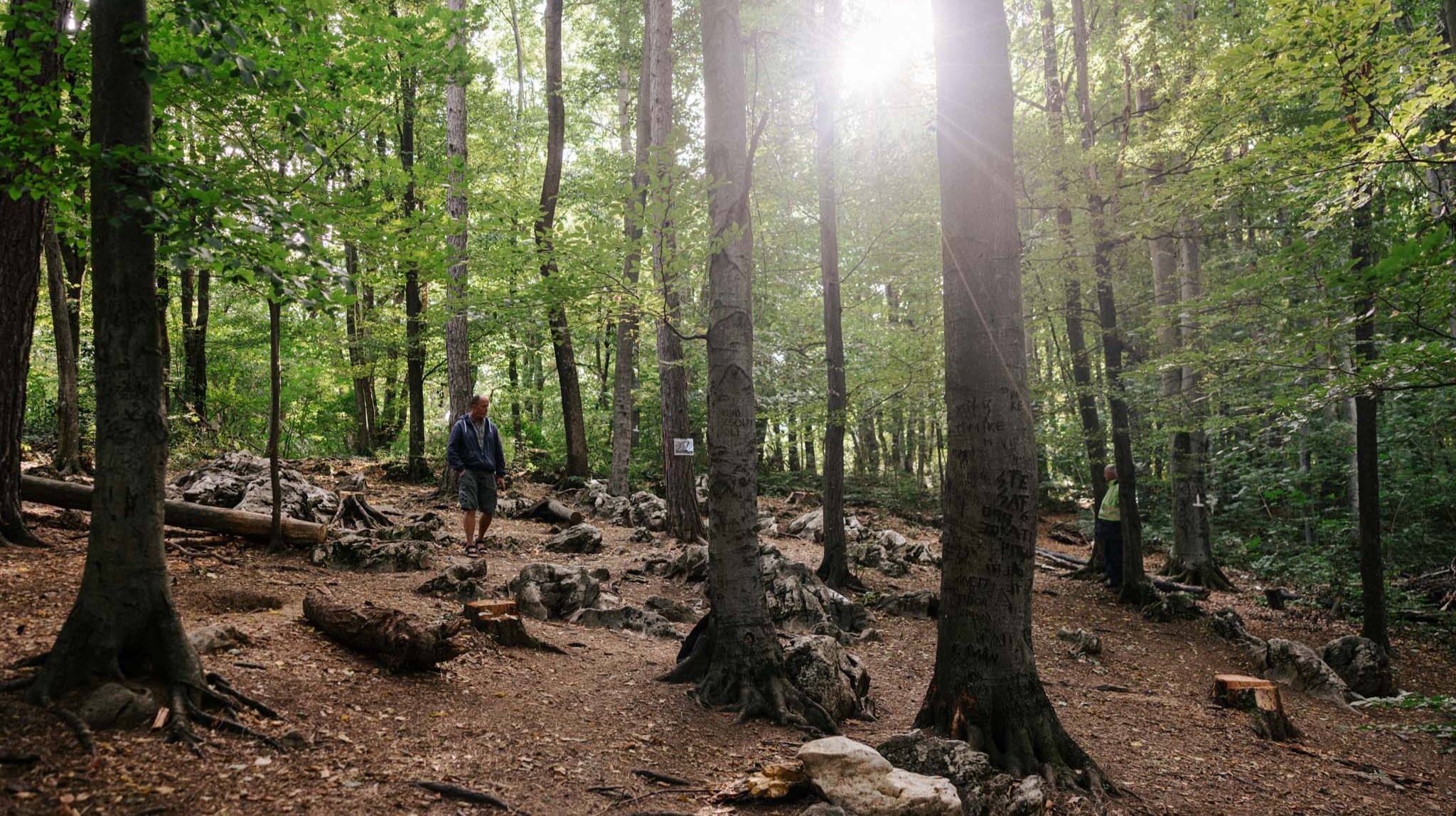
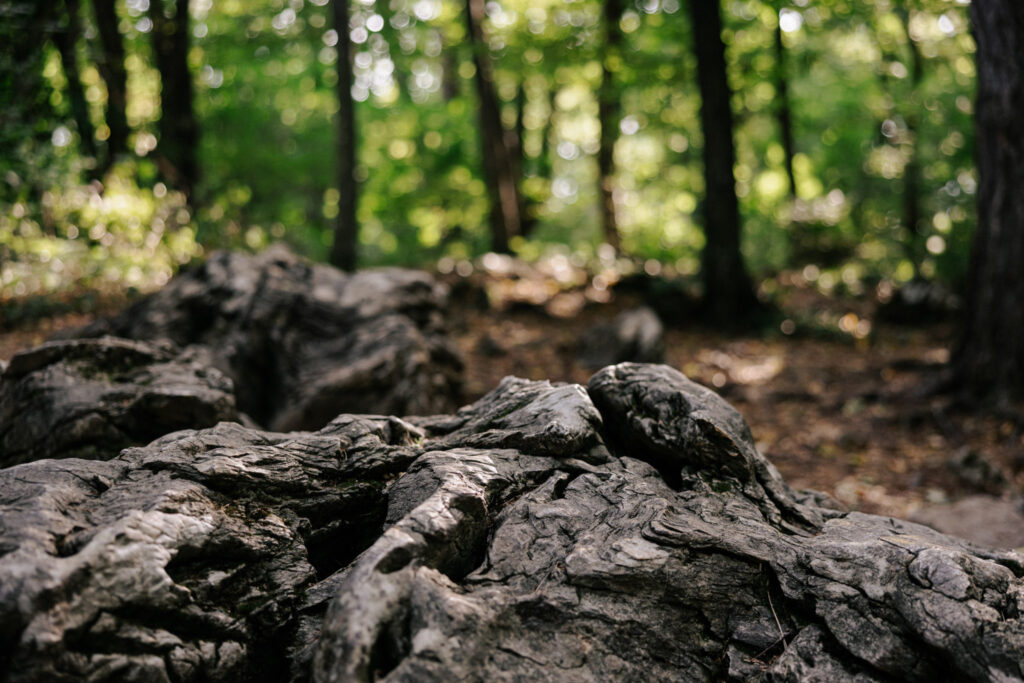
Today, we still know of many such shrines and pilgrimage sites. Most of them have been ‘approved’ by the Catholic Church, meaning they are officially recognized, but some have not yet been approved, even though they have long been known in popular religion. One such pilgrimage site is the Boldogasszony Stone, better known as ‘the healing stones’, located on the outskirts of Bükkszentkereszt. One of Hungary’s highest settlements (the highest being Mátraszentimre) offers an idyllic view, surrounded by forests on all sides. The stones are located in the beech forest surrounding the village to the south, half-buried in the ground, and are associated with a legend.

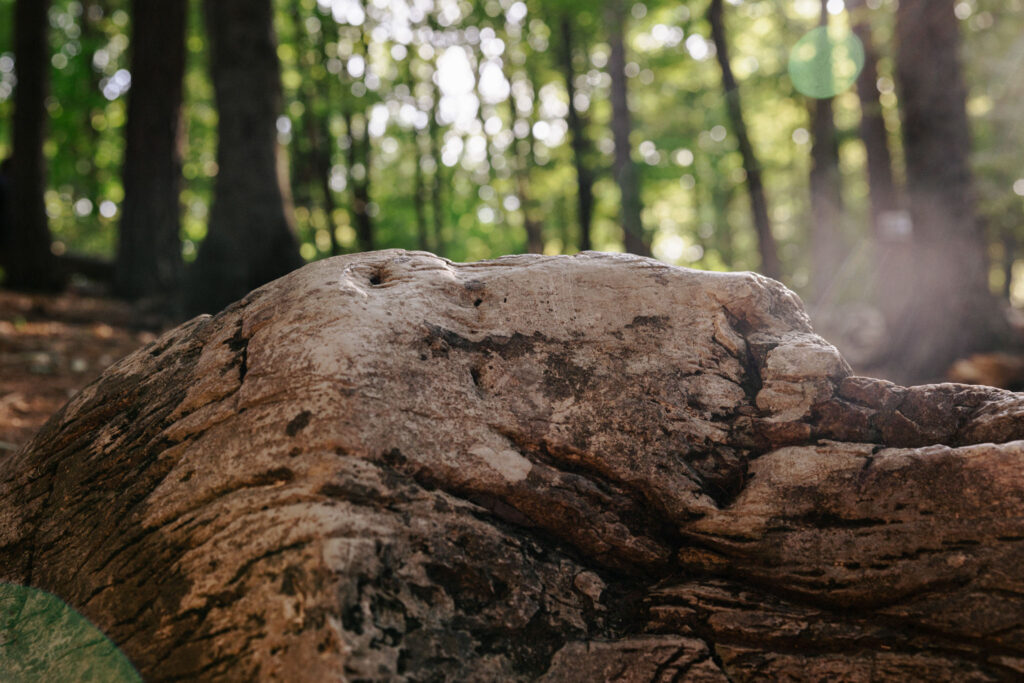
According to legend, after Christ’s death, the Virgin Mary set out on a journey in her grief, arriving at the border of today’s Bükkszentkereszt, where she sat down on a stone to rest. The stone softened beneath her, preserving the imprint of her seat. Those travelling to the nearby Kács pilgrimage also always rested at this spot, where they regained their strength remarkably quickly after the climb. It is not known exactly when the news of the healing stones spread to more distant lands, but today, many people visit here to alleviate various ailments. According to the official scientific explanation, the soil here contains small amounts of radium, which is beneficial to the immune system.
‘Since ancient times, humanity has recognized special places, and the Boldogasszony Stone is one of them’
Reconciling popular religiosity, esoteric teachings experiencing a renaissance, and modern science is not our task here, so it is hard to decide which explanation is valid. And, there is no need to decide. Since ancient times, humanity has recognized special places, and the Boldogasszony Stone is one of them.
Our colleagues from Magyar Krónika visited the stones one August morning, but even at that relatively early hour, they were not alone. An elderly man was walking slowly among the stones, stopping at each one to pray, then leaning his forehead against the trunk of a beech tree and remaining motionless for a long time.
In one of the photographs from a series taken in Siberia in the early 20th century, depicting the everyday life of the people there, a woman is seen leaning against a tree in the same position. According to the caption, this was an expression of a nature cult dating back to ancient times, a kind of connection with the spirit of nature.
Seeing this man performing his morning ritual was like peering into the bottomless well of the past. It was almost dizzying to see him doing the same thing as people did thousands of years ago, even if today it is partly framed by Christian tradition. It was a timeless moment in the morning silence of the beech forest.
The forest itself is healing, and secrets lie deep in the mountains and in the human soul.
Related articles:
Click here to read the original article.
At a time when public debate is increasingly polarized and superficial, Hungarian Conservative remains committed to depth, intellectual honesty, and independent conservative thought.
Producing high-quality journalism requires resources. Your contribution helps us expand our coverage, reach new audiences, and keep our content accessible.

Please consider supporting our mission.