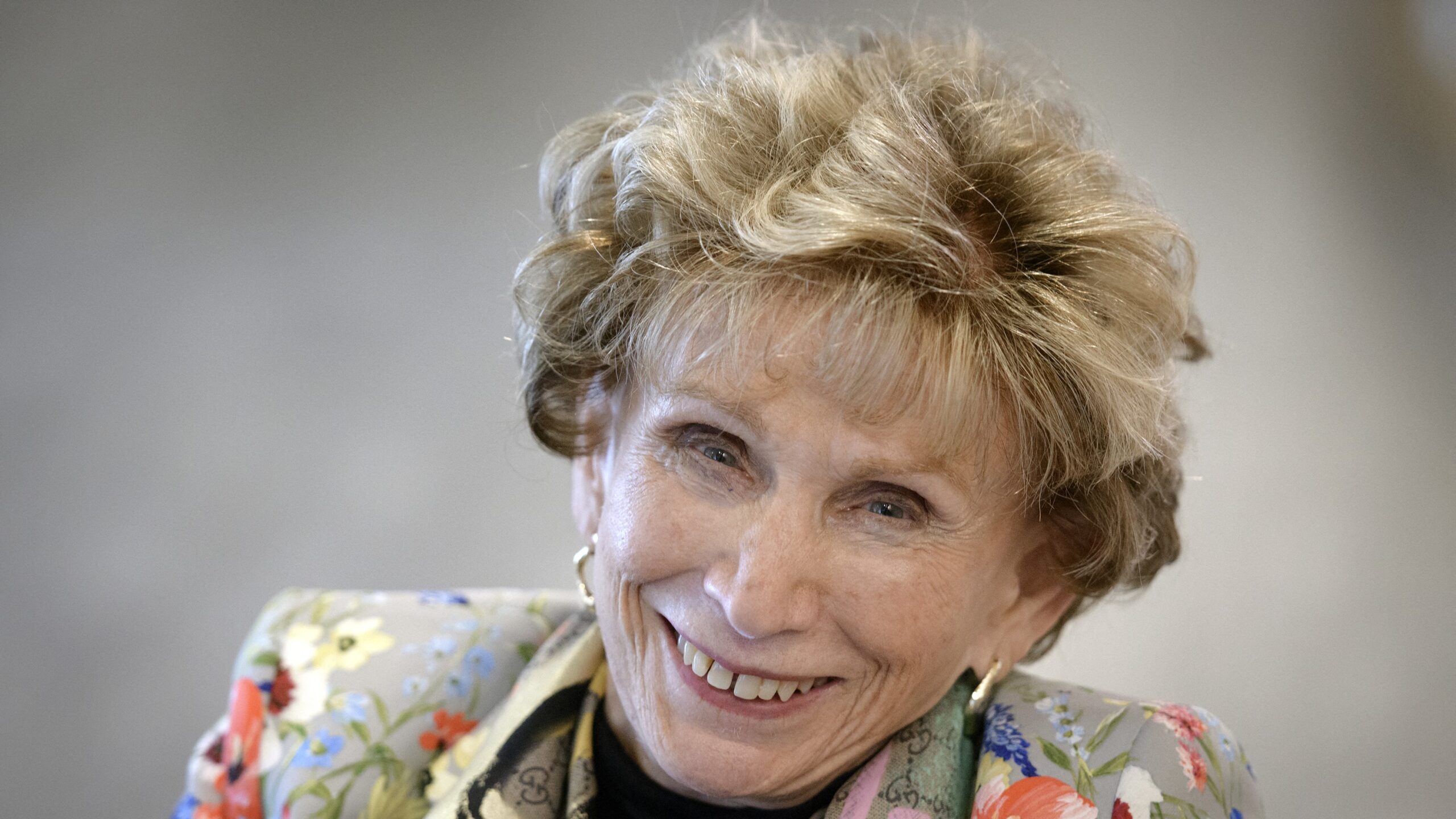
On 27 April, the world lost Edith Eva Eger—a Hungarian-born Holocaust survivor who transformed unimaginable suffering into a lifelong mission of healing, responsibility, and inner freedom. She passed away in San Diego at the age of 98, peacefully, surrounded by her family. In their farewell, her loved ones described her departure as ‘full of grace…like an angel returning home.’
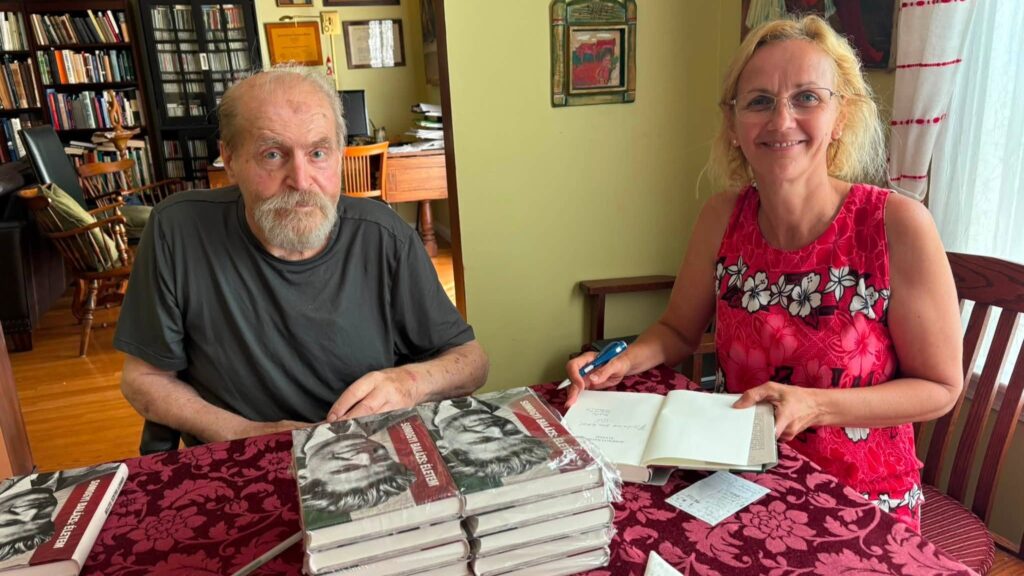
She was the author of the bestselling books The Choice and The Gift. The tragic news was announced by her Hungarian publisher, Open Books, on its Facebook page.
‘Edie was not only a witness to the darkest hours of history, but also a shining beacon of light who, even in the mud of Auschwitz, after the loss of her mother and unimaginable horrors, was able to dance with inner freedom. Her life and work are not merely a biography, but the chronicle of a universal process of healing,’ their tribute reads.
Edith Eger Was Forced to Dance to Entertain Mengele in Auschwitz
Born in 1927 in Košice (Kassa), then part of Czechoslovakia, Eger showed exceptional promise early in life. In interviews, she recalled the surge of emotion Hungarians felt when Kassa was briefly returned to Hungary. As a 10-year-old, she tried everything to become ‘the best Hungarian’, bursting into tears whenever she heard the national anthem. As a teenager, she applied to the Hungarian Olympic team but was ultimately rejected because of her Jewish background—a foreshadowing of the brutal exclusions that would soon define her fate. In 1944, during the Nazi occupation, she was deported to the Auschwitz concentration camp with her mother and sister.
Eger later recalled with haunting clarity the moment of selection under Josef Mengele. They weren’t told where they were being taken. There was no chance to say goodbye—only to stand in line and wait for a gesture that meant life or death. When she tried to follow her mother, Mengele asked her a question that would haunt her for decades: ‘Is that your mother or your sister?’ In a moment she would later describe as a fatal mistake, she answered truthfully. She was separated from her mother, who was sent to the gas chamber. ‘I could never forgive myself,’ she reflected, tormented by the thought that her answer might have sealed her mother’s fate. Her sister, trying to console her, whispered words that would remain with her forever: ‘The spirit never dies.’
In a cruel twist of fate, that very evening, Eger was forced to dance for Mengele. One of her most vivid memories of him was not merely his power, but the boundless, inexplicable fear he inspired. ‘The same man who destroyed my family pushed me to the other side,’ she later wrote—an experience that fed a deep and enduring sense of survivor’s guilt: why had she lived, when so many others had perished?
‘The spirit never dies’
She passed through several concentration camps with her sister, including Mauthausen. As the American and Soviet armies approached, the Nazis evacuated Mauthausen, and the two girls were sent on a death march with others to Gunskirchen. Survival seemed almost impossible: Edith ate grass to stay alive, while others were driven to cannibalism.
In May 1945, when the American army liberated the camp, a soldier noticed the young girl among the corpses as she moved. When someone touched her hand, she looked up and saw an American soldier standing over her, tears in his eyes, holding out M&M’s. By then, she weighed only 32 kilograms and was suffering from typhus, pneumonia, and pleurisy; her back was broken.
In the aftermath of war, the surviving family members found one another again—a small miracle amid devastation. Like many Central European Jews, she chose not to remain in a continent marked by trauma. In 1949, she emigrated to the United States with her husband, Béla Eger, also a survivor, and began the difficult task of rebuilding a life.
‘Forgiveness is a gift I give myself—so I don’t carry the Nazis with me, and keep living in the past’
Yet survival, as her later writings make clear, was only the beginning of a much longer struggle. Her physical recovery took time, but her psychological healing took even longer. For years, Eger was unable to speak about what she had experienced. She suffered from depression, post-traumatic stress, and intrusive memories, while the weight of guilt remained ever-present.
Her story echoes that of other Holocaust survivors who found psychological endurance through an inner act of defiance—the determination that, as she put it: ‘the Nazis could not touch what was inside me.’
In the United States, Eger pursued education with remarkable determination. She earned a doctorate in clinical psychology and became a respected expert in trauma therapy, particularly in the treatment of post-traumatic stress disorder. Influenced in part by her friendship with Viktor Frankl, author of Man’s Search for Meaning, Eger developed a philosophy grounded not in victimhood, but in personal responsibility and choice.
Eger helped patients confront their own traumas, yet for decades, she kept her own past largely unspoken.
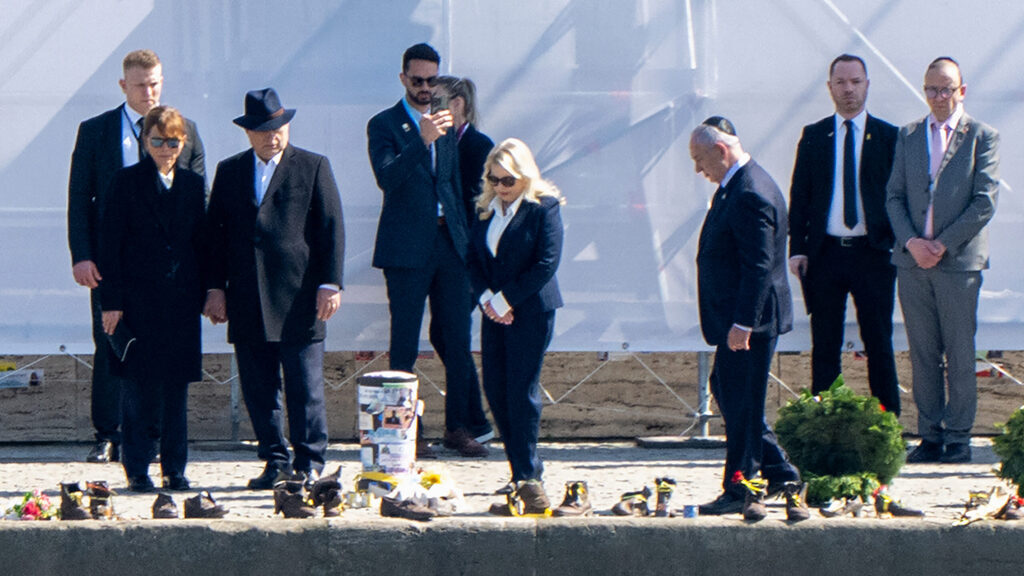
Confronting that past became the turning point of her life. After 35 years of silence, she made the difficult decision—despite her sister’s reluctance—to return to Auschwitz. This act marked the beginning of a deeper process of healing. As she would later articulate, healing does not mean erasing the wound, nor even simply tending to it; rather, it means learning to honour it.
As Eger recounts:
‘[My visit to Auschwitz] was an important moment in my life, and I am deeply grateful that I was able to do it. I saw the barrack where I had danced for Dr. Mengele, and when I could touch that place—really touch it, not just talk about what had happened…I hadn’t fully realized how important it was for me to return there. To see it, to feel it, to experience it again. It was important not only to remember, but to go back and relive it within myself—and, of course, not to remain trapped there.’
This realization would later shape her understanding of forgiveness—not as absolution, but as a form of personal liberation. As she phrased it in an interview: ‘Let’s be clear about one thing: I do not have the divine power to forgive crimes. Forgiveness is a gift I give myself—so I don’t carry the Nazis with me, so I don’t keep living in the past.’
‘While we cannot change what has happened to us, we can choose how to respond to it’
This message would later reach millions. Her memoir, The Choice: Embrace the Possible, published in 2017 when she was already 90, became an international bestseller. In it, she articulated a simple but profound truth: while we cannot change what has happened to us, we can choose how we respond to it.
Her memoir reveals that it is one thing to survive Auschwitz, and quite another to endure the years that follow with one’s sanity intact.
It was through confronting her own trauma that she found her way to psychology. In the process of healing herself and helping others, she gradually came to understand how life-defining tragedy can be transformed into an opportunity. Hardships and the darker chapters of our past cannot be erased, nor should they be denied, Eger argued. Yet our attitude toward trauma can always be changed through conscious effort—it is ultimately a matter of personal choice.
‘In Auschwitz, I never gave up hope,’ she recalled in a later interview. For Eger, hope was not naïve optimism but a deliberate act of will.
Her Big Family Is Her ‘Ultimate Revenge Against Hitler’
Eger left behind her three children, five grandchildren, and seven great-grandchildren. In an interview, she described her large family as her ‘ultimate revenge against Hitler’—a living affirmation of continuity in the face of an attempt at annihilation.
A powerful visual testament to her philosophy appears in the portrait documentary by Hungarian filmmakers S Takács András and Cseke Eszter, known for their On The Spot series. The film captures not only Eger’s life story, but also the coherence between her ideas and the way she lived them. Over more than a week of filming in her home—and in its most intimate spaces—Eger allowed an unusual degree of access. She spoke candidly about decades of silence, her confrontation with the past, and her return to Auschwitz.
What emerges is not simply a survivor’s testimony, but a portrait of sustained vitality. The filmmakers show her doing household chores, swimming in her panoramic pool, and continuing her work with patients well into advanced age. Most strikingly, they capture her ease in everyday life—her curiosity, humour, and sense of presence. Even in what might be described as the twilight of her life, she remained engaged with it fully.
As the directors later recalled, few people radiated such energy and steadiness. Eger’s presence was defined not only by what she said, but by how she lived. It was, in their view, a lived expression of her central belief: that freedom is not abstract, but practiced.
Life after Trauma Is Not Only Possible, but Can Still Be Fully Lived
Eger remained deeply connected to her Jewish identity and openly supported the State of Israel throughout her life. Her sense of survival was not only personal, but rooted in historical continuity. ‘We Jews survived so much, and we’re still surviving,’ she said at one point, emphasizing a resilience that totalitarian ideologies failed to break.
‘Eger did not ask people to deny suffering, but to reinterpret it’
Her grandson, Jordan Engle, later summarized her legacy in similar terms: Eger did not ask people to deny suffering, but to reinterpret it—not as a final verdict, but as something that could be transformed into strength. This idea extends beyond clinical psychology into a broader ethical message about agency and meaning.
Eger’s life ultimately suggests that history’s darkest chapters do not erase human choice; they intensify its importance. In her understanding, freedom is not granted by circumstances, but exercised within them.
She is survived by her children, grandchildren, and great-grandchildren—and by a legacy that continues through the Edith Eger Foundation. At its core is a simple but enduring idea: that even after the greatest horrors, the human spirit retains its capacity for dignity, responsibility, and freedom.
In a century marked by both devastation and resilience, Edith Eger stood as a witness to both—insisting, until the end, that life after trauma is not only possible, but can still be fully lived.
Related articles:
At a time when public debate is increasingly polarized and superficial, Hungarian Conservative remains committed to depth, intellectual honesty, and independent conservative thought.
Producing high-quality journalism requires resources. Your contribution helps us expand our coverage, reach new audiences, and keep our content accessible.

Please consider supporting our mission.