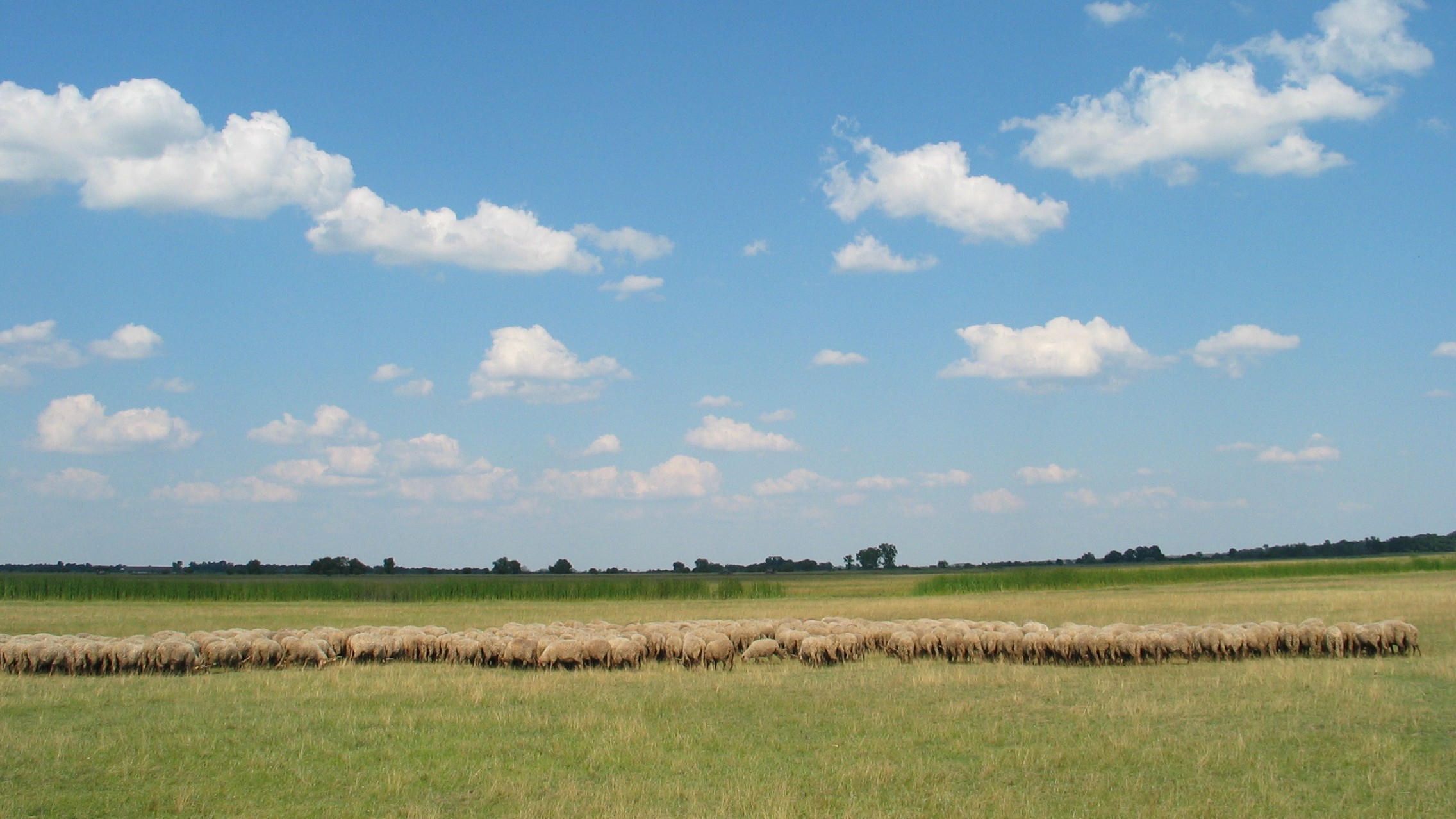
This is a piece about one of Hungary’s most important, most endangered, and often least visited regions: the Alföld, that is, the Great Hungarian Plain. The Alföld is the lowland region of Hungary, lying mostly south and east of the Danube River, with a unique culture and character both as a whole and as a collection of distinct subregions. It should not be forgotten that the Alföld has many different parts where Hungarians have lived, and still live. These include the Duna–Tisza Köze (Between the Danube and the Tisza), Tiszántúl (Beyond the Tisza), Kiskunság (Little Cumania), Nagykunság (Greater Cumania), the Hortobágy, as well as other regions now outside present-day Hungary. Yet they all share a common history, character, and culture to this day. Together, they constitute the lowland region that has shaped much of Hungarian history.
A brief look into the background of this area reveals a difficult past. The region has long served as a passageway between East and West for many peoples and nations. Indeed, it is the route by which the Hungarians entered the Carpathian Basin, travelling across the Eurasian Steppe, which stretches into the Hungarian Plain. These vast flatlands extend all the way to eastern Mongolia across the heart of Asia. Many nomadic peoples moved along this broad axis at different times and settled in various parts of the region. Their main route of migration followed this corridor, and some, such as the Cumans, the Avars, and the Hungarians, reached the Carpathian Basin.
‘The region has long served as a passageway between East and West for many peoples and nations’
This region marked the geographical endpoint of their migration. Beyond it, the landscape gradually loses its flat character, giving way to hills and then, relatively quickly, to high mountain ranges such as the Alps. This terrain was not well suited to the nomadic way of life, and therefore, among other reasons, the Hungarian Alföld became their natural place of settlement. Over time, these various groups assimilated on the plains, integrating with the local populations already living there. Their cultures, in many ways, became woven into the broader fabric of Hungarian culture, and many local customs survived, though they are now often regarded simply as Hungarian traditions.
Another reason why so many people suffered on these plains is also connected to their corridor-like nature running from south to north. The Ottoman Turks and other armies often marched north from the Balkans into the Kingdom of Hungary, using this geographical passageway. This path of war left widespread desolation and destruction after decades of conflict and occupation. Many of the ancient inhabitants of the plains were driven away or killed. Therefore, during the 18th century, many new groups were settled there to provide the Habsburg Monarchy with food. This was of vital importance given the region’s agricultural potential.
The Alföld remains the breadbasket of Hungary to this day. It is where millions of tonnes of fruit, vegetables, and grain are produced each year. Without this region, the country would face a much greater shortage of agricultural produce. This brings us to the danger the region is facing, one that the entire nation must address.
Much of the Alföld has been drying out at an alarming pace over the past decade. The issue has even become the subject of fierce parliamentary debates over the nation’s water shortage, particularly because of its impact on agriculture. Without sufficient water, agricultural production is severely affected, and over time the land itself is depleted of its vital reserves and begins to desertify. There have been many reports of the Homokhátság gradually turning from arable land into stretches of sun-parched sand. This is nothing short of a national crisis. Currently, much of the Alföld falls into the highest category of drought on the Hungarian scale for a variety of reasons.
‘This is nothing short of a national crisis’
If the ongoing water-retention projects are not effective and swift enough to restore the water storage of these regions, there is a real risk that the land will become largely unusable. The severe lack of water is also having a major impact on the ecosystem, with important habitats collapsing across the region. Many of them are affected, even if only indirectly, by the scorching heat and parched soil. Therefore, no one can predict with certainty the ripple effects of such a prolonged climate crisis, further strengthening the notion that this is a shared concern for us all. We cannot know who will be affected or when.
Therefore, let us strive to restore water to, and thus help save, this region. Let us continue to provide the care it needs, both at the local level, by recognizing the scarcity of sustaining water resources, and at the municipal and state levels. It is of great importance that we look upon this vast, flat land and appreciate its serene beauty, rich culture, remarkable resilience, and enduring value. Let this inspire all Hungarians to strive for a more arable, sustainable, and agriculturally prosperous future for the region, while preserving its history, food, music, and local traditions, and fostering national cooperation for the benefit of both local agriculture and the national economy.
Related articles:
At a time when public debate is increasingly polarized and superficial, Hungarian Conservative remains committed to depth, intellectual honesty, and independent conservative thought.
Producing high-quality journalism requires resources. Your contribution helps us expand our coverage, reach new audiences, and keep our content accessible.

Please consider supporting our mission.