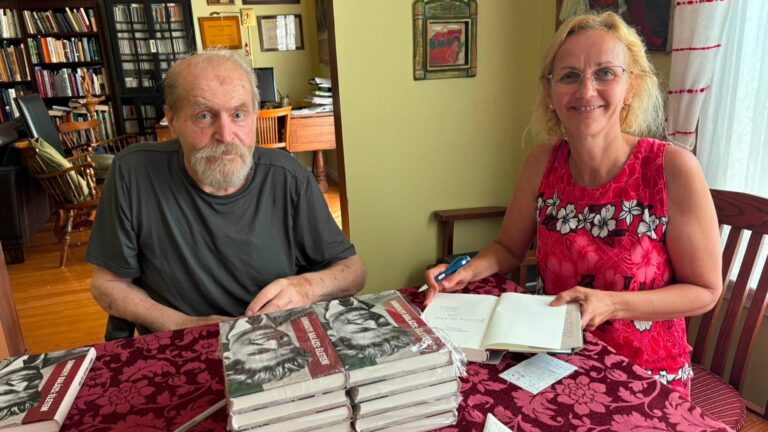
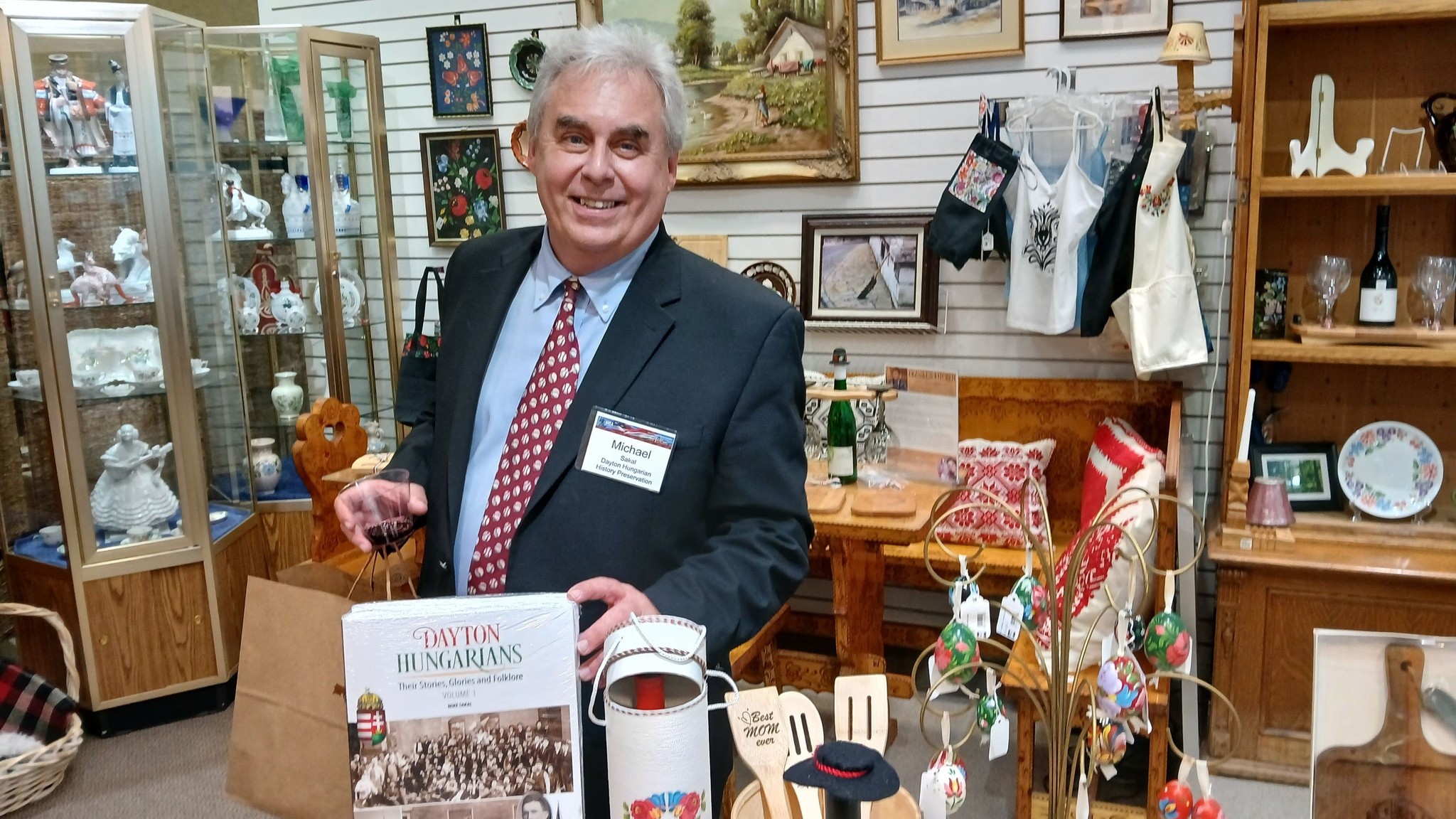
Mike Sakal’s Hungarian grandparents emigrated to the U.S. and settled in Dayton, Ohio, in the early 1900s. Like many younger families leaving the Hungarian enclaves and moving to the suburbs in the 60s–70s, his parents moved to Milton, a small rural town where he grew up, but they always kept up with various Hungarian events in Dayton. The idea that started with writing a story about the Dakota Street Football Team in 1991 caused him to look further into his Hungarian heritage and the community’s history. As a result, he recently published a book of two volumes—Dayton Hungarians: Their Stories, Glories and Folklore—on the Dayton Hungarians, of more than 800 pages, including 1,300 photographs.
***
How did your grandparents emigrate to the U.S.?
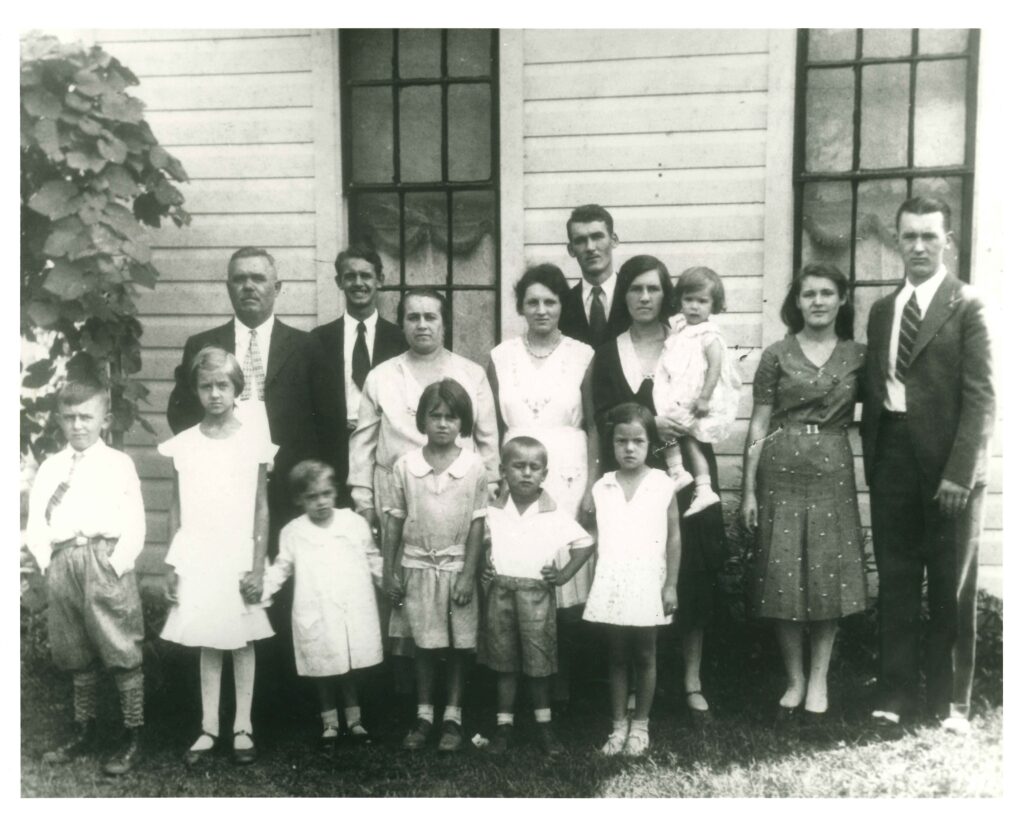
My grandfather, Mike Szakal, emigrated to the U.S. in 1906 and settled in Dayton’s West Side Hungarian neighborhood. His first wife, Mary Korenko, came to Dayton with their first daughter, Maggie, in 1907. They ultimately had six kids together. Sadly, Mary died in October 1918 as a result of the Spanish influenza epidemic. Soon after, my grandfather asked her sister, Anna Kolarik, to help take care of the kids. She was living in a part of northern Hungary that became Czechoslovakia after the Treaty of Trianon in 1920. She came over in 1920, and they got married soon after. Mike and Anna Szakal had nine children; my dad, Joe Sakal, was the youngest son.
How did your family preserve their Hungarian heritage in the family as well as in the community? How did they manage to pass it forward?
With so many aunts, uncles, and cousins on my Sakal/Szakal side of the family, we were able to enjoy and cherish my grandma’s presence for many years and be grateful for the cooking and baking talents she passed on to my aunts and my mom. When we lived in inner-city Dayton, I’d sometimes come home from elementary school and savor the smell of my grandma cooking in the kitchen as she was making csigatészta soup, cooking chicken paprikas, or baking pastries. Sometimes my sister or I would walk into the kitchen and happen to see that she had left the large bowl of pastry filling unattended. We’d quickly grab a spoon, dig into the filling a couple of times, only to have our grandma suddenly reappear and swiftly smack us on the back of the head with her wooden spoon!
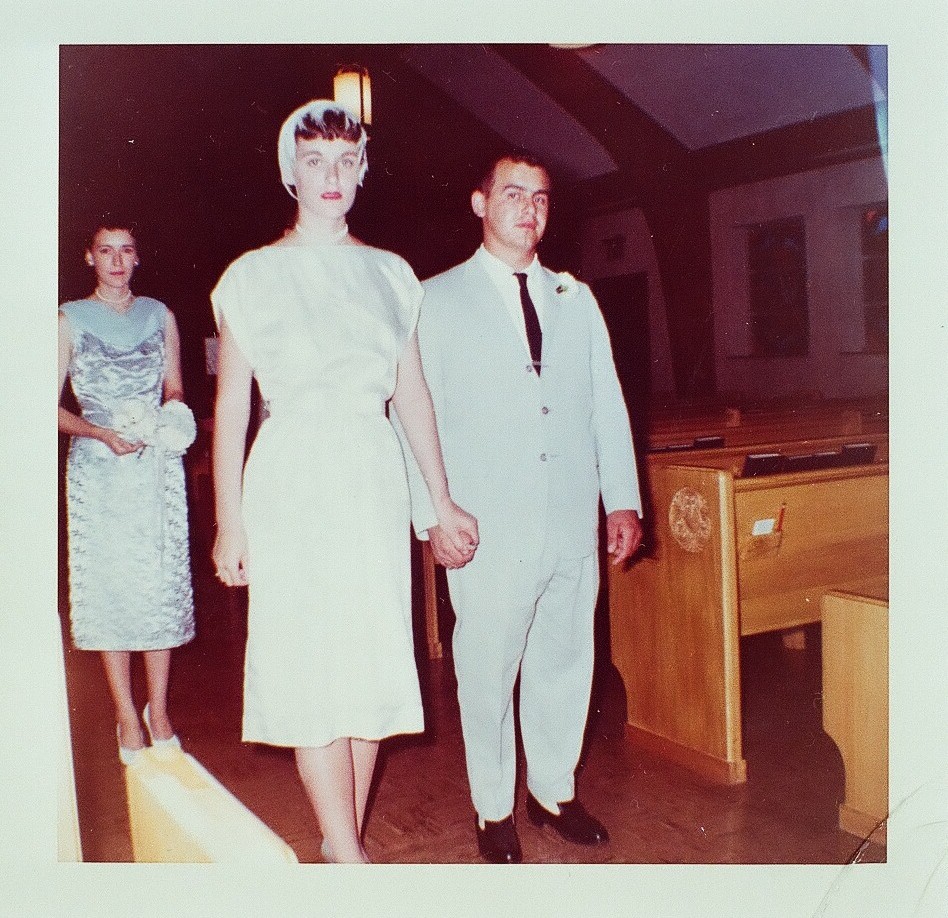
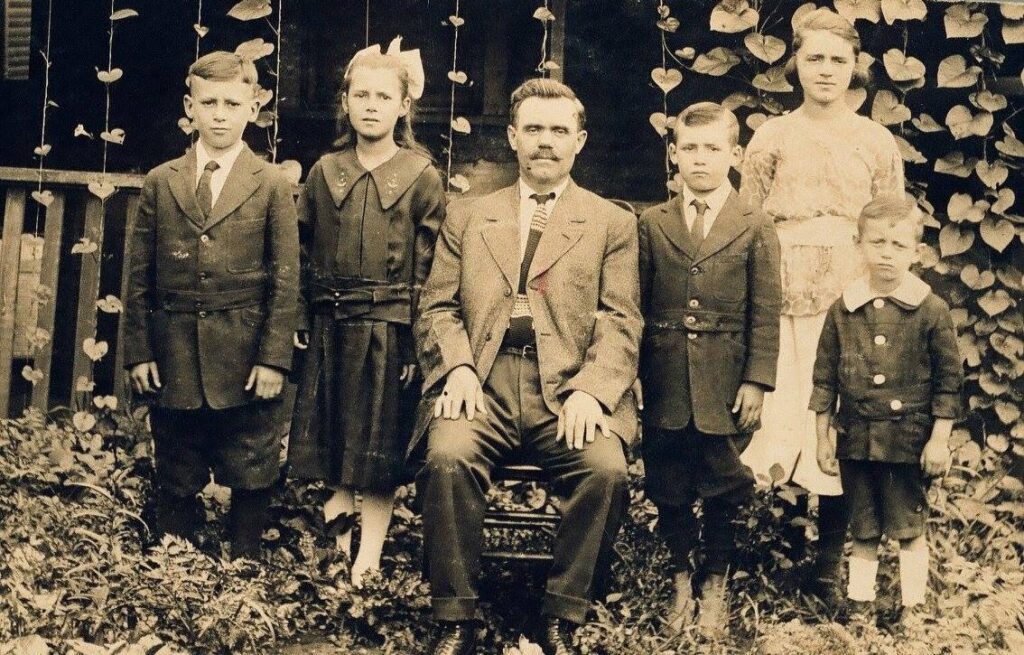
She passed away at age 78 in 1977, when I was ten years old. Unfortunately, I never met my paternal grandfather. He died in 1953 at age 77, when my dad was only 13. I heard many stories about him, though. He was short and stocky; Hungarians in the West Side Hungarian neighborhood called him ‘Kis’ Szakal. Working in the Heating and Treating Department for the National Cash Register in Dayton, his arms were thick and round and resembled the arms of Popeye. My uncle, George Szakal, once told me that grandpa could easily move around the 500-pound blocks of brass or steel for the cash registers.
My dad went to the Hungarian Reformed Church with my Aunt Jani when he was a child and later a young man. He married Carolyn Angel Sakal, my mom, in a ceremony performed by Rev. Louis Molnar in the Hungarian Reformed Church. Like many younger families leaving the Hungarian enclaves and moving to the suburbs in the ‘60s and ‘70s, my parents were a part of that, too. We later belonged to the United Church of Christ in West Milton, Ohio, in the small rural town where I grew up. However, my parents always kept up with various Hungarian events in Dayton: the Hungarian Freedom Day dinners in the Reformed Church’s Kossuth Hall held on the Sunday closest to March 15, the picnics in summer, and the Szüreti (Grape Harvest) Festivals in the fall. I have fond memories of these events and the people, especially the hard-working ladies in the kitchen who served the dinners. I was also always fascinated by the folklore dancers in their costumes and the Hungarian Gypsy Orchestra playing beautiful music that brought many people to the dance floor.
Years later, after I moved back to Ohio from Arizona in early 1998 to work for newspapers in Elyria and Lorain, Ohio, I soon joined the Hungarian Reformed Church in Lorain and even danced with the local Hungarian folklore dancers for a few years as I did in Dayton. I live in Dayton now, but I remain an active member of the church in Lorain and some of its activities, such as sausage making, cabbage roll sales, and chicken paprikas. I’ve also worked in the Hungary booth at the Dayton International Festival’s World A’Fair.
What were the most important characteristics of this 125-year-old, big Hungarian community of 6000 people? And what do you think the main reasons are for such a big and thriving community to almost cease?
Many Dayton Hungarian community members came from the same villages to continue their lives in the U.S. in pursuit of the American Dream. They all shared a common bond in coming from the same country and continuing a new life in another one. They wanted to stick together through their churches, jobs, and cultural heritage, as in cities such as Cleveland, Detroit, and Toledo. Today, it’s not so much sticking together in their churches or jobs anymore, but through the cultural heritage and events themselves, which is supported by the core of the die-hard members of the Hungarian communities that you always see at various ethnic events and festivals throughout Ohio.
I believe some of the main reasons for large Hungarian enclaves or communities to decline or cease existing are the same in nearly every Hungarian community in large cities across the U.S. Shortly after World War II, many young servicemen returned home and moved out of the neighborhoods to other areas or the emerging suburbs to start families. In many cases, the younger generation started marrying outside of their ethnic heritage and began attending other nearby churches. The older generation left behind in the old neighborhoods began to die off, and those neighborhoods changed over the following years.
What is the current situation of the Dayton Hungarian community?
It’s similar to many rapidly changing Hungarian communities in mid-size cities such as Akron, Youngstown, and Columbus. Although the current active local Hungarian community remains tight-knit, it’s spread out throughout the Dayton area as opposed to the two former very distinctive Hungarian neighborhoods—the West Side and Old North Dayton—that are sadly long gone. Although much of the older generation has died off, there was a resurgence in the community in the late 60s-early 70s at the Hungarian Evangelical and Reformed Church as well as the St. Stephen Catholic Hungarian Church: they brought back the Grape Harvest Festivals, the Hungarian Freedom Day dinner, and the folklore dance group that continues to perform at Dayton’s International Festival.
Sadly, St. Stephen Church closed in 2015. The few remaining members of the Old Troy Pike Community Church (formerly the Hungarian Evangelical and Reformed Church of Dayton) are currently deciding the fate of the nearly 125-year-old church. However, we have a very active branch of the William Penn Association still benefiting the Hungarian community. There are also about 200–300 members in the Magyar Club of Dayton that organizes events and fundraisers about every other month, such as the Annual Fall Dinner and Dance, the Annual Gulyas Festival, and the club’s bacon fry and sausage making. Many say: Oh, the Hungarian traditions are dying off and soon will be gone, but the remaining group that continues to participate in the events of their heritage keeps it very much alive for future generations.
What was your motivation to start this huge project, and why did it take 30 years? Why is the book built up in two (uneven) volumes?
While I was working as a part-time sports writer for the Dayton Daily News in the early 1990s, an elderly gentleman by the name of Wilbur Curtis found out I was Hungarian and knew one of my uncles who played on the Dakota Street Football Team—a tough semi-pro team from Dayton’s West Side Hungarian neighborhood in the 1920s and 30s. Curtis suggested I write a story about the team, which I did—it appeared in the Dayton Daily News on 1 January 1992. I got about six of the former players together, and when they mentioned a number of the Hungarian neighborhood places they ate at after games—the Hungarian Village, the Budapest Café, and Illes’ Tavern—it spurred my interest in finding pictures of those places with the thought of writing a book on local Hungarians.
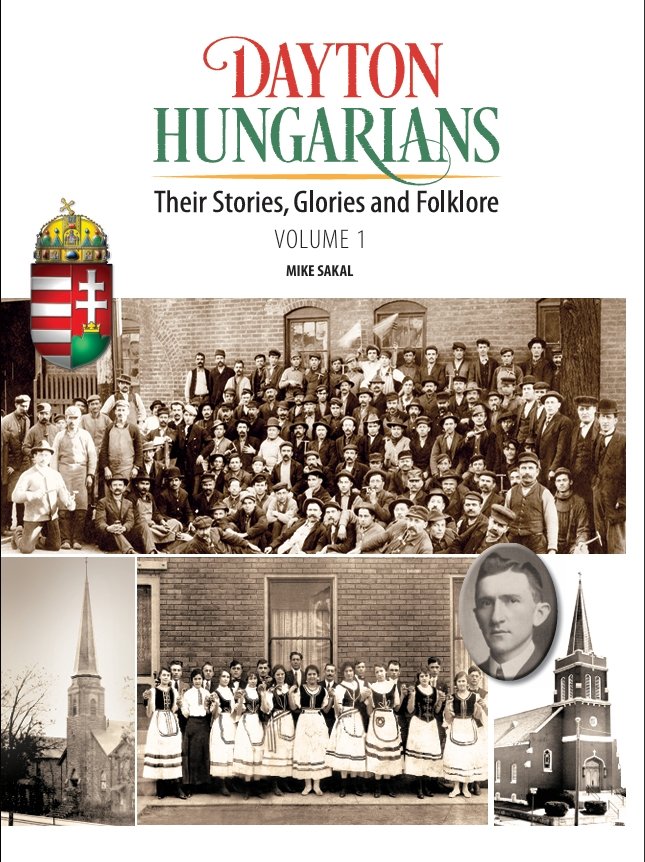
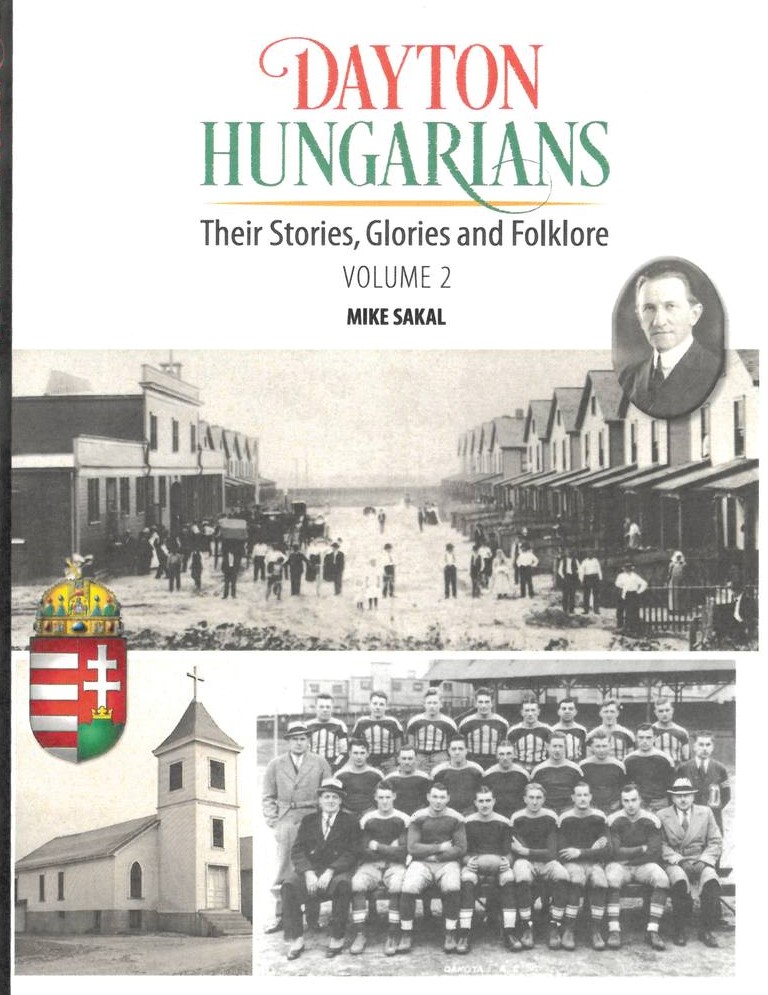
I soon immersed myself in the Dayton Hungarian community in search of these pictures that came along with great stories. I had compiled and curated so much information that it had to be divided into two volumes. Volume 1 consists of the older Dayton Hungarian history, including in-depth church histories, stories about families, and the old Hungarian neighborhood businesses. Volume 2 includes local sport history, interviews with 1956 refugees and the current Dayton Hungarian community, also with many vintage pictures. Many people who’ve seen my book have commented that they couldn’t believe I spoke with so many people (former ministers, priests, families, sports heroes, refugees, and freedom fighters from the 1956 Hungarian Revolution who had great stories to tell). Even retired Rev. Peter Toth of the Hungarian Reformed Church in Lorain told me that of all the Hungarian community history books he has seen, he has never seen one like mine that has included so much. That makes me feel proud.
What were your most memorable moments during this huge work?
There were many memorable and challenging moments since I started interviewing many Dayton Hungarians in October 1992 who either came to the U.S. as youngsters, lived in the old Hungarian neighborhoods and saw its changes, whose parents owned and operated the many Hungarian neighborhood businesses, emigrated in the aftermath of the 1956 Hungarian Revolution and those who continue to live the Hungarian way of life, keeping up with their heritage today. I couldn’t name one or two moments that stick out, but they all seem to run a common theme of heartwarming enthusiasm by those who shared their stories and vintage photographs of Dayton’s long-gone Hungarian neighborhoods, many of which had never been publicly seen before. The photographs I curated throughout the duration of the Dayton Hungarians book project are priceless, in my opinion, from an era that will never be duplicated.
Two great moments of finding photographs included one of my grandmother, Anna Szakal, making cabbage rolls for the 1967 Grape Harvest Festival with her friends, Hermina Hanos and Rose Kocsik, which I discovered in the archives of the Dayton Daily News newspaper. I was also very surprised and grateful to find another picture of her rolling csigatészta in the basement of Hermina Hanos’ home with the other ‘noodle ladies’ in 1975, in a photo album belonging to former Reformed Church members Dezso and Irene Melegh. And it was always great for the people I interviewed to ask me: ‘Now, which Sakal are you?’ I had a large Hungarian family with deep roots in Dayton’s West Side Hungarian neighborhood, and that was a big help in allowing me to come into their homes and interview them, as well as trust me with their family photographs for a short time to copy them or later scan them for the book.
A truly challenging moment was when the funding didn’t come through for the book as promised when it was completed in early 1996 and ready for print. For whatever reason, the officials of the two Hungarian churches decided in early 1996 that they wouldn’t be funding the project. I was in my 20s then, and had to move on. I had a successful career with newspapers in Arizona and Cleveland, but achieving the goal of getting Dayton Hungarians published remained on my mind. I was elated when the members of the Old Troy Pike Community Church Consistory voted to support and fund the Dayton Hungarians book project in 2020. The funding was generated in part following the sale of the church’s 11-acre property and buildings on Old Troy Pike in north Dayton. I’m also forever grateful to them for approving the funding for this important history preservation project, and definitely for their friendship and patience.
The five years the talented graphic designers needed to complete the book took longer than it did me to research and write it. The two volumes of the book total more than 800 pages and include 1,300 photographs. Through the second leg of this project (2020–2025), sadly, many people died who never got to see the finished product, including my mom, Hungarian friend David A. Boston, who encouraged me to join the Magyar Club of Dayton, and my cousin John Belme, who helped me with a lot of family history. I’m sure they all are looking down from Heaven and are happy that their legacies are preserved for future generations.
Did the project make an impact on you? What plans do you have for it?
The project truly was a labor of love. It’s fun and enriching to do, especially when it comes to uncovering/discovering many never-before-seen vintage photographs that are on a search list. Then, when it gets down to the technical, editing, and navigating the design process, it becomes challenging at times when you’re at the mercy of the schedules of contract workers, although they did a great job in helping take the books across the finish line.
It absolutely changed me from the very time I interviewed the ‘old guys’ of the Dakota Street Football Team in late 1991, and with nearly every interview later with Dayton Hungarians individuals or couples, who shared wonderful stories. Many of those people are gone now; I’m glad I was able to preserve their legacies in this book, especially my family’s and the churches that allowed them to continue their heritage. I became more involved in my Hungarian heritage and appreciate my family’s history more. I remained active in the Cleveland and Lorain Hungarian communities as well as Dayton’s Hungarian community. God works in strange and mysterious ways, and I truly believe Wilbur Curtis crossed my life’s path for a reason, for which I’m very grateful. I plan to take it to the next level by marketing it to colleges and universities for possible use for different (e.g., Eastern European Studies, Public History, Ethnic Neighborhood Studies, or Urban Studies) courses. I’m also using it as part of my portfolio to return to a full-time writing/communications job, possibly with a historical society or as some kind of curator in a special collection and archives.
Read more Diaspora interviews:
At a time when public debate is increasingly polarized and superficial, Hungarian Conservative remains committed to depth, intellectual honesty, and independent conservative thought.
Producing high-quality journalism requires resources. Your contribution helps us expand our coverage, reach new audiences, and keep our content accessible.

Please consider supporting our mission.