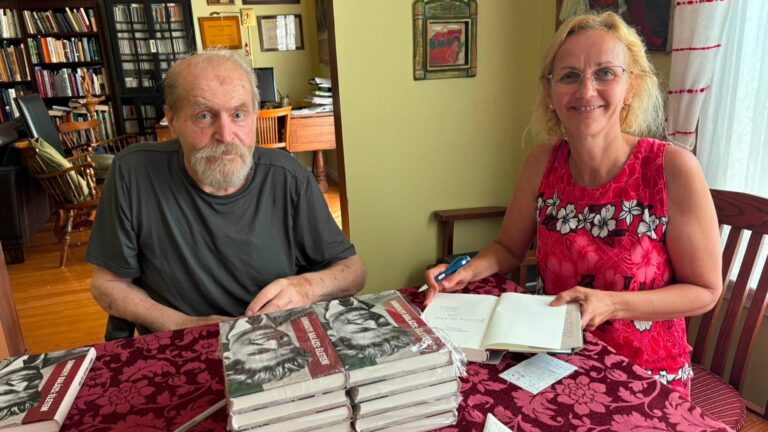
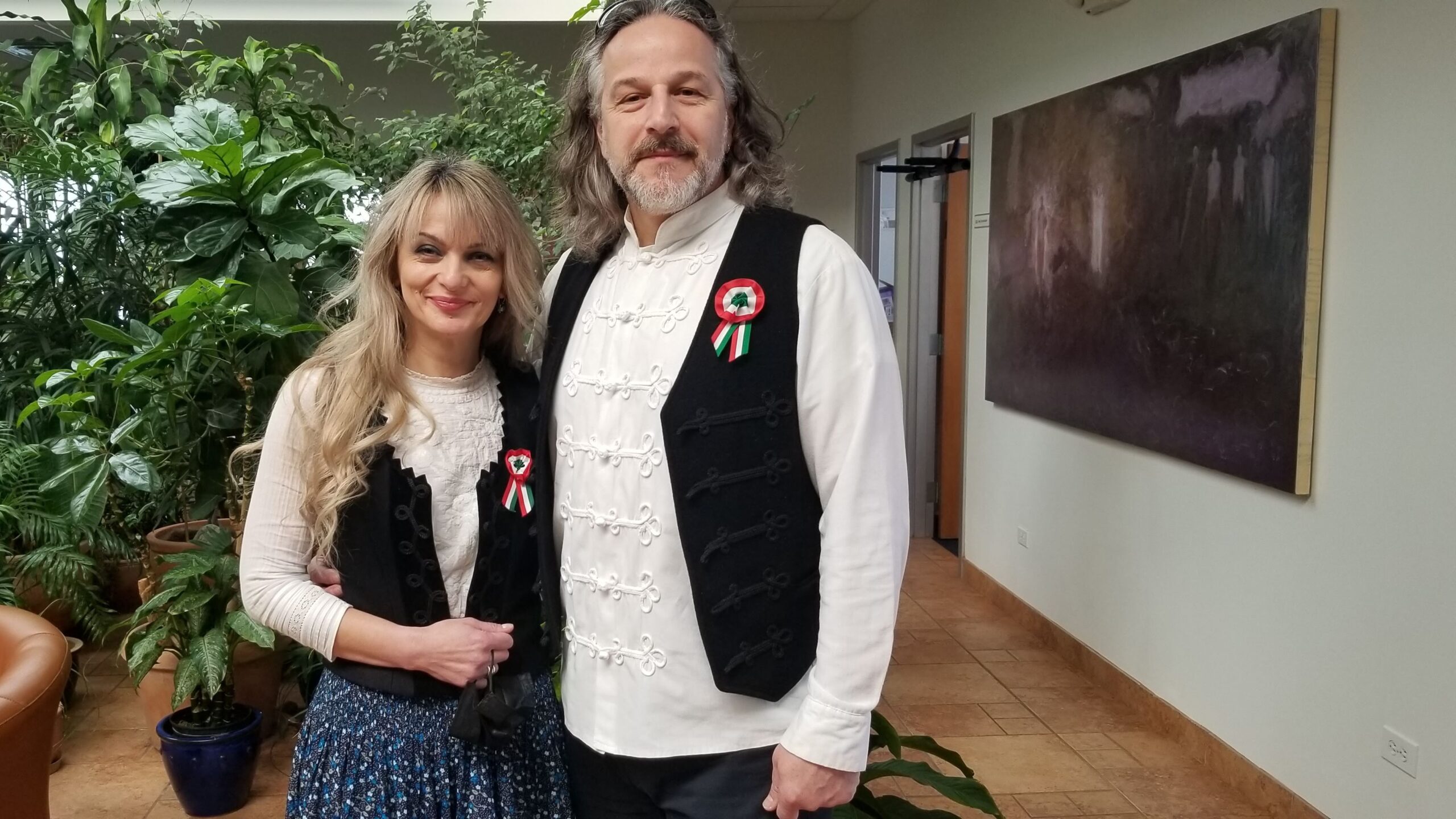
Lóránd Csibi moved with his family from Csíkszereda (Miercurea Ciuc, Transylvania) to the U.S. in 2001. At first, they were connected to a smaller circle of friends and the community of St. Elizabeth’s Catholic Church, but over time, they found it important to meet other local Hungarians and to take part in their community life and organizations. We discussed the perception of Hungarians in Cleveland, his extensive voluntary work and commitment to sports, and the recent visit of the President of Hungary to Cleveland.
***
When did you move to the U.S.?
I grew up and lived for 30 years in Csíkszereda (Miercurea Ciuc, Transylvania). In 1989, while doing my military service, I took part in the revolution in Brassó (Brașov). I had a child at the age of 19. After I divorced at 23, I raised her alone until she was seven, when I married my second wife. After her husband died in a car accident, Zsuzsi was also left alone with her son, so in 1997 we united the two ‘half-families’… We applied for the green card lottery and were selected. We moved here in 2001; our children grew up here; we have two grandchildren.
How did you become involved with the large local Hungarian community?
During 1998–2002, about 15–20 Hungarian families moved here from the same region, roughly the same generation, with small children, who became close friends and continued together the St. Elizabeth’s Church’s community life that we revitalized 25 years ago. For several years, we focused on rebuilding our lives and didn’t establish contact with other local Hungarians, beyond the Catholic community. While working at the Little Budapest restaurant for four years, I met some elderly Hungarian gentlemen and came to understand why it’s important to live one’s Hungarian identity in the diaspora. Later, I also had many conversations about this with Honorary Consul László Böjtös.
My deeper connection to the local Hungarian community began in 2012, when I took on the leadership of Bocskai Radio. With our small, enthusiastic team, we attended every local Hungarian event—that’s when I truly realized how diaspora communities function and why Hungarian identity matters so much to them. I also came to understand the mentality of the different waves of Hungarian emigration to the U.S. Of course, I brought some sense of Hungarian identity from home, but the 18 years of communism and the ten years after the regime change didn’t have as strong an impact on me as my life in Cleveland. I didn’t do folk dancing, nor did I wear a Bocskai suit or Szekler costume, whereas here I do so occasionally; on American ice hockey games, I wear a jersey from the Csíkszereda club—to show that I’m a proud Szekler Hungarian.
Since then, we’ve undertaken extensive voluntary work—whatever was needed: event organization, teaching, reciting poetry, cooking, setting up chairs, etc.—to support the survival of the local Hungarian community. Our foundation was established for the Hungarians of Cleveland—to promote Hungarian community life and strengthen the sense of belonging among them. We work for them together with my wife and my friends, whom I’m grateful to for their support.
Hungarians are highly respected in Cleveland, you said. How does this manifest?
They respect that we also speak our own language, we preserve our traditions, and celebrate our national and religious holidays. When I say I’m Hungarian, many immediately share their personal connections and experiences: stuffed cabbage made by grandma, a kind Hungarian neighbor, etc. I consider it very important that this positive impression of us remains.
In 2015, when the churches of St. Margaret and St. Emeric were closed, other ethnic communities stood by us—they were also affected and felt the power of solidarity. I speak Romanian, and I’m also familiar with the local Romanian community. Through football, I meet many other nationalities—Croatians, Serbs, Italians, Mexicans, Jamaicans—they often say they respect us for what we have achieved. This is especially important this year, the 250th anniversary, when every nationality tries to showcase how it has contributed to America. Hungarians in Cleveland have contributed a great deal to building American society: through communities, built heritage—churches, parks, statues, etc., and several significant scientific and cultural achievements.
‘I should preserve my Hungarian identity and remain a proud Hungarian while becoming a proud American’
At all our national celebrations, the Hungarian flag is displayed on the City Hall, and Niagara Falls is also illuminated in these colors. The clearest sign of respect is when we approach a public officer, such as the mayor, with the news that, for example, the President of Hungary is coming to Cleveland: he’s very happy to support any local Hungarian event—he knows how important the community is. We’ve also met the Governor of Ohio and several other public officials at local Hungarian events, but my greatest personal experience was when I became an American citizen in 2007. At the oath-taking ceremony, the Governor looked at my Bocskai suit, shook my hand for minutes, questioned me thoroughly, and told me: I should preserve my Hungarian identity and remain a proud Hungarian while becoming a proud American. These all, step by step, shaped in my heart the feeling of being a ‘proud Hungarian’ which I’d like to preserve and pass on.
As regards your Hungarian activities, let’s start with Bocskai Radio, which you’ve already mentioned.
In autumn 2006, Tamás Gaudi-Nagy came here to deliver a lecture—at that time, everyone in our small circle was concerned about the fate of the Hungarian nation… In those years, we became good friends with Laci and Gabriella Czár, who led the radio together with Dániel and Mari Kádár, who were planning to move back to Hungary, so in 2009, they invited me to the studio to learn radio broadcasting.
I didn’t have to deal with the technical side; there was another man responsible for that. When the Kádárs moved back home in 2012, I took over and brought Zsuzsi to keep having a female voice. We’d have liked at least one more family to take turns running the weekly show, but unfortunately, no one volunteered. Many people don’t take on responsibility and cannot commit to the long term… We had family and paid jobs—it wasn’t easy to commit to doing it every Sunday and preparing during the week. We were welcomed everywhere with warmth, and everybody knew they could rely on us. In September 2019, we parted ways, but the radio is still highly respected, and I’ve been an external correspondent for the Hungarian Independent Radio of Toronto.
What kind of events usually take place at the Hungarian Club in Hiram?
The Hungarian Cultural Center of Northeastern Ohio, based in Hiram, OH, is one of the oldest local Hungarian organizations, after the United Hungarian Societies (UHS) and the local Hungarian church communities. It owns a 17-hectare wooded area that was originally jointly run with the local Slovak community. When they diminished significantly in the 70s, Hungarians bought them out, promising to hold a joint picnic once a year. At first, there had only been a small clubhouse, then covered pavilions, and later, a Hungarian country house was built. As they wanted to present the different ethnographic regions of Hungarian culture, a Szekler gate was erected in 2006, as the work of a master carver from Transylvania. It was the first monument-like object, followed by a bell tower and the planting of a walnut tree for the centenary of Trianon in 2020.
The area can accommodate 600–700 people. We have four picnics: in June, the picnic with the Slovaks, in July, we combine it with a vintage car exhibition, the August one is generally smaller, the September one is the largest, with a harvest ball, where the Cleveland Regös folk dance group performs, there is live music and vendors. We try to make good use of the club grounds during the rest of the summer weekends—it can be rented out for various events: weddings, scout camping, even hunting. 18 years ago, we started a family camping event of about 150 people. By now, we braid whips, set fires, bake lángos, play soccer, practice archery, boat on the river, hike in the forest, etc. We also carry out some community work—we clean up the forest, repaint or wash surfaces as necessary—helping to ensure the club’s continued existence. On other occasions, we mow the grass, maintain the buildings, etc., on a voluntary basis.
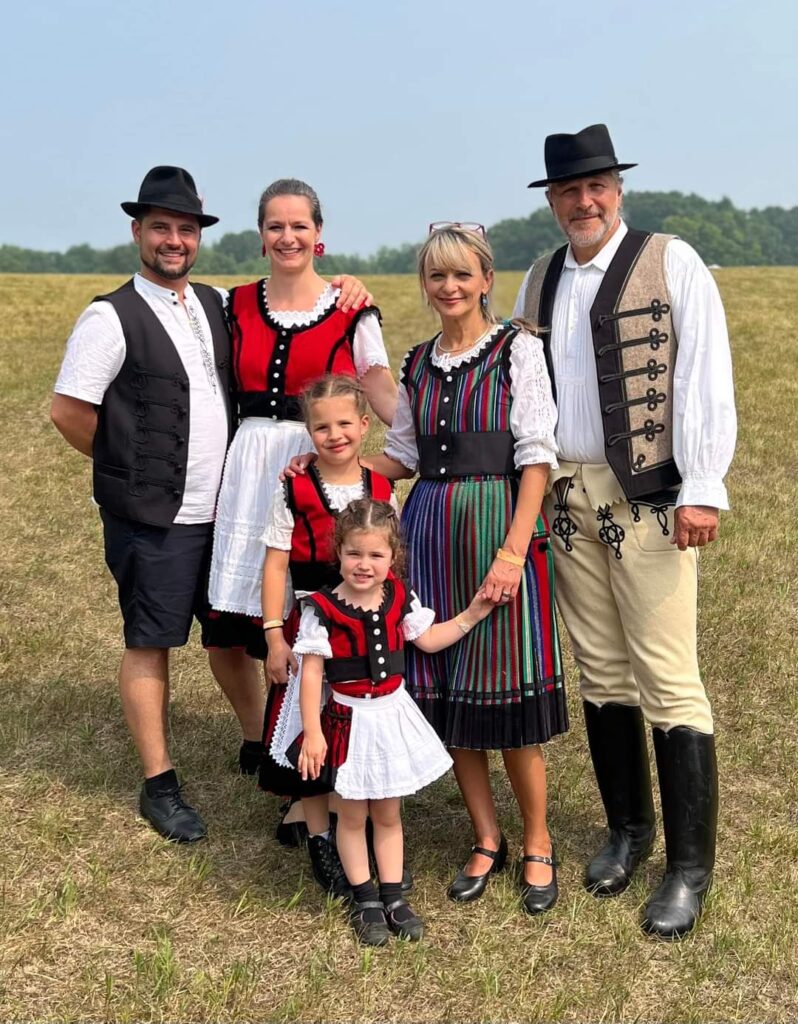
We have 400–500 paying members, there is an entrance fee at picnics, and we often receive one-off donations—the club is viable and sustainable in the long term. At larger events, fewer speak Hungarian, but many of Hungarian descent attend. Of the 13-member leadership, which I’ve been a member of since 2009, only two don’t speak the language, but they’re of Hungarian origin as well.
You are also a member of the Hungarian Association of Cleveland, right?
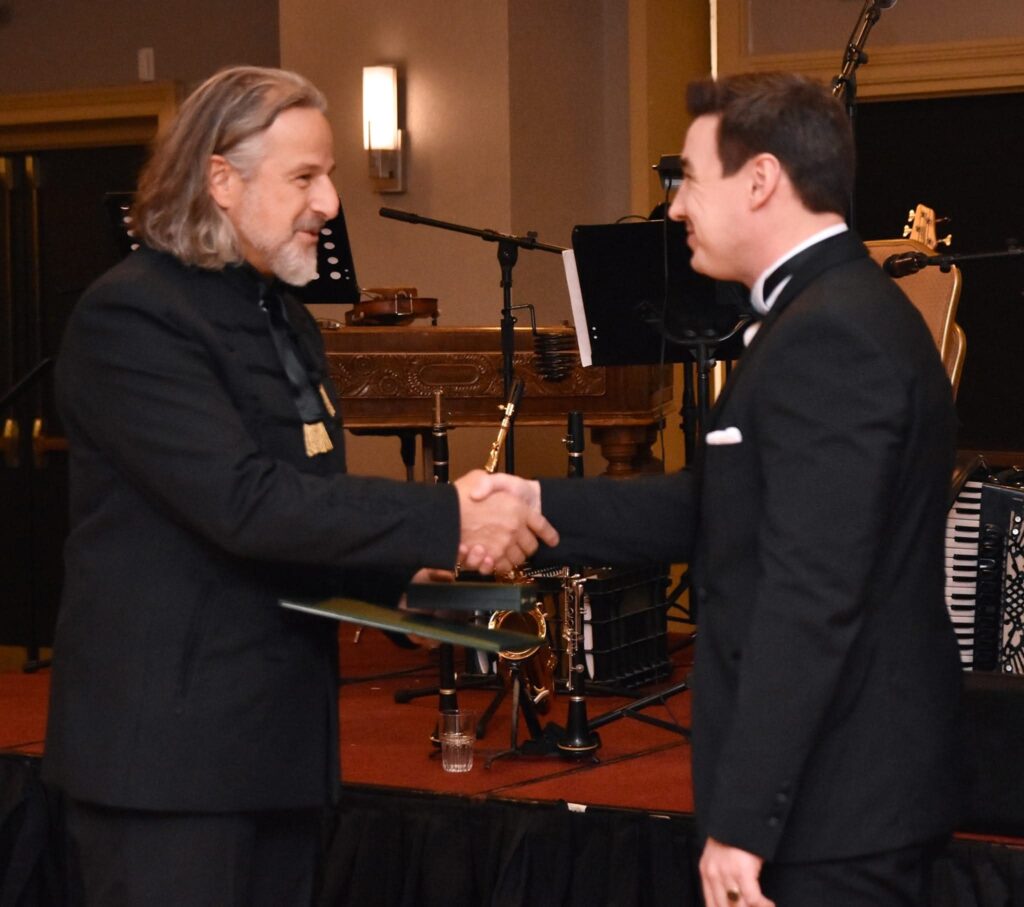
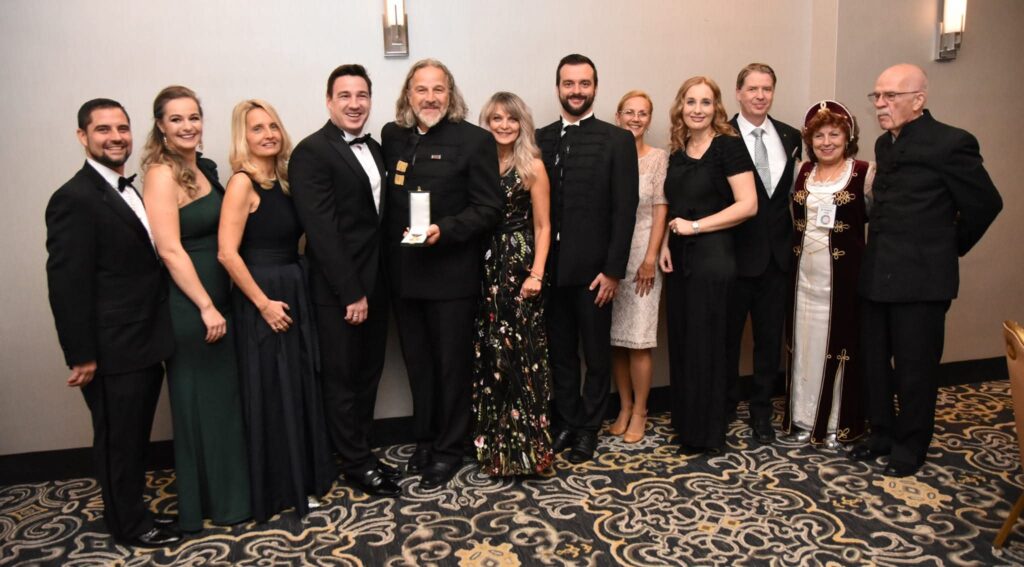
Back in the day, when more and more Szeklers appeared at the annual Hungarian Congress, Gabriella Nádas suggested we should present the Szeklers. That’s when Zsuzsi and I began the series of Szekler evenings: one year we presented Szekler gastronomy, another year history, athletes, traditional costumes, etc. As we took on more—installing the works of caricaturist István Para, photographer Zoltán Kuti, inviting artists of the Hungarian theater of Csíkszereda, recently visual artist László Csomortáni, etc.—they became increasingly interested in our opinion. Since we became organizing committee members, we’ve taken a substantial part in organizing the entire event each year. I’m proud and grateful that in 2024 I received the Hungarian Gold Cross of Merit at their ball, being nominated by the former Hungarian Consul General in Chicago, Tamás Kovács.
Why are sports and the Árpád Cup so close to your heart?
I played soccer back home, and upon arriving, I wanted to get involved in local sports life, but the Budapest Stars met on Sundays, when I was working… I could only train with them properly once I changed jobs in 2005 and my weekends became free. I only then heard about the Árpád Cup—an all-Hungarian football tournament held in Las Vegas, where amateur teams from North America and Hungary compete. After 20 years, in 2016, the organizer announced that he would no longer continue.
We decided not to give up and turned it into a travelling cup: San Francisco undertook the 2017 event, and Toronto in 2018. I organized the Cleveland event in 2019, helped out in Chicago in 2023, and organized the Detroit Cup in 2024, with local help. In 2025 in Miami, I had to organize everything myself from Cleveland, completing it on site—securing football pitches and referees, arranging tables and flags, ordering shirts and medals, organizing the banquet, etc. Accommodation is arranged by participants at their own expense, but the Hungarian state, through György Szöllősi and the State Secretariat for National Policy, provides significant support for the event. In 2026, it will again be in Toronto, and Wisconsin Dells applied for 2027. We wanted to take the 25th event to Hungary, but we’re unable to—it’s our goal for the 30th in 2028.
Sport is also a kind of national bond, where you put on a red-white-green jersey, play against another nation, then sit down, have a beer together, and talk. Soccer has a strong tradition in Cleveland, in which—alongside fencing and table tennis—Hungarians have excelled over the past 100 years. Many young Hungarian players play in university teams—very talented, committed to the sport, and proud of their Hungarian identity. There are many Hungarians in the leadership of the Northern Ohio Soccer Association: Pál Gyékényesi is the president, I’m the secretary, and Kálmán Tóth is the treasurer.
We also began organizing teqball tournaments and introduced the sport into various Ohio soccer academies years ago. The US Soccer Federation realized how important it is for developing players’ technical skills—now it’s present in every academy, and it may be included in the Olympics. When we, four Hungarians from Cleveland, entered the American teqball championship in Detroit, we told everyone this was a Hungarian invention with Hungarian world champions!
You were elected UHS Vice-President for the second time. Was the visit of the President of Hungary the responsibility of this organization?
Founded in 1902, UHS is an umbrella organization that today brings together 15 Hungarian organizations and six Hungarian church communities. Its main task is to organize local commemorations each year for two national holidays (15 March and 23 October), to resolve any issues arising between member organizations, and to represent the Hungarians of Cleveland towards Hungary. Our greatest challenge is avoiding conflicting schedules of Hungarian events, which isn’t always successful, as there are many of us who wish to do many different things, and everyone’s ideas and voluntary work must be respected.
At the request of the Consulate General in Chicago, we coordinated the tasks taken on by the UHS member organizations in relation to the Hungarian President’s visit. The program began on Sunday with Mass at St. Emeric Church, after which they visited the Scout House, then St. Elizabeth’s Church, where they viewed the small museum in the basement, followed by the 15 March national commemoration, where more than 300 people gathered—many came who attend Hungarian events less frequently. On Monday, they visited the Hungarian Museum and the Cultural Garden, met economic professionals at Cleveland State University, and visited the Hungarian weekend school. On Tuesday morning, they laid a wreath at the Kossuth statue, then flew to New Orleans. The President and his family seemed to have a pleasant and productive visit here; he seemed to feel comfortable, gladly exchanging words with anyone.
You’ve represented the local Hungarians at the Diaspora Council twice. Why is this important for you?
Previous UHS President, Andrea Mészáros, was unable to attend the annual meetings in Hungary—I gladly undertook to represent one of the largest Hungarian communities in the North American diaspora. Everyone struggles with similar difficulties—if we share these with each other, we can learn a great deal and feel we aren’t alone with our concerns. I find personal connections very important—I’m happy to go wherever I’m invited. We nurture personal relationships in our private lives, too—we’re happy to host acquaintances arriving for various professional conferences in our house, which is a little Hungarian island. We draw strength from these friendships and strive to pass them on to our children.
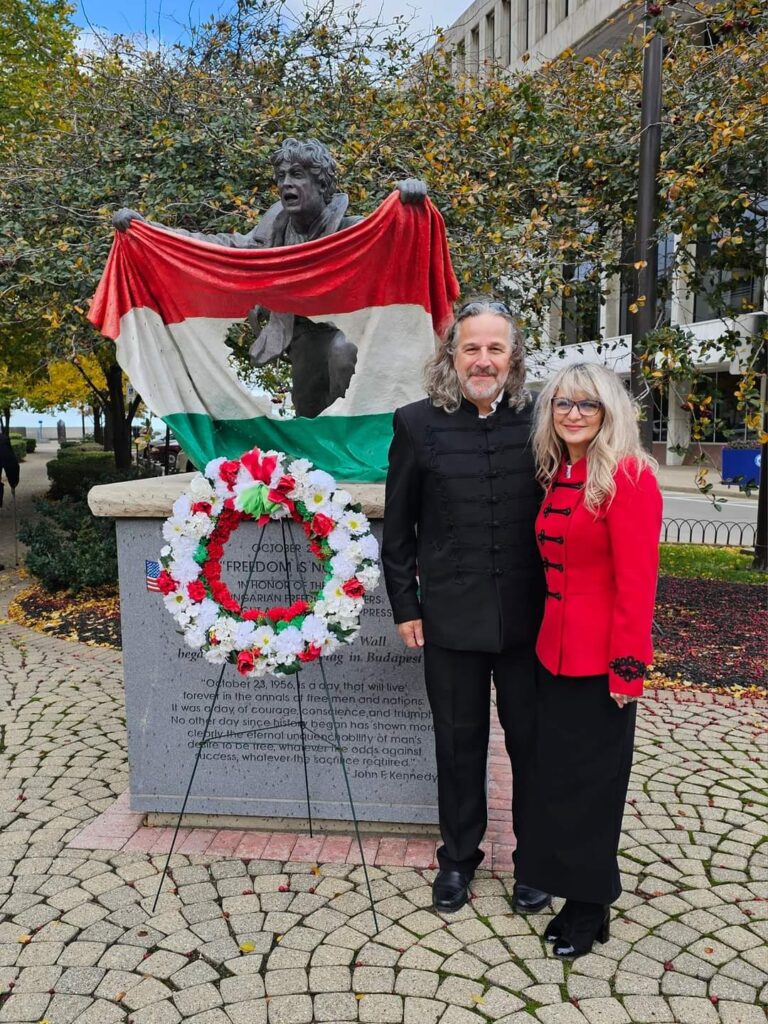
This year, we’ll also commemorate the 500th anniversary of Mohács, the 70th anniversary of the 1956 Hungarian Revolution, and the 65th anniversary of the first Hungarian Congress. Several elders asked me to attend, and to invite those who, for some—usually personal—reasons, drifted away from the community. It’s very important to listen to the whole community and to help bring closer together those who don’t agree with one another, so that as many of us as possible can live our Hungarian identity together—not only on anniversaries, but at least then—thereby also setting a good example for the next generation.
Related articles:
At a time when public debate is increasingly polarized and superficial, Hungarian Conservative remains committed to depth, intellectual honesty, and independent conservative thought.
Producing high-quality journalism requires resources. Your contribution helps us expand our coverage, reach new audiences, and keep our content accessible.

Please consider supporting our mission.