Hungary’s space research and space industry were showcased to strong international interest at the Space‑Comm Expo Europe in London, where the Hungarian stand became one of the conference’s most visited exhibition areas.
According to a statement released on Tuesday by the HUN‑REN Hungarian Research Network, the presentation featured researchers answering professional questions, scientific presentations and a panel discussion involving astronauts from Hungary’s national astronaut programme.
More than 5,000 professionals attended the conference, including researchers, representatives of industrial companies and government officials. Organizers said Hungary’s renewed space research activities, its newly announced strategic space programme and the results of experiments conducted aboard the International Space Station as part of the HUNOR Programme generated significant interest. Visitors to the stand also had the opportunity to meet HUNOR Programme research astronaut Tibor Kapu and trained research astronaut Gyula Cserényi, who is also participating in the programme.
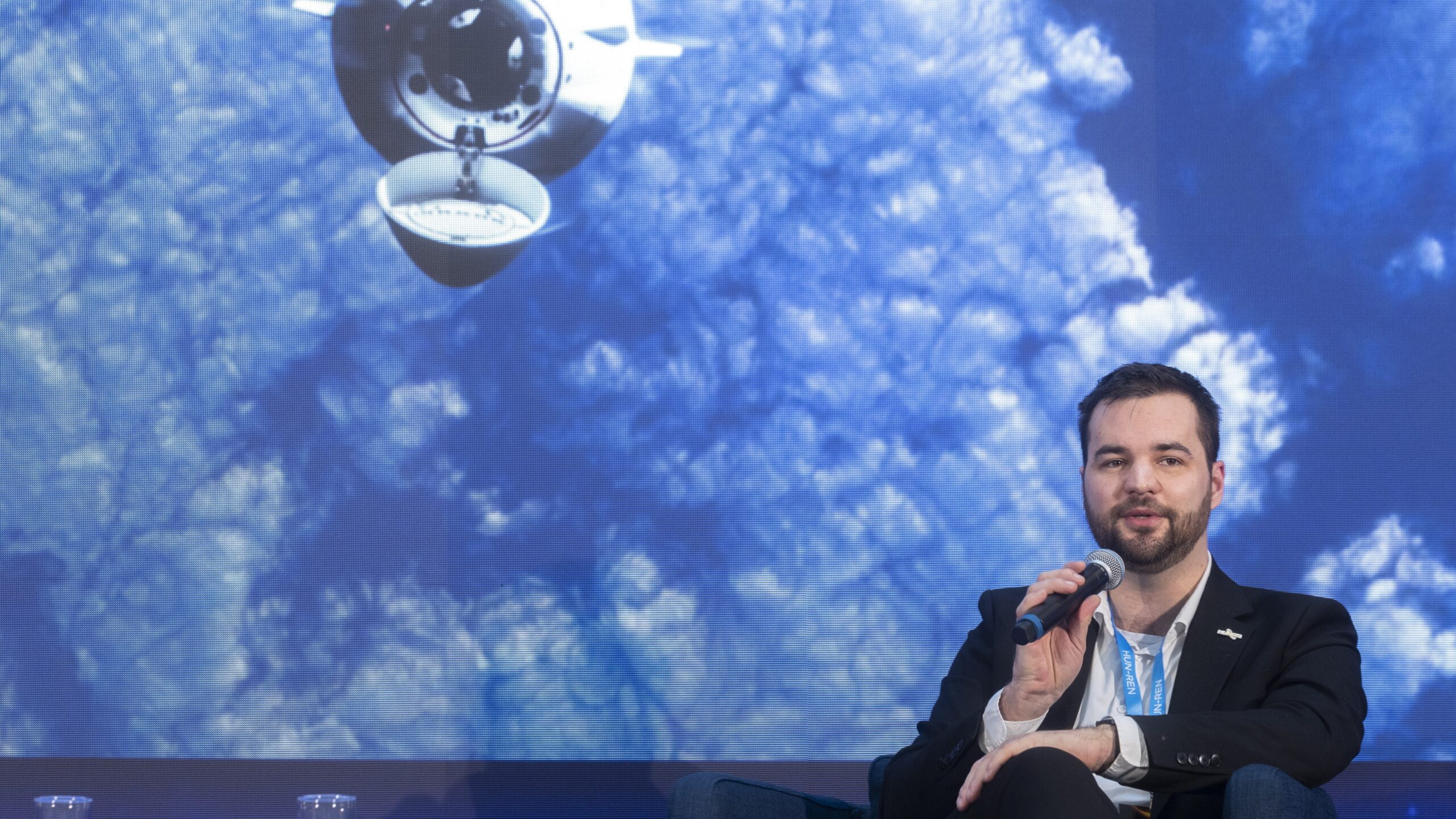
Hungary’s presence was further strengthened by Kapu’s independent presentation about the Axiom Mission 4 and the experiments conducted within the framework of the HUNOR Programme. Following the talk, he joined a panel discussion alongside British astronaut and Axiom Space strategic adviser Tim Peake, one of the conference’s featured speakers, as well as HUN-REN Scientific Vice-President for Engineering and Natural Sciences Zsolt Szalay. According to the statement, space-related research within the HUN-REN network currently involves around 160 researchers working in roughly two dozen research groups across eight institutes. Four institutes and four individual researchers represented the network at the exhibition. The organizers noted that the unified Hungarian presence demonstrated the advantages of cooperation between different scientific fields and institutions.
‘Space-related research within the HUN-REN network currently involves around 160 researchers working in roughly two dozen research groups across eight institutes’
Speaking at the panel discussion, Szalay highlighted that the rapidly expanding space industry offers countries the size of Hungary a chance to gain a competitive advantage by focusing on a few strategically important areas and reaching the global forefront in those fields. He added that the comprehensive space research programme announced last month aims to strengthen synergies among research groups. According to Szalay, presenting these capacities together also improves Hungary’s ability to negotiate with major international partners from both the scientific community and the business sector.
During the two-day event, Hungarian representatives received several inquiries from major space industry companies, including firms involved in future lunar missions. Talks with these partners are expected to continue in the near future. One of Hungary’s most internationally recognized areas of expertise in space science is radiation measurement and dosimetry. The first version of the PILLE dosimeter was deployed in space in the 1970s, and since 2003, it has been standard equipment on the International Space Station. The device remains the only instrument capable of measuring the additional radiation dose astronauts receive during spacewalks.
Hungarian researchers have also achieved notable results in the development of small satellites and in the study of space weather.
The country’s scientific infrastructure also supports these efforts. Facilities such as the Zero Magnetic Laboratory near Sopron and the particle accelerators of the Institute for Nuclear Research (ATOMKI) in Debrecen, which simulate the effects of the solar wind, provide internationally competitive research opportunities.
According to HUN-REN, Hungary has the potential to play a greater role in international scientific and industrial cooperation, including programmes led by the European Space Agency and NASA.
The network said that Hungary’s first participation at Space-Comm Expo Europe demonstrated the value of presenting the country’s space research and industrial capacities in an integrated way to the international community.
Related articles:
At a time when public debate is increasingly polarized and superficial, Hungarian Conservative remains committed to depth, intellectual honesty, and independent conservative thought.
Producing high-quality journalism requires resources. Your contribution helps us expand our coverage, reach new audiences, and keep our content accessible.

Please consider supporting our mission.