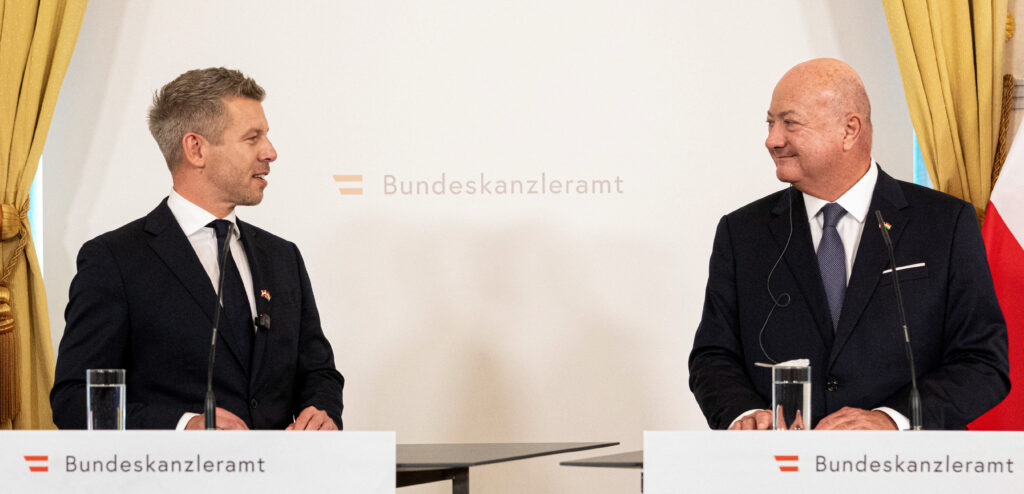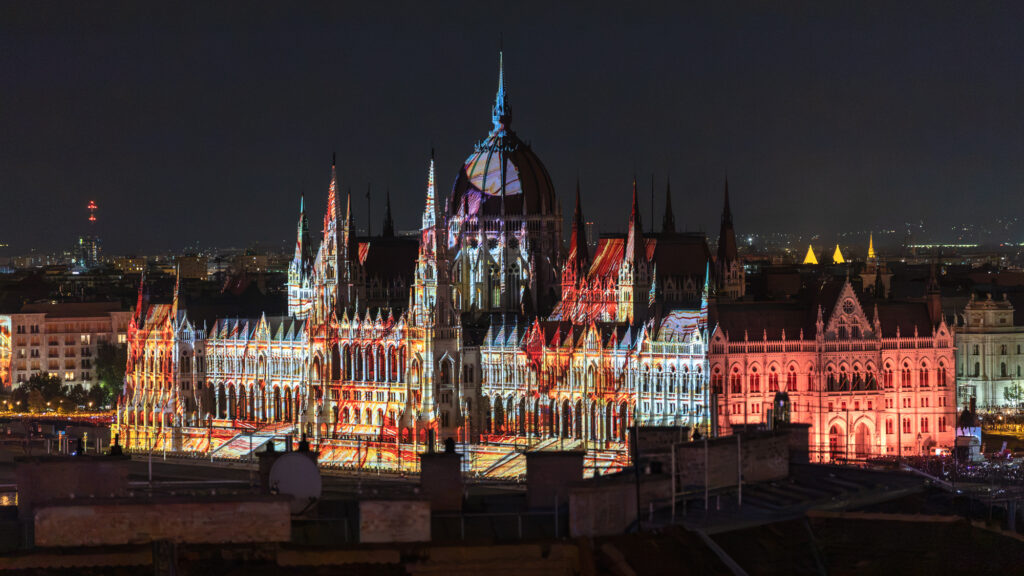
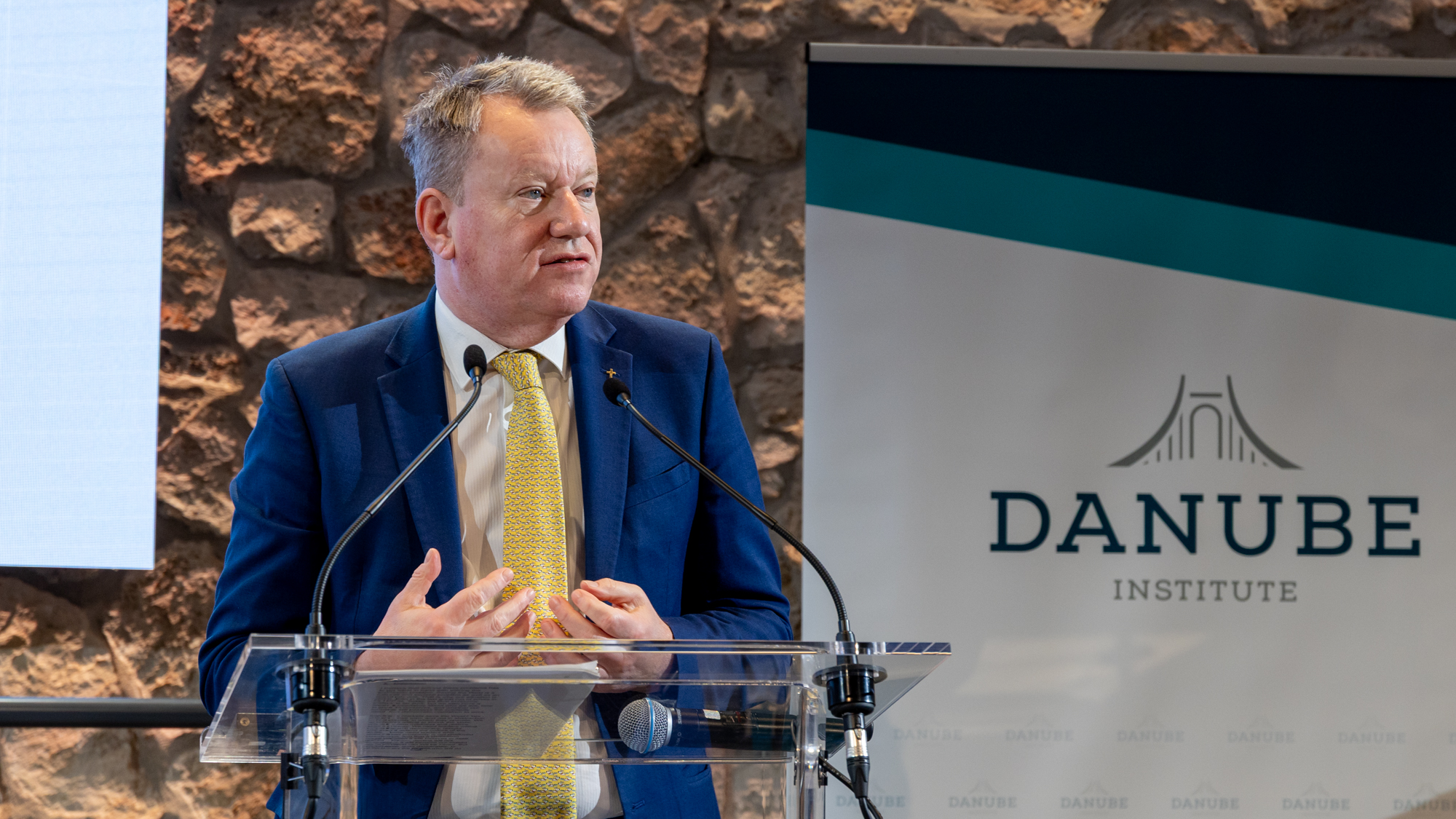
The Free Market Road Show, organized by the Danube Institute and the Austrian Economics Center, was held for the 11th time in Budapest on Thursday, 19 March. The conference, featuring prominent speakers from the worlds of business, investment, and politics, focused on one of the key questions of our time: whether free markets can save Western civilization.
Delivering a presentation at the event, the UK’s former Chief Brexit negotiator and Director General of the Institute of Economic Affairs (IEA), David Frost, argued that free markets could help save the West—but they are not some kind of superweapon, rather part of the solution. He said that the stagnation of European economies is not accidental, but the result of policy choices that have undermined growth and confidence.
Mr Frost pointed to the stark contrast between how the United States has managed to maintain relatively strong GDP growth, while major European economies such as France, Germany, and Italy have become increasingly characterized by high taxation, expansive welfare systems, and ever-growing state intervention.
These already flawed models have been compounded by misguided energy policies, such as the sacrifice of nuclear power on the altar of the green transition. This, Mr Frost continued, has led to a decline in energy production unprecedented since the industrial revolution. ‘When energy is too expensive, everything becomes more expensive,’ he stressed, warning that government-imposed limitations on energy supply are directly holding back economic growth.
Frost argued that reversing these trends—including abandoning the EU’s current energy framework—could yield significant economic benefits, while also restoring the sense of dynamism and confidence that he sees as essential for the revival of the West.
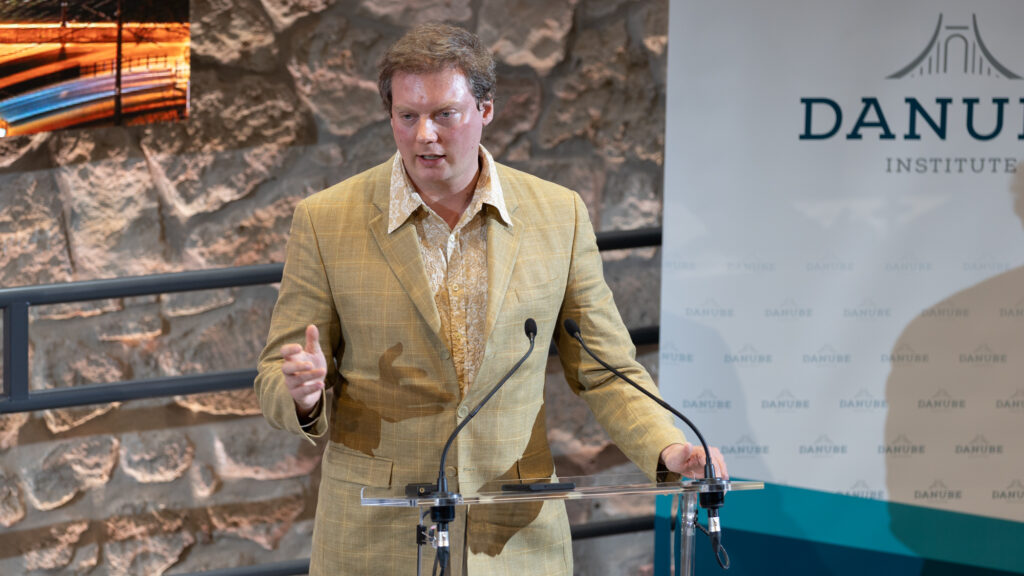
Addressing the question of whether the West is in decline, Max Rangeley, editor of The Cobden Centre and author of The Age of Debt Bubbles (2025), argued that today’s challenges must be understood against the backdrop of an otherwise ‘extraordinary period of economic history’ that saw centuries of rising prosperity, living standards, and life expectancy.
However, he warned that a reversal is now underway, noting that millennials have become the first generation since the industrial revolution to be poorer than their parents—a trend he believes is no longer temporary but structural.
Rangeley linked this development to deeper civilizational dynamics, arguing that ‘civilizations don’t die due to murder but rather to suicide’, pointing to what he described as a growing ‘civilizational winter’ marked by declining self-confidence, excessive bureaucratization, and the erosion of shared values.
He also cautioned that technological optimism may be overstated, as advances such as artificial intelligence have so far failed to deliver the expected productivity gains, reinforcing the sense that the West is losing both its economic dynamism and cultural momentum.
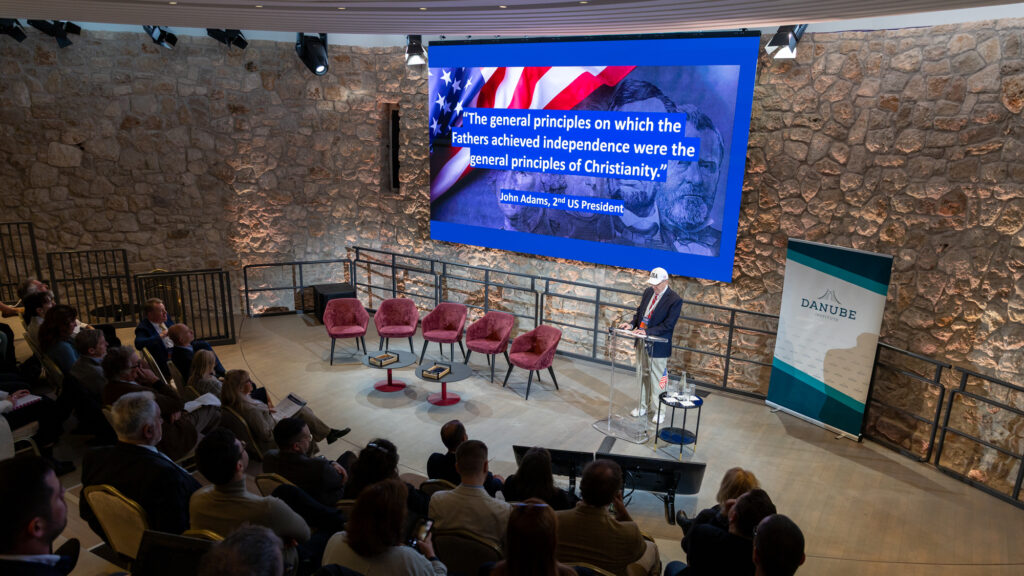
In his keynote address, founder and CEO of American Values Investments Carter LeCraw argued that the success of free markets ultimately depends on the strength of free nations, describing Hungary as a ‘bastion of the free world’ in this regard.
Presenting his concept of ‘compassionate capitalism’, he emphasized that the United States’ position as the world’s leading economy is deeply rooted in its foundation on Christian and biblical values, which shape not only individual behaviour but also business practices and long-term economic growth.
According to LeCraw, these values are cultivated first within families and then carried into the marketplace, providing a moral framework for investment and decision-making. He advocated a model of investing that consciously aligns with these principles, arguing that value-based capitalism offers both economic and civilizational resilience.
Echoing this perspective, he referenced Hungarian Prime Minister Viktor Orbán’s remarks at CPAC 2022, highlighting the role of Judeo–Christian values in guiding societies in distinguishing right from wrong.
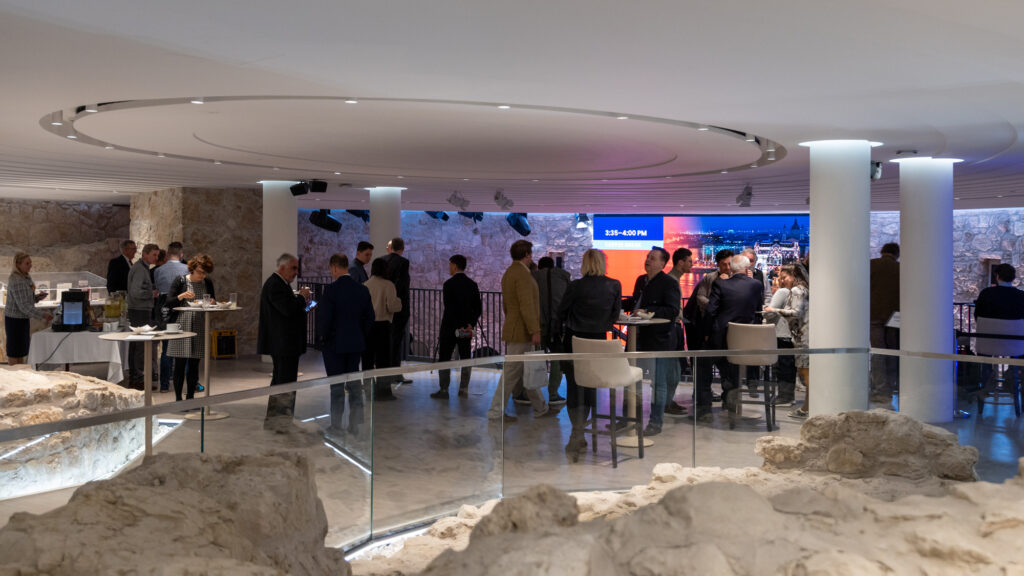
The role of technology in the rise—and possible fall—of Western civilization was also discussed at the conference. In his presentation, British financial historian, author, and strategist Edward Chancellor examined the phenomenon of artificial intelligence and whether it represents another bubble waiting to burst.
Defining a bubble as a ‘mass delusion’ in which public perception becomes detached from underlying reality, he argued that current enthusiasm around AI exhibits many of the features seen in past technology-driven manias.
These include extravagant—yet superficially plausible—claims about transformative productivity gains and even the reshaping of human society, coupled with a climate of abundant liquidity, strong investor optimism, and a surge of new companies and publications promoting the technology’s potential. Chancellor noted that such periods are often characterized by the suspension of traditional valuation metrics and a significant overcommitment of capital, which ultimately depresses long-term returns.
In the case of AI, he warned that investment inflows have already surpassed those seen during the dot-com era, while risks are further amplified by rising debt levels and off-balance-sheet exposures. Given that the technology remains relatively immature, he suggested that the current trajectory closely resembles previous bubbles—which, by definition, eventually burst.
The Free Market Road Show concluded with a panel discussion featuring Barbara Kolm, Director of the Austrian Economics Center and President of the Hayek Institute; Drew Bond, Co-founder and Executive Chairman of the Conservative Coalition for Climate Solutions (C3 Solutions); Szabolcs Pásztor, economist and Research Director at the Oeconomus Economic Research Foundation; and Visiting Fellow at the Danube Institute Philip Pilkington. The discussion focused on the importance of affordable and reliable energy supplies for prosperity.
Related articles:
At a time when public debate is increasingly polarized and superficial, Hungarian Conservative remains committed to depth, intellectual honesty, and independent conservative thought.
Producing high-quality journalism requires resources. Your contribution helps us expand our coverage, reach new audiences, and keep our content accessible.

Please consider supporting our mission.