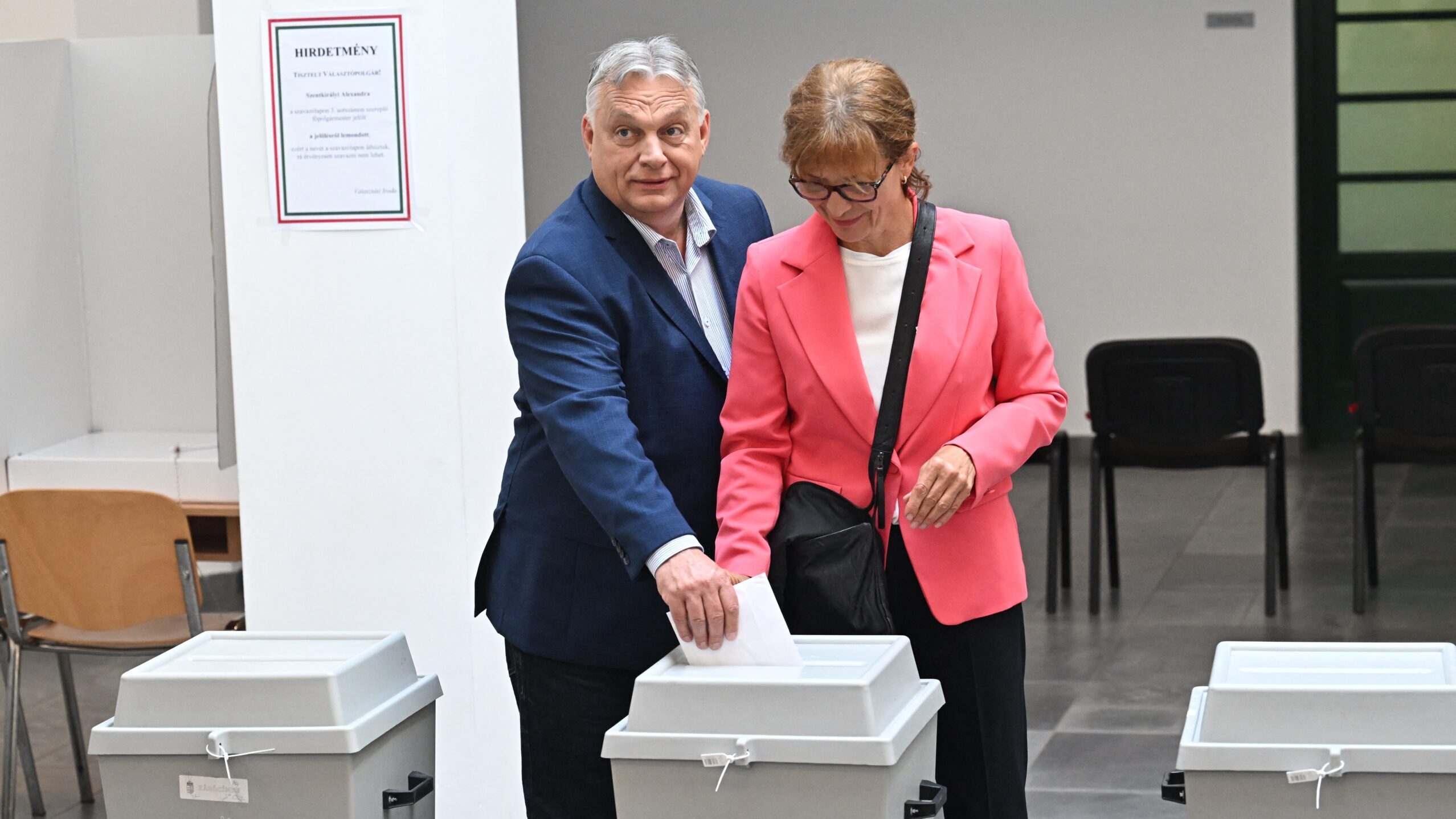
An international election observation mission has been launched to monitor Hungary’s upcoming high-stakes parliamentary elections on 12 April, with Polish lawyer Jerzy Kwaśniewski announcing that he will serve as co-chair of the initiative, which brings together nearly 100 observers from across four continents.
Kwaśniewski, president of the legal think tank Ordo Iuris, said in a post on X that the mission is being deployed ‘in an unprecedentedly polarized environment’ and aims to provide ‘verified, reliable data on the campaign and the integrity of the electoral process’. The initiative operates under the name Liberty Coalition for a Free and Fair Election (LCFFE).
According to a statement released by LCFFE, the mission will assess whether Hungary’s electoral process is conducted ‘in a lawful, transparent, and democratic manner’, including whether voters are able to express their political will freely and without undue influence, and whether the final results reflect that will.
LCFFE is composed of observers from Argentina, Austria, Czechia, Kenya, Poland, Germany, Italy, Spain, Serbia, Tanzania, and the United States. Many participants are affiliated with professional organizations and research institutes, while an eight-member expert group is set to begin work two weeks ahead of election day. Additional observers and analysts are expected to arrive in Hungary on a rolling basis.
‘LCFFE is composed of observers from Argentina, Austria, Czechia, Kenya, Poland, Germany, Italy, Spain, Serbia, Tanzania, and the United States’
The mission will cover the entire electoral process, including consultations with electoral authorities, constitutional institutions, political parties, media actors, and civil society representatives. On election day, LCFFE observers will be present at polling stations across the country. The mission’s stated objective is to produce a comprehensive and evidence-based assessment of both the conduct of the vote and the broader electoral environment.
The organizers emphasize that LCFFE will operate in line with established international standards, including the Venice Commission’s Code of Good Practice in Electoral Matters and the 2005 UN Declaration of Principles for International Election Observation.
In line with these frameworks, LCFFE has adopted a set of operational principles. Observers are required to remain politically neutral, refrain from any interference in the electoral process, and base their conclusions exclusively on ‘factual and verifiable evidence’. They must also comply with Hungarian law and maintain a professional and impartial public posture throughout the mission.
The initiative is co-led by Kwaśniewski and US communications specialist Anna Wellisz. According to the organizers, LCFFE’s findings are intended to provide ‘a factual common point of reference’ for all stakeholders, including political actors and the broader public.
The establishment of LCFFE comes amid criticism surrounding the ongoing observation mission of the Organization for Security and Co-operation in Europe (OSCE), which is also monitoring the Hungarian elections. Media reports emerged earlier in March that the OSCE assigned Daria Boyarskaya, who worked for many years as an interpreter for Russian President Vladimir Putin, to help coordinate the body’s mission to monitor the election. Boyarskaya is currently a senior adviser at the OSCE Parliamentary Assembly. Hungarian NGOs have protested against the decision.
‘Legitimacy concerns were already part of the Hungarian opposition Tisza Party’s narrative’
Against this backdrop, LCFFE argues that an additional international observation effort is warranted. The initiative is described as a complementary effort aimed at reinforcing confidence in the electoral process through ‘qualified and impartial’ monitoring.
LCFFE expressed hope that the presence of multiple observation missions will contribute to adherence to international best practices and support what it describes as ‘the genuine act of democratic elections’, emphasizing that electoral legitimacy ultimately rests on the free expression of the people’s will.
Legitimacy concerns were already part of the Hungarian opposition Tisza Party’s narrative, which has accused Prime Minister Viktor Orbán and his Fidesz–KDNP alliance of committing systematic voter fraud, voter-buying, and chain voting. A recently released documentary claimed that Fidesz–KDNP is exploiting vulnerability and economic dependence in impoverished communities, allegedly affecting up to 600,000 voters.
Orbán has also been accused of cooperating with Russia to influence the election by Western mainstream media and the opposition, potentially to reinforce the ‘stolen election’ narrative, under which an electoral defeat could be framed as illegitimate.
Related articles:
At a time when public debate is increasingly polarized and superficial, Hungarian Conservative remains committed to depth, intellectual honesty, and independent conservative thought.
Producing high-quality journalism requires resources. Your contribution helps us expand our coverage, reach new audiences, and keep our content accessible.

Please consider supporting our mission.