The first post-election polling data in Hungary have been published, signalling a widening gap between the Tisza Party and Fidesz–KDNP. The incoming governing party has strengthened its support to 66 per cent among voters with a party preference, while Viktor Orbán’s party alliance has fallen to 25 per cent, marking a 13-per-cent decrease since the election.
The hard-right Our Homeland (Mi Hazánk) stands at 6 per cent, with no significant change. The survey was conducted by Medián, which was among the most accurate pollsters in projecting the election results in terms of seat distribution.
Data for the total voting-age population are even more unfavourable for Fidesz: the party stands at 21 per cent, while Tisza is at 56 per cent. It was 14 years ago that support for Viktor Orbán’s party last fell to such levels, when some pollsters measured Fidesz at around 15–20 per cent. However, this occurred in the middle of a government cycle, not immediately after an election.
The sharp increase in Tisza’s support is not surprising. It can be attributed to the so-called ‘bandwagon effect’ or ‘honeymoon effect’: following a decisive electoral victory, many voters tend to align themselves with the winning party, even if they voted differently just a week earlier.
‘It was 14 years ago that support for Viktor Orbán’s party last fell to such levels’
This trend is evident not only in party preferences but also in how voters recall their own choices: 59 per cent of respondents claim they voted for Tisza, while the actual figure was 53 per cent. In contrast, only 26 per cent say they voted for Fidesz–KDNP, compared to the actual 39 per cent.
A marked shift is also visible in public sentiment. According to data reported by HVG, 54 per cent of respondents believe the country is heading in the right direction since Tisza’s victory, representing a 21-point improvement. Meanwhile, the proportion of those who believe the country is heading in the wrong direction has dropped to 27 per cent, a 33-point decline.
Fidesz in Deep Crisis
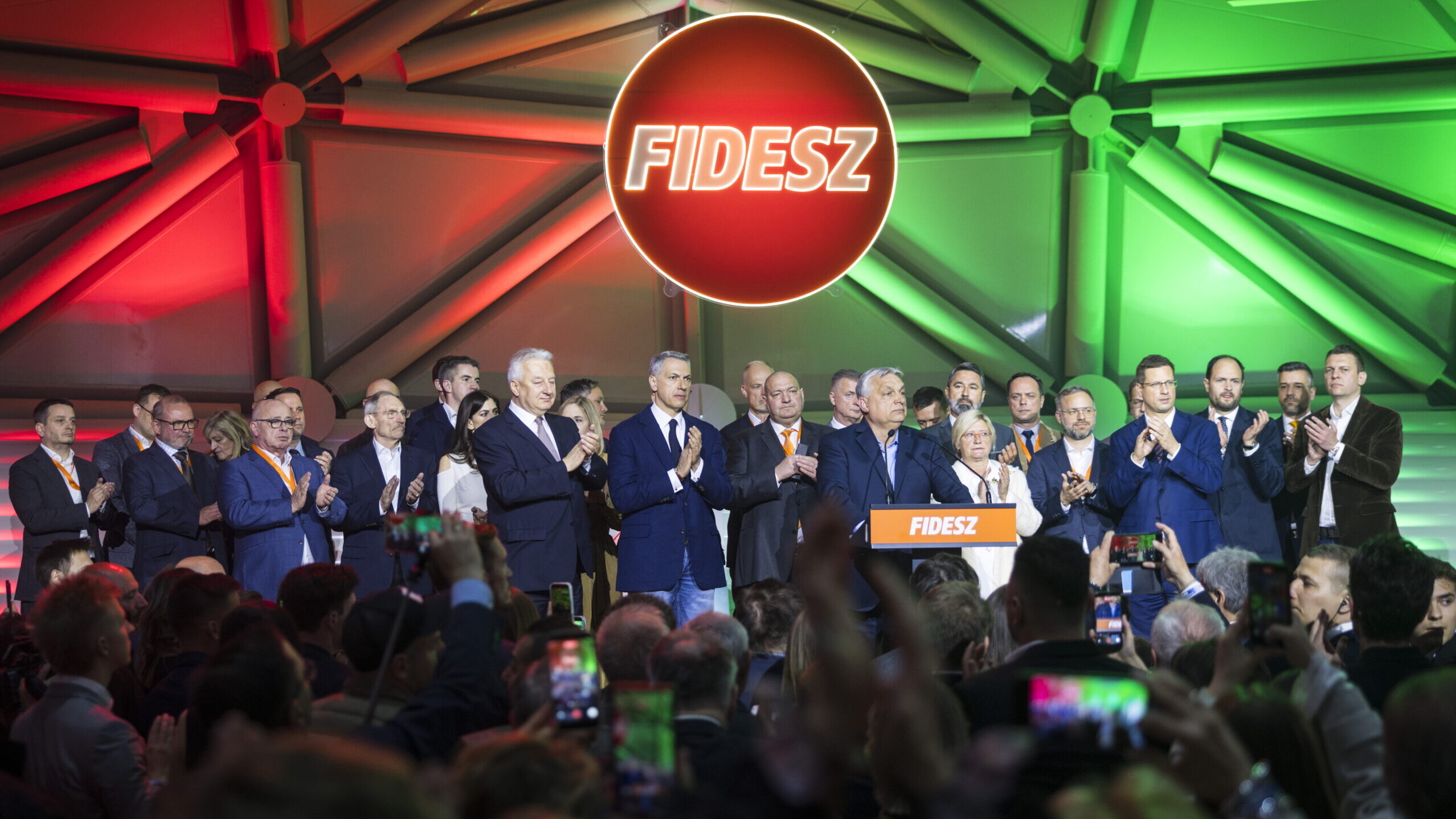
While it is still too soon to draw long-term conclusions, it is clear that Fidesz–KDNP is facing a serious crisis, which is also a natural consequence of a historic defeat, particularly after 16 years in power and four consecutive constitutional supermajority victories. This uncertainty is reflected in statements from Fidesz–KDNP politicians at different levels of the party hierarchy.
Speaking to Patrióta last Thursday, Orbán claimed full responsibility for the defeat and said that the party’s congress would elect new leadership in the coming period, as the community requires a comprehensive reassessment of strategy and renewal. This sentiment was echoed by senior party figures, including Orbán’s campaign chief Balázs Orbán.
‘We need to finally cut out that diseased part from our community’
However, more critical voices have also emerged from within Fidesz. Outgoing ministerial commissioner Orsolya Ferencz argued that the defeat was not merely the result of a poor campaign, but rather the consequence of accumulated mistakes over recent years, including corruption that had not been adequately addressed within the party. She emphasized that those responsible must step down, otherwise the right wing would be ‘digging its own grave’. ‘We need to finally cut out that diseased part from our community,’ she said.
Fidesz MP candidate Nóra Király criticized both the tone of the campaign and the party’s internal operations, while apologizing for the ‘hate campaign’. She warned that the party would fail to learn from the defeat if it continued with the same tactics and personnel. She also raised the issue of leadership accountability, stating that she was surprised that Viktor Orbán had not resigned immediately after the defeat.
Similar criticisms have been voiced by veteran Fidesz mayor of Székesfehérvár András Cser-Palkovics and other party figures.
Related articles:
At a time when public debate is increasingly polarized and superficial, Hungarian Conservative remains committed to depth, intellectual honesty, and independent conservative thought.
Producing high-quality journalism requires resources. Your contribution helps us expand our coverage, reach new audiences, and keep our content accessible.

Please consider supporting our mission.