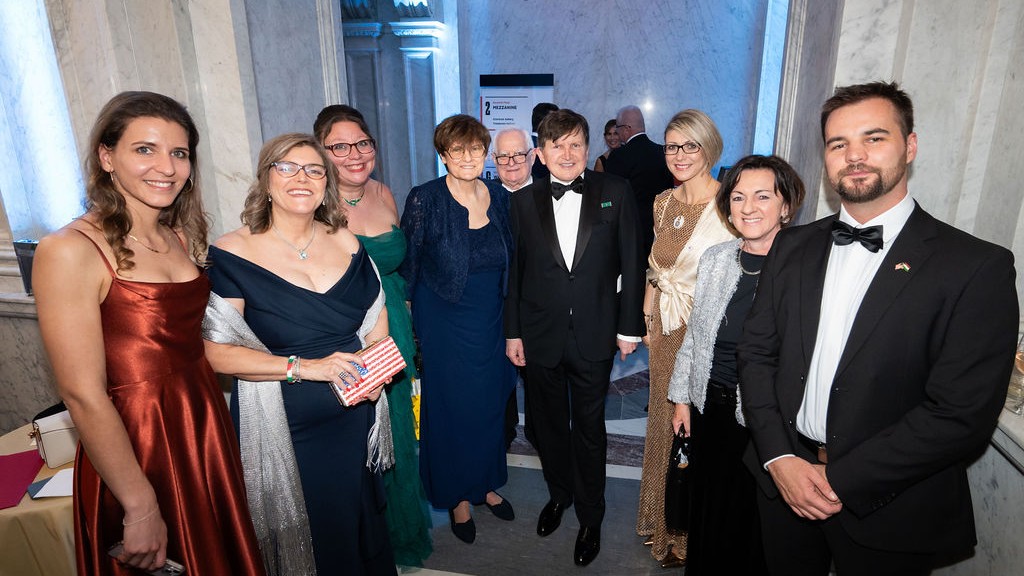
The leader of the Hungarian American Coalition (HAC), Andrea Lauer Rice had a vision 18 months ago to create a memorable celebration in 2026, i.e. during the U.S. 250th anniversary period honoring the Hungarian contribution to the U.S. Her dream came true with a three-day mega event in (and around) Washington, D.C., starting with the Hungarian Heritage Festival in McLean, Virginia and concluding with a USA250 Gala with 420 participants at the Library of Congress. This series of events was organized in collaboration with and supported by several Hungarian American organizations, such as the American Hungarian Foundation (AHF), the Tulipán Foundation, the Kossuth Foundation, and the Hungary Foundation.
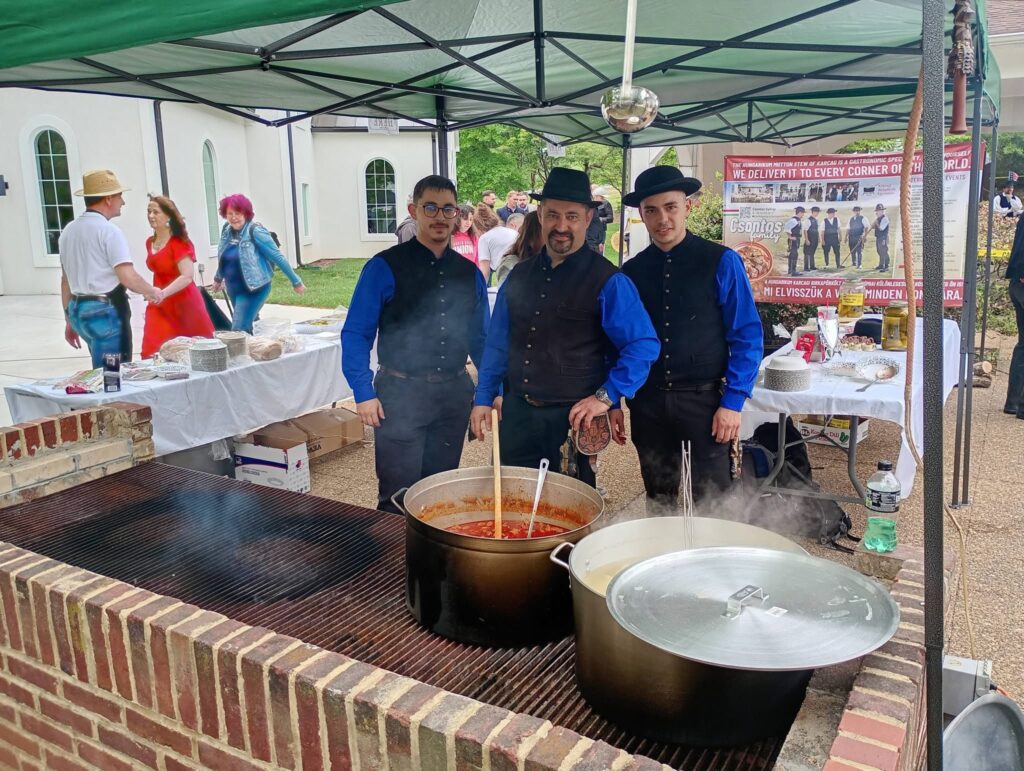
The first related event, the annual Hungarian Heritage Festival organized by the Kossuth Foundation, led by Sándor Végh and having its fifth occasion in McLean, Virginia, on April 25, was, as the organizers claimed, ‘more than an event—it was a journey to Hungary without leaving Washington, D.C.’ Hungarian food and artisans, folk music and folk dance were available all day. The traditional Hungarian mutton stew cook Csontos family ‘proudly represented Karcag and the Kunság’ and mentioned that it was an honor for them to be part of this special event, where they could meet several ‘old’ Hungarian American friends. ‘These experiences reinforce our belief that what we stand for has a place in the world!’ board member (of the Karcag Mutton Cookers Association) György Csontos said. As HAC Vice President, Honorary Council Piros Pazaurek highlighted, it felt like ‘a big Hungarian American class reunion, where we kept running into people we’ve worked with, met, or represented shared causes with over the past ten years.’
The celebration continued on 26 April, Sunday, with the opening of The Martians exhibition, where Nobel laureate Katalin Karikó was also present, followed by the Hungarian American Coalition’s (HAC) HYPE (Hungarian Young Professional Engagement) program, both in the Kossuth House in Washington, D.C., with a significant turnout.
During May, visitors can explore an unconventional, book-shaped installation that presents the lives of some of the greatest Hungarian scientists of the 19–20th centuries in an engaging and entertaining way—characters such as John von Neumann, Leo Szilard, and Theodore von Kármán, whose work still continues to shape the world today. As Balázs Gulyás, president of HUN-REN (Hungary’s leading national research organization) and curator of the outdoor, interactive traveling exhibition, told M1: ‘America is a large and prosperous country that has attracted talented individuals from all over the world—that’s how it reached such a high level also in science. Through the exhibition, Americans can learn about the remarkable contributions Hungarian scientists have made to this success.’ The project included a comic named The Martians – The Nobel Prize-Winning Scientists (all participants of the USA250 Gala received a print copy as a farewell present) which is an entertaining ‘journey into the world of science, creatively presenting the geniuses whose discoveries changed the world, while using humor and a style that makes complex topics easy to understand, and proving that science isn’t boring, but actually incredibly cool’, as its developers claimed. They also showcased the Martians board game, featuring real Nobel Prize winners and legendary Hungarian minds, allowing players to build teams for various creative research projects by collecting world-famous Hungarian scientists and using them as part of their strategy.
The HYPE’s Next 250 event offered a glimpse into the ideas and initiatives being built by the next generation of Hungarian American leaders. Guests could walk through Biophilia by Dániel Barabási, an exhibition that blends science and fine art to explore the tension between natural systems and the structure of modern urban life. The pieces bring together Transylvanian landscapes, urban scenes from Budapest, and neuronal images from the fly brain, creating a surreal final work that connects biology, environment, and human experience. Participants could also get a live demo of the latest innovation in the education space, as Barnabás Novák introduced ClassMateAI, an AI-powered tool designed to support both students and teachers in the classroom. The event also marked the launch of an online auction hosted by the Nás brothers, offering guests the opportunity to bid on cultural and artistic pieces. Among the highlights were a Viski oil painting and a commemorative stamp set honoring John von Neumann, with proceeds to be donated to the HAC. Later on, guests gathered to enjoy Greek ice cream from Yala Greek Ice Cream, co-founded by Salah Czapary, creating the perfect atmosphere for networking and making new connections. As highlighted by HAC president Andrea Lauer Rice, the HYPE Future Leaders Program is now accepting applications by May 31—a six-month experience designed for ambitious young Hungarian professionals and Hungarian Americans looking to grow their leadership skills, expand their network, and take on meaningful roles within their communities.
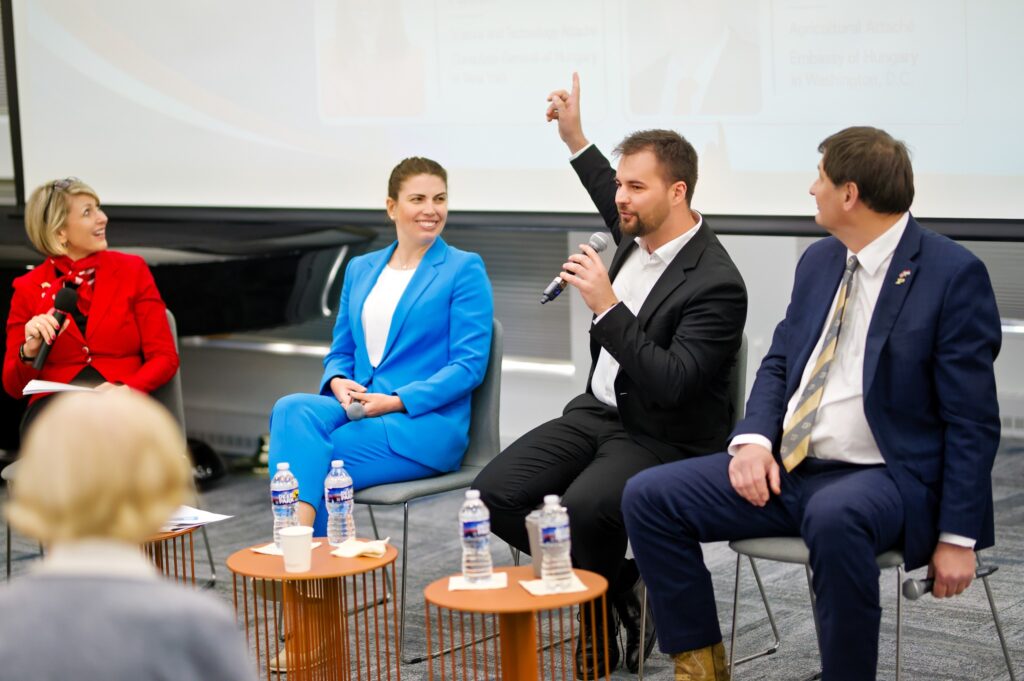
On Monday, 27 April, two side events took place simultaneously at the Embassy of Hungary in Washington, D.C. The first was titled ‘Science Meets Business: Hungarian–American Perspectives’ and organized by Piros Pazaurek, who talked with Tibor Kapu, Hungary’s second research astronaut, representing the HUNOR Program.
‘Living near the Space Coast, you inevitably look at space a little differently. In Central Florida, space is not an abstract or distant idea—it’s part of everyday life. Launches, universities, research, innovation, industry, and economic development all come together in an ecosystem we can learn a great deal from. That’s why this year, instead of organizing the Hungarian Summit separately, we dedicated our energy and spirit to the HAC USA 250 celebration weekend. Our goal was to show why the connection between science, higher education, innovation, and business matters so much, and what Hungary can learn from the American way of thinking in this field,’ she explained, adding: ‘from the perspective of the “Space Coast”, this is especially visible. Institutions such as the University of Central Florida are not simply educational centers—they are active parts of a larger ecosystem where talent, research, workforce development, industry, and strategic growth all reinforce one another. This may be one of the most important lessons of all: innovation becomes truly powerful when it is connected to institutions, partnerships, and real-world application. There was one message I felt especially important to emphasize: space travel is not tourism; this is serious work, responsibility, research, and a long-term strategic investment in knowledge, innovation, and national capability. These are exactly the kinds of conversations we need more of.’
At the same time, another side event took place at the Embassy of Hungary. AMIT (American Hungarian Schools’ Association), co-founded and led by Prof. Judit Kerekes and Katalin Petreczky, organized the ‘Let’s celebrate together!’ conference for community leaders. The event was closely aligned with the theme of the October 2026 methodological conference. Ambassador Szabolcs Takács emphasized that it’s not only the world we leave to our children that matters, but also the children we raise for the world. Katalin Petreczky introduced the AMIT team and outlined the organization’s goals. Eszter Gagnon presented the latest developments of the AMIT website, including educational resources, digital platforms, and new AI-based learning materials. Dr. Anna Fenyvesi introduced a traveling exhibition on Hungarian heritage in the U.S., while Anna Lacey Smith presented student materials related to Mihály Fabriczy Kováts.
Prof. Judit Kerekes announced the Benedek Elek storytelling competition, while Judit Regős (Parents’ House, Hungary) highlighted cooperation opportunities with Hungarian weekend schools. Participants arrived from across the U.S. and Canada, with additional online attendance. The workshop focused on ensuring that educational developments reach a wider audience, emphasizing the key role of parents alongside educators. As Hungarian is increasingly taught as a foreign language, supporting parental involvement is becoming ever more important. Participants also shared best practices: Endre Szentkirályi presented the successful poetry recitation competition of the Cleveland Hungarian School, while Eszter Sütő spoke about teaching key figures of Hungarian culture at the Washington Hungarian School and Kindergarten. The meeting concluded with a reception, followed by a guided tour led by community diplomat Zsuzsanna Fekete, offering participants insight into the history and hidden details of the embassy’s impressive building.
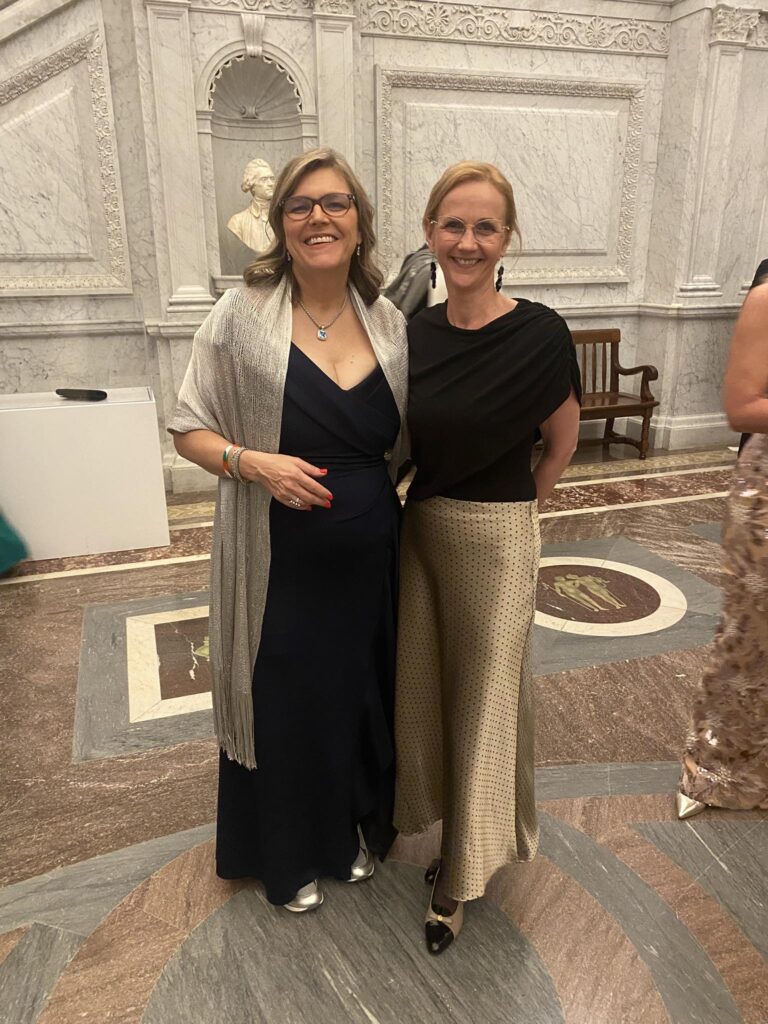
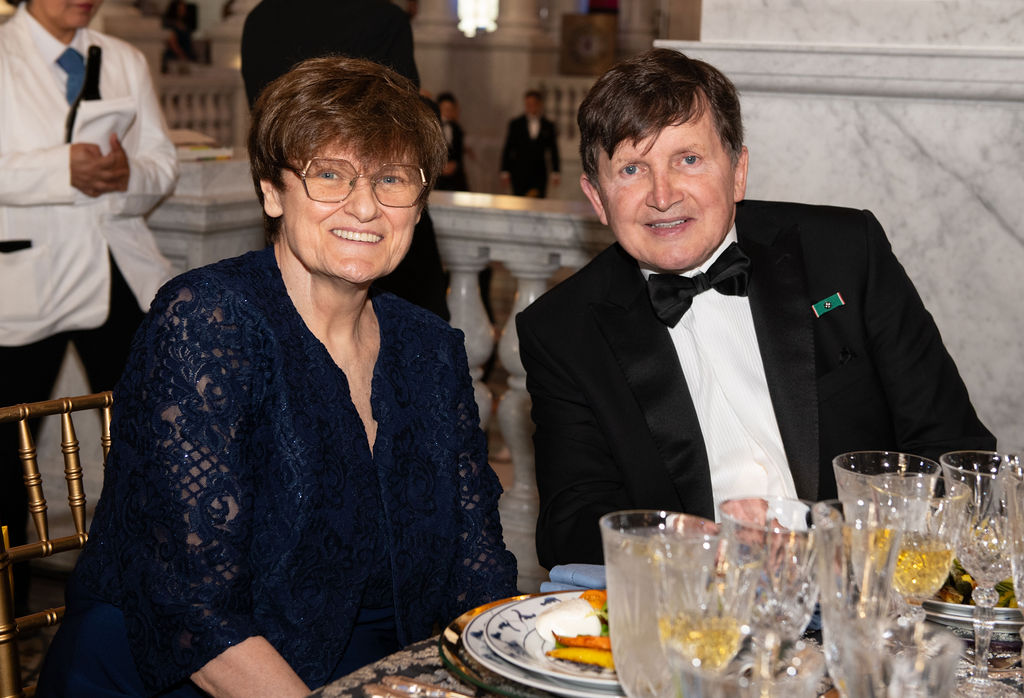
The closing event, the USA250 Gala, took place at the breathtaking and historic settings of the Library of Congress, where over 420 guests from the U.S. and Hungary participated, celebrating 250 years of Hungarian–American connection and honoring the contributors who’ve helped define the Hungarian–American story. The toasts were delivered by Ambassador Szabolcs Takács and SBO Robert Palladino, adding a meaningful close to an unforgettable evening of celebration and recognition. Their remarks followed a program that honored Dr. Charles Simonyi and Dr. Katalin Karikó and highlighted their and other Hungarian Americans’ exemplary contributions to the U.S and the world.
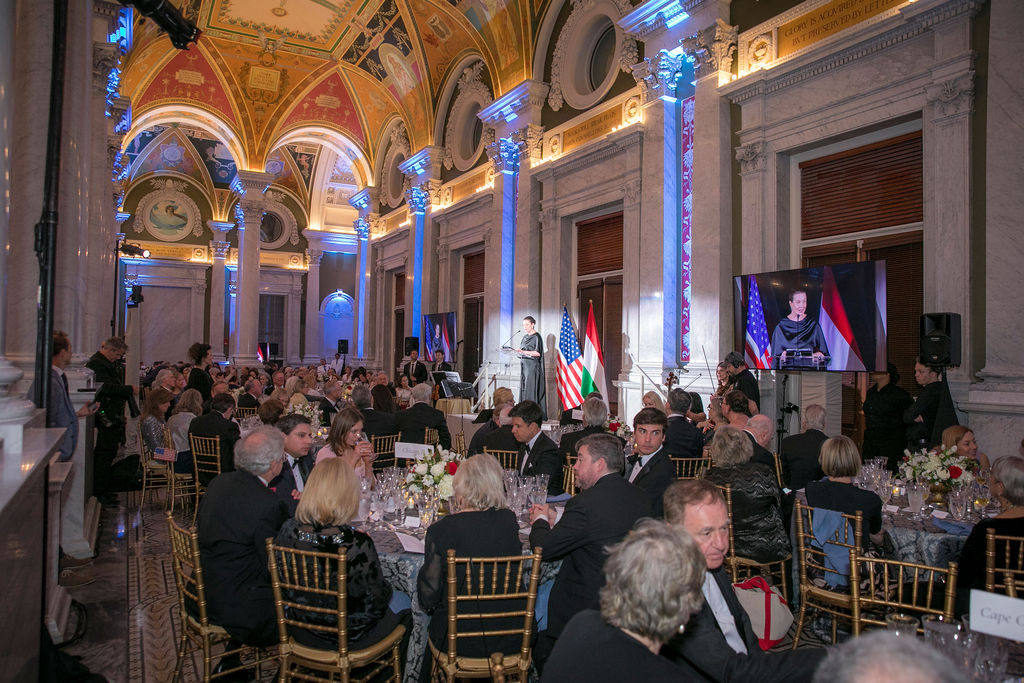
Guests could first enjoy several exhibitions. The exclusive preview of the above-mentioned The Martians exhibition featured some of the most brilliant Hungarian scientists in America, who led many to joke that they must have come from another planet, when in fact they all came from Budapest… The exhibition celebrates not only these iconic figures, but all Hungarian Nobel laureates and other outstanding minds in the world of science. The U.S. video premiere of the Bridges of Greatness documentary short series, produced by 56Films, directed and written by Réka Pigniczky and Andrea Lauer Rice, also revealed the profound contributions of Hungarian Americans, whose stories have helped shape the U.S. over the past 250 years. From revolutionaries and statesmen to scientists, artists, and innovators, the film showcases the enduring spirit of Hungarians who helped to contribute to the legacy of the U.S.
The U.S. premiere of the Hungarians in the U.S. People, Places, Pathways exhibition traces the deep ties between Hungary and America through personal stories, from the early pioneers of 1776. Spanning from the late 18th century to the present day, the project presents a comprehensive historical overview of the Hungarian presence in the U.S., combining 250 personal and family stories with key community locations that shaped Hungarian American life. The Hungarian American Artifacts Exhibit, presented by the AHF, showcased rare objects and archival materials from Zsolnay porcelain and Camp Kilmer materials to archival photographs that document the journeys, communities, and lived experiences of Hungarian Americans through several generations. The artifacts collected and conserved by the AHF also highlight the depth and diversity of the Hungarian American contributions. The interactive exhibition and art installation Original Rubik’s Cube Mosaic by Dylan Sadiq, the ‘College Cuber’, invited guests to contribute by placing an individual Rubik’s Cube into the evolving piece, gradually revealing a 1956 Hungarian Freedom Fighter, Time Magazine’s well-known Man of the Year cover page image. Finally, guests could also capture the moment in front of the step-and-repeat wall featuring HAC’s partner organizations for the evening, the AHF and Tulipán Foundation.
The USA250 Gala itself brought together speakers who reflected on this once-in-a-generation moment—a celebration of 250 years of the U.S. alongside the enduring contributions of Hungarian Americans. Susan Hutchison, Master of Ceremonies, welcomed the audience. The invocation, delivered by Dr. Eric Patterson, President of the Victims of Communism Memorial Foundation, drew from Cardinal József Mindszenty’s prayer for Hungary’s future, grounding the program in remembrance and hope. Following the video premiere honoring 250 years of Hungarian American contributions, Andrea Lauer Rice greeted the guests, highlighting a remarkable ‘trifecta’ year: the 250th anniversary of the U.S., the 70th anniversary of the 1956 Hungarian Revolution, and 35 years of the HAC, founded by Chair Emerita of the HAC Edith K. Lauer together with President of the Hungarian Human Rights Foundation (HHRF) Zsolt Szekeres. Guests heard remarks from Gala Co-Chair Governor George E. Pataki, as he reflected on the enduring values of freedom and democracy, and highlighted the extraordinary global impact of the evening’s awardees, Dr. Charles Simonyi (Spirit of America Award by HAC; Edith K. Lauer delivered the laudation and the award) and Dr. Katalin Karikó (George Washington Award by AHF, delivered and praised by Melissa Katkó Pepin, Director of the AHF).
The program continued with a musical performance by Daniel Sender and the Ragged Mountain String Quartet, presented with support from the Tulipán Foundation, before remarks from Dr. Katrina Lantos Swett, who spoke on heritage, legacy, and the enduring lessons of her father, Congressman Tom Lantos. The guests represented several Hungarian American organizations from all over the U.S. (and some from Hungary)—people deeply committed to the ‘Hungarian cause’, who continuously build and enrich the Hungarian culture and science in the U.S. day by day, and who, as Piros Pazaurek noted ‘serve their communities with sincerity, heart, and tremendous effort, working together, supporting one another, creating real value and show real results’.
As HAC President Andrea Lauer Rice announced, the proceeds from the gala support scholarship programs for young Hungarians and three community history projects: permanent signage honoring the arrival of 1956 Hungarian refugees at Camp Kilmer, New Jersey; the Albert Szent-Györgyi gravesite renewal in Woods Hole, Massachusetts; and the Michael Kováts de Fabriczy statue project in Charleston, South Carolina—each of these initiatives helps preserve Hungarian American history while investing in the next generation. Guests also received special commemorative gifts, including the previously mentioned comic, a book titled Pioneers of Liberty and Legacy: The Hungarian American Story, 1776–2026, a USA250 Challenge Coin, a hand-etched Hungarian egg by Tulipán Foundation, and a magnet from the AHF.
Related articles:
At a time when public debate is increasingly polarized and superficial, Hungarian Conservative remains committed to depth, intellectual honesty, and independent conservative thought.
Producing high-quality journalism requires resources. Your contribution helps us expand our coverage, reach new audiences, and keep our content accessible.

Please consider supporting our mission.