
Fitch Ratings has affirmed Hungary’s long-term sovereign credit rating at BBB, maintaining the country’s investment-grade status while leaving the outlook unchanged at negative.
The international credit rating agency announced its decision on Friday night, citing concerns over the deterioration of Hungary’s public finances ahead of the April parliamentary elections, the unpredictability of fiscal policy, and the country’s weak economic growth performance.
According to Fitch, the negative outlook reflects the larger-than-expected weakening of fiscal indicators before the election and the challenges facing the new government as it seeks to restore budgetary stability.
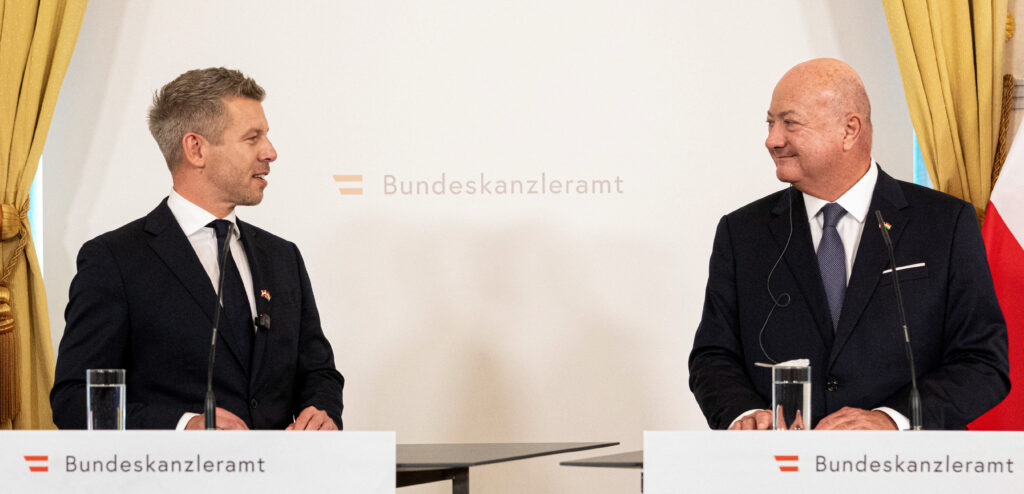
The agency noted that the government led by Prime Minister Péter Magyar has identified reducing the budget deficit as a key medium-term objective. However, Fitch warned that the administration must formulate its consolidation strategy while managing substantial inherited spending commitments, election-related promises made by the previous government, and an uncertain global economic environment.
At the same time, the rating agency highlighted the constitutional majority secured by the Tisza Party in April’s election, arguing that it reduces the likelihood of institutional conflicts and could facilitate the rapid implementation of the government’s policy agenda.
Fitch also pointed to the political agreement recently reached between the Hungarian government and the European Commission regarding the release of €16.4 billion in Recovery and Resilience Facility (RRF) funds allocated to Hungary. The agency noted that the disbursement remains conditional on reforms addressing rule-of-law and anti-corruption concerns.
The rating agency expects Hungary’s budget deficit to widen to 6.4 per cent of GDP this year, driven by pre-election fiscal loosening, ad hoc support measures such as fuel and energy subsidies, and the potential repayment of certain special taxes should rulings by European courts require reimbursement.
This projection is significantly higher than Fitch’s previous forecast issued in December, when it expected a deficit of 5.6 per cent in 2026. By comparison, the median projected deficit among sovereign issuers rated BBB is 3.1 per cent.
Fitch forecasts Hungary’s primary budget deficit to reach 2.6 per cent of GDP this year, up from 0.9 per cent in 2025.
The agency also noted that the government intends to use its commitment to meeting eurozone accession criteria by 2030 as an anchor for its medium-term fiscal consolidation strategy. Nevertheless, Fitch expects only gradual adjustment and said it remains uncertain whether anticipated savings from reviewing government contracts and public spending commitments will materialize.
As a result, the agency projects the budget deficit will remain elevated at 5.9 per cent of GDP in 2027.
Hungary’s debt burden is also expected to rise. Fitch forecasts the country’s debt-to-GDP ratio will increase from 74.6 per cent last year to 76.2 per cent by the end of 2027. This would remain substantially above the projected median of 58.3 per cent for sovereign borrowers in the BBB rating category.
The agency said the increase in debt levels would be partly offset by the strengthening of the forint, noting that roughly 30 per cent of Hungary’s government debt is denominated in foreign currencies.
Fitch expects lower government bond yields and future monetary easing to reduce interest costs over the coming years. Interest payments as a share of government revenue could fall to 8.3 per cent in 2027, below both the projected BBB-category median of 9.6 per cent and Hungary’s recent peak of 11.6 per cent recorded in 2024.
Regarding economic growth, Fitch said Hungary’s economy accelerated during the first quarter of 2026 as a result of pre-election fiscal stimulus measures. However, the agency expects growth to slow again due to weaker external demand linked to the ongoing conflict in the Middle East.
The rating agency believes that RRF disbursements will have only a limited impact on economic activity this year. However, EU cohesion funds are expected to support investment growth beginning in 2027.
In this environment, Fitch forecasts Hungary’s real GDP growth will accelerate from 0.5 per cent in 2025 to 2.5 per cent in 2027, reflecting a gradual recovery in investment and economic activity despite ongoing fiscal and external challenges.
Related articles:
At a time when public debate is increasingly polarized and superficial, Hungarian Conservative remains committed to depth, intellectual honesty, and independent conservative thought.
Producing high-quality journalism requires resources. Your contribution helps us expand our coverage, reach new audiences, and keep our content accessible.

Please consider supporting our mission.