The following is an adapted version of an article written by Mátyás Bíró, originally published in Hungarian in Magyar Krónika.
István Széchenyi, one of the greatest statesmen in our nation’s history, played a major role in the spread of gas lighting in Hungary. The first gas lamp in Pest was lit in 1816 on the side of the Hungarian National Museum.
Street lighting, which we now take for granted, first appeared in Hungary in Buda in 1777, while rapeseed-oil lanterns were in use in Pest starting in 1790. A true breakthrough in the history of lighting came with the use of gas—or, as it was initially called, ‘illuminating gas’—in the early 19th century.
European city dwellers began to enjoy the benefits of gas lighting in the early 1800s. By 1802, parts of London were already lit by gas—the first gas lamp burned on Westminster Bridge—and by 1812, it had become widespread throughout the city. This method of lighting appeared in Paris in 1817, in Berlin in 1826, and in Vienna in 1833.
István Széchenyi played a major role in the spread of gas lighting in Hungary. In 1815, he had a gas generator brought over from England, which was put into operation at his castle in Nagycenk. Gas burned in large glass globes at the eastern gatehouses, and gas burners provided light in the entrance hall, the halls, and the rooms as well.
In Pest, the first gas lamp was lit in 1816 on the side of the Hungarian National Museum, thanks to Lajos Tehel, a philosopher, physician, and a distinguished member of the museum. By 1827, banker Frigyes Kappel was already using gas lighting in his house on Bálvány Street, and his example was soon followed by several major merchants in Pest. An entrepreneur had already sought to introduce gas lighting on the streets of Pest and Buda in 1846, but city leaders deemed it premature.
Shortly thereafter, another company submitted a new proposal to introduce gas lighting in Pest, and a contract had even been drafted, but the project fell through due to the war of independence.
‘In Pest, the first gas lamp was lit in 1816 on the side of the Hungarian National Museum’
It was considered a sensation that, just a few weeks after the opening of the Pesti Magyar Theatre on 22 August 1837, the building was already lit by gas. The necessary equipment and lamps were made by Antal Weber, a citizen of Pest, and he was also the first master in charge of the lighting. Novelist Mór Jókai also mentions the theatre’s gas lighting in a 1900 essay: ‘This gas had a slightly stale, sour cabbage smell, but we put up with it out of national pride.’
Jókai loved and kept up with technical innovations; it is also thanks to him that we know the theatre had its own ‘gas distiller’. This was necessary because the production of lighting gas from coal generates several substances that are non-combustible, hinder combustion, or may be harmful to health. The lighting gas first had to be purified of these substances, specifically in the following manner:
‘Outside in the courtyard stood a huge iron basin filled with water. It was used for gas distilling. During the war of independence, Hentzi’s bombs also struck the National Theatre. A 150-pound bomb struck the theatre’s courtyard, but the God of the Hungarians arranged for the bomb to fall right into the water basin, where the water smothered it. Had it fallen just a foot further, it would have set the entire theatre ablaze, burning it to ashes.’
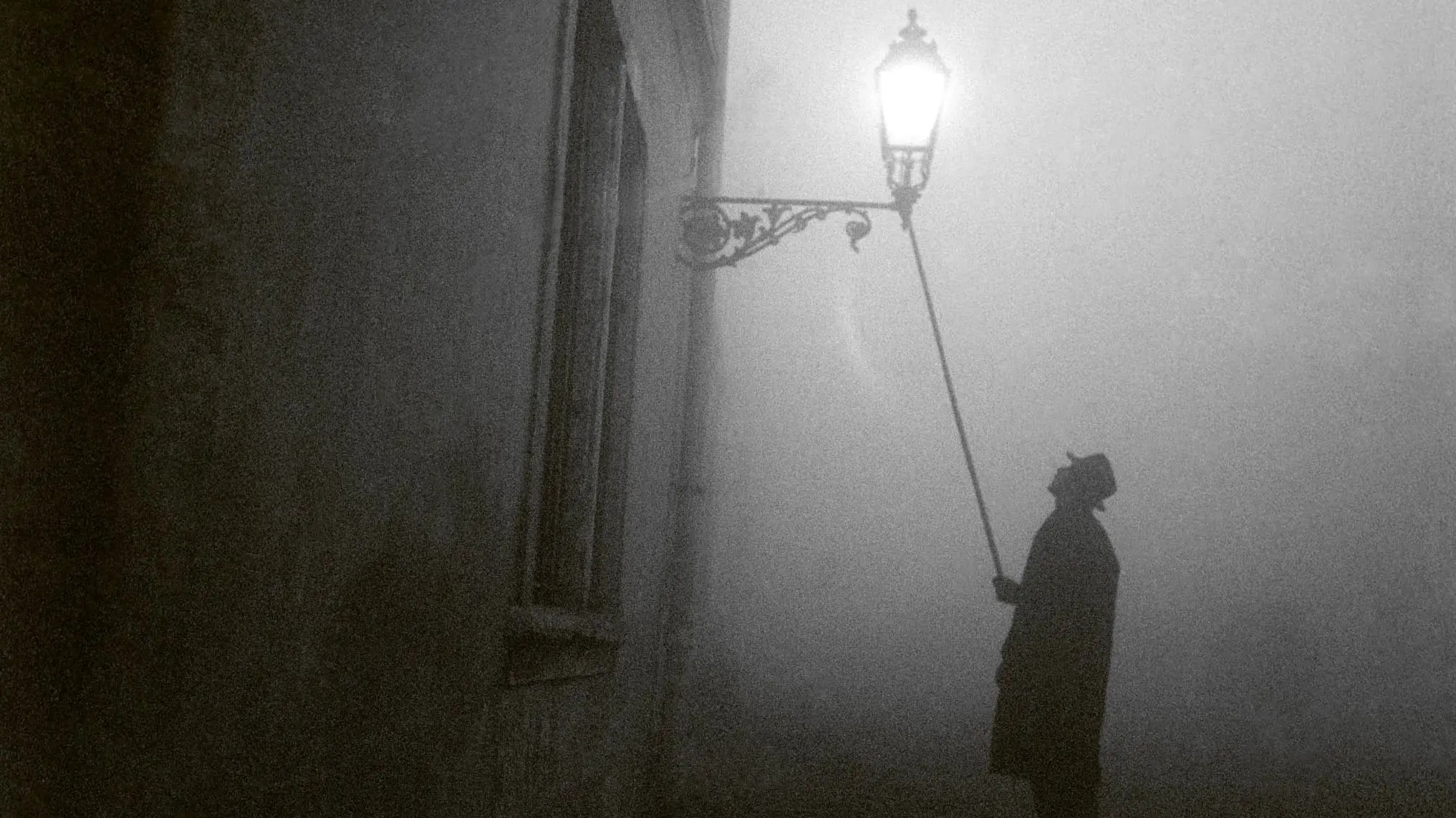
Just how much of a novelty gas lighting in theatres was in 1837 is clearly illustrated by the fact that gas was first used for public lighting in Pest in December 1856 and in Buda in 1862. On Christmas 1856, the first street gas lamps were lit on Kerepesi Street—now Rákóczi Street—and in the city centre. For a long time, the lamplighter was a characteristic figure of the capital, lighting the gas lamps one by one with his stick in the evenings and cleaning the lampshades during the day.
The March 1857 issue of Vasárnapi Ujság reported that visitors from the countryside would now find in the city ‘beautiful and elegant new lamps, serving as the true adornment of Pest’, and on the wider streets, a row of lamps stretching along both sides between the roadway and the sidewalk; and upon leaving the National Theatre, people can ‘walk home, so to speak, through a sea of light, which seems all the more striking to them when they think back to the frugal glow of the oil lamps that used to flicker here and there with a red flame.’
Not everyone, however, was enthusiastic about the innovation; many—especially members of the older generation—were downright averse to it.
Nor was it a common experience that the streets had become brighter—quite the contrary. In the Christmas 1856 issue of Pesti Napló, for example, we can read:
‘The introduction of this beneficial institution has amply confirmed the truth that all things have a difficult beginning. Instead of being welcomed by enthusiastic people as another achievement of ingenious minds, it has been the subject of mockery, sarcasm, and ridicule rather than triumph. And the night before last, we observed on the downtown streets that even if people do not bump into one another, the remaining gloom still provides a sufficient cloak for fleeing from creditors. But we believe these lights will eventually become whiter and brighter.’
This is indeed what happened later, but until the Auer burner was invented, the butterfly-wing-shaped gas flames emitted only a faint, yellowish light.
‘Until the Auer burner was invented, the butterfly-wing-shaped gas flames emitted only a faint, yellowish light’
In 1856 the first domestic gasworks, the Kapferer–Stefani plant, began operations in Budapest on Lóvásár Square (now Köztársaság Square); soon after, similar facilities were built in Józsefváros, Ferencváros, Buda, Óbuda, and Újpest. After these were established, institutions—including the National Theatre—had to procure the gas needed for lighting from them. In the absence of an established gas pipeline, it was initially transported in huge leather hoses to the theatre’s storage tank.
Grumbling aside, citizens experienced many advantages of gas lighting compared to candle and oil lighting. On the one hand, gas was cheaper to use than oil, especially for lighting large spaces; on the other hand, a gas flame provided four times the light of a candle.
It was also much safer—provided, of course, that the valves were turned off in time. This was not always the case. In 1864, for instance, a massive gas explosion occurred in the storefront of a two-story building on Váci Street; five people lost their lives beneath the collapsing walls.
Jókai also recalls a gas-related accident in which the National Theatre nearly went up in flames—it was thanks to him that a catastrophe was averted:
‘They were performing Macbeth, and all the stagehands and machinists were busy moving the ghost kings around. Suddenly, I noticed that the screw on the pipe of a stage gas lamp had come loose, and gas was gushing out of the wide hole in a stream as thick as an arm. Just a moment’s hesitation, and that gas flame would have shot up to the rafters, and the stage would have gone up in flames. I, however, did not lose my composure. It was the year 1861, and we were wearing Hungarian costumes: I suddenly snatched my astrakhan cap from my head and, in an instant, smothered the spewing gas flame with it.’
Read more:
Click here to read the original article.
At a time when public debate is increasingly polarized and superficial, Hungarian Conservative remains committed to depth, intellectual honesty, and independent conservative thought.
Producing high-quality journalism requires resources. Your contribution helps us expand our coverage, reach new audiences, and keep our content accessible.

Please consider supporting our mission.