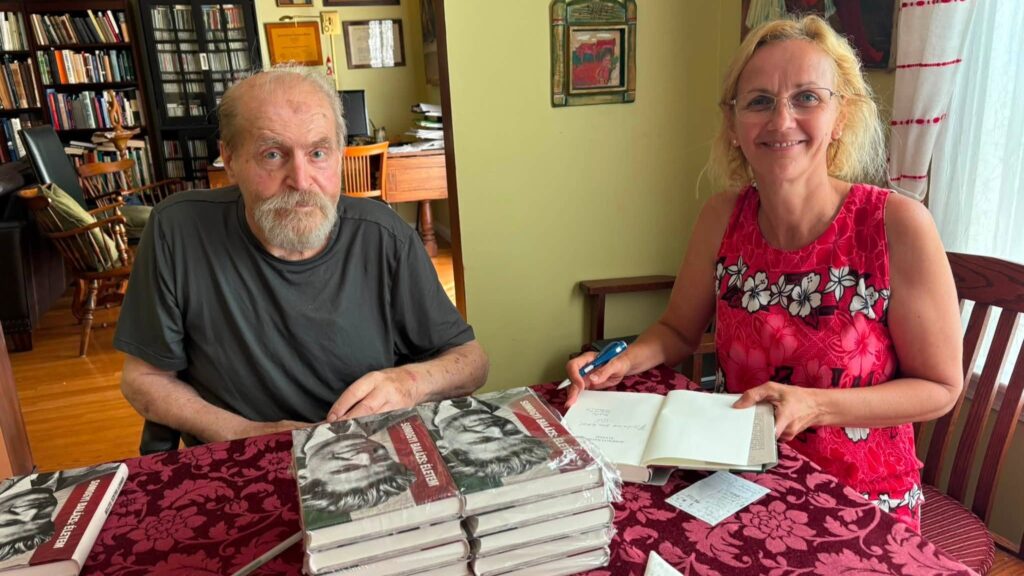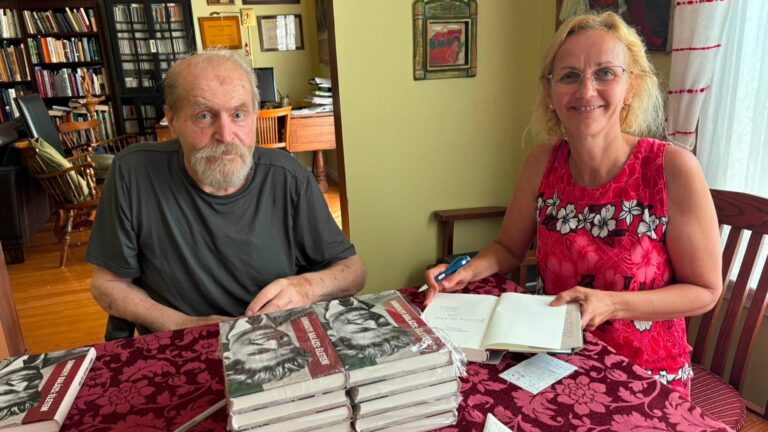
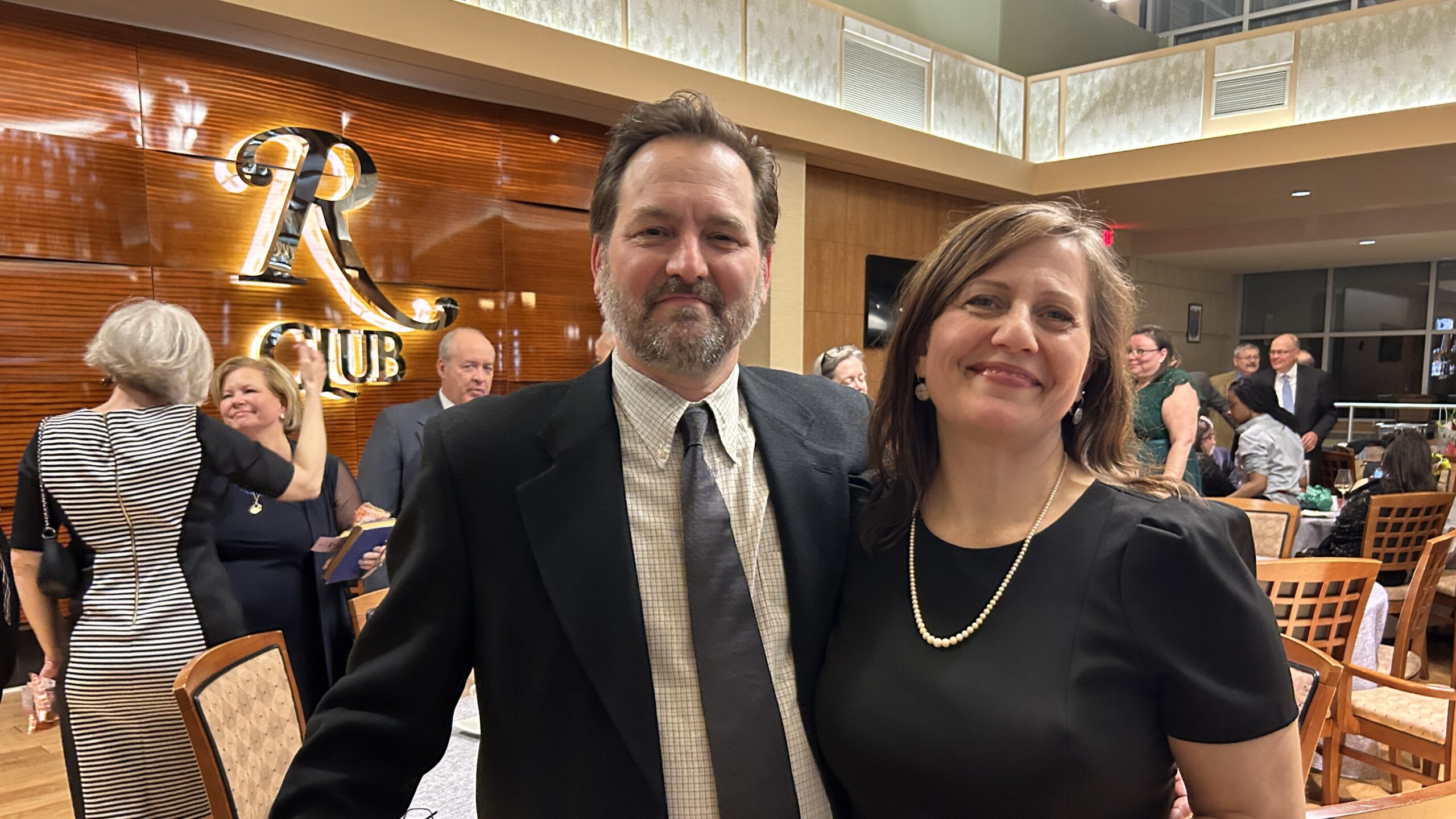
Liz is the daughter of a 56 freedom fighter and a mother who was born in Hungary but raised in Venezuela. After her parents divorced, Liz lost much of her connection to her Hungarian heritage, including language, which she’s been trying to regain since, first as a young adult through meetings with her father, then through her passion for literature. In 2023, she wrote a hybrid historical fiction novel, You Cannot Forbid the Flower, focusing on her father’s role in 1956 to share the story of the revolution and have a written record of his life for her children. Since then, she continues to be involved in other Hungarian literature projects as a translator or editor, and is an enthusiastic volunteer at the American Hungarian Foundation (AHF) in New Brunswick, NJ.
***
Please tell us briefly about your parents’ emigration story.
My father, Márton Lukács, was born in 1927 in Gyergyószentmiklós, Transylvania (Gheorgheni, Romania), which became part of Romania after the 1920 Treaty of Trianon. In the fall of 1944, when my father was just 17, he was forced by the occupying German Army to fight against the Soviets. He and his family were able to escape to Hungary and settled in Petneháza, near Nyíregyháza, but it was a very difficult time—there was little food or work, and they were a big family. So in 1945, at the end of the war, he moved to Budapest to find work. He was 29 years old and working as a toolmaker when the Hungarian Revolution started in 1956. He joined the protests on 23 October and then joined the Freedom Fighters that night when the protesters were attacked at the Hungarian radio station. After the Revolution, he escaped through the swamps to Austria. He arrived at Camp Kilmer on 17 December, 1956. Just after Christmas, he was sponsored by a pastor in Philadelphia, PA, and about ten years later, he met my mother at a Philadelphia Hungarian Club event.
My mother, Csilla Egyed, was born in Budapest in 1941. I’m named after her mother, Erzsébet Dani. My grandmother was a very strong and independent woman—she had to be. She never knew her father, who died in World War I, and she was only 14 when her mother died in 1926. She loved to work with children and planned to become a teacher, but after she got her diploma in 1935, she couldn’t find a teaching post, so she learned typing and shorthand and became a secretary at Buda Castle, working in the Prime Minister’s Office. She met my grandfather, Egyed János, who was a doctor, and they married in 1938. My aunt was born a year later, and then my mother at the start of the war. I never knew this as a child, but my grandmother enabled their escape right before the Siege. Through her government contacts, she was able to get the whole family on a government evacuee train with paperwork that would get them across the border into Austria. So at the same time that my father and his family were escaping from Romania to Hungary in 1944, my mother and her family were fleeing from Hungary. After several years as DPs [displaced people], they were eventually able to emigrate to Caracas, Venezuela. There was a large community of Hungarian refugees there, and they stayed for about a decade. When they were finally able to come to the U.S. and settle in Philadelphia, they right away connected with the Hungarian community here.
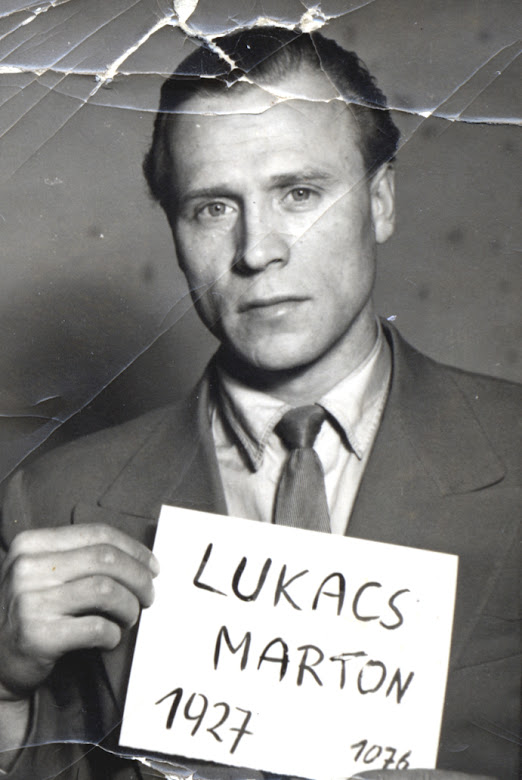
My grandparents and my father were both involved in founding the Magyar Tanya near Philadelphia in the early 1960s, and my grandmother helped found scout troops and was a troop leader in both Caracas and this area. My mom was brought up in the scouts, but she wasn’t involved by the time she married my father, and I wasn’t involved and don’t have any scout memories. But I do remember some times at the Tanya, and we spoke Hungarian at home, and when we spent time with a few other Hungarian families my parents were close to.
Your parents divorced, and you were raised in an American manner. Did you manage to keep your Hungarian heritage alive during that period?
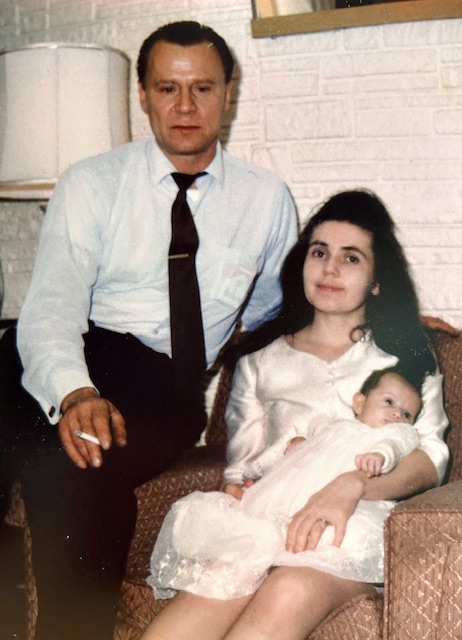
My father wanted to raise a Hungarian family, but my mother was a lot younger, and her ties to Hungary, which she left when she was a toddler, were not as strong. After their divorce, she remarried to an American, and my father moved far away, so for most of our childhoods, my brother, sister, and I had little connection to our Hungarian heritage other than regular visits with our grandparents and some Hungarian dishes my mother still cooked for us.
My mother and grandparents felt that assimilation was important, and they never really talked about their Hungarian past or tried to get us involved in the community when we were growing up. But I remember my grandmother had a small home office we called her ‘Hungarian room’, where she kept all of her work with the scouts and charity organizations she’d been involved with. The room was filled with Hungarian books, plates, embroidery, and awards all over the walls. Unfortunately, I didn’t understand the importance of her role in the Hungarian community then, but I’m lucky to have some of the things my mother saved from her Hungarian room now. I’ve learned a lot about my grandmother by going through these family archives. In addition to her being a founding member of the Magyar Tanya as well as a founder and leader of the Girl Scout troops in Philadelphia and shortly after in New York, she was also president of the Scout Troop Support Association and of the Hungarian American Women’s Aid Society of Philadelphia. When they were in Venezuela, she organized committees to support other refugees, in 1956, the refugees from the Revolution. She never stopped working for the Hungarian communities.
My siblings and I’d typically spend a week or two in the summer with our father, who, of course, was disappointed that we could no longer speak Hungarian. He didn’t talk about Hungary or his past much either, but we knew he’d been a Freedom Fighter. When I was about 12, I finally asked him to tell me about it. That’s when he pulled out the Life magazine special photo issue, Hungary’s Fight for Freedom, published in November 1956. I’ll never forget how I felt looking through that magazine and how much I learned about my father that afternoon. I knew even then that I’d write about it someday.
What did your Hungarian roots mean to you later, when you had your own family?
I missed my father so much when I was growing up. When I was in college, I began to take trips on my own to see him, first by myself and then with my boyfriend, who I married a few years later. I thought the very least I could do for my Hungarian roots was to keep our family name, so I changed my middle name (Katharina) to Lukács, and later, when our son was born, we named him Lukas. I tried to learn as much as I could about my father over those years, but my father kept things close. We took the kids to visit him as much as we could, but he passed away in 2005, just after our youngest was born. I’m so grateful that he at least got to meet her. One of the main reasons I wrote You Cannot Forbid the Flower was to have a written record of my father’s life for my children. They have very little to no memory of him, and it’s really important to me that they know who their grandfather was, where he came from, and why he risked his life to fight for his homeland. I wanted to create something that would help them understand his personal history, our family history, and our collective history as Hungarian Americans.
‘One of the main reasons I wrote You Cannot Forbid the Flower was to have a written record of my father’s life for my children’
You Cannot Forbid the Flower is part biography and part fiction, officially a hybrid historical-fiction novel that imagines your father’s death in several different ways. Why did you use this writing method?
I get this question a lot! I spent many years researching and thinking about how I could tell my father’s story and the larger story of the Hungarian Revolution. The more I researched, the more I realized there were so many other stories I wanted to tell. My dad was the only person, and he couldn’t possibly have been at all of the events I wanted to include. But there were other Hungarians there, Freedom Fighters and civilians who were caught in the crossfire, and I felt that they deserved a place in the story, too. I didn’t want a big cast of characters—I wanted to stay focused on my father. Plus, I didn’t really have any details about where my father was and what he was doing during those twelve days. So my solution was to have my father be all of them. That way, I could tell those other stories, too—about the people who died that first night of the revolution, in the massacres at Parliament Square and Mosonmagyaróvár, in prison, in the last stand before the Soviets crushed the revolution on November 4. And I hope that having the main character murdered over and over helps convey the tragedy of the lives lost in this fight for freedom.
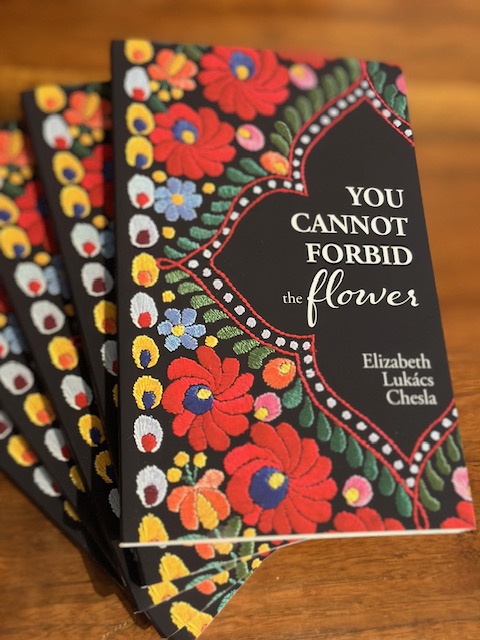
What does the main symbol of the flower mean to you?
The flower is an important symbol for me on two levels. First of all, the traditional flower embroidery that was all over my grandparents’ house and even in ours was literally a thread that kept me connected to my heritage. The title also comes from a love poem by Sándor Petőfi that maybe most Hungarians know, but not so many first- or second-generation Hungarian Americans. When I came across it, I knew it had to be the title, because the book is really a love story about how much my father loved his country, and about the people he loved and lost and left behind. It’s also about my love for my father. And I think of the flower as a symbol for the revolution itself. To me, the line ‘You cannot forbid the flower to bloom’ is about the human spirit, because when you suppress a people and take away their freedom, force them to live in fear, commit atrocities against them, you will have a forradalom, a literal ‘boiling over’. It’s the nature of things. Flowers must bloom. People must be free.
In 2024, you became the editor of the interview book series Being Hungarian in America. What did those partly similar emigrant life stories mean to you?
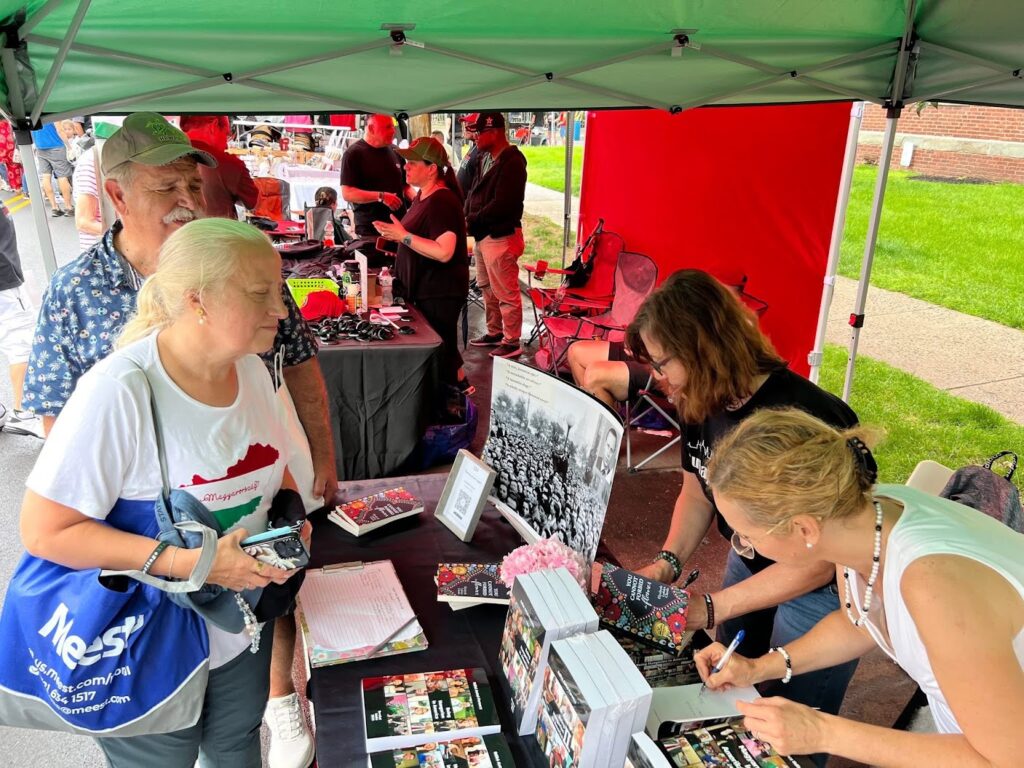
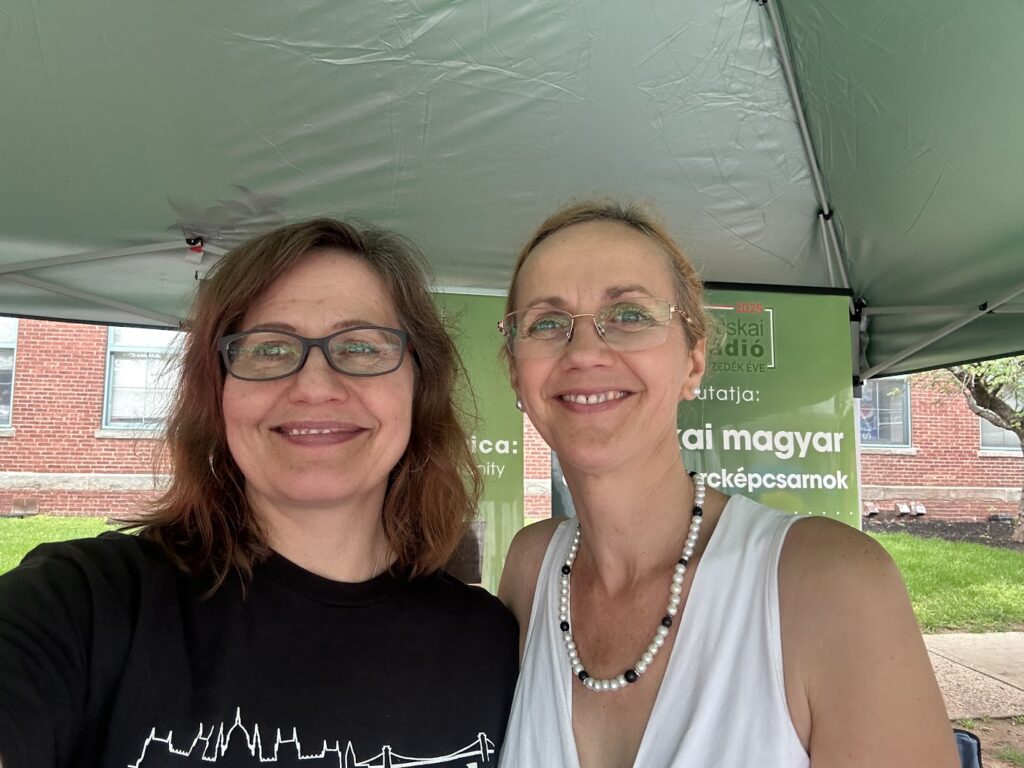
That project was such a gift for me at the perfect time. My book had just come out—that’s how I met you, both of us with our new books at the AHF during the Hungarian Festival in New Brunswick, NJ, in June 2024—and I’d recently started relearning the language and reconnecting with the diasporic community. It was so powerful to hear so many stories of other Hungarian Americans in these books, many of whom I realized would have known my grandmother through the scouts, and if things had been different, maybe we’d have grown up together. And it was inspiring to read about so many professional and cultural achievements in the community. Then, through the project, and also the AHF and AHEA (American Hungarian Educators Association), I got to meet many of the interviewees in person. It felt like a kind of long-overdue homecoming.
Any other similar projects or plans? What does literature mean to you in terms of connection to your Hungarian roots?
Even though the circumstances of my life distanced me from my Hungarian roots for several decades, a part of me always felt their pull. And even though I was never very close with my grandparents, my grandmother influenced me more than I realized. I inherited her love of teaching, literature, and languages, and knew from a very young age that I wanted to be a teacher and a writer.
Of course, I’m also an editor, and in the past couple of months, I’ve had the pleasure of editing two memoirs, one by a Hungarian American dancer I met at the Hungarian House in New York City, and another about two years in Budapest by an American who married a Hungarian. And I’ve been translating, too. Hungarian is such a beautiful language, and I’ve been in love with Hungarian literature since I took my first course in it in graduate school. I took two literary translation courses in 2024 and 2025, and I absolutely love them. I have some work published on Hungarian Literature Online—translations of a short story by Panni Puskás and poems by Réka Ágnes Tóth—and more of Réka’s poems forthcoming.
As for my book, my publisher closed during COVID, so I’m planning on self-publishing a new edition before the anniversary of the revolution this fall. I’m also in the early stages of another hybrid historical fiction novel, this time about the Siege of Budapest and my mom’s family’s escape. I also want to dedicate more time to translating. I think literature is one of the most fundamental and vital ways we connect to our heritage—we connect to each other through our shared stories. There are a lot of really talented people translating Hungarian literature right now, and I’m proud to join this group of people dedicated to sharing Hungarian literature with American readers.
You are connected to the Hungarian community in New Brunswick, especially to AHF. Why and what do you do for them on a voluntary basis?
I was introduced to the New Brunswick Hungarian community and AHF through Christine Portnoy, who interviewed me for her Hungarian Heritage Podcast after I reached out about my book. I love Christine’s enthusiasm for connecting Hungarian Americans not just in the New Jersey–New York region, but all across the U.S. and world. When I can, I volunteer at the AHF’s Hungarian American Markets and annual Hungarian Festival held in June.
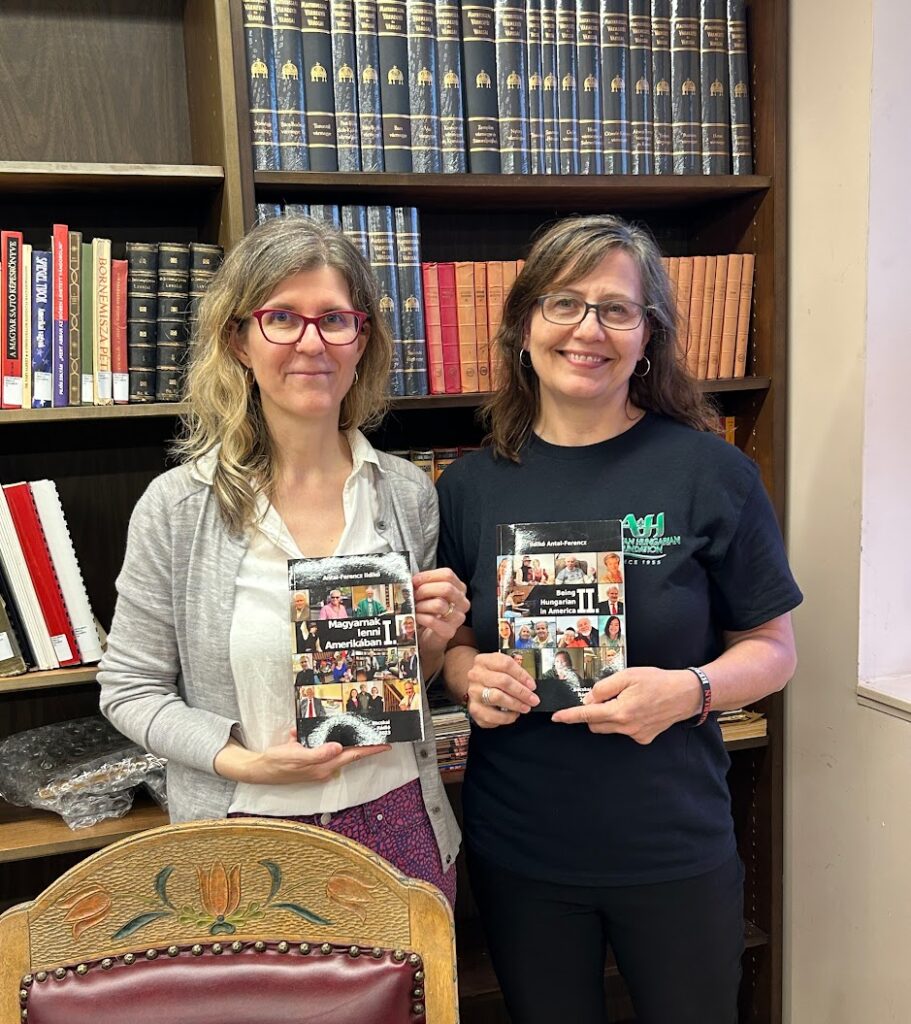
This year, I spent most of the festival in the AHF’s recently renovated museum, which featured the USA 250 Legacy of Hungarians in the United States: People, Places, Pathways traveling exhibit. I was invited to contribute to the second Hungarian Roots, American Dreams anthology curated by Réka Bakos and Anna Fenyvesi, which now has a huge, active online community. I focused on my grandmother’s story for that collection. Writing her story made me realize just how much impact she had on the Hungarian communities in Venezuela and the U.S. I’ll be meeting with the AHF Archivist Ágnes Szanyi soon to share her scouting and other archives, some of which may be included in the USA250 online exhibit as well.
Related articles:
At a time when public debate is increasingly polarized and superficial, Hungarian Conservative remains committed to depth, intellectual honesty, and independent conservative thought.
Producing high-quality journalism requires resources. Your contribution helps us expand our coverage, reach new audiences, and keep our content accessible.
Please consider supporting our mission.