
The following is an adapted version of an article written by Orsolya Ferenczi-Bónis, originally published in Hungarian in Magyar Krónika.
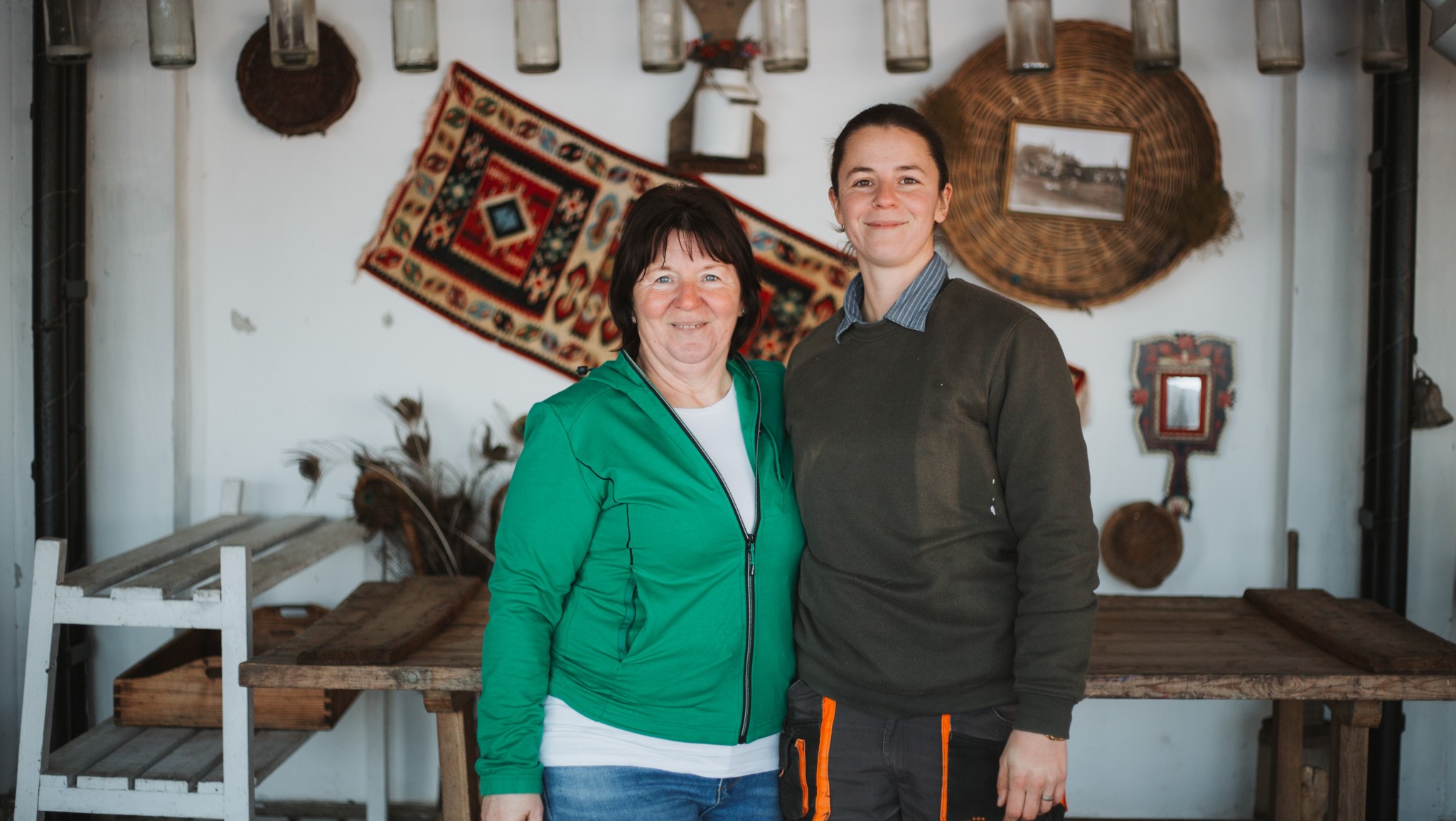
According to the manager of the Gabóca Cheese Workshop in Sándorhegy, she has the most beautiful workplace in the whole wide world.
Perhaps few people know that the ‘Street of Flavours’ runs through the Sándorhegy district of Gyula. The name comes from Mrs Gabriella Csomós Csontos, the determined and tireless manager of the Gabóca Cheese Workshop. There’s certainly no shortage of flavour here, and the recipe is simpler than you might think: quality can only be created with love.
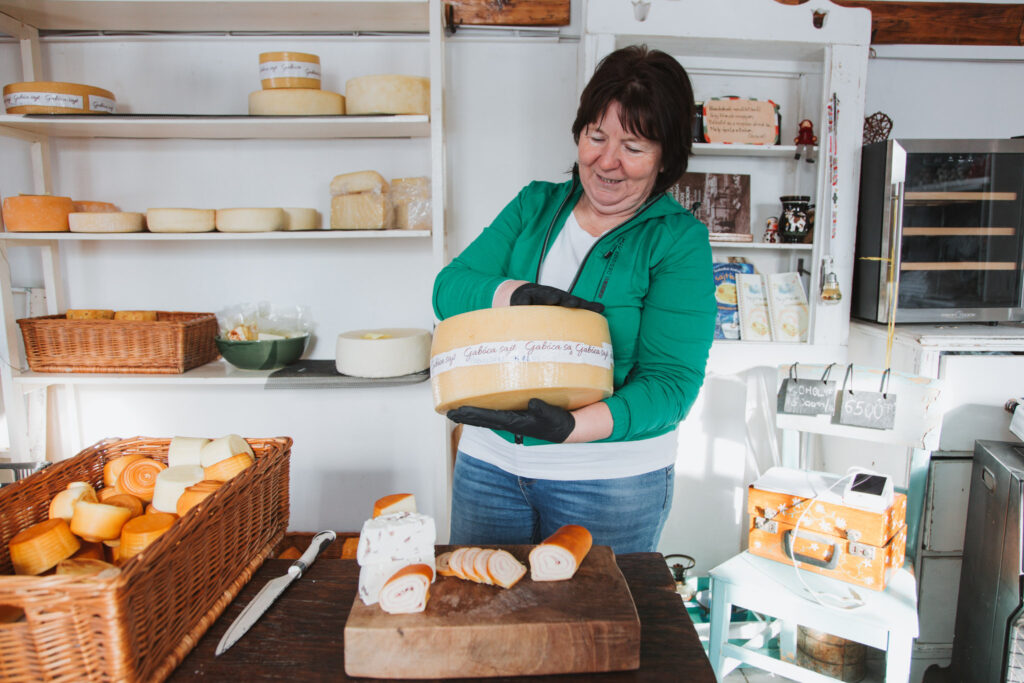
‘Ours is the most beautiful workplace in the world,’ Mrs Gabriella Csomós Csontos—nicknamed Gabóca—claims as she shows us around her estate nestled among the farmsteads of Sándorhegy. ‘And the most beautiful music is carried to us by the wind in the spring—the sound of the livestock munching on the grass,’ her daughter, Zsanett Csontos, adds. ‘This isn’t a fast-paced story,’ they say with a smile as they introduce the story of their way of life. Indeed, to truly appreciate all the beauty that surrounds you here, you have to slow down and truly live in harmony with nature.
The Csontos family bought the property five years ago, and as they say, since then they’ve been going to their house—located two lots down the street—pretty much just to sleep. Gabriella had already been raising animals and making cheese even before purchasing the farm; she was driven by a desire to experiment. ‘We had more and more calves, and our milk supply kept growing, so after work I’d stay up late into the night making cheese.’ She worked for 30 years in the laboratory at the local wastewater treatment plant. Still, when her thoughts began to revolve around cheese-making tasks even during the day, she decided to pursue what she still considers her calling today. Free from the monotony of her previous job, she embarked on a liberating, creative process, racking her brain for new ideas and plans, which she gradually brought to life with her own hands, in cooperation with her family and the community.
‘To truly appreciate all the beauty that surrounds you here, you have to slow down and truly live in harmony with nature’
‘We got off to a good start,’ Gabriella sums up, but as we listen further, it becomes increasingly clear that the key to her success lies in her integrity, her sense of self, and her strong sense of vocation. For Gabóca, success is not measured by traditional standards, but by the love of others. ‘I believe that our path is predetermined, and if we put our heart and soul into it, we’ll make progress along it,’ she says, adding that this is how they found their farm as well. They had walked past the gate many times before but didn’t know what lay beyond it. That is, until the elderly owner told them that he could no longer mow the grass and asked if they’d like to cut it for his cow. He then suggested that it would be easier if they brought the cow over to graze there. His next suggestion was that they buy the property from him. ‘We hadn’t planned such a big step at the time, but since our path had led us there, we went for it and moved the workshop and the animals over as well.’
A Market Stall at a Bus Stop?
At first, the products were delivered directly to customers’ homes, and Gabriella also travelled to Békéscsaba once a month to the Ligeti Market, where more and more people came to know and love their products, and she built good relationships not only with customers but also with other producers. ‘Things really took off when I was able to make cheese full-time, so my next idea was to open a small shop that would be open once a week.’ But even on the very first day, so many people showed up that they couldn’t even fit through the door. Due to the estate’s popularity, home delivery has gradually ceased; now they only deliver cheese to the homes of a few elderly customers.
In fact, it became clear already after the first event that they needed a larger space than the tiny shop, so Gabriella organized a market. She converted Gyula’s disused bus stops into sales booths, then invited producers she knew from the Ligeti Market and the surrounding area. ‘I always say that in Gyula, on Sándorhegy, there’s a “Street of Flavours”,’ she explains. ‘That’s because everyone here grows or makes something; they grow radishes, raspberries, and melons under plastic tunnels; there are people making syrups, honey, and pasta; some bake sourdough bread; there’s a pálinka distillery; and further down, a bakery.’ Gabriella was certain of one thing at the first market: whoever comes here speaks authentically about high-quality products made with love. ‘And these people have been selling here with us ever since. No one pays a stall fee; here, the admission fee is a smile and kindness toward shoppers and fellow producers.’
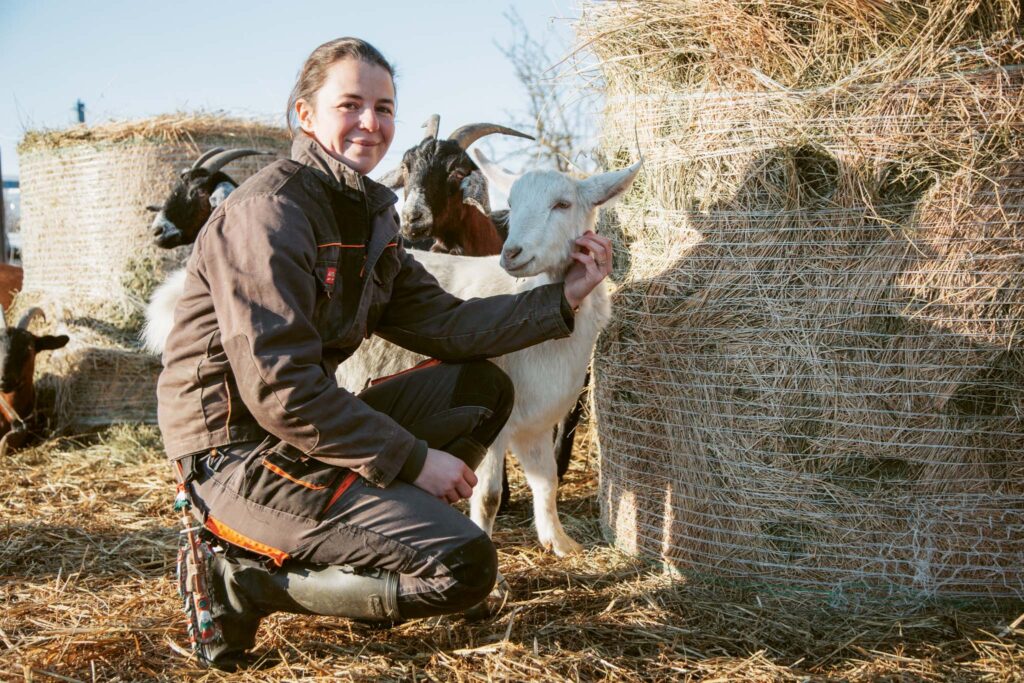
Gabriella’s husband, János, works for the water utility in Gyula, but he also does his share of the chores around the farm. Before heading off to work, he gets the farm up and running at three in the morning, and during the day, Zsani takes over as the farm manager—who, as we learn, gave up a career as a professional football player to work alongside his mother. For the young woman, working with animals is a dream job. From a very young age, she spent a great deal of time with her grandparents, who were shepherds, as well as with her father, who worked at the local cattle ranch for many years.
Happy Cheese Makers
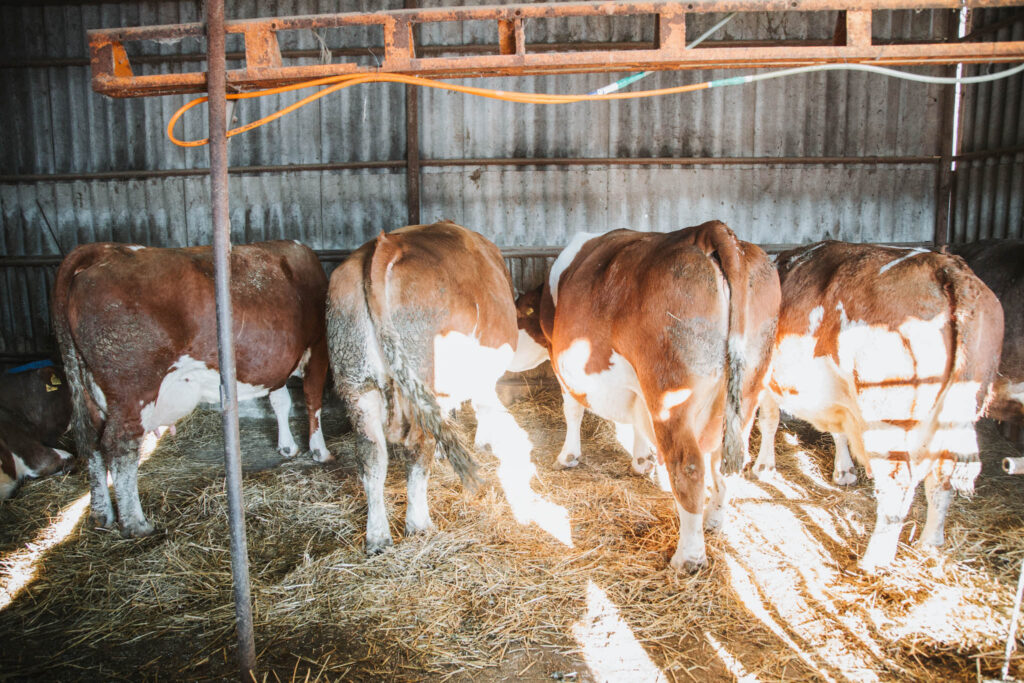
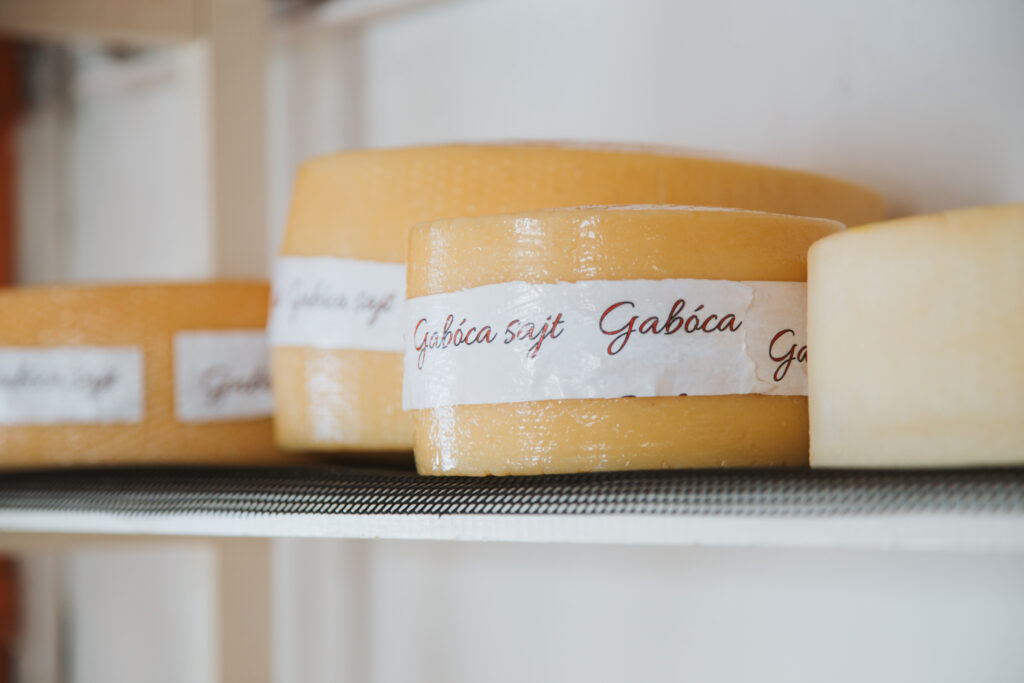
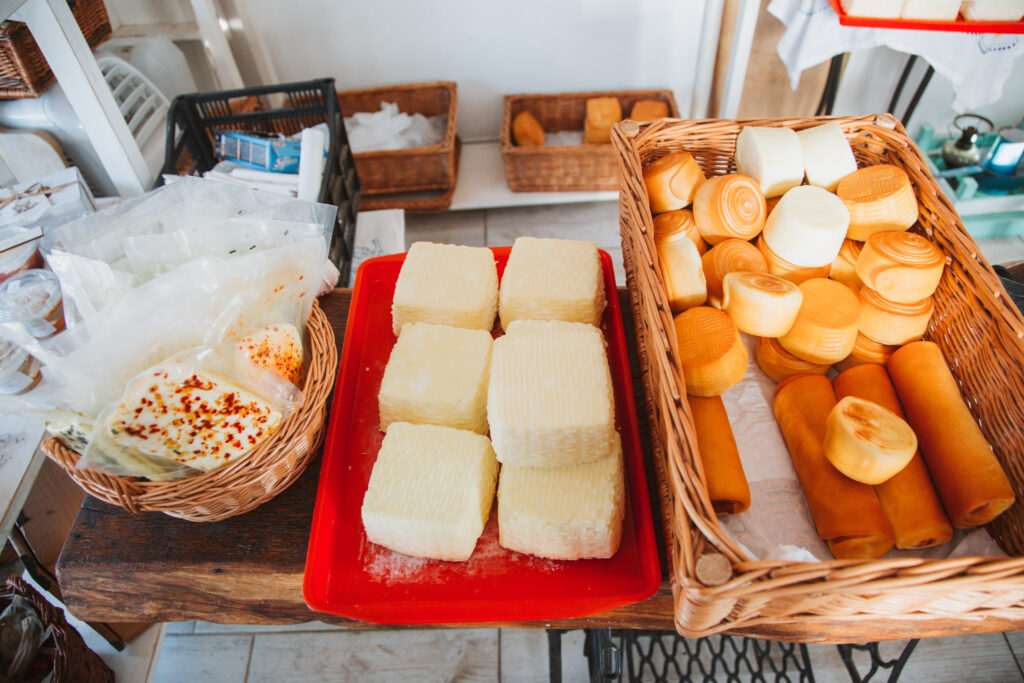
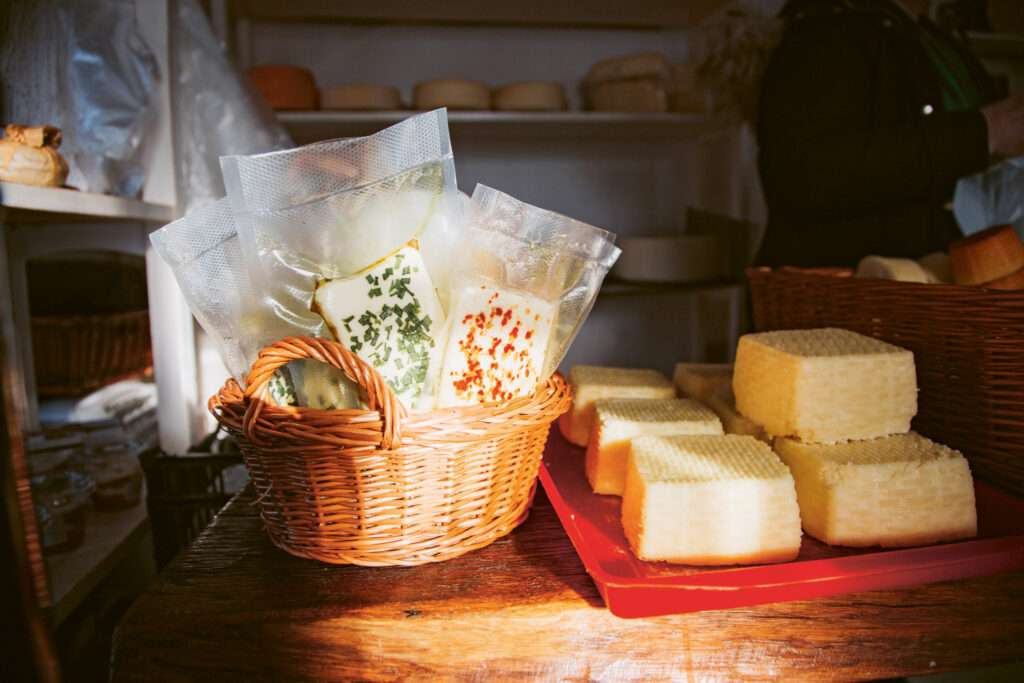
Everything on the farm is done exclusively by hand. ‘I make the cheese in these 50-litre pots,’ Gabriella says as she steps into the workshop. She knows that with a cheese vat and without modern technology, she’ll never be able to process large quantities, but the 180 to 200 litres they produce daily from their 11 cows is enough for them. ‘I wouldn’t want any more anyway. You can’t produce quality in a hurry. I do this because I love it; if I had to conform to external expectations, it would take the soul out of the whole thing. The very first cheese I made was this grilled cheese,’ she recounts, pointing to the slices tastefully arranged on the serving platter. Next is the parenyica, she explains, which took longer to perfect; but when she finally succeeded, she cried tears of joy. It earned a gold rating, just like the ham roll. As for the cream cheese with walnuts, blueberries, and parsley, it earned a silver medal; one judge, for example, wrote that it was a bold idea, but a very good one. ‘It’s more labour-intensive, but it’s better to make something unique. This year, I’d like to set up a ripening chamber, because making aged cheeses is a true art,’ she says.
She makes his award-winning cream yoghurts from fresh or frozen fruit—never from jam. In cheese-making, too, she uses only what nature provides, so the products are just as rich and full of flavour as the milk from which they’re made. The milk collected at the Csontos estate contains only what the cows have eaten; the herd grazes outdoors all summer long and comes in on its own at dawn and in the afternoon for milking.
‘You must really love the animals. Without that, I couldn’t handle getting up at dawn every day’
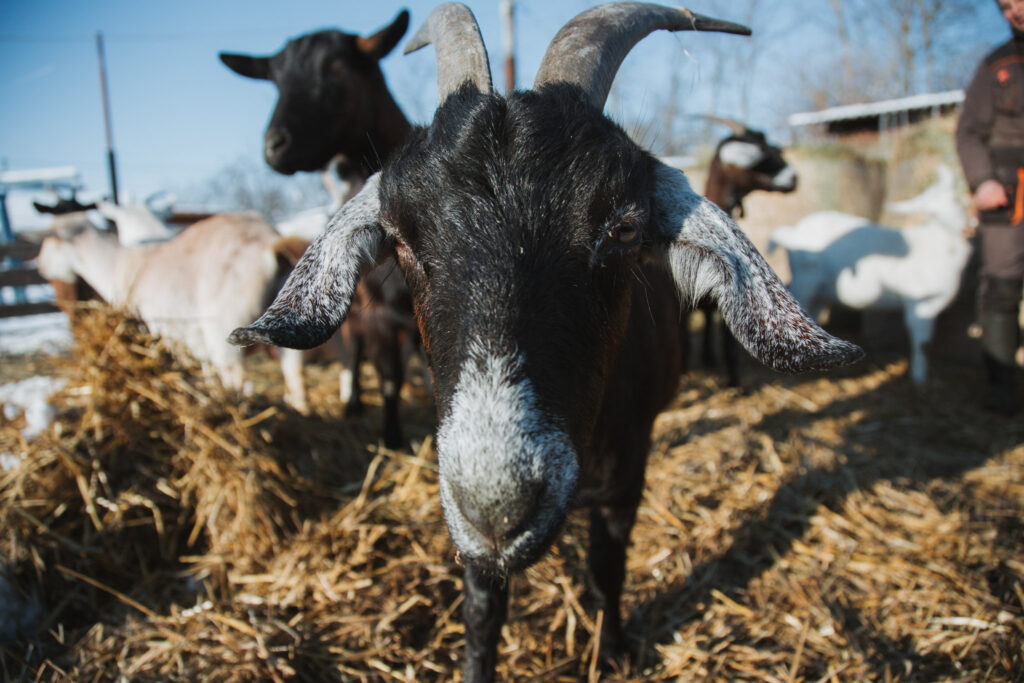
‘They spend the winter in the barn—that’s the tougher time of year—and I muck out their stalls three times a day,’ Zsani explains as she joins us. ‘Each of our cows has her own personality; Marcsa is probably the smartest. You have to know them very well—their habits—so you can tell right away if there’s a problem.’ She tells us that she’s now an independent small-scale farmer in her own right; she has 24 goats, which, like the rest of their livestock, live freely, healthily, and are fed good feed.
‘You must really love the animals. Without that, I couldn’t handle getting up at dawn every day, or the fact that my parents and I never have a day off together, and we can’t visit my sister, who teaches in Debrecen,’ she explains.
Not to mention that the work is never done, because after Zsanett has tended to all the animals, she always comes up with a new idea that, once implemented, can make their living space more comfortable.
Sitting around the Guest Table
‘There’s a cycle to farm life. I remember my own grandmother didn’t even have a trash can because they used everything,’ the mother says. They follow a similar philosophy at the Csontos estate as well. Nothing goes to waste here; for example, the whey produced during milk processing is fed to the pigs. When the time comes, the animal is slaughtered. They raise it with respect, care for it with love, and slaughter it humanely—they explain. ‘No one can grow and produce everything on their own, which is why we need to support producers. When people buy from us, they know where the products come from and where they’re processed,’ Gabriella emphasizes. It’s no wonder, then, that by the time the Friday afternoon market opens, the line is already snaking down the road, and the bigger events attract as many as 600–700 people. Many are locals—after all, once someone comes, they usually bring a neighbour, relative, or coworker the next time—and there are also plenty of interested tourists. The fair is a family event, and for the children, being up close to the animals is a tremendous experience. In the spacious barn that serves as the guest area, Zsani makes artisan hamburgers; the neighbour bakes the buns, but the young farmer prepares everything else—from the onion jam to the beef patties.
Everything the Csontos family has created on the estate didn’t come from a series of conscious decisions, but rather as if they had been guided along the way—they say. Once, a grandmother wanted to visit the animals with her grandchild; they were offered lemonade, and they stayed to chat. By the following week, they had already set out the pitcher with glasses. Just in case. Little by little, more and more people began walking over to them, settling down to play chess or badminton, while Gabriella and her family prepared various treats for the visitors. This grew into the ‘village guest table’, where most of the guests are now friends, and it’s not uncommon for them to surprise the cheese maker with gifts inspired by their shared stories. ‘Perhaps it’s that we’re genuine: we’re exactly as people see us,’ she replies when we ask what the secret to their popularity might be. ‘Week after week, we offer what we have—no more, no less—but with a great deal of love.’
Related articles:
Click here to read the original article.
At a time when public debate is increasingly polarized and superficial, Hungarian Conservative remains committed to depth, intellectual honesty, and independent conservative thought.
Producing high-quality journalism requires resources. Your contribution helps us expand our coverage, reach new audiences, and keep our content accessible.

Please consider supporting our mission.