This is a translated and edited version of the original article.
The Hawaiian Islands had never been on my bucket list. In fact, when we were living in the U.S., and our teenagers started to get tired of traveling across the American mainland, they hinted at more ‘exotic’ states such as Hawaii and Alaska… I was firmly opposed to the idea—just as I had previously resisted holidays to the Seychelles, the Maldives, or the increasingly fashionable destinations of Thailand and Dubai, so popular among travelers from Hungary and Transylvania alike. Yet, recently we found ourselves in Hawaii. We returned home not only with unforgettable memories, but also with a new Hungarian ‘grandmother’.
The reasons why I eventually changed my mind—and indeed became the one to suggest Hawaii as our holiday destination—were twofold. Firstly, several close Hungarian American friends, whose appreciation of nature far outweighs any interest in fashionable tourist hotspots, had returned from the islands with glowing recommendations. Secondly, I realized that 2026 would bring several important family anniversaries, making it the perfect occasion for a truly special holiday. After convincing myself, I managed to persuade my husband as well, and together we planned the trip as a surprise for our teenagers—especially our oldest, who was about to step into adulthood—and, of course, for ourselves.
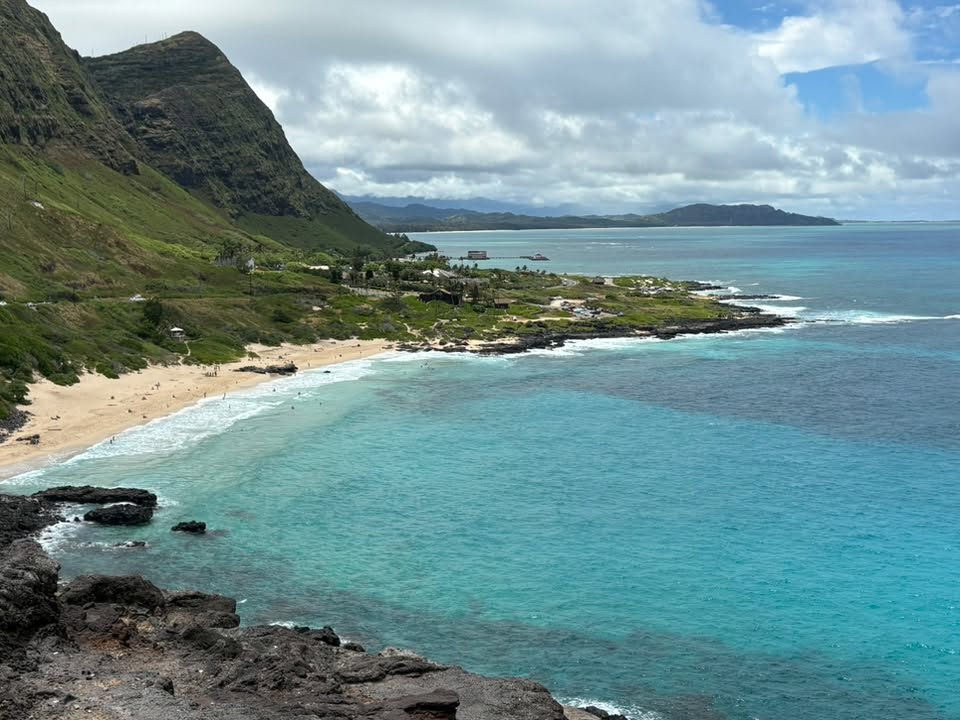
I could write at length about the extraordinary geography of the Hawaiian archipelago—since 1959, it has been the 50th state of the United States and encompasses almost the entire length of a 2,400-kilometer volcanic chain, most of whose tiny islands remain uninhabited. I could also describe its remarkably diverse climate, its fascinating history—from the first Polynesian settlers through the violent unification of the islands shortly after the arrival of the first Europeans, the arrival of Christian missionaries and colonial powers, the suppression of the Hawaiian language and culture, and the resilience of the indigenous people—as well as the many remarkable women who shaped Hawaii’s history. I could equally spend pages describing the breathtaking natural beauty we encountered. Yet all of that would go far beyond the scope of this article—and, in truth, words can never fully capture such experiences. Instead, I shall simply highlight what impressed us most.
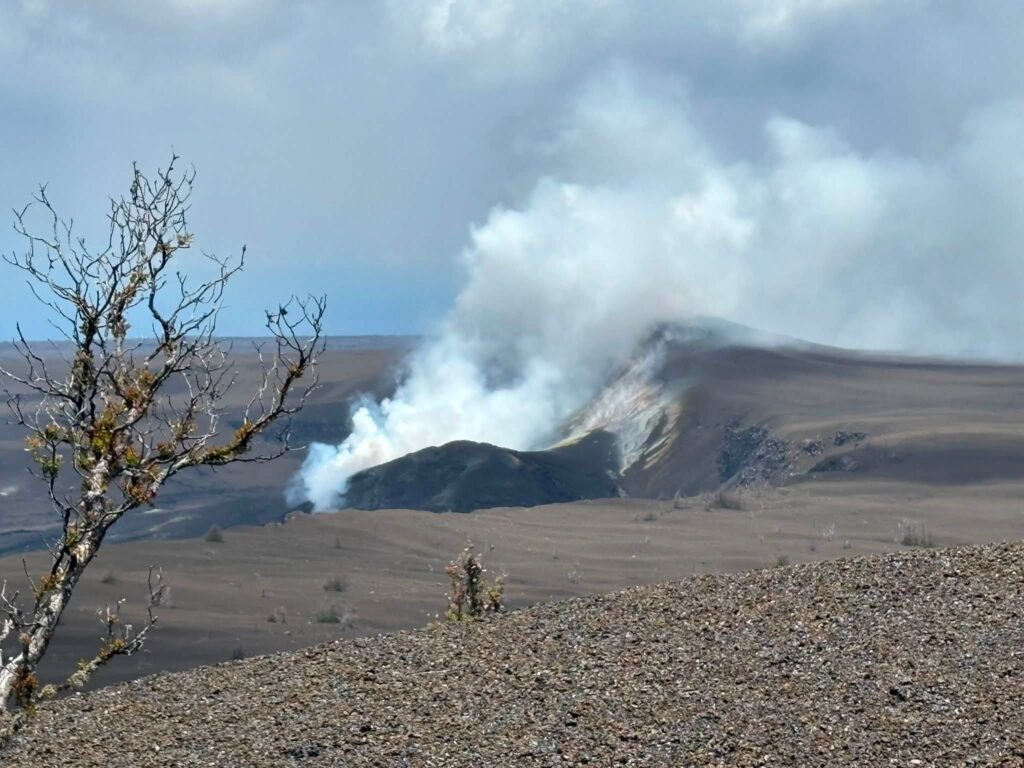
Thanks to its unique geography and exceptionally favorable climate, Hawaii offers astonishing natural diversity. The ocean shimmers in every imaginable shade of blue, spectacular volcanic craters dominate the landscape, and several volcanoes remain active. On the Island of Hawaiʻi—commonly known as the Big Island—we watched Kilauea quietly emitting smoke while the locals anticipated another lava flow, which has since indeed occurred.
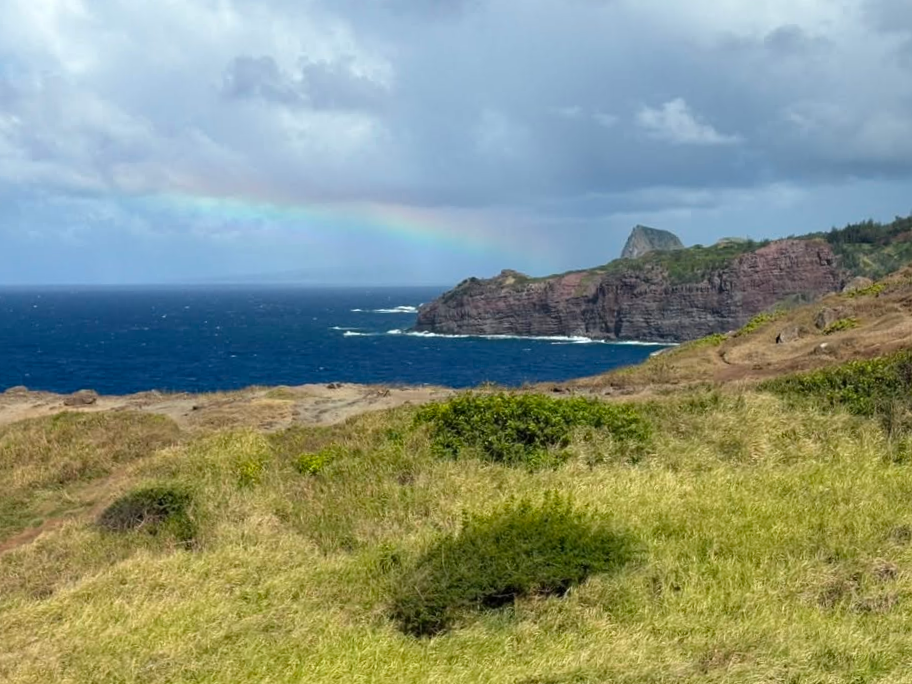
The vast fields of solidified lava, stretching in shades of charcoal and black, are dramatically interrupted by vibrant flowers, shrubs and trees that symbolize renewal and the resilience of life itself. Every island is partly covered in lush tropical vegetation, where brilliantly colored blossoms, abundant exotic fruit and the rich reds and browns of the forest floor create an almost overwhelming visual feast. Individually each element is beautiful; together they leave visitors utterly spellbound, regardless of age or background. For anyone who loves both towering mountains and the open sea, Hawaii is simply irresistible. When I discovered that the word Hawaiʻi has several meanings—including homeland, ancestral land, the underworld, and the deity of water and air—I found them remarkably fitting. They seem to reflect not only the islands’ extraordinary natural environment, but also the strong sense of identity and spirituality that continues to characterize the local people, themes to which I shall return later.
‘The vast fields of solidified lava, stretching in shades of charcoal and black, are dramatically interrupted by vibrant flowers, shrubs and trees’
One of the reasons for the remarkable diversity of landscape is the consistency of the climate. The ever-present trade winds keep temperatures pleasantly warm rather than oppressively hot, while frequent showers provide welcome relief from the humidity. Unlike Florida, where I sorely missed the changing seasons, Hawaii felt like a place where I could genuinely imagine living for an extended period of time. The local cuisine, rich in tropical fruit and fresh seafood, is easy to grow accustomed to, as are the comparatively short traveling distances. In California, for instance, we often spent hours driving to reach the spectacular national parks, whereas in Hawaii it felt as though we were living in them. Our accommodation alternated between the coast and the rainforest, and although traveling between the islands required short flights, we spent far less time in the car than we ever did, for instance, along the American West Coast. That left us with plenty of time for swimming and snorkeling—if not quite the full days our teenagers had originally hoped for.

With so many unforgettable experiences, choosing our favorites was no easy task. On the Big Island, besides witnessing the quietly smoking Kilauea, the greatest highlight for me was watching the sunset near the summit of Mauna Kea, a volcano I had previously known only from school geography lessons. As darkness fell, the sky revealed millions upon millions of stars that transported me back again to childhood evenings spent in the Harghita Mountains in Transylvania. Yet I had to admit that even those could only faintly compare with what we witnessed from Mauna Kea.
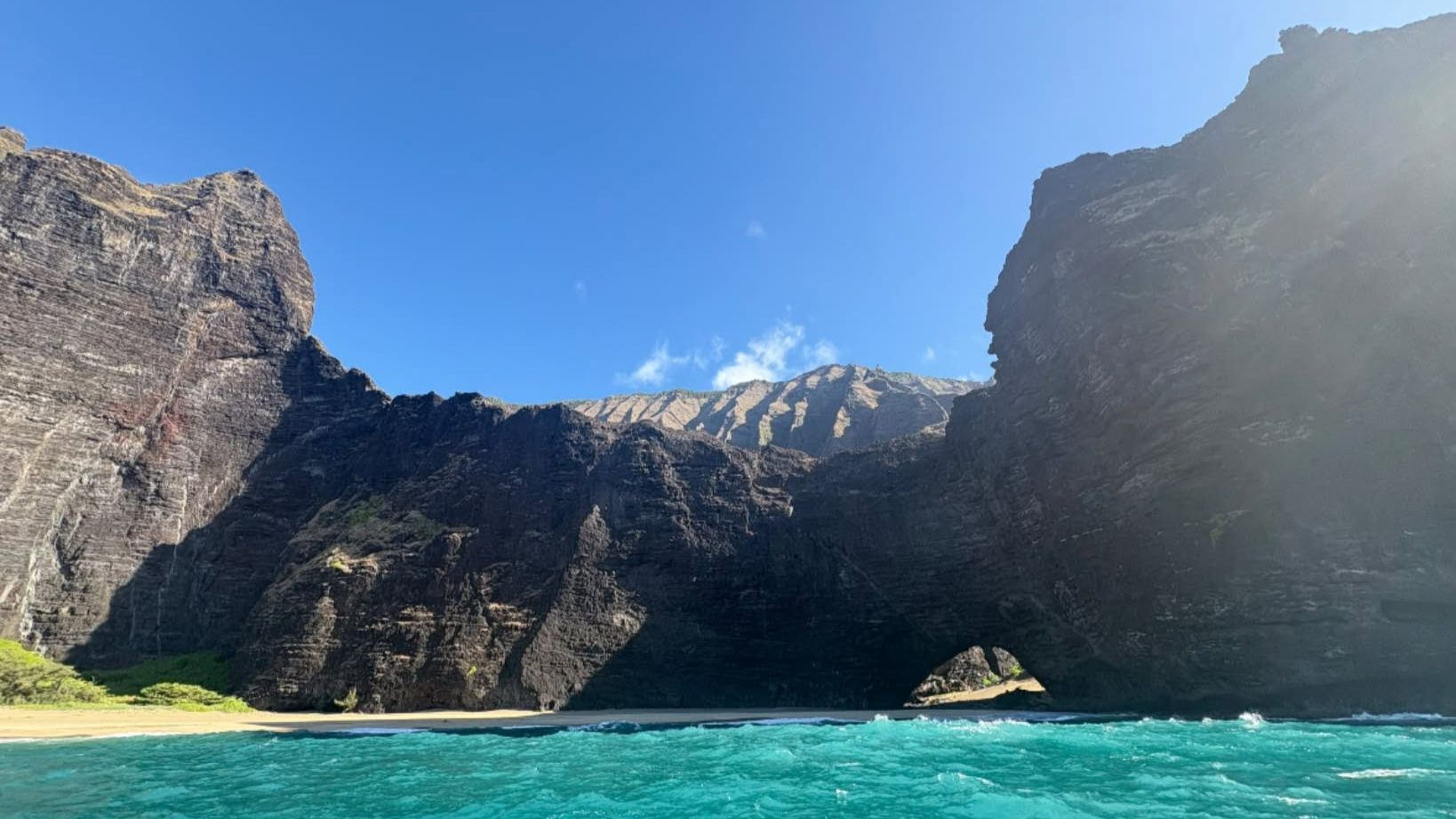
On the island of Maui, it was the more secluded beaches that captured our hearts, where we shared the shoreline mainly with local families and the island’s surprisingly numerous wild hens, roosters, and chicks while we sunbathed and explored the underwater world. On Kauaʻi, the most unforgettable experience was the spectacular 17-mile stretch of the Nā Pali Coast, inaccessible by road and made famous through countless movie scenes. We explored this breathtaking coastline via a three-hour inflatable speedboat excursion led by two local guides. As for Oʻahu, the first island we visited, some memories will remain with us forever: watching surfers greet the sunrise at the world-famous Waikiki Beach in Honolulu; climbing the crater and viewpoint of Diamond Head, the island’s long-extinct volcanic cone; and, naturally, visiting the Pearl Harbor memorial complex.
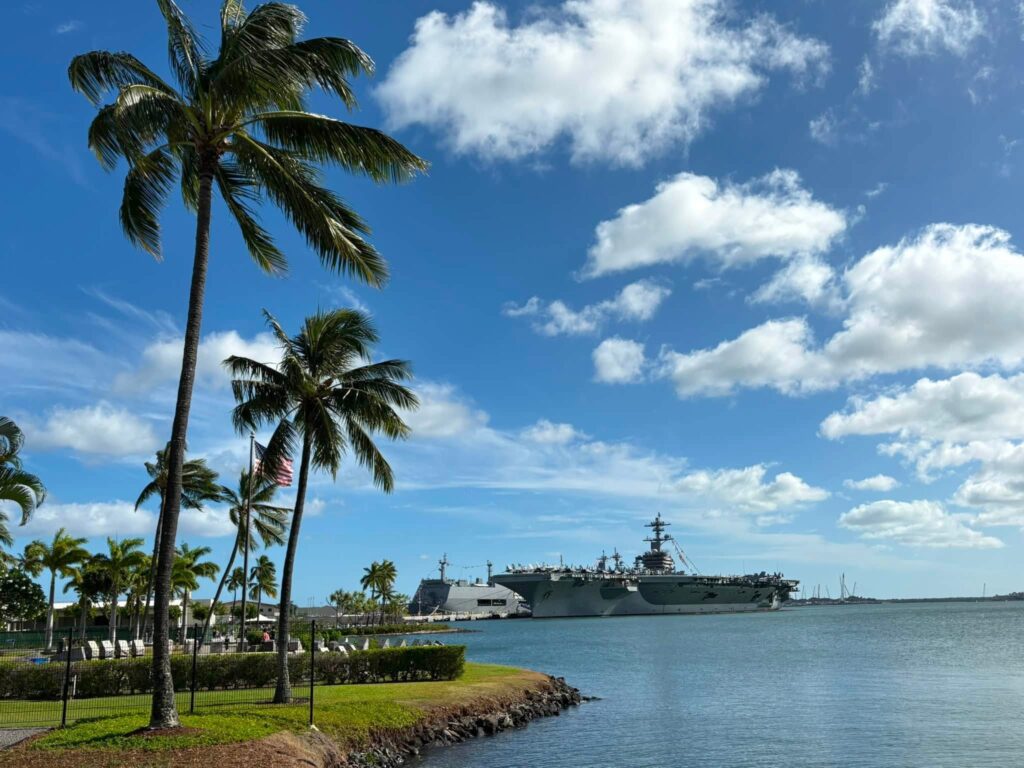
I have deliberately left Pearl Harbor until last. Overall, we tended to prefer the less crowded places—even though even Hawaii’s busiest attractions were far more manageable than many famous tourist destinations in Europe or North America—Pearl Harbor was an undeniable exception. Despite attracting large numbers of visitors, it became one of the highlights of our journey for every member of the family. Standing where one of the defining chapters of 20th-century history unfolded, and gaining such a tangible understanding of the beginning and course of the Pacific War during World War II, proved a profoundly moving experience. We spent many hours exploring the three principal exhibitions: the battleship USS Missouri, where Japan formally signed the instrument of surrender ending the war; the Aviation Museum; and the Submarine Museum. Although we did not visit the memorial built above the sunken USS Arizona, destroyed during the Japanese attack in 1941, we nevertheless felt our visit was complete. In truth, Pearl Harbor deserves at least two full days to appreciate properly. Adding to the atmosphere was the imposing presence of the USS Theodore Roosevelt, one of the world’s largest aircraft carriers, anchored in the harbor throughout our visit. Visible from almost everywhere, it served as a constant reminder that the tragedies of the past are never entirely confined to history—they continue to shape the present.
The traces of colonization are still visible everywhere. For many people, Hawaii evokes images of volcanoes, idyllic weather, spectacular scenery, and smiling islanders wearing flower garlands and performing the hula dance. Yet it’s worth remembering another side of the islands’ history. After Captain James Cook arrived in 1778, waves of colonists, traders and American Protestant missionaries sought not only to settle on the islands, but also to persuade—or compel—the Indigenous population to abandon their religion, language, customs and cultural identity. Cook himself reportedly attempted to exploit the reverence with which the islanders initially regarded him, believing that he possessed divine qualities. Ironically, he met an equally undignified end shortly after this episode.
‘The tragedies of the past are never entirely confined to history—they continue to shape the present’
It’s impossible not to reflect on the complex web of economic, political, and religious interests that led to the physical and spiritual oppression of Hawaii’s indigenous people. Introduced epidemics devastated the population, while systematic efforts were made to suppress local traditions and institutions, ultimately culminating in the gradual loss of Hawaiian sovereignty. Fortunately, there were always those who resisted. Among them was Queen Liliʻuokalani, the last sovereign ruler of the Hawaiian Kingdom and its only queen. Following the overthrow of the monarchy and the eventual annexation of Hawaii by the U.S. in 1898, she fought tirelessly against the loss of her country’s independence. She became the symbolic leader of the resistance movement. Although an armed uprising launched by her supporters against Sanford B. Dole’s Provisional Government ultimately failed, she never abandoned her cause. Throughout her reign, she expressed her deep love for her people through patriotic reforms and later through the songs she composed after her deposition.
Inspired by her example, nowadays many Hawaiians continue preserving and passing on authentic local traditions rather than following those adapted purely for tourism. Although we didn’t personally encounter such cultural initiatives, we frequently came across statues, memorials, and information boards encouraging visitors not only to protect the natural environment, but also to respect Hawaii’s cultural heritage. One small detail struck us in particular: many homes displayed polite notices asking visitors to remove their shoes before entering. Such signs are virtually unheard of elsewhere in the U.S. Even in Europe, where removing shoes is more common, it’s unusual to see such a request written on the front door.
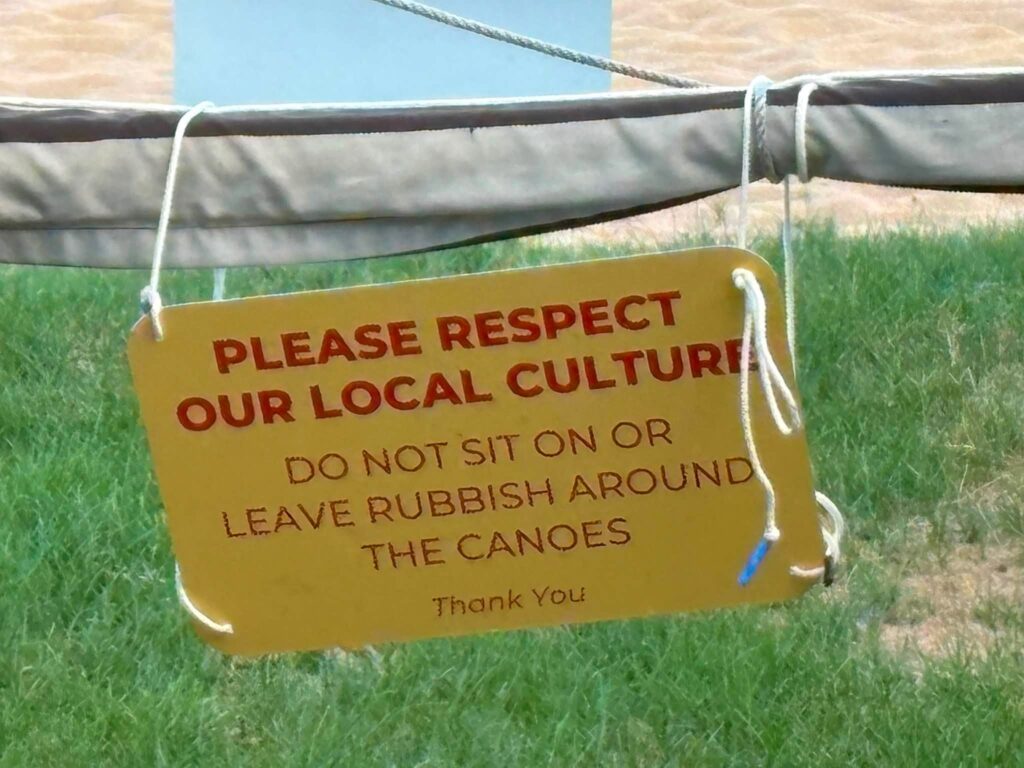
We first noticed one of these signs when we arrived at our accommodation on the Big Island, our second stop in Hawaii. Nestled in the rainforest, the house belonged to an elderly lady who rented out two bedrooms while continuing to live there herself. It soon became apparent that the reason she spoke English with an unusual accent was simple: she was Hungarian! Apart from a single tourist couple, she was the only fellow Hungarian we encountered during our stay in Hawaii. Before our journey, I had corresponded with another elderly Hungarian lady living on Maui, who had once ordered my Being Hungarian in America books, but unfortunately I was unable to reach her this time.
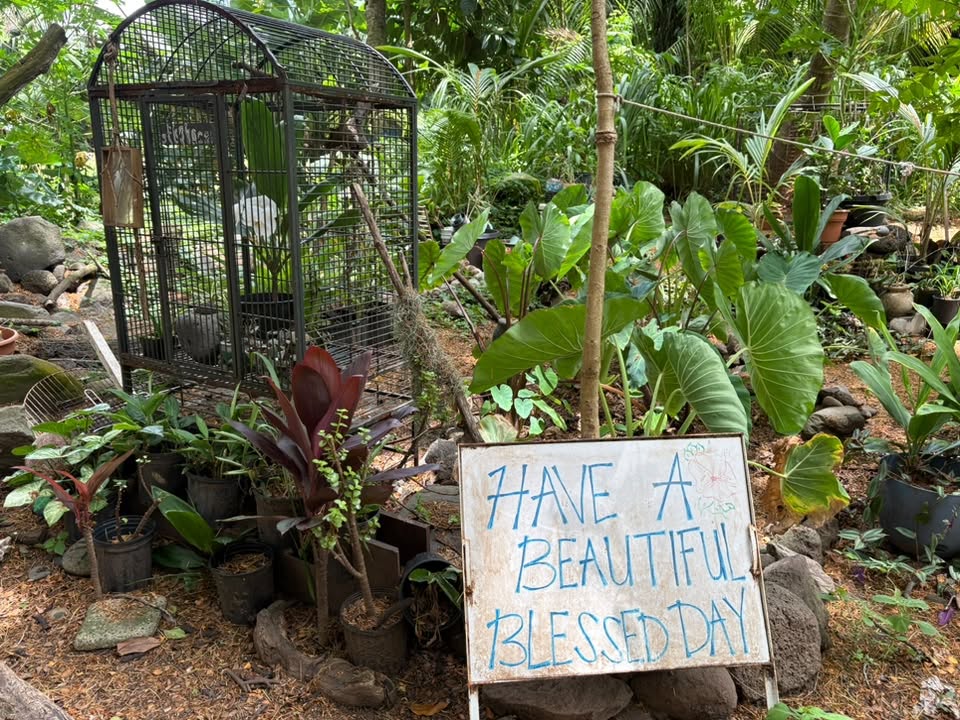
Our guesthouse owner and manager, Irene Grunfeld, had left Hungary in the 1970s. After spending several years in Western Europe, followed by two decades in Los Angeles, she visited Hawaii on holiday, fell completely in love with the islands, bought a house that happened to be for sale, and has lived there ever since, running it as a smaller guesthouse. Our relationship did not begin entirely smoothly. We arrived late in the evening, and because of an error in the online booking, there was one extra person in our family, which was unexpected for her. Small geckos wandered freely across the bedroom walls—something we didn’t particularly appreciate at first—and when we asked her how to get rid of them, she replied rather sternly: ‘You don’t. Leave them alone.’ Our children quietly muttered to us, equally unimpressed: ‘Why couldn’t we have stayed in a hotel instead?’ She also seemed rather annoyed that we had brought food for breakfast and had, in her words, ‘taken over’ her kitchen. Given these circumstances, our first few days together were somewhat awkward. Yet, as time passed, the rather formidable elderly lady gradually revealed a much warmer side of herself.
She brought us extra bedding and fresh towels every day—essential in the rainforest’s humid climate—and surprised us each morning with delicious homemade breakfasts. Little by little, she took us into her heart, just as we came to cherish her. One afternoon she invited us to join a local music gathering. She plays the ukulele in an amateur Hawaiian elderly ensemble and introduced us to some of her musician friends, who ended up staying for two nights. Ron told us how he had immigrated from New Zealand to Hawaii as a young man simply because it offered more and better surfing possibilities than his home country, while he and his American wife, Roberta, had spent decades leading cycling tours across the islands.
After that cheerful afternoon, Irene herself became increasingly open. She shared stories about her life in Hawaii, her circle of friends—none of whom were Hungarian, which meant she now spoke her native language only with relatives in Budapest and Los Angeles—and the music and canoeing they enjoyed together. Two stories, in particular, stayed with me. After her mother’s death, while she was grieving deeply, a Hawaiian friend came to comfort her through music. He eventually taught her to play the ukulele, which became a source of healing and joy. Later she told us that her former husband had also been of Transylvanian origin. Then she showed us old family photographs of relatives who had been deported to Auschwitz, most of whom never returned.
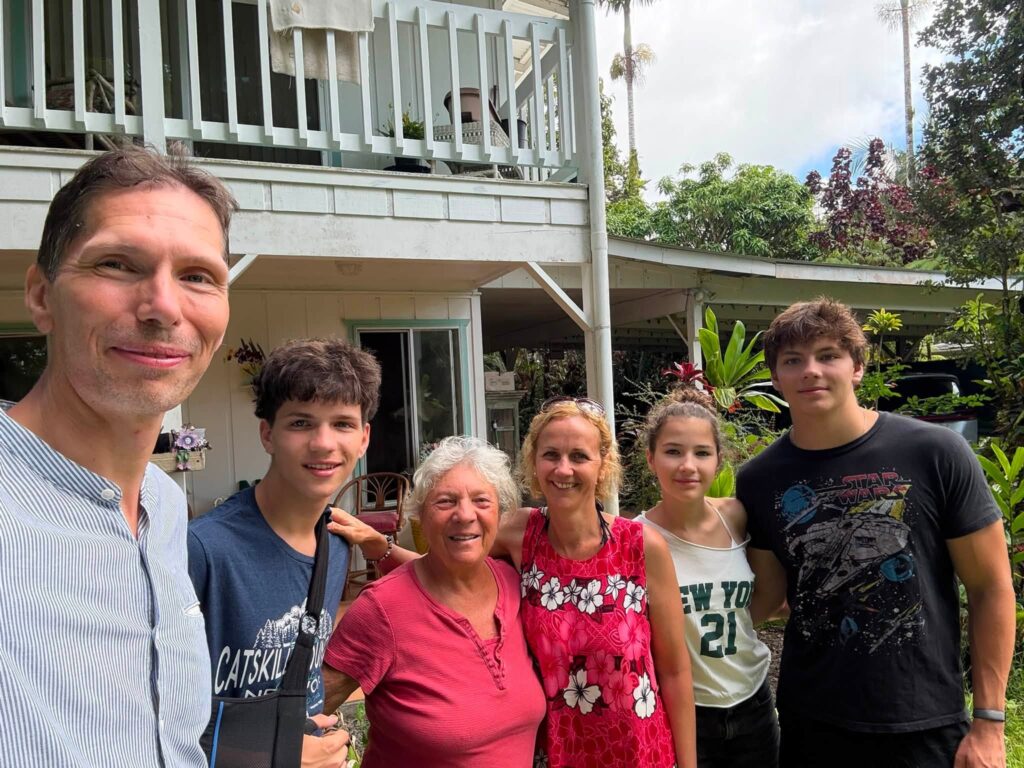
Speaking Hungarian in the middle of a Hawaiian rainforest already felt surreal. Looking through those photographs was something far more profound and deeply moving. On our final morning, Irene presented us with several farewell gifts: a calendar, heartfelt embraces accompanied by tears, and, most precious of all, a grandmother’s blessing. When I told her that, after my mother’s early death and the sale of my childhood home, an elderly lady in Transylvania had become a kind of honorary grandmother for our children, always telling us that we were welcome back whenever we wished, Irene’s eyes filled with tears, and she quietly said: ‘Your Hawaiian grandmother will be waiting for you, too.’
Related articles:
Read the original article here.
At a time when public debate is increasingly polarized and superficial, Hungarian Conservative remains committed to depth, intellectual honesty, and independent conservative thought.
Producing high-quality journalism requires resources. Your contribution helps us expand our coverage, reach new audiences, and keep our content accessible.

Please consider supporting our mission.