
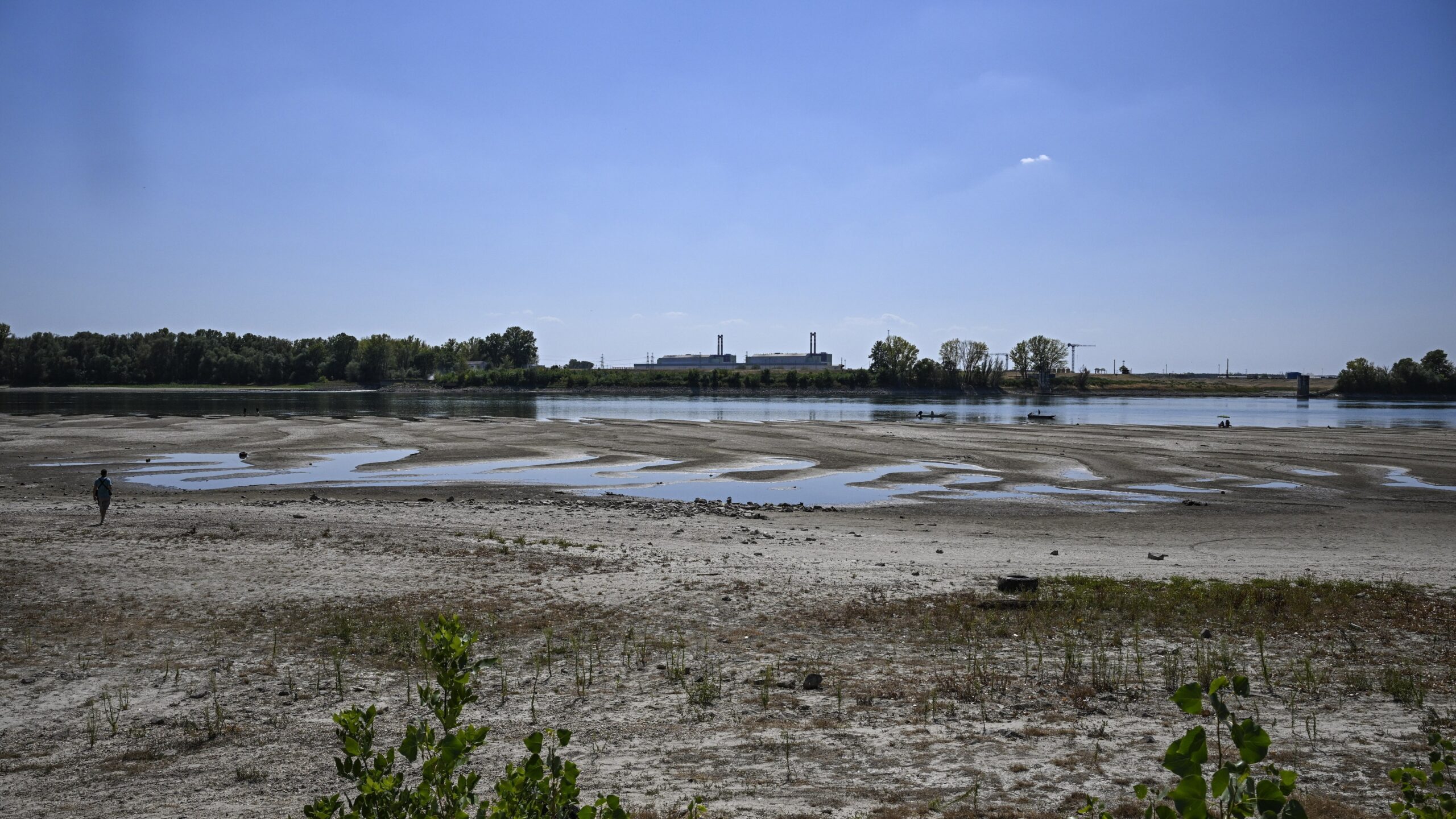
Hungary has temporarily avoided a complete shutdown of the Paks Nuclear Power Plant, with the facility’s final 240-megawatt turbine expected to remain in operation through Monday and possibly Tuesday, Prime Minister Péter Magyar said in a video message posted on Facebook.
Magyar described the development as positive news, noting that the country’s power system had so far avoided losing an additional 240 megawatts of generating capacity during one of the year’s highest electricity demand periods.
He recalled that experts had expected the continued fall in the Danube’s water level to force the complete shutdown of the plant on Sunday or Monday, marking the first total stoppage in the facility’s 44-year history.
According to the prime minister, government experts, water management authorities, and Paks engineers have spent several days examining whether electricity generation could safely continue despite the exceptionally low water level.
He said no contingency plans had been prepared by previous governments, the plant’s designers or its management for water levels as low as those currently affecting the Danube, leaving engineers in uncharted territory.
Authorities have also been examining the possibility of constructing a temporary dam outside the plant, although Magyar said such intervention would require lengthy and complex regulatory approvals because of nuclear safety requirements.
The Danube’s water level at Paks has now fallen to minus 137 centimetres, below the previously identified shutdown threshold of minus 134 centimetres.
Magyar said that after the penultimate turbine was switched off on Sunday, engineers reduced the volume of cooling water required by the plant. As a result, the water level at the plant’s intake structure temporarily rose by several centimetres. According to the plant’s management, the final operating turbine will remain online until the water level at the intake falls another five centimetres.
The prime minister thanked employees at the Paks Nuclear Power Plant for their work, while stressing that the possibility of a complete shutdown remains if the Danube continues to fall. He said nuclear safety remains the government’s overriding priority and that electricity generation would only continue as long as it can be maintained safely.
Magyar also praised households, businesses, public institutions and local authorities for reducing electricity consumption by 700 megawatts on Sunday, describing the savings as equivalent to roughly one and a half Paks reactor units.
He warned that the five most critical days are now beginning, with record temperatures forecast and no significant rainfall expected to improve drought conditions or increase the Danube’s flow.
The prolonged heatwave is expected to place additional strain on the electricity grid, drinking water supply, healthcare system, social services, transport, agriculture, water management and disaster response services.
Magyar said the government will first require the state, major companies and industrial facilities to reduce electricity consumption before asking households to make further sacrifices. He added that hundreds of companies have already voluntarily adjusted production schedules to lower power demand, but mandatory consumption reductions and temporary disconnection of major industrial users remain possible if needed to safeguard national energy security.
He urged the public to reduce or postpone non-essential electricity use between 5pm and 10pm over the coming days, saying the country’s energy supply remains stable thanks to the public’s disciplined cooperation.
Related articles:
At a time when public debate is increasingly polarized and superficial, Hungarian Conservative remains committed to depth, intellectual honesty, and independent conservative thought.
Producing high-quality journalism requires resources. Your contribution helps us expand our coverage, reach new audiences, and keep our content accessible.

Please consider supporting our mission.