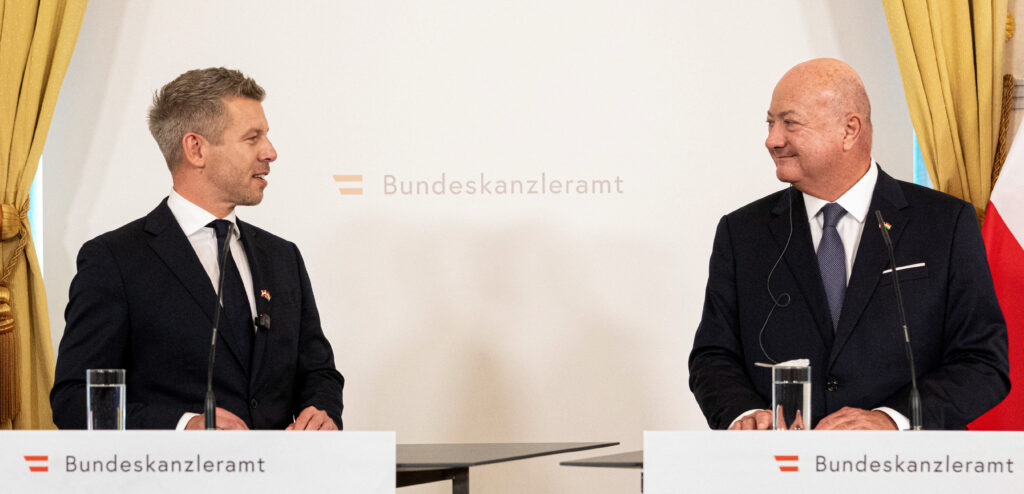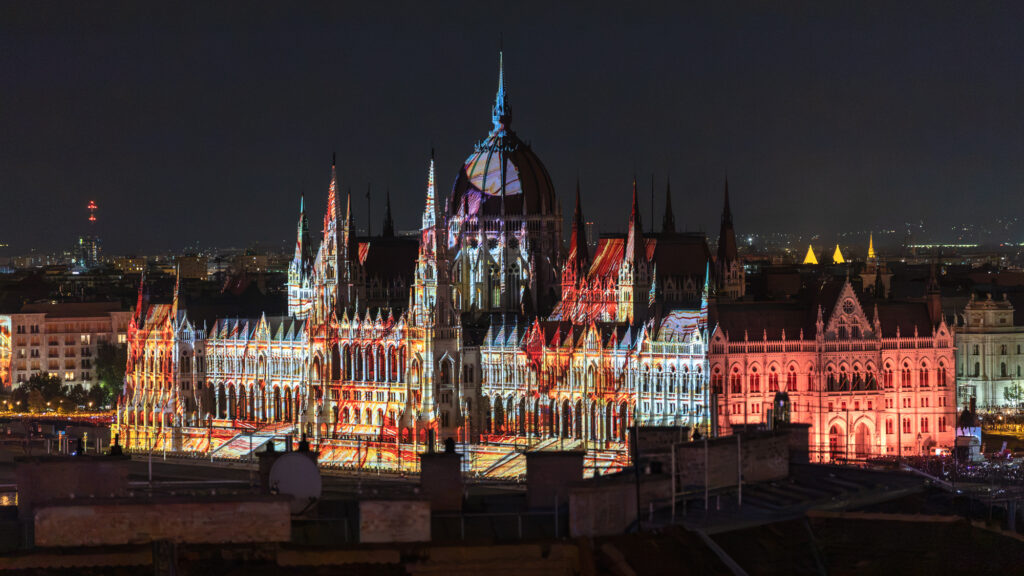

The Hungarian government has approved a comprehensive energy development plan in response to the lessons learned from the current energy crisis, Prime Minister Péter Magyar announced on Wednesday.
In a video published on Facebook, Magyar said the programme includes expanding energy storage capacity, modernizing the electricity grid and launching new wind power and geothermal energy projects.
The investments will be financed through a combination of domestic and European Union funding, alongside private capital. According to the prime minister, the government will introduce financing models that allow both the Hungarian state and host municipalities to benefit financially from the projects.
Magyar also provided an update following a meeting of the government’s Defence Task Force, saying the situation at the Paks Nuclear Power Plant had stabilized as the Danube’s water level at Paks had risen to seven centimetres above the minimum operational threshold.
He added that Slovakia had publicly confirmed it would continue fulfilling its international obligations by ensuring Hungary receives its agreed share of Danube water.
The prime minister noted that one of the power plant’s pumps had briefly shut down automatically because of the extreme heat earlier in the day but was expected to resume operation shortly.
‘We are cautiously optimistic,’ Magyar said, adding that Hungary had so far managed to preserve the balance of its electricity system and avoid a complete shutdown of the Paks Nuclear Power Plant. He also praised what he described as a nationwide effort to reduce electricity consumption, while warning that the coming days would remain critical.
The prime minister also reported on several emergency situations caused by the heatwave. A wildfire covering approximately 150 hectares near a MOL facility outside Székesfehérvár had been extinguished, while another fire affecting around 100 hectares of vegetation near Dédestapolcsány in north-eastern Hungary was still being fought with the support of military helicopters.
Magyar said drinking water supplies remained stable across almost the entire country. Where assistance was needed, disaster management authorities and the armed forces had been deployed. Over the previous two days, authorities had distributed around 140,000 litres of drinking water to motorists caught in motorway traffic jams and to rail passengers.
He also highlighted the contribution of around 2,500 volunteers from the Tisza party, who distributed one million litres of drinking water at 350 locations to pedestrians and people working outdoors.
The prime minister said he had instructed every sector represented in the Defence Task Force to prepare medium- and long-term climate adaptation strategies.
Magyar argued that the current situation was the result of years of poor decisions and neglect by the previous government. He accused the former administration of deliberately obstructing wind power development, failing to expand energy storage capacity, leaving the Paks Nuclear Power Plant unprepared for historically low river levels and abandoning efforts to secure EU funding for energy investments and climate adaptation.
He pledged that the current government would secure those European Union funds and initially invest 868 billion forints in energy development projects.
Among the planned measures, Magyar said the government would accelerate and simplify the grid connection process for household solar installations. Free smart electricity meters will become available to all consumers, while households using more than 4,000 kilowatt-hours of electricity annually will be required to install them.
The government also plans to streamline permitting procedures for geothermal energy projects.
Magyar announced that the first tenders for wind power developments will be published by 31 August. Developers will be required to include Hungarian state ownership in their projects, with the aim of ensuring that both the state and local governments receive financial benefits, unlike earlier solar investments. Municipalities will be able to participate through the St Stephen Rural Development Programme.
According to the prime minister, hosting wind farms would provide communities with long-term tax revenues, more secure and affordable energy supplies, as well as investment in local roads and electricity networks.
He also announced that the results of a 1.5 billion euro, or approximately 600 billion forint, European Union-funded electricity grid modernization tender will be published on Friday.
Concluding his remarks, Magyar again appealed to households and businesses to continue limiting electricity consumption and to postpone non-essential energy use wherever possible during the current period of exceptionally high demand.
Related articles:
At a time when public debate is increasingly polarized and superficial, Hungarian Conservative remains committed to depth, intellectual honesty, and independent conservative thought.
Producing high-quality journalism requires resources. Your contribution helps us expand our coverage, reach new audiences, and keep our content accessible.

Please consider supporting our mission.