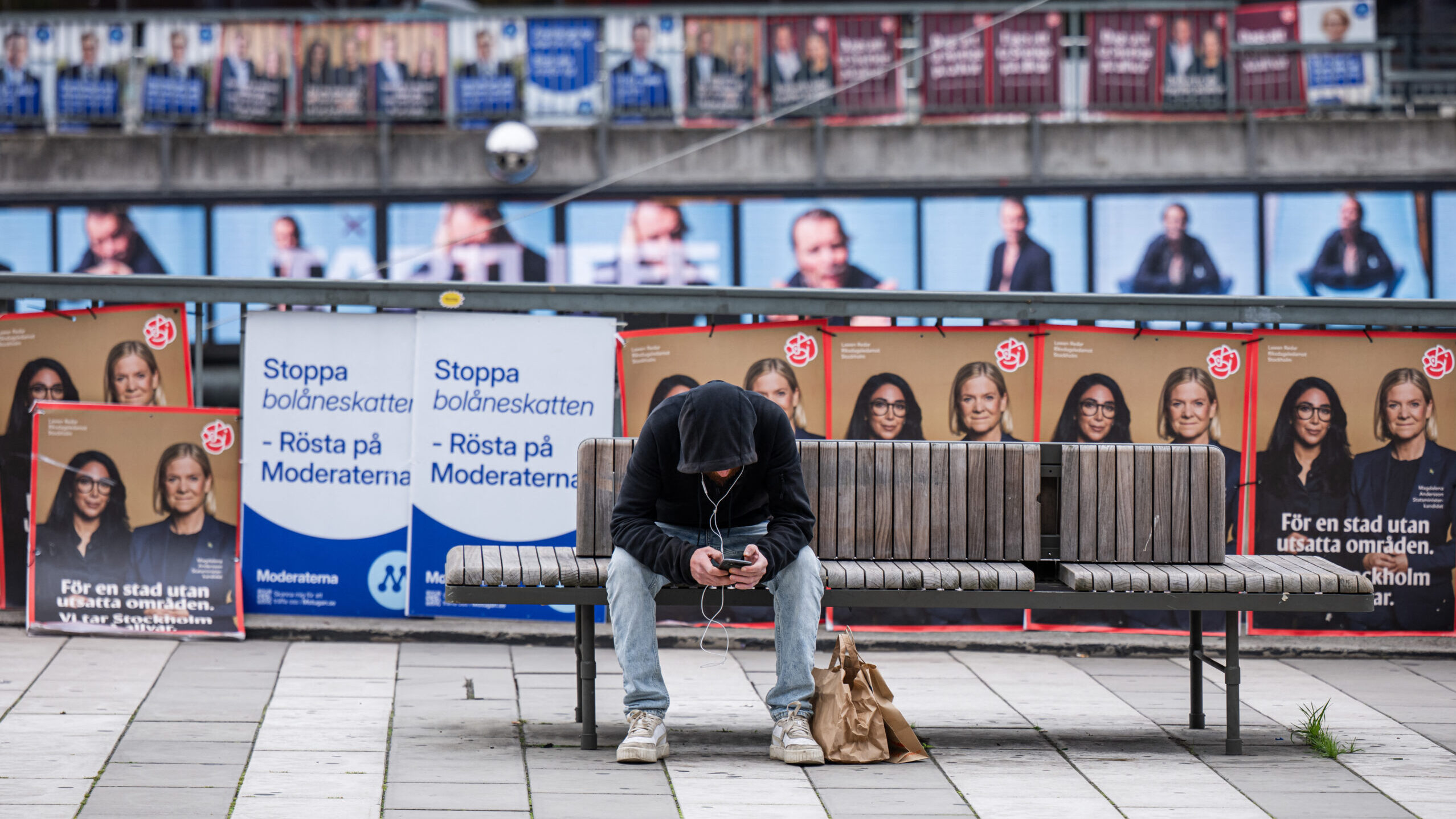
Sweden’s Social Democratic leader Magdalena Andersson has accused Prime Minister Ulf Kristersson of failing to answer security questions surrounding his future coalition partner, the hard-right, anti-immigration Sweden Democrats, as the country’s general election, scheduled for the weekend, has become mired in a scandal linked to Russia.
‘Ulf Kristersson must come clean about the security crisis,’ Andersson told POLITICO Brussels in an interview published on 7 September, six days before Swedes vote. Calling Russia ‘the greatest threat to Sweden’, the former prime minister demanded to know whether national-security information may have been exposed.
The controversy began with a 3 September investigation by the so-called anti-racist foundation Expo into Polina Malaberg, a Sweden Democrats (SD) employee who has worked around the Riksdag’s EU Affairs and Constitutional committees. Expo said she promoted pro-Kremlin narratives and joined a Kremlin-sponsored trip to Russia in 2017.
What makes the allegations more politically explosive is her partner, Gustav Gellerbrant, head of SD’s Coordination Office inside the Government Offices. The senior SD politician has not been accused of working for Russia; nevertheless, SD says he underwent renewed security vetting after the relationship began. No Swedish authority has asked the party to take action regarding the scandal so far. SD leader Jimmie Åkesson called the allegations serious; Kristersson said Malaberg should be dismissed if they prove true.
‘The Social Democrats are now seeking to turn an election dominated by domestic issues into a choice about geopolitical reliability’
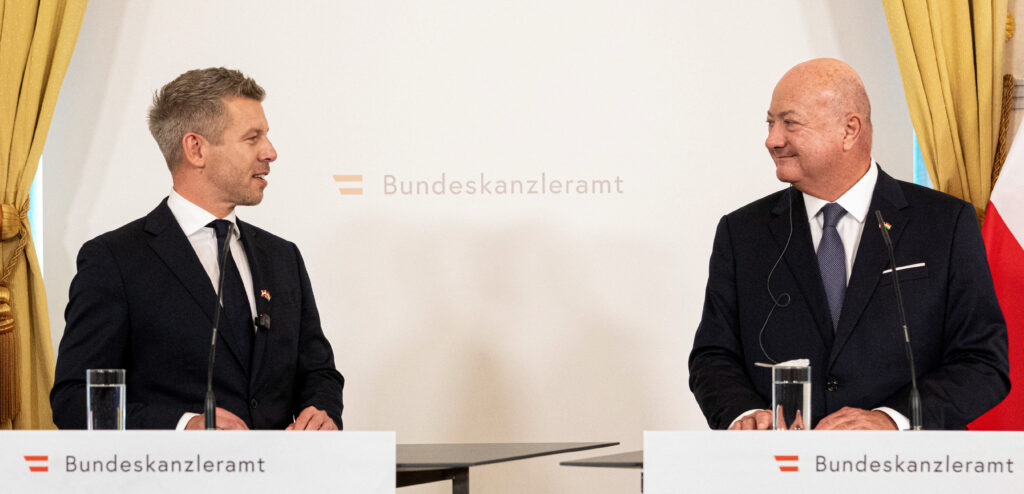
The timing bears an eerie resemblance to the closing weeks of Hungary’s April election. From late March, then-Minister of Foreign Affairs and Trade Péter Szijjártó’s relationship with Russian Foreign Minister Sergei Lavrov became one of the campaign’s defining stories after leaked calls appeared to show him discussing EU sanctions with Moscow. Further recordings released on 8 April—four days before voting—showed Szijjártó offering to send Lavrov a document, already public at the time of the call, concerning Ukraine’s EU accession talks.
Then-opposition leader Péter Magyar seized on the disclosures to recast Hungary’s election as a geopolitical choice. In an Associated Press interview published on 3 April, he said the vote would decide whether Hungary continued drifting towards ‘Eastern autocracies’ or returned to Europe’s democratic mainstream, calling it a referendum on Hungary’s place in the world. At Tisza rallies, crowds repeatedly chanted ‘Russians, go home’. Szijjártó, meanwhile, denounced the releases as intelligence interference. On 12 April, Tisza won a historic landslide, securing 141 mandates in the 199-seat parliament.
Sweden’s own ‘Russiagate’ arrives at a very similar phase of the campaign, and the opposition’s reaction is much the same: the Social Democrats are now seeking to turn an election dominated by domestic issues into a choice about geopolitical reliability.
That is particularly dangerous for Kristersson because the right had only just begun to close the polling gap against the Social Democrat-led coalition. A Novus poll published on Monday put Andersson’s four-party opposition bloc at 50.3 per cent and the Tidö parties—named after the current coalition agreement, the Tidö Agreement—at 47.9 per cent, within the statistical margin of error. Crucially, the Liberals reached 4.3 per cent, above Sweden’s 4 per cent parliamentary threshold.
The stakes are higher than in 2022. Kristersson has opened the door to SD entering government, while Åkesson has argued that ministerial posts should broadly reflect party strength. A Tidö 2.0 could therefore give SD executive responsibility for the first time. Currently, the hard-right party is not officially part of the governing coalition, but supports the cabinet from the outside.
Migration remains among voters’ top concerns. Kristersson’s government says its first term delivered a ‘paradigm shift’: asylum rules moved towards the EU legal minimum, internal controls were strengthened, and permanent residence was restricted. The Moderates now advocate minimal asylum immigration for the foreseeable future, broader deportation of criminals and those who seriously misconduct themselves, and tougher enforcement against illegal residence.
SD goes further, promising the lowest possible asylum intake, continued voluntary repatriation, deportation of serious foreign criminals, and support for replacing more permanent residence permits with temporary ones.
‘All eyes will be on the Liberals: if they clear the threshold, the right recovers a potentially decisive tranche of seats and keeps a Tidö 2.0 in play’
Andersson has conceded that Sweden’s old migration model was unsustainable, though she was hardly an outside observer: she served as finance minister from 2014 to 2021, including throughout the 2015 migration crisis, when the Löfven government initially maintained one of Europe’s most generous asylum regimes. She now told POLITICO that Sweden requires a ‘very strict’ policy, even endorsing third-country return hubs, while drawing the line at SD’s push to revoke some existing permanent residence rights.
With six days left, the election has become a battle over framing. Andersson wants the final stretch to focus on Russia, security, and whether SD can be trusted inside government. Kristersson and Åkesson need voters focused on migration, crime, integration, and whether to extend four years of tougher policy.
Swedes vote on Sunday, 13 September, in a proportional election for the 349-seat Riksdag, with parties generally needing at least 4 per cent nationally to enter parliament and 39 adjustment seats used to keep the final result broadly proportional.
All eyes will be on the Liberals: if they clear the threshold, the right recovers a potentially decisive tranche of seats and keeps a Tidö 2.0 in play. If they fall short, however, those votes are largely wasted, making a Social Democrat-led majority far more likely.
Related articles:
At a time when public debate is increasingly polarized and superficial, Hungarian Conservative remains committed to depth, intellectual honesty, and independent conservative thought.
Producing high-quality journalism requires resources. Your contribution helps us expand our coverage, reach new audiences, and keep our content accessible.

Please consider supporting our mission.