
Hungary has ordered ten members of Russia’s diplomatic mission to leave the country after authorities concluded that they had carried out activities incompatible with diplomatic status, Foreign Minister Anita Orbán announced on Tuesday, 8 September, prompting Moscow to vow a ‘harsh and painful’ response.
‘Today, on my instruction, the competent head of the Foreign Ministry informed Russia’s ambassador in Budapest that, according to the assessment of the Hungarian authorities, ten employees of the Russian representation had carried out activities in Hungary that are unacceptable for a diplomat under the Vienna Convention,’ Orbán wrote.
The Hungarian side therefore instructed the ten employees to leave the country. Orbán said the decision was intended to protect ‘Hungary’s security and sovereignty’. The government has not disclosed their names or positions, the precise activities attributed to them, or their departure deadline.
Russia reacted immediately, with Foreign Ministry spokeswoman Maria Zakharova saying Moscow’s response to what she described as the ‘Russophobic lobby in Budapest’ would be ‘harsh and painful’, although Russia has not yet specified what retaliatory measures it intends to take.
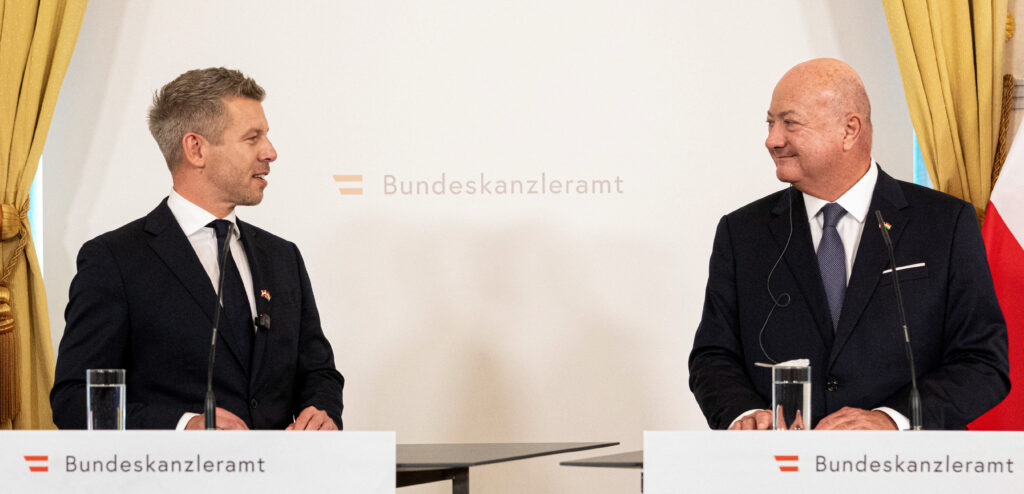
Prime Minister Péter Magyar also read out Orbán’s announcement in parliament on Tuesday, saying the Tisza government would defend Hungary’s sovereignty.
Orbán highlighted that the move does not amount to a rupture of diplomatic relations with Russia. ‘Hungary continues to intend to maintain the necessary dialogue, alongside mutual respect and compliance with the rules,’ she said.
Russia’s ambassador in Budapest, Yevgeny Stanislavov, was formally informed of the decision. He had previously been summoned by Orbán in May after a major Russian drone attack on western Ukraine also struck Transcarpathia, home to the Hungarian minority community.
Tuesday’s expulsions come amid gradually deteriorating relations between Budapest and Moscow since the change of government. Magyar’s Tisza Party won the 12 April election, ending 16 years of Fidesz–KDNP rule under Viktor Orbán.
Tensions intensified in late August after the Magyar government issued instructions for Hungary’s delegation to the 81st UN General Assembly describing Russia’s conduct as a ‘threat to Hungary, Europe and the global order’. The document condemned Russia’s military aggression, reaffirmed Ukraine’s sovereignty and territorial integrity, and warned that the war also endangers ethnic Hungarians in Transcarpathia.
The language provoked unusually sharp reactions from Russian lawmakers. Grigory Karasin, chairman of the Federation Council’s International Affairs Committee, accused Magyar of joining Europe’s ‘battalion of hatred and hostility towards Russia’. State Duma Defence Committee member Andrei Kolesnik suggested Russian oil and other energy supplies to Hungary could be put ‘in question’, while Senator Vladimir Dzhabarov similarly warned Budapest over its rhetoric. The Kremlin has not reacted so far.
Relations are also overshadowed by an investigation into former foreign minister Péter Szijjártó’s contacts with Moscow. Magyar confirmed on 16 July that a probe had begun into Szijjártó’s Russia ties, saying authorities had classified documents, Foreign Ministry documents, and other materials, but declined to give further details.
The investigation followed the so-called ‘Russiagate’ scandal that erupted during the final weeks of the election campaign. The Washington Post reported in March, citing unnamed European intelligence sources, that Szijjártó repeatedly called Russian Foreign Minister Sergei Lavrov around closed EU foreign ministers’ meetings and provided immediate, near-live information about the discussions.
Days before the 12 April election, investigative outlets published recordings of calls made between 2023 and 2025 that appeared to show close coordination over EU sanctions, Ukraine’s accession talks, and other sensitive European issues. Szijjártó denied improperly sharing confidential information, initially dismissing parts of the reporting as ‘fake news’ and later arguing that consultations with Lavrov before and after EU meetings were normal diplomacy.
The expulsions also come against a wider counter-intelligence backdrop. An April investigation by independent Russian outlet Agentstvo, based on leaked data and Hungary’s diplomatic registry, reported that 15 of the 47 employees then listed at the Russian embassy had links to Russian intelligence services, while another six were suspected of such connections. The Hungarian government has not said whether any of the ten ordered to leave on Tuesday are among those previously identified.
Hungarian Conservative contacted the Foreign Ministry seeking further information on the identities and positions of those expelled, the activities that prompted the decision, their departure deadline, and the possibility of Russian retaliation. The ministry declined to provide additional details, saying it ‘does not wish to share any further information regarding the expulsions at this time’.
Related articles:
At a time when public debate is increasingly polarized and superficial, Hungarian Conservative remains committed to depth, intellectual honesty, and independent conservative thought.
Producing high-quality journalism requires resources. Your contribution helps us expand our coverage, reach new audiences, and keep our content accessible.

Please consider supporting our mission.