

‘If current trends continue unchecked, Germany in 2030 will be a country…in which the range of acceptable opinion has narrowed dramatically. The constitutional vocabulary will still be used, but its content will have been hollowed out, rights will be conditional on democratic reliability, and whole social groups will live under a permanent cloud of suspicion.’
Why does Germany react with moral panic to Washington’s 2025 National Security Strategy, a document clarifying national interests while exposing Europe’s civilizational erosion, strategic weakness, and German political culture that treats realism as illegitimate, borders as taboo, and national interests as extremism, revealing Germany’s inability to act as a nation?
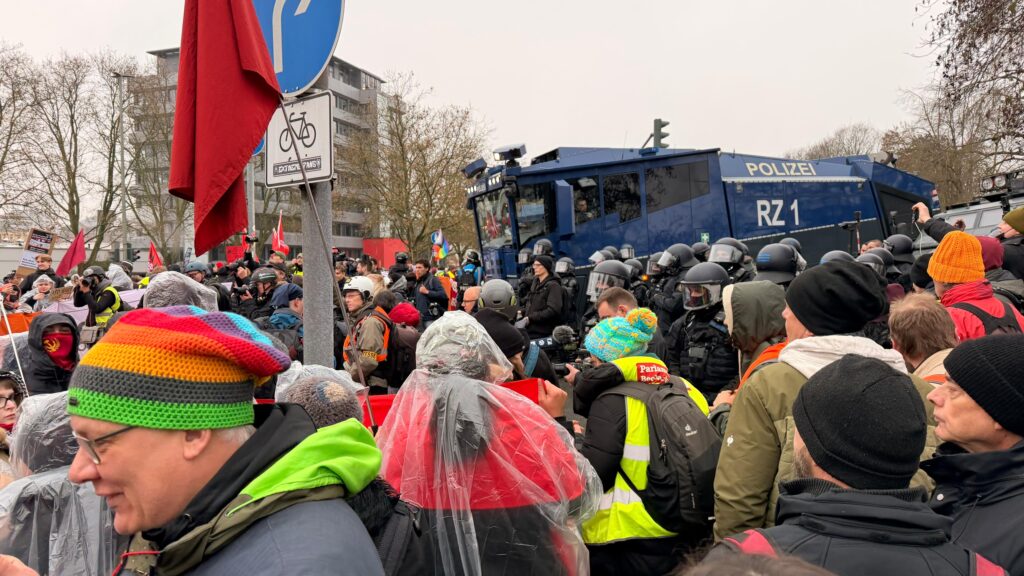
Left-wing groups and union-backed networks mounted coordinated blockades and street violence in Giessen to hinder the founding congress of AfD’s youth wing, Generation Deutschland. Subsidized NGOs helped mobilize masked agitators who built barricades and attacked journalists, politicians, and vehicles, while police intervened only partially, exposing publicly funded pressure against the AfD.
‘Germany faces a stark choice between continued strategic drift and fundamental transformation. The half-measures of constrained realism will prove no more effective than the delusions of values-based idealism when confronted with determined opposition…Only genuine sovereign realism…offers the possibility of effective foreign policy in the age of great power competition.’
‘To speak the obvious about demographic transformation, public safety, or cultural integration is to provoke a moral tempest that sweeps aside all debate and casts every doubt into the abyss of social damnation. This is not mere rhetorical excess. It is the lived reality of German public discourse in 2025, where statistical facts about migration are treated as heresy…’
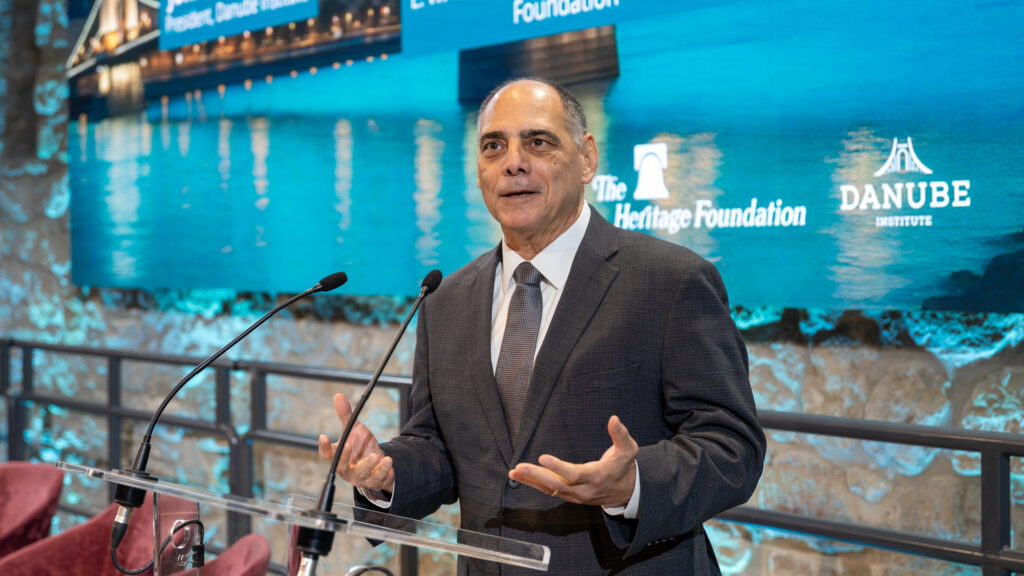
At the 5th Geopolitical Summit in Budapest, hosted by the Danube Institute and The Heritage Foundation, we spoke with a leading policy strategist about the collapse of liberal institutionalism, the rise of sovereign realism, and the future of conservative foreign policy. As global power shifts, how can nations preserve sovereignty in an era of deep uncertainty?
‘We are very much aware that Hayekian ideas must be articulated and defended in contemporary language—otherwise, they risk being confined to the seminar room or misunderstood as mere nostalgia for the past…The aim is not to create an elitist in-house journal, but to establish a lively forum for debate, analysis, and pointed interventions…’
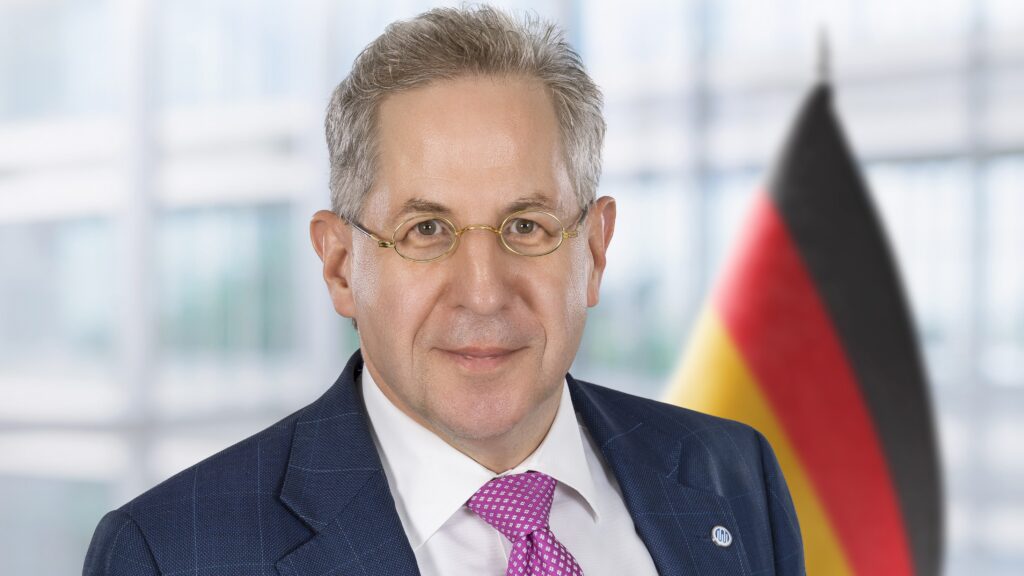
‘It is impossible to defend democratic legitimacy by hollowing out the very norms that give our institutions their credibility. Germany’s strength after 1949 was not rooted in the moral purity of its political representatives, but in the trust built around procedures, non-negotiable rules, and the idea that the parliament is bound not by political preference but by democratic representation.’
‘We are no longer living in an age where mere export promotion or trade fairs are sufficient to stimulate economic growth. What Germany lacks is strategic positioning in a geopolitical context that has dramatically changed. That is where we step in. BWA Global Economic Network is Germany’s only institutional framework that consistently thinks in terms of economic diplomacy…’
‘American conservatism places the individual at the centre, with an emphasis on freedom and scepticism toward government intervention. German conservatism, by contrast, remains more attuned to the needs of the community, valuing stability and continuity,’ Dr George Weinberg, Executive President and Partner at Grundwert USA/Polska and Chairman of Republicans Overseas Germany, has told our site.

At a time when public debate is increasingly polarized and superficial, Hungarian Conservative remains committed to depth and independent thought.
Donate Now
Please consider supporting our mission.