

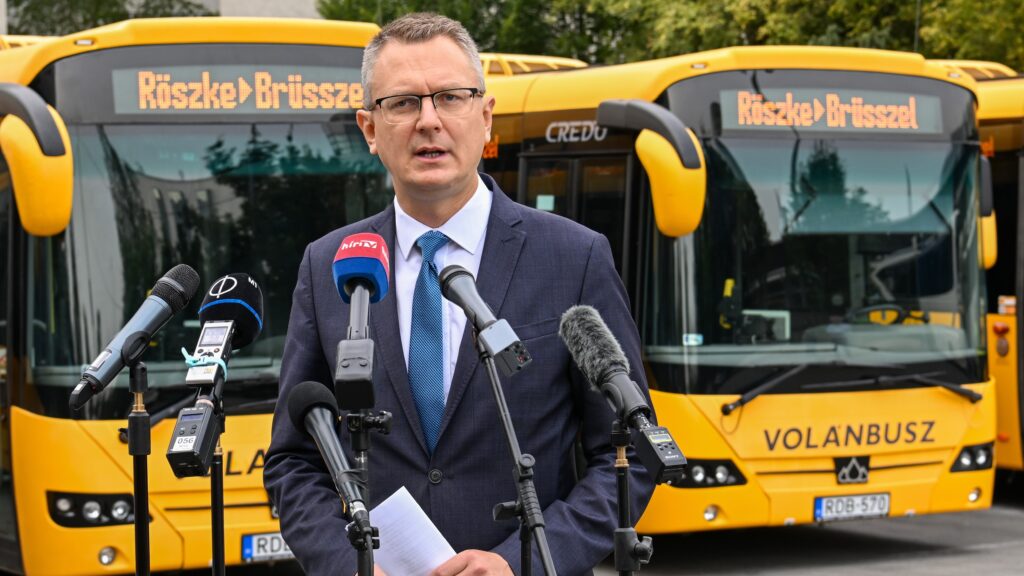


As Minister for EU Affairs János Bóka also emphasized on 24 September, the Hungarian government is aware that the Commission has other tools at its disposal to deduct the sum. Despite not being willing to pay the fine, Budapest aims to engage in a ‘constructive way’ with Brussels to ensure compliance with the ECJ ruling. Minister Bóka also said Hungary was looking into ‘legal possibilities on how certain expenses incurred in the protection of the border could be offset’ against the penalty.
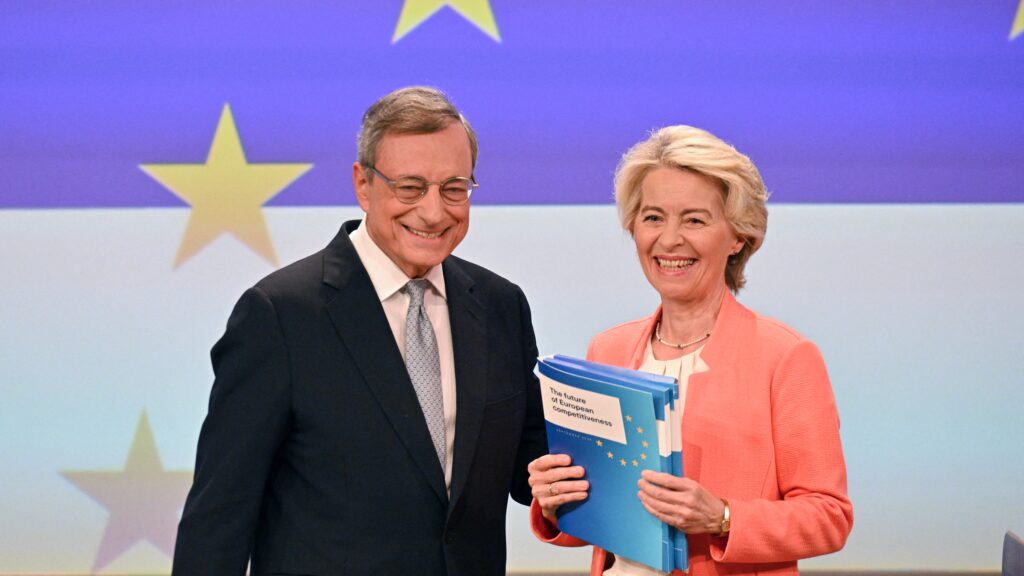
Draghi proposes that the EU’s priorities should include the lowering of energy prices, increasing competitiveness, proper governance of industrial policy, and increased defence spending. The EU should no longer rely on others to maintain its security, he argues, since continuing to do so would make it more vulnerable.
At the end of July Viktor Orbán announced that he would nominate again Olivér Várhelyi, the former Commissioner for Neighbourhood and Enlargement Policy. Hungary would retain the position in charge of enlargement policy in the new Commission, but this ambition may be thwarted. Currently it seems that the majority of Member States and the EP are reluctant to give Hungary any strong commissioner position, and many predict that Várhelyi will be given a hard time during his parliamentary committee hearing.
On 13 August the European Commission disbursed nearly €4.2 billion to Ukraine under the First Pillar of the Ukraine Facility. During the four-year plan, the EU aims to provide up to €50 billion in grants and loans for the country’s recovery, reconstruction, and modernization. Meanwhile, Kyiv has made gains in Kursk, which, according to the Institute for the Study of War, is a pivotal moment in the war with the potential to change its trajectory.
According to the new Rule of Law Report released by the European Commission on 24 July, Italy, Hungary, and Slovakia performed poorly regarding the continued decline in democratic standards threatening the effective prosecution of corruption, the independence of the judicial system, and the safety of journalists.
According to Ukrainian Deputy Minister of Education Yevhen Kudriavets, 3,500 educational institutions have suffered some kind of damage and nearly 400 have been completely destroyed since the beginning of the Russian invasion. Currently, Ukraine’s first underground school is being built in the southern city of Zaporizhzhia, with the aim of children being able to attend in-person classes from September. Altogether, ten underground schools will be built across the region, five being already under construction and expected to open in the autumn.
Hungary begins its six-month rotating presidency of the Council of the European Union on 1 July during a period of extraordinary circumstances and challenges. During its presidency, Hungary aims to focus on seven priorities to answer the EU’s most pressing economic, security, and social issues.
A turnabout in the Hungarian stance seems unlikely at the moment. The Hungarian government has consistently vetoed further military assistance to Ukraine as well, and will most probably not change course regarding Ukrainian accession to the EU either under the Hungarian rotating presidency.
Despite the significant support Ukraine receives from its Western allies, the Russian military industry seems to be still superior in terms of quantities. According to reports, five Russian responses are received for every shot fired by Ukraine. In addition, Ukraine’s Western allies produce artillery ammunition not only more expensively but at a much slower rate than Russia. According to predictions, in 2024, Russia will be able to produce 4.5 million artillery shells, while the EU and the US together only about 1.3 million.
The Lithuanian presidency began with Lithuanian Prime Minister Ingrida Šimonytė outlining the goals of the upcoming term. Firstly, she mentioned the importance of supporting Ukraine in defending itself against Russian aggression, which should be achieved by strengthening democratic institutions in Ukraine and providing further significant support for reconstruction. Secondly, she stressed that a higher level of accountability would be required in connection with international crimes. In this process, the CoE’s expertise should be utilized, for example, to establish a Special International Tribunal for the Crime of Aggression of the Russian Federation against Ukraine.

At a time when public debate is increasingly polarized and superficial, Hungarian Conservative remains committed to depth and independent thought.
Donate Now
Please consider supporting our mission.