


Professor Jonathan Price has been teaching legal and philosophical subjects at the University of Oxford since 2011, where he is a Fellow of St Cross College. Since 2006, he has co-organized the annual Vanenburg Meetings of the Center for European Renewal. He serves as Professor of General Jurisprudence at Memoria College and is a founding editor of The European Conservative. His writings have appeared in publications such as the National Review, First Things, The Washington Times, Volkskrant, and Die Presse. He is also a Visiting Research Fellow at the Danube Institute.
‘The question before us is not whether we can perfect our legal systems or eliminate all misuse of law…The question is whether we will recognize lawfare for what it is—a corruption that hollows out law from within—and whether we will have the courage to name it, oppose it, and restore the principle that truth, not power, not procedure, not expedience, makes law.’
‘The so-called “populist wave” is not the enemy of democracy; it is the symptom of liberal democracy’s philosophical exhaustion.’
‘The danger is not that artificial intelligence will turn evil, but that we will forget how to discern good.’
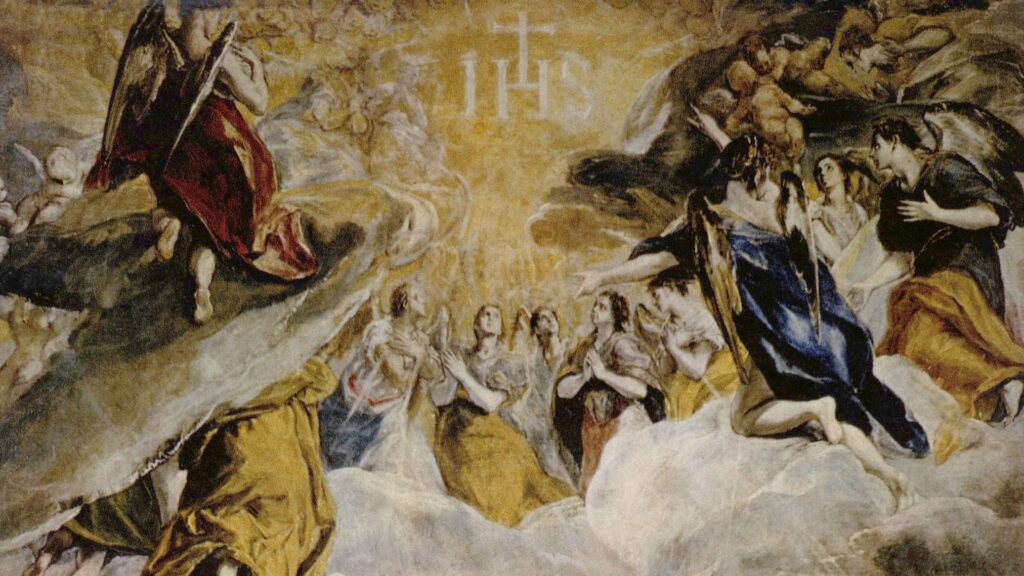
‘In an age dominated by the immediacy of scrolling, the icon insists upon stillness. Where modern images reflect narcissism, icons guide the viewer toward transcendence. The practice of looking reverently at an icon can serve as a powerful antidote to the visual distractions of modernity.’
‘Preferring a loosely Christian society to these theocratic or technocratic extremes, Dawkins concedes that “we need Christianity” as a cultural inheritance that sustains meaning.’
‘In our own “post-liberal” moment, Thatcher’s Arminian liberalism deserves a second look. Liberalism, rightly understood, was never meant to be the cult of the autonomous self. It was the civic translation of a theological truth: that we are created free so that we might learn to use freedom well.’
‘Whereas Augustine’s inner self pointed beyond itself to God, Rousseau’s pointed only inward. Conscience, no longer an echo of divine law, became the voice of the self. Politics, in turn, had to be remade in its image: the true will of the people was nothing less than the collective expression of each individual’s inner authenticity.’
‘True freedom is a paradox: we are most free when we accept the burdens of responsibility. A society that worships liberty without responsibility ends with neither. But a society that remembers responsibility as the guardian of liberty secures both.’
‘In an age where a phone tells better time than any Rolex, watches are thriving—not despite their obsolescence, but because of it. They are beautiful, technical, embodied objects in an abstract and disposable world. They are the final adornment, the last private ritual, the culture of time made visible—and kept close to the skin.’

At a time when public debate is increasingly polarized and superficial, Hungarian Conservative remains committed to depth and independent thought.
Donate Now
Please consider supporting our mission.
To provide the best experiences, we and our partners use technologies like cookies to store and/or access device information. Consenting to these technologies will allow us and our partners to process personal data such as browsing behavior or unique IDs on this site and show (non-) personalized ads. Not consenting or withdrawing consent, may adversely affect certain features and functions.
Click below to consent to the above or make granular choices. Your choices will be applied to this site only. You can change your settings at any time, including withdrawing your consent, by using the toggles on the Cookie Policy, or by clicking on the manage consent button at the bottom of the screen.