




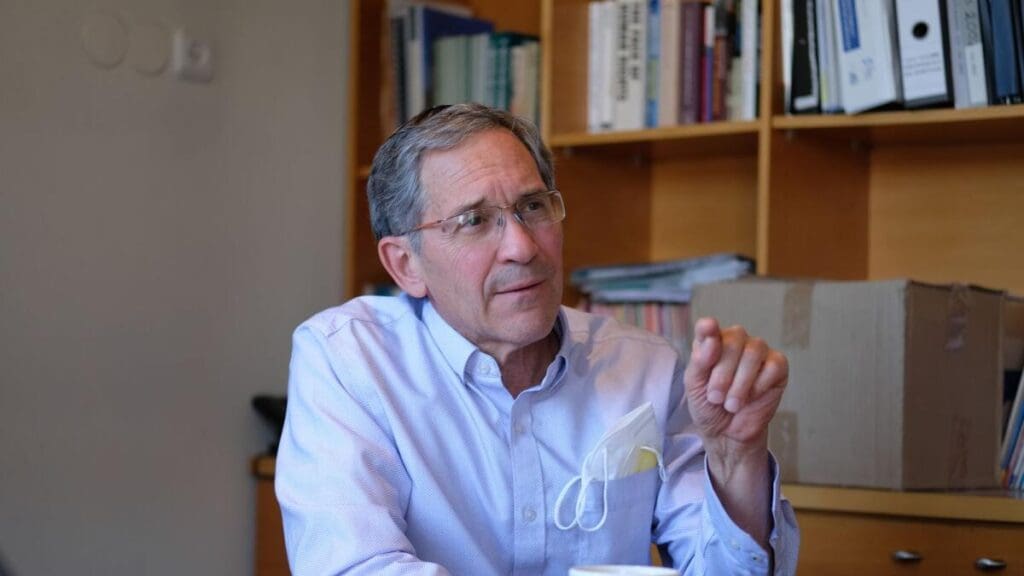



Referring to the European Union Agency for Fundamental Rights’ (FRA) 2018 survey, Máthé raised attention to the fact that hostility, threats and psychical attacks against Jewish people are most commonly reported in France, which has the largest Jewish community in Europe. However, despite having a significantly smaller Jewish population, Sweden is also considered an unsafe place for Jewish people. As opposed to that, Hungary, with a Jewish community almost three times larger than that of Sweden, records far fewer incidents—the number is between five to eight times lower compared to the Scandinavian country.
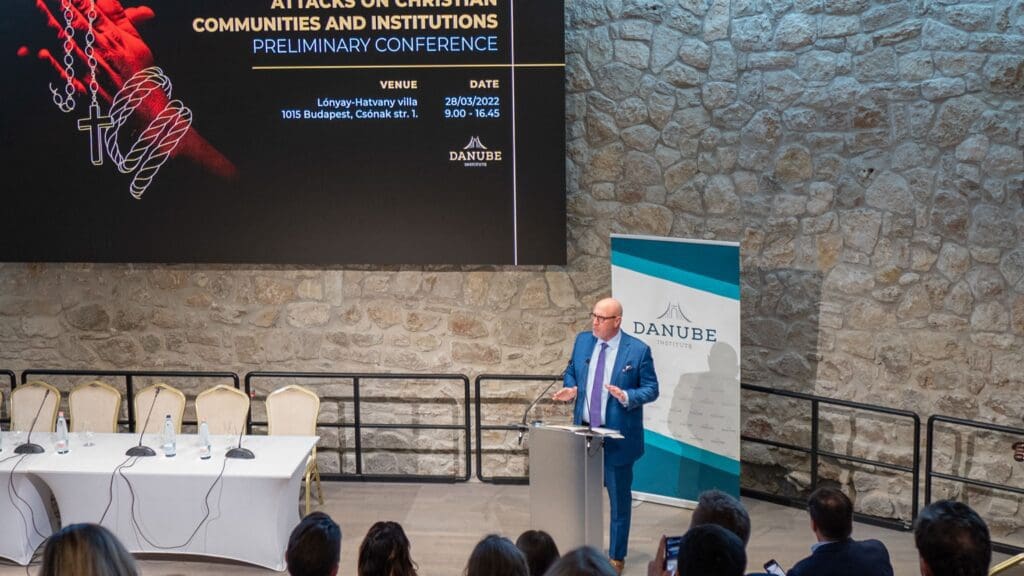
As a closing thought of his lecture, Dr Peterson explained that a central unifying spirit connects the biblical stories he had cited, and if we get into a proper relationship and alliance with this spirit, it will carry us through even the most horrible situations. He highlighted that the complete realisation and fulfilment of this can be seen in the New Testament.
Although today violence is no longer the primary form of persecution Christians face in the country, they still endure other serious forms of discrimination. Among the most pressing issues are economic problems, incompetent legislation by the government and conflicts from inter-communal relations, which they suffer from not just because of their faith, but also because they are an ethnic minority in the Kurdish region.
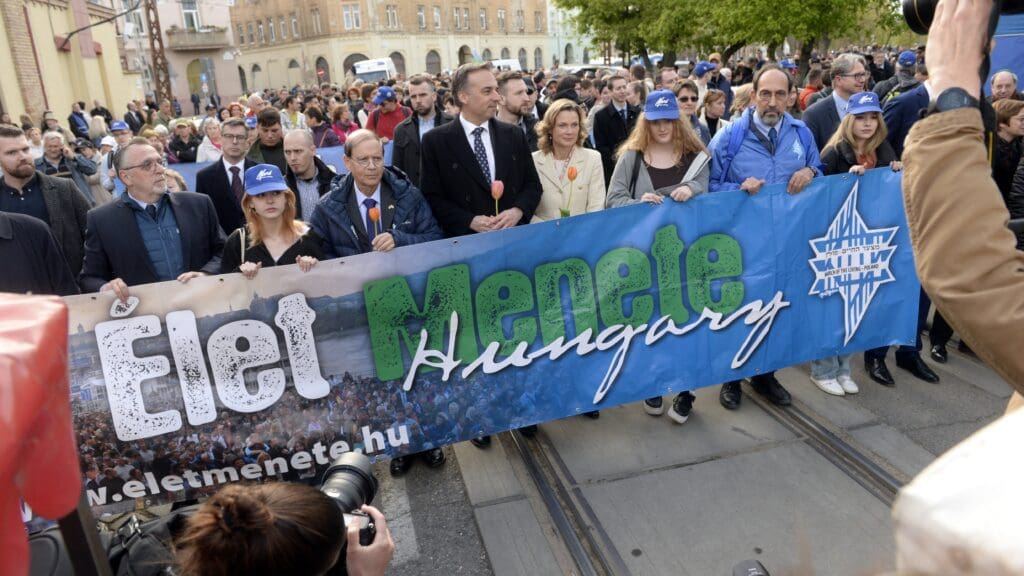
One hundred fifty-five people from Hungary travelled to Poland to attend the International March of the Living on 18 April, where nearly 10,000 participants from 54 countries marched the 3 km route between the Auschwitz I and Auschwitz-Birkenau lagers. The march was held on Yom HaShoah, which is Israel’s National Day of Mourning for the victims of the Holocaust.
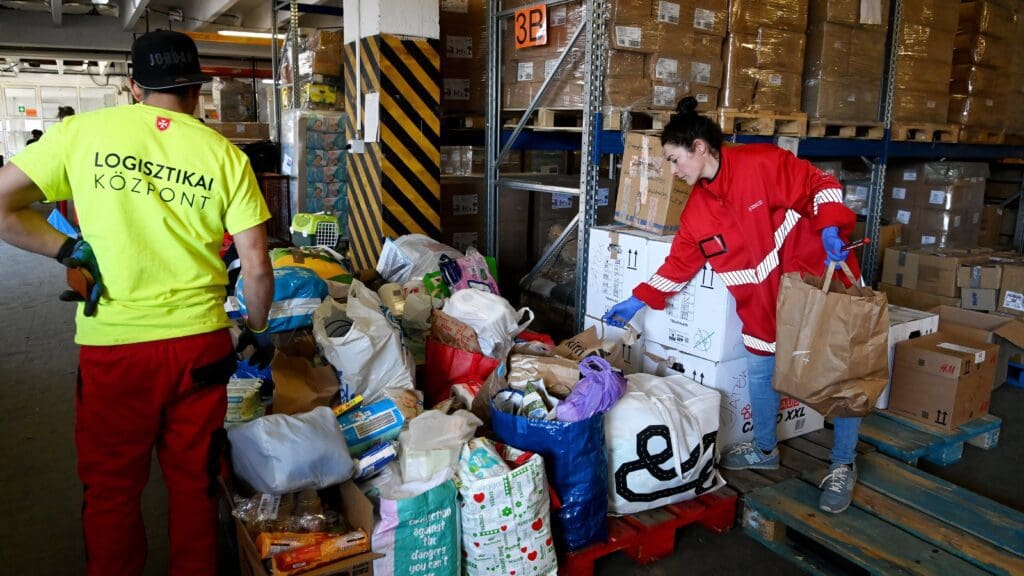
The Hungary Helps Programme, however, does not only help persecuted Christians, but provides effective support in crisis areas and areas that are hit by man-made or natural disasters as well. Since the outbreak of the Ukraine war, Hungary has provided 130 billion forints (335.6 million euros) in aid to the victims of the war in Ukraine. Hungary also sent ten tons of relief supplies to Turkey immediately after the deadly earthquakes on 6 February and 50 million forints (132,000 euros) to Syria.
‘Israel is the only country in the Middle East where Christians thrive in every aspect of life and enjoy equal rights. If you look at other Muslim countries in the Middle East or Africa, it can be seen how Christians are persecuted and massacred on a monthly basis. I’m always shocked that the Christian leadership around the world and the mainstream media are so silent about the sufferings of persecuted Christians, but when it comes to Palestinians blaming Israel for Christian persecution, the whole world is screaming.’
‘While, as we can see, more and more Western governments support the over-sexualisation of children with LGTBQ programmes, Hungarian Justice Minister Judit Varga filed a counterclaim with the Court of Justice of the European Union in favour of the Hungarian Child Protection Act. She also highlighted in her Facebook post that Hungary will continue to “stand by its conviction and the Charter of Fundamental Rights of the European Union that education is a national competence and that parents have the right to decide on the upbringing of their children.”‘
David Curry has been the CEO of the most well-known international ministry, Open Doors USA, for ten years. The organisation recently changed its name to Global Christian Relief to achieve better cooperation between Christian denominations and NGO networks, and thus to help persecuted Christians more efficiently.
According to Juliana Taimoorazy, the future of Assyrian Iraqi Christians is worrisome. She underscored that the situation could improve only if their religious leaders would start educating Muslim communities and if a steadfast partnership with different Islamic organisations would come to life.
In a recent discussion with British-born demographer and documentary filmmaker Stephen J. Shaw, Peterson listed Hungarian family-supporting policies as the only known example of a government-issued incentive programme that has measurably slowed population decline.

At a time when public debate is increasingly polarized and superficial, Hungarian Conservative remains committed to depth and independent thought.
Donate Now
Please consider supporting our mission.