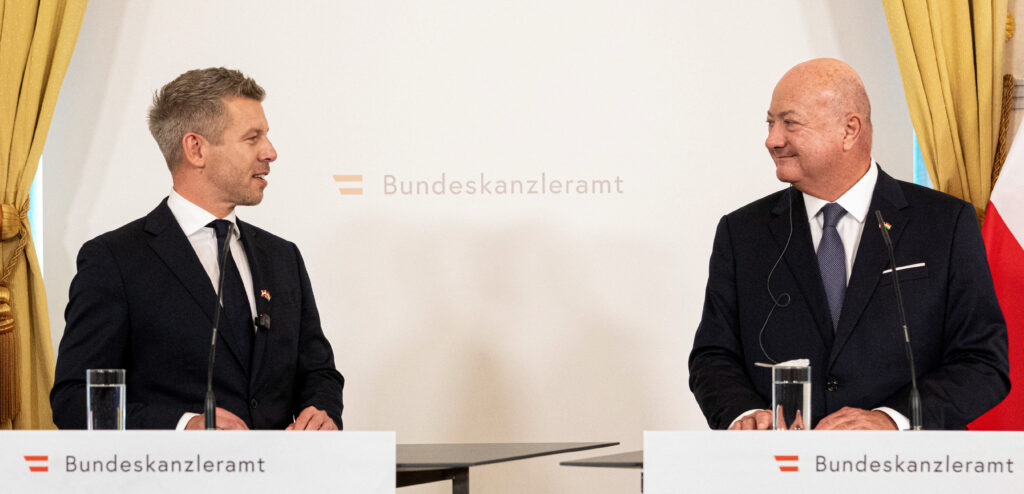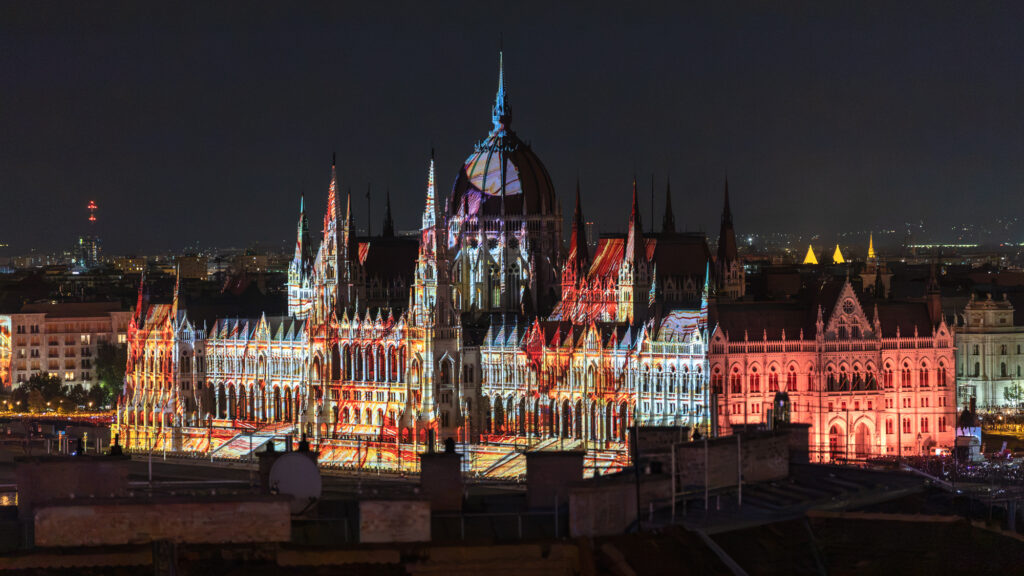
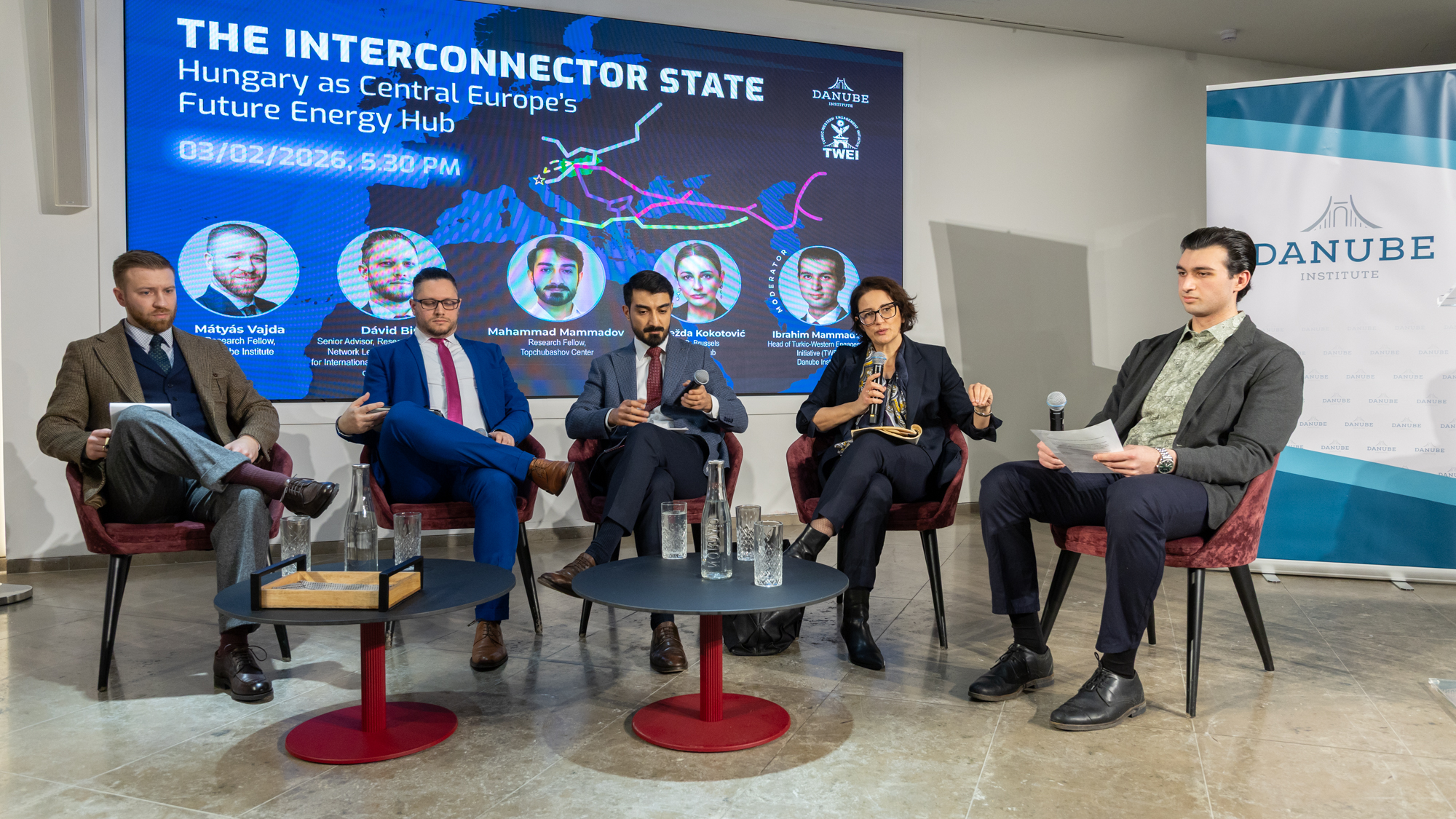
The Danube Institute held an event dedicated to Hungary’s policy in foreign gas and oil imports at the Lónyay–Hatvany Villa on Tuesday, 3 February, in the Castle District of Budapest, Hungary. The afternoon titled The Interconnector State: Hungary as Central Europe’s Future Energy Hub featured a panel of five experts on the topic.
The featured speakers were: Research Fellow at the Danube Institute Mátyás Vajda, Research and Academic Network Lead at the Ludovika University of Public Service Dávid Biró, Research Fellow at the Topchubashov Center in Baku, Azerbaijan Mahammad Mammadov, and Director for the Brussels Energy Club Nadežda Kokotović. Head of Turkic–Western Engagement Initiative Ibrahim Mammadov of the Danube Institute served in the role of the moderator.
Ms Kokotović spoke first. She shared that she has 20 years of experience in the energy sector, and that her group is specializing in connecting EU countries with non-EU countries in energy matters. She went on to state that new transit routes for gas and oil imports are getting increasingly important for European countries, and Hungary serves a key role in that process.
Mr Mammadov described Hungary as ‘the most important strategic partner of Azerbaijan in the EU’. He opined that a new world order is being established in the post-Ukraine War era, in which new energy import routes that transfer fuel from Central Asia will be crucial.
Mr Biró told the audience that the Hungarian government’s new energy import policy stands on three pillars. One, diversifying the infrastructure by branching out to the Port of Trieste and the Southern Gas Corridor as well; two, partnership with the Turkic states; and three, the collective European energy security.
Mr Vajda pointed out that energy imports are not just about fuel and physics, but also geopolitics, as well, with each decision in energy policy having additional political implications. He added that ‘energy security does not mean freedom from dependence, but the freedom to choose who to depend on’.
Mr Mamadov took back the word, pointing out that Azerbaijan has increased its natural gas exports to Europe so much that it now has to look for new gas reserves to meet demand. One way to increase supply is to have gas from Turkmenistan integrated into the pipeline, so another Central European nation can send its gas to Europe as well. In the meantime, Baku is also investing in green energy alternatives, such as wind farms.
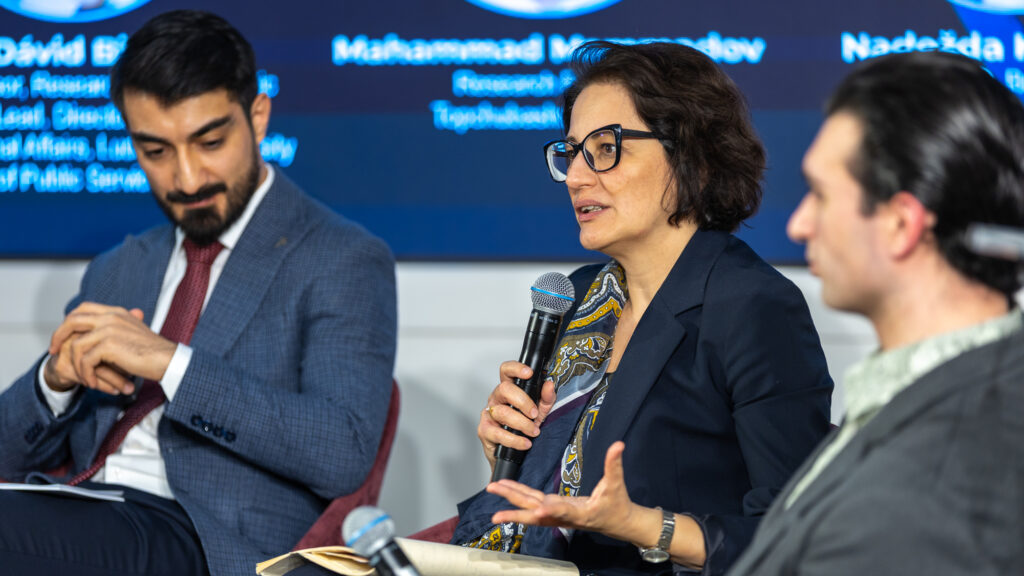
Ms Kokotović spoke about the Hungarian oil company MOL and the Hungarian electricity company MVM. As she pointed out, these two companies often collaborate on projects, as opposed to the fierce competition that is characteristic of domestic rivals in the energy sector in Western Europe. On that point, she noted that MOL, in partnership with the UAE-based energy company ADNOC, recently purchased Serbia’s primary energy provider NIS, making Hungary even more prominent in the Central European energy sector. She also talked about imports from Russia: about 14 per cent of all energy imports to Europe still come from the Eastern European country. Even Western nations continue to buy from them, although at a diminished level, in the form of LNGs, as she pointed out.
Meanwhile, Mr Vajda stressed Hungary’s need to expand to the Port of Trieste, to provide crucial maritime access to the landlocked country. A project to connect Hungary to the Transalpine Pipeline is ongoing and is expected to finish by the end of this decade, he noted.
Related articles:
At a time when public debate is increasingly polarized and superficial, Hungarian Conservative remains committed to depth, intellectual honesty, and independent conservative thought.
Producing high-quality journalism requires resources. Your contribution helps us expand our coverage, reach new audiences, and keep our content accessible.

Please consider supporting our mission.