
The following is a translation of an article originally published in Hungarian in Magyar Krónika.
The treasure may have been the savings of a medieval merchant.
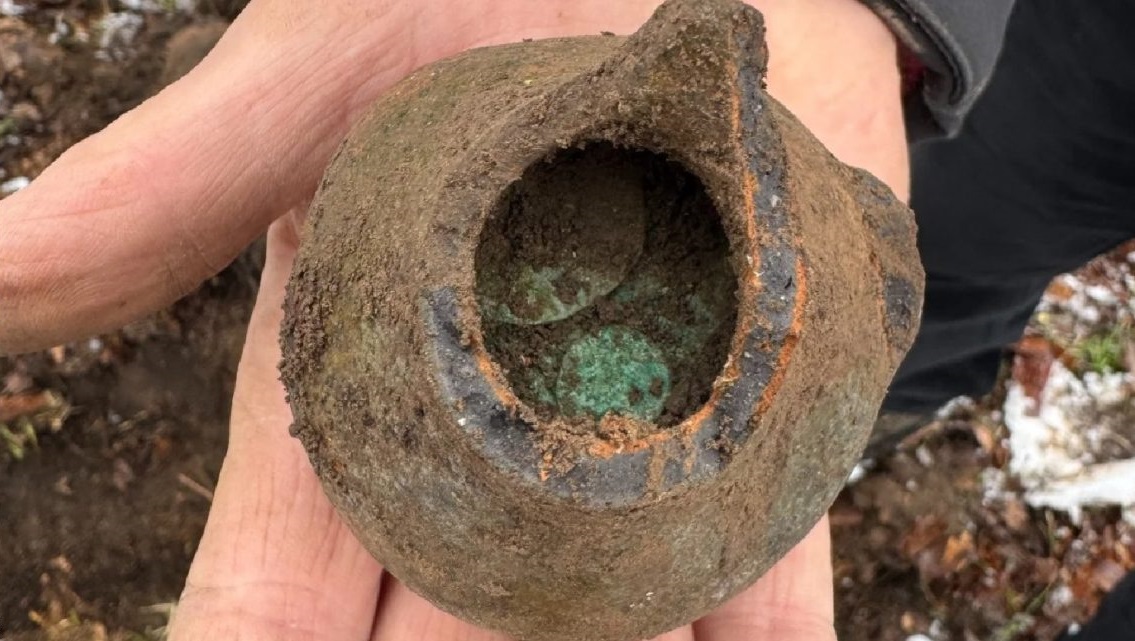
Hundreds of medieval coins were found by metal detectors in a forest near the town of Bochnia, Poland. The treasures were buried hidden in a ceramic pot, according to Heritage Daily.
The finders immediately notified the authorities, who sent archaeologists to the site. Experts counted more than 600 coins in total, mostly silver denarii from the Jagiellonian era and other silver coins, but four gold coins from the time of Sigismund of Luxembourg, King of Hungary and Bohemia and Holy Roman Emperor, were also found in the pot.
Historians believe that the find indicates the important role of the region in Central European trade. The town, located near the royal salt mines, flourished in the late Middle Ages. It is also believed that the treasure could have been the savings of a merchant who buried it during a time of crisis.
The finds will enrich the collection of the Stanisław Fischer Museum in Bochnia.
Medieval gold coinage began in Hungary around 1325 during the reign of Charles I, and at the same time, counterfeiting also started with it.
Related articles:
Click here to read the original article.
At a time when public debate is increasingly polarized and superficial, Hungarian Conservative remains committed to depth, intellectual honesty, and independent conservative thought.
Producing high-quality journalism requires resources. Your contribution helps us expand our coverage, reach new audiences, and keep our content accessible.

Please consider supporting our mission.