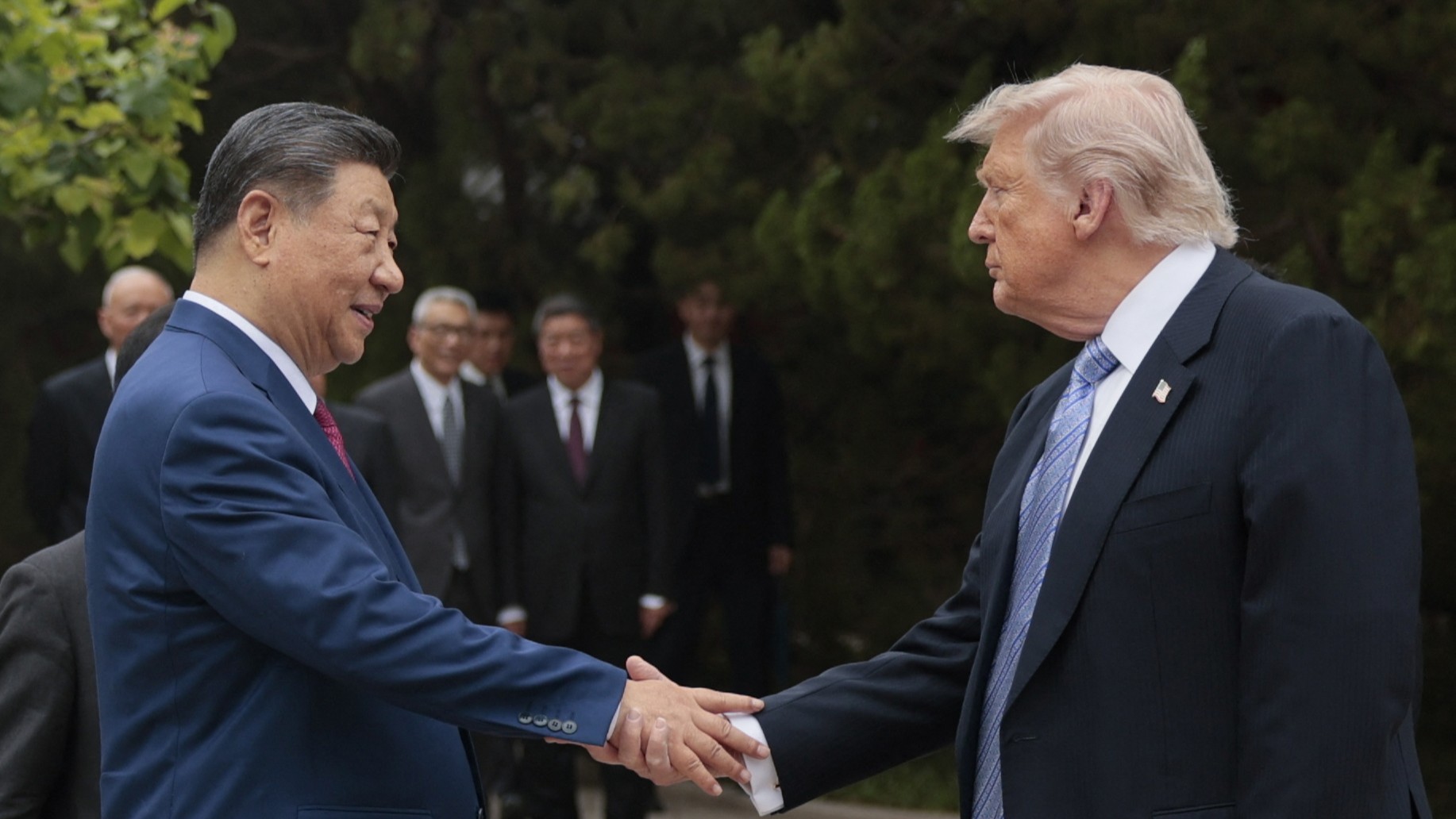
The forthcoming meeting between President Donald Trump and Chinese Communist Party Chairman Xi Jinping on 24 September in Washington will inevitably be dominated by the familiar concerns of great-power diplomacy: trade, tariffs, critical minerals, investment, technology, artificial intelligence, and the broader strategic relationship between the United States and the People’s Republic of China (PRC). Recent reporting indicates that the two governments are already working toward economic deliverables ahead of the summit, while separate discussions on artificial intelligence safety are also underway.
Yet the summit should also address a question that is easier to neglect precisely because it does not lend itself to a commercial agreement: the fate of individuals imprisoned, detained, or otherwise persecuted by the Chinese government for exercising internationally recognized rights.
There is a useful precedent in American diplomacy. The Reagan administration demonstrated that human rights need not be treated as an alternative to strategic engagement. Instead, they can become one of the subjects through which engagement is conducted.
Taking a Page out of Reagan’s Playbook
Ronald Reagan’s approach to human rights evolved during his presidency. His administration initially contained competing views about how prominently the issue should feature in foreign policy, particularly in relations with authoritarian governments that Washington regarded as strategically important. The transition from Alexander Haig to George Shultz as secretary of state in 1982 was significant. After Haig’s resignation in June 1982, Shultz developed a close working relationship with Reagan and helped establish a more systematic framework for dealing with the Soviet Union.
By January 1983, human rights had become one of the four principal components of the administration’s Soviet policy, alongside arms control, regional issues, and bilateral relations. The historical record is explicit: National Security Decision Directive 75 established a framework in which negotiations and strategic competition were pursued alongside pressure on the Soviet Union over human rights and other political questions.
This was not simply rhetorical.
Reagan repeatedly raised the cases of individual Soviet dissidents, including Anatoly Shcharansky, Andrei Sakharov, and members of a group of Siberian Pentecostals seeking to emigrate. The State Department’s historical record describes these cases as receiving sustained presidential attention. Reagan also publicly linked religious freedom and emigration to the Soviet Union’s international obligations, declaring in 1982 that the denial of those freedoms was a matter of profound concern to the U.S.
The broader principle was stated even more clearly by Reagan himself. In his 1982 address to the British Parliament, he described freedom as a universal human right and argued that American foreign policy should actively defend it. His administration consequently sought not merely to condemn abuses but to use American influence to secure the release of political prisoners, end persecution, and expand political freedom.
‘Human rights need not be separated from great-power diplomacy, but they can be incorporated into it’
The lesson for the present is not that America should attempt to reproduce Cold War policy toward the Soviet Union. The PRC is not the Soviet Union, and the strategic circumstances are fundamentally different. The relevant lesson is more limited and more practical, i.e., human rights need not be separated from great-power diplomacy, but they can be incorporated into it.
Reagan did not abandon negotiations because the Soviets violated human rights, nor did he subordinate every other American interest to those concerns. Instead, it became one track of a broader strategy that simultaneously pursued arms control, regional stability, bilateral engagement, and American security interests.
Washington therefore has an interest that is both humanitarian and governmental. The United States has an established responsibility to protect and advocate for its citizens abroad, particularly when the circumstances of their detention raise serious questions about due process or other internationally recognized standards. The State Department’s wrongful-detention framework provides a formal mechanism to assess such cases based on the totality of the circumstances, including the fairness of the judicial process, the basis for the charges, and the circumstances surrounding the detention.
Presidential intervention should therefore be understood not as a substitute for diplomacy or consular work, but as an additional instrument within a broader governmental effort. The existing framework permits the State Department and other agencies to coordinate strategies for securing a wrongfully detained American’s release, including high-level meetings and direct diplomatic engagement. At a presidential summit, raising specific cases can give those established efforts the highest level of political visibility while preserving the distinction between routine consular protection, formal wrongful-detention determinations, and presidential diplomacy.
The International System under Pressure
China has increasingly challenged external scrutiny of its human-rights practices while seeking to influence the institutions that debate international norms. Human Rights Watch has documented China’s efforts to weaken or reduce funding for UN human-rights mechanisms and resist initiatives that subject its domestic policies to international scrutiny.
At the same time, the U.S. under the Trump administration has substantially reduced its participation in several multilateral institutions. The administration ordered the United States to withdraw from the World Health Organization and directed a review of U.S. participation in international organizations, including the UN Human Rights Council.
These developments should not be treated as equivalent.
China’s political system is a one-party authoritarian system in which the Communist Party exercises comprehensive political authority. The U.S. remains a constitutional system characterized by separation of powers, federalism, competitive elections, an independent judiciary, and institutional mechanisms through which executive actions can be challenged. Indeed, American courts and other institutions have repeatedly constrained aspects of the Trump administration’s policies.
The relevant comparison, therefore, is not between two identical political systems. It is between two different sets of policies that can still affect the international institutions designed to protect human rights.
That distinction matters. Criticism of UN institutions, disputes over their effectiveness, or withdrawal from a particular organization does not by itself establish opposition to human rights. But when major powers reduce institutional capacity, limit international scrutiny, or withdraw resources from multilateral mechanisms, the practical ability of those institutions to protect vulnerable populations can diminish.
The resulting danger is structural.
International human-rights law depends not only on treaties and declarations but also on institutions that can monitor compliance, document abuses, support civil society, and impose reputational and diplomatic costs on governments that violate internationally recognized standards. If those institutions become weaker, individuals living under authoritarian governments have fewer avenues for protection.
The consequences are especially serious for those who have no political power of their own. In other words, if the United States of America does not do it, it is highly unlikely that another nation will.
Related articles:
At a time when public debate is increasingly polarized and superficial, Hungarian Conservative remains committed to depth, intellectual honesty, and independent conservative thought.
Producing high-quality journalism requires resources. Your contribution helps us expand our coverage, reach new audiences, and keep our content accessible.

Please consider supporting our mission.