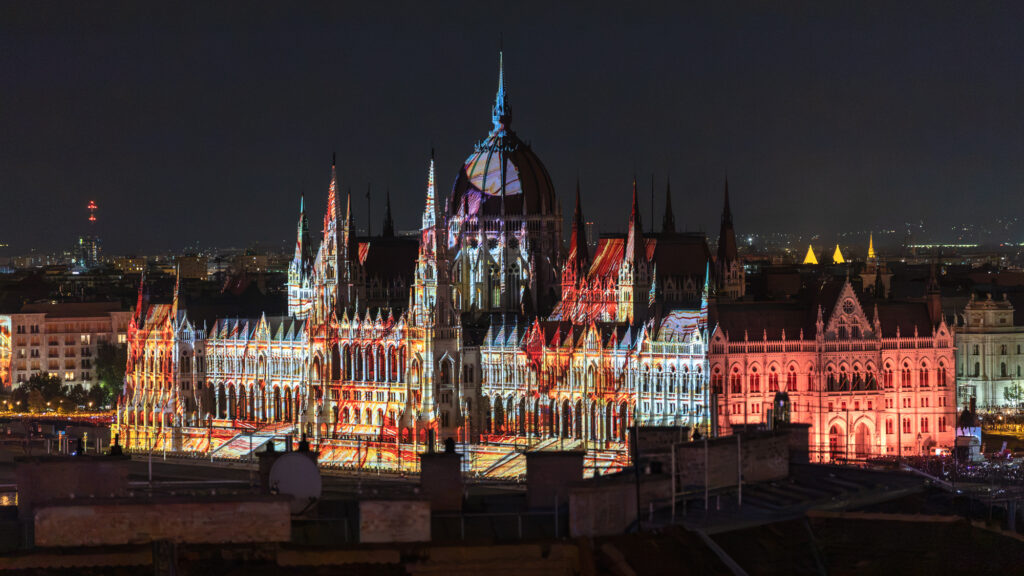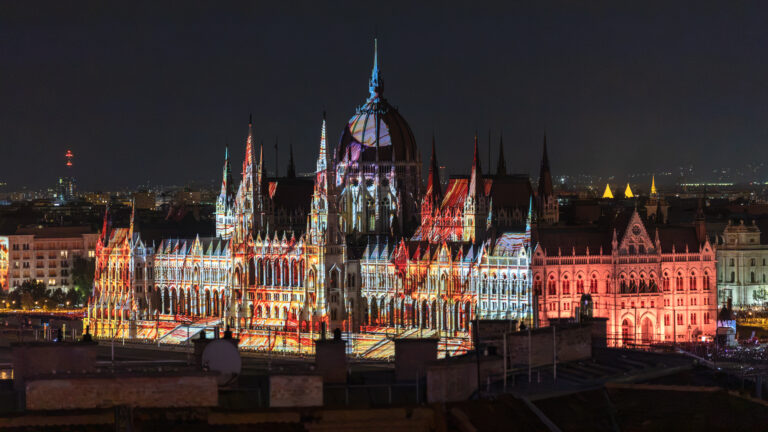
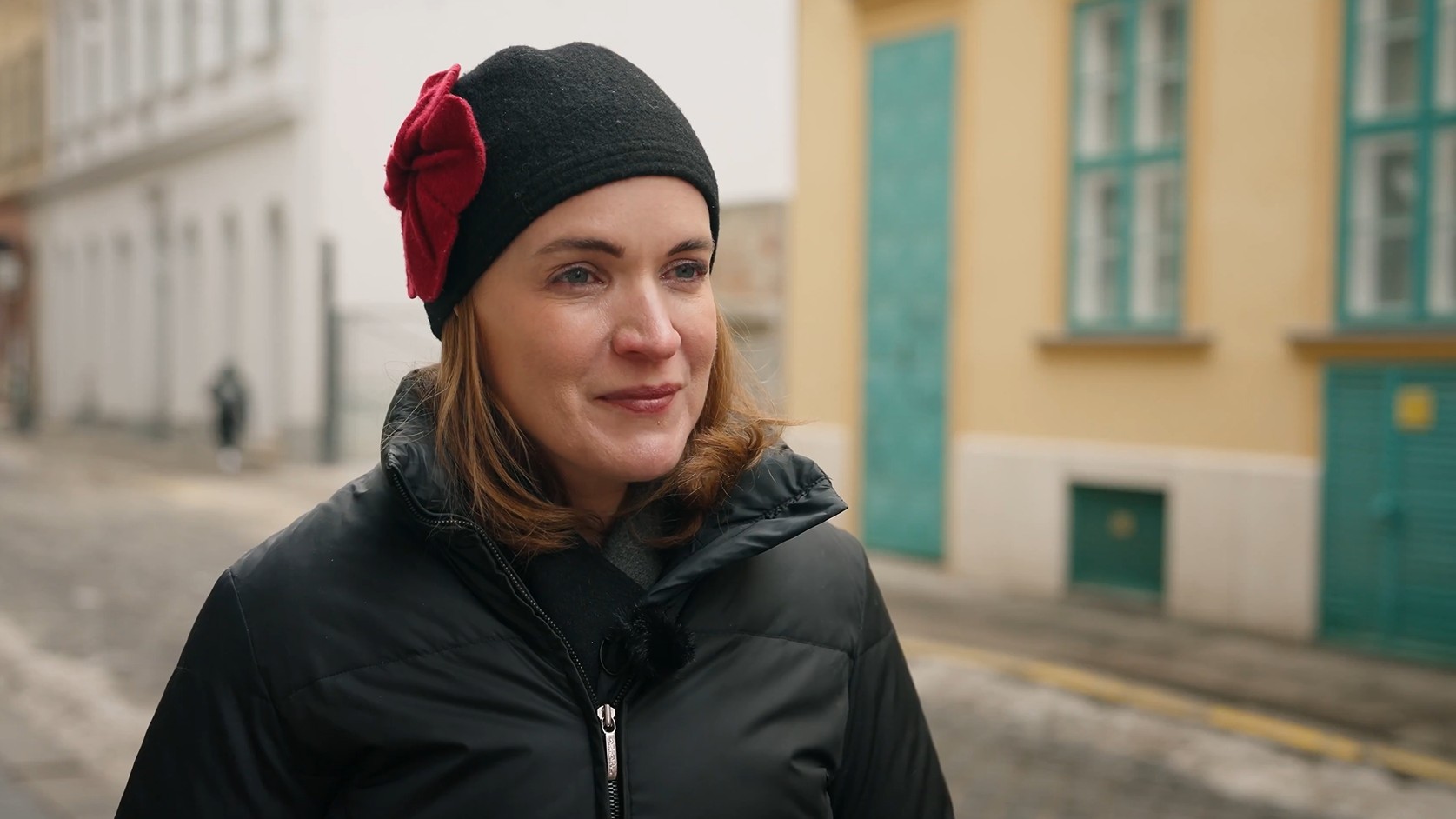
Chargé d’Affaires at the US Embassy in Budapest Caroline Savage travelled back in time to the streets of the Jewish ghetto in the occupied Hungarian capital during the Second World War on 27 January, to mark International Holocaust Remembrance Day.
In a post on her official X account, Savage shared a video of herself taking part in an augmented reality-based urban experience titled If These Streets Could Talk, which transforms the streets of Budapest’s Seventh District, Erzsébetváros. Using cutting-edge technology, the project allows visitors to witness human stories from the 1940s exactly where they unfolded, while standing on the streets of present-day Budapest.
‘Our aim is not just to teach history, but to let visitors step inside it and confront the same moral decisions and dilemmas people faced more than 80 years ago,’ producer of If These Streets Could Talk Máté Artúr Vincze said in the video, adding that the project seeks to spark empathy and dialogue.
At its core, If These Streets Could Talk turns Erzsébetváros itself into an open-air, interactive time-travel experience. Participants move through the streets using a tablet, where augmented reality overlays reconstruct vanished buildings, ghetto barricades, and interiors, while historical figures appear in the exact locations where they once lived or acted.
These figures—based on real people, archival documents, and survivor testimonies—address the viewer directly, drawing them into everyday situations shaped by hunger, fear, moral compromise, and acts of courage. Rather than following a passive narrative, participants are confronted with choices that influence how events unfold, mirroring the ‘choiceless choices’ faced by civilians in and around the Budapest ghetto in 1944–45.
According to the video, the experience left a deep impression on Chargé d’Affaires Savage. ‘I don’t think I will ever walk through them with the same lens again. The visual power of video has an emotional impact that will stay with me,’ she said. She also praised the project as ‘extremely powerful’, adding that the stories presented ‘reflect an essential chapter that people need to know about in Hungary, in the United States, and far beyond.’
In contrast to 1945, Budapest today is widely regarded as the safest capital in Europe for Jewish people. Owing to the policies implemented by Hungarian Prime Minister Viktor Orbán and his government over the past decade, Hungary has not admitted illegal migrants from regions associated with radical Islamist networks, preventing the rise of antisemitism that many Western European countries are now struggling with.
Marking International Holocaust Remembrance Day, Orbán stressed that remembrance ‘is not about the past alone.’ ‘At a time when antisemitism is once again on the rise across Europe, it is our duty to ensure that such evil is never allowed to return,’ he wrote in a post on X.
Related articles:
At a time when public debate is increasingly polarized and superficial, Hungarian Conservative remains committed to depth, intellectual honesty, and independent conservative thought.
Producing high-quality journalism requires resources. Your contribution helps us expand our coverage, reach new audiences, and keep our content accessible.

Please consider supporting our mission.