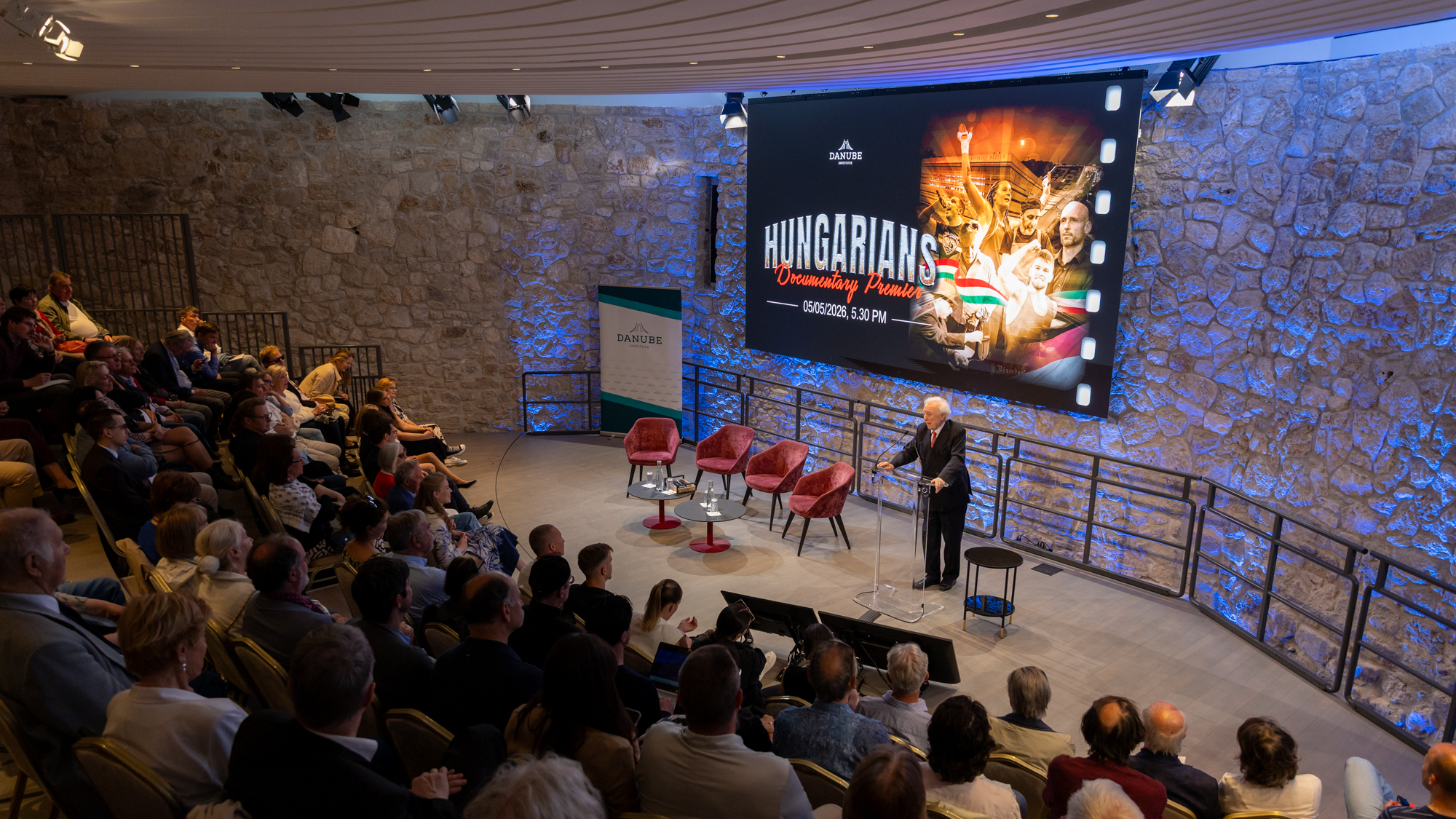
After the premiere of the documentary The Future at the Gate last month, the Danube Institute unveiled its second major film project in quick succession. Hungarians, another documentary piece, debuted at the Danube headquarters at the Lónyay-Hatvany Villa in Budapest, Hungary, on Tuesday, 5 May.
Head of Communications at the Danube Institute Zsófia Rácz was the first to address the packed audience.
She described the Hungarian people as ‘a strong-headed, historically troubled nation’, and shared that it was hard to conceptualize a film about the members of a nation as a whole. The end product, she explained, follows the personal stories of a number of subjects that, in the end, converge into the story of an entire nation.
President of the Danube Institute John O’Sullivan took the stage next. He told the audience that his institution has been involved in cultural projects from its inception in 2013, not just politics. ‘There is more to think tanks than the usual…like the pursuit of beauty,’ he stated. He then recalled his first memory of the Hungarian nation from his childhood: his national team, England, getting beaten 6–3 at Wembley by the ‘Mighty Magyars’ Hungarian national team led by Ferenc Puskás in 1953.
Following O’Sullivan’s remarks, Hungarians received its first public screening.
The film features the self-told life stories of a number of fascinating subjects, without narration. Marcel Ferencz, the Ybl Award-winning architect of the Budapest Museum of Ethnography, is one of the people featured. So is Luca Hámori, the female boxer who made international headlines after being matched with Imane Khelif, an Algerian boxer who has male chromosomes but female genitalia due to a birth defect, at the quarter-finals of the women’s welterweight boxing event at the 2024 Summer Olympics in Paris, France.
The fate of Hungarian Jews during World War II is prominently featured in the film.
Composer Grego Földvári speaks about what it is like to live in Hungary as a Jewish person in the 21st century, given the country’s history in WWII. Földvári is famous for writing a song in Hebrew in memory of the victims of the 7 October terror attacks by Hamas on Israel, a composition he performs in the film as well.
David Seboek, owner of the David’s Kitchen Restaurant & Bakery at Klauzál Square, is the descendant of Hungarian Holocaust survivors who emigrated to the United States. He recalled that when he told his parents that he was planning to buy property at Klauzál Square, they told him to buy anywhere in Budapest but there—only later did he learn that it was because it was the location of a mass grave for Jews killed in the Holocaust during World War II.
Clips of family videos of Seboek’s grandmother, a Hungarian survivor of the Holocaust, are also featured in the film.
World U23 Champion wrestler Tamás Lévai, another person profiled, comes from a family of athletes. His two brothers and his father are all professional wrestlers. Keeping with the theme of sports, Ádám Hamberger, the leader of the Green Monsters ultra group supporting Ferencváros, also speaks in the movie. The 36-time Hungarian champions football team, Ferencváros are famous across Europe for their ferocious fans.
László Kondor emigrated to Austria, then to the United States with his family after the 1956 Hungarian Revolution against the Soviet oppressors. He is a professional photographer who was with active American troops deployed in Vietnam to document their lives through his lens between 1969 and 1971. He, too, is featured in the film.
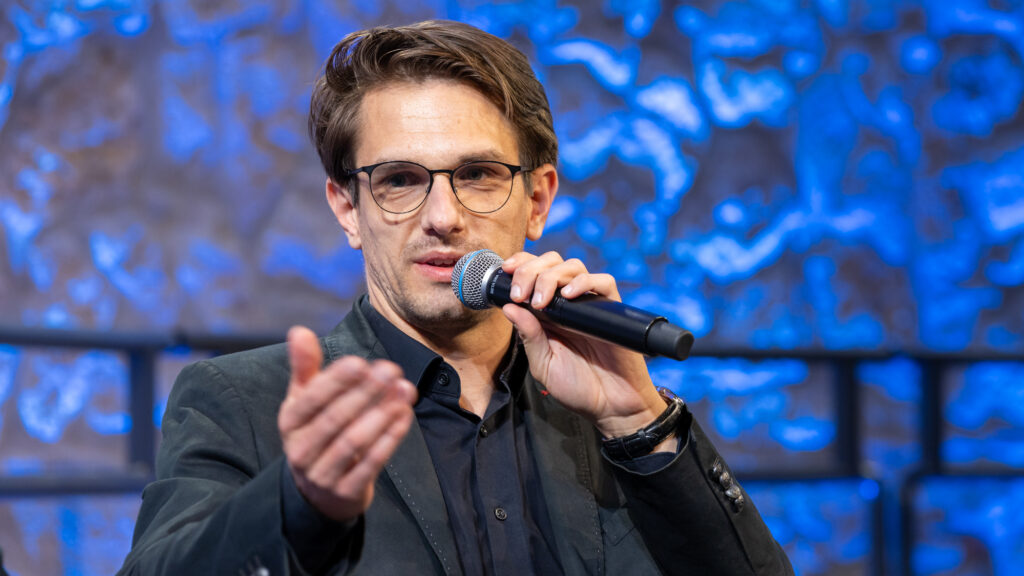
After the screening, producer and Head of Operations at the Danube Institute Gergely Dobozi shared during a panel discussion that when he was approached with the idea for the movie, he reached out to the editorial staff of the cultural magazine Magyar Krónika and to author and Danube Institute fellow Adam LeBor for inspiration. He also revealed that he was initially reluctant about the idea of having no narrator in the film, but after seeing the finished work, he is now impressed by that artistic choice.
Related articles:
At a time when public debate is increasingly polarized and superficial, Hungarian Conservative remains committed to depth, intellectual honesty, and independent conservative thought.
Producing high-quality journalism requires resources. Your contribution helps us expand our coverage, reach new audiences, and keep our content accessible.

Please consider supporting our mission.