
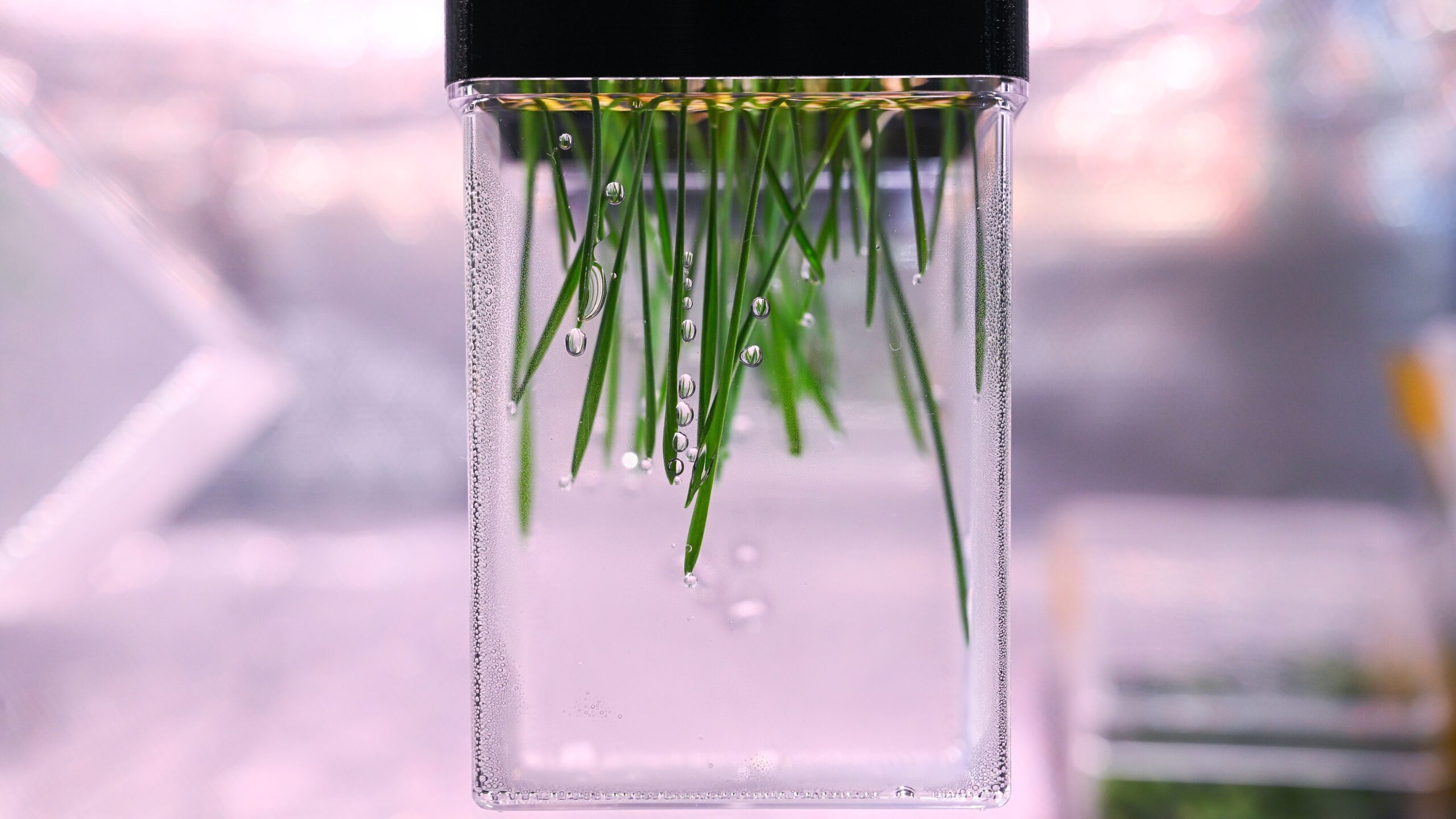
Samples from Hungary’s first space plant experiment, the VITAPRIC programme, have returned to Earth after spending nearly 203 days in orbit and circling the planet more than 3,200 times, the University of Debrecen said on Tuesday.
Researchers from the university’s Faculty of Agricultural and Food Sciences and Environmental Management received the experimental materials from Hungarian research astronaut Tibor Kapu on Monday at the institution’s Biodrome facility, which serves as the home of the space paprika project within the HUNOR Hungarian Astronaut Programme.
The experiment began a year earlier, on 17 March, when researchers prepared radish, wheat and pepper seeds for the mission. The VITAPRIC research package was launched on 25 June as part of the Axiom-4 mission from the Kennedy Space Center to the International Space Station.
According to László Stündl, dean of the faculty, the university’s long-standing expertise in plant breeding, cultivation and biotechnology provided the foundation for participation in the national space programme. He expressed hope that the findings will be put to practical use and open new directions for future research.
Kapu described VITAPRIC as one of the most exciting experiments within the HUNOR programme, highlighting the unique challenges of conducting plant research in space. ‘In an environment without gravity, seeds do not really know which direction to grow, and they can easily fall out of the germination system. Yet we managed to solve these challenges,’ he said. He added that the experiment marked a global first: growing plants in the same environment where astronauts live, rather than in a fully isolated and controlled module.
The seeds used in the programme were bred and pre-treated between 2024 and 2025 in the biotechnology laboratories of the university. The applied methods accelerated germination, improved seedling vitality and enhanced phytochemical composition, resulting in higher nutritional value. Onboard the space station, the plants were harvested in three stages: first radish microgreens, followed by wheatgrass and finally pepper microgreens. The samples were stored at minus 80 degrees Celsius until 15 January, when they were returned to Earth aboard a spacecraft carrying the crew of the interrupted Crew-11 mission.
According to Szilvia Veres, scientific deputy dean and head of the VITAPRIC programme, the returned samples will be compared with control plants grown under similar conditions in the Biodrome, including light, temperature, carbon dioxide levels and humidity.
The analysis will include microbiome studies to determine whether the space-grown microgreens are suitable for human consumption, as well as examinations of biochemical and mineral composition. Researchers will also assess how selenium pre-treatment of seeds influenced plant development in a microgravity environment.
Related articles:
At a time when public debate is increasingly polarized and superficial, Hungarian Conservative remains committed to depth, intellectual honesty, and independent conservative thought.
Producing high-quality journalism requires resources. Your contribution helps us expand our coverage, reach new audiences, and keep our content accessible.

Please consider supporting our mission.