The following is an adapted version of a recollection written by Gábor Muray, originally published in Hungarian in Magyar Krónika.
The northern tip of Szentendre Island is an exceptional space that also opens doors to the interior landscapes. The place that runs out of road. We have been coming back for decades to pitch our tents, build a fire, sit around, and look into it. To listen to the cuckoo spit tick on the tent tarpaulin.
The froghoppers produce cuckoo spit. It’s ticking on the tent tarpaulin, as if the rain were about to fall, but the night is clear, and the full moon shines through the mosquito net. A cargo ship rumbles by, the hum of cars floats across the water from Route 11 under the Visegrád Citadel, and a train sometimes rumbles across, too.
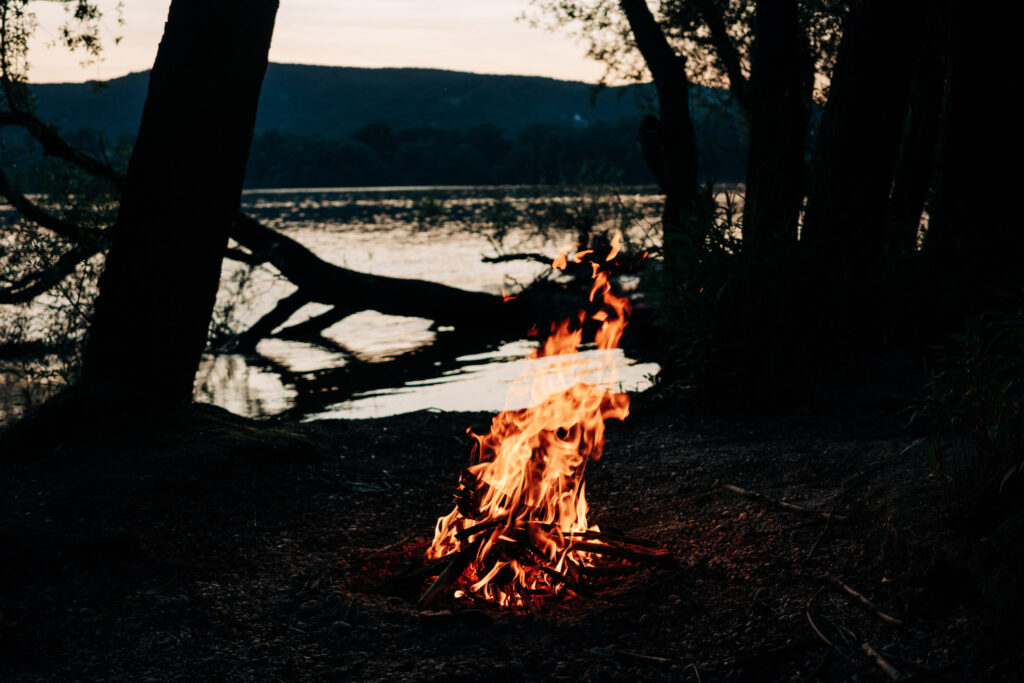
With two groups of trees below us, they are reciting Bikini songs with guitar accompaniment, even though it is already dawn. They are doing well. We have done well for 20 years, too. ‘Time sits here on my neck / The road is running out from under my feet,’ the lyrics of the well-known old Hungarian retro song go. The waves crash against the boat, as if lapping along the tent. A dove coos above our tent, while the sun slowly starts to rise. It’s the dawn of Pentecost Monday on the island tip of Kisorosz.
Cuckoo spit has nothing to do with cuckoos; people tend to think that willows shed tears, but it is much more profane than that: it is the early summer sap, ultimately the excrement, of the larvae of froghoppers, or cercopoidea, that is gently seeping out.
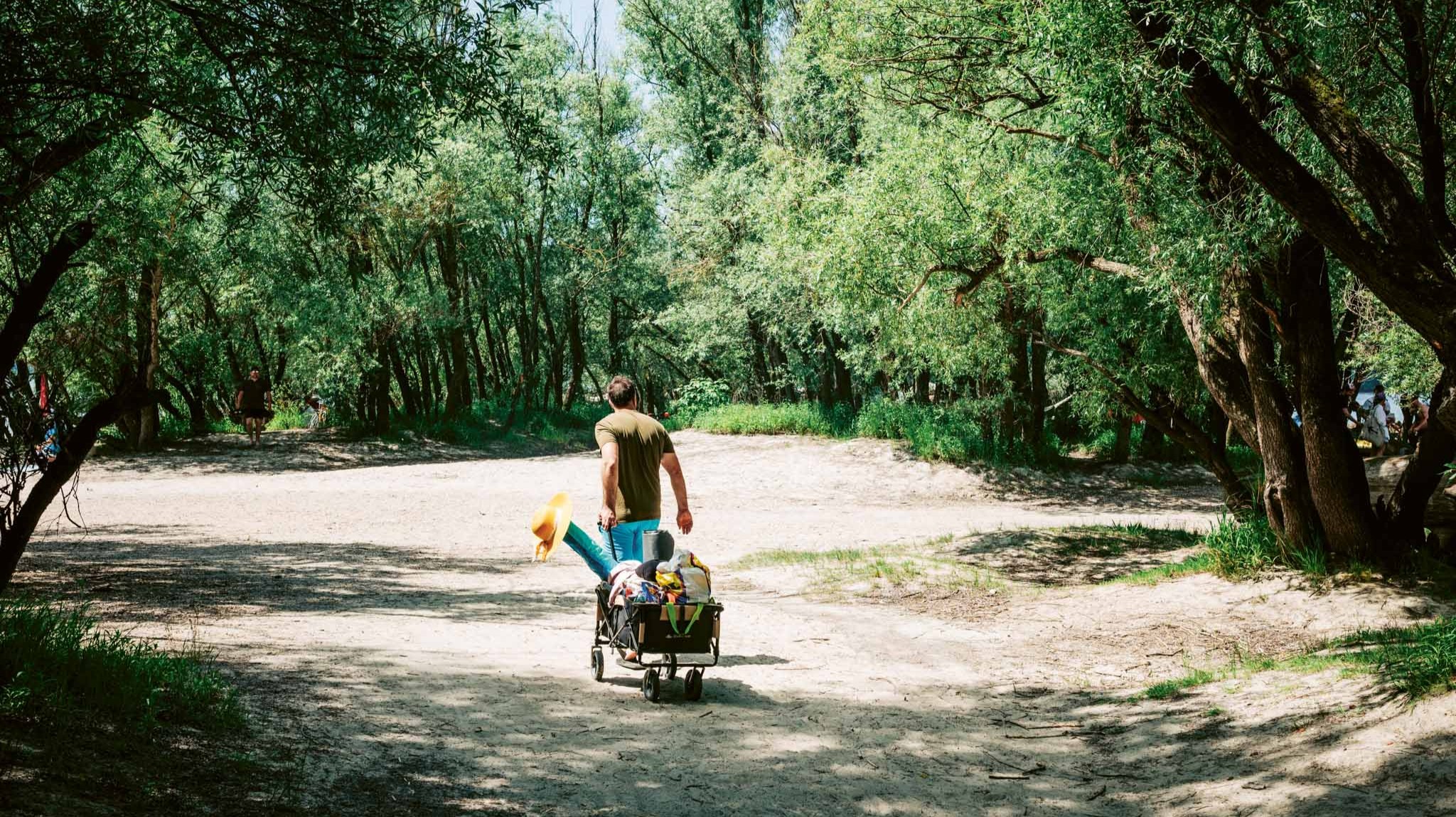
I have been returning to the island tip for two decades. To where the road ends. At first, by kayak or canoe, later with my dog on a yellow bus and ferry, and then when I got a car, with more stuff from the village.
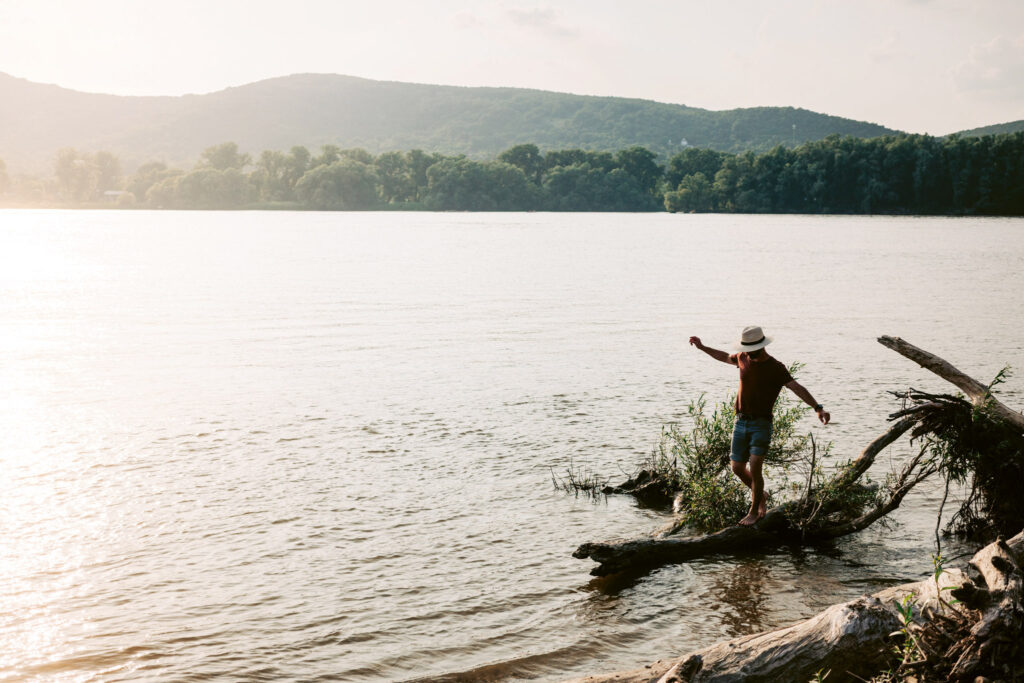
The essence is the childlike self-forgetfulness of being barefoot together. Ultimately, the island tip is all about this: at the end of the ideal landmass extending into the Danube Bend, shedding everything that stretches, frames, and characterizes, like on a pilgrimage.
A couple in their sixties are camping next to us in a small tent. They also build a big fire in the evening. They are making skewers, and they are quietly enjoying themselves. I watch as they build a fire again for breakfast. Children are bleak fishing, a dog is splashing in the water, and the first canoeists are arriving as well. A soft breeze ruffles the willows on the shore—ideal for laziness in a hammock.
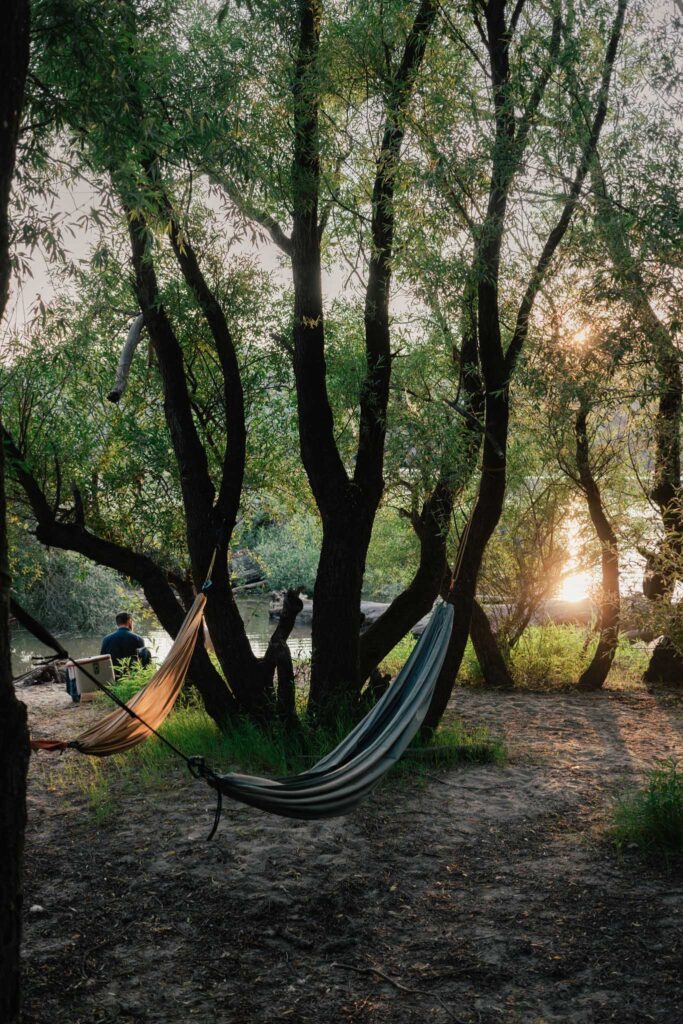
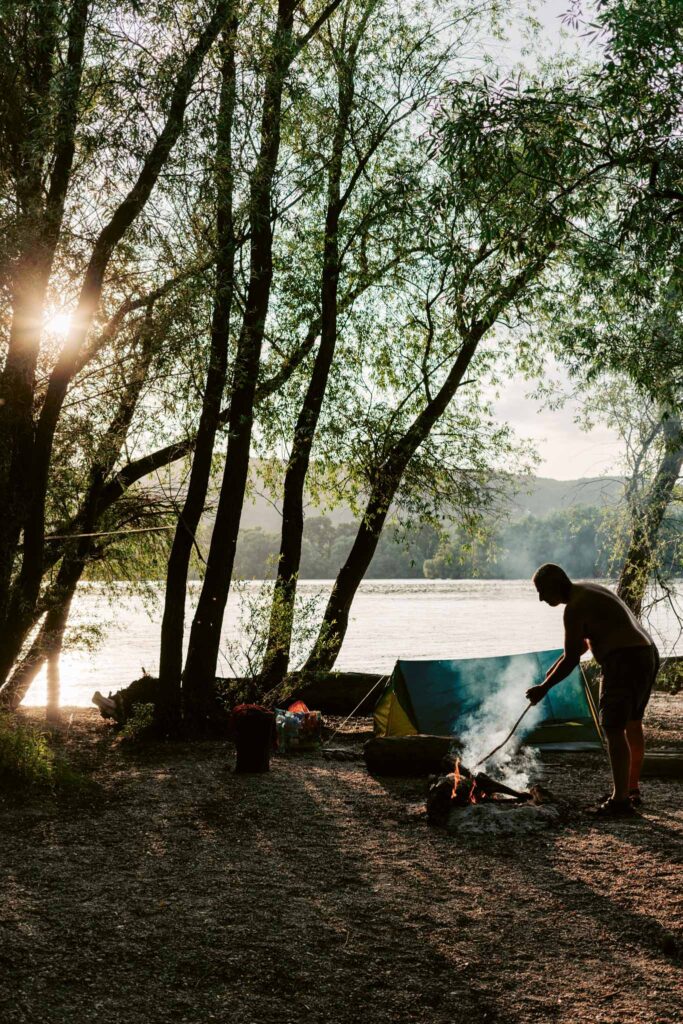
Cuckoo spit drips onto my notebook; the strange drizzling is just as much a part of well-being here as a dip in the Danube. Later, at the Pentecost mass in Kisoroszi, the priest preaches about the symbols of the soul. About doves and tongues of flame.
Time sits here. It gets cloudy, and the wind comes up. We pull up stakes. The Danube is transparent, the current is strong. We let it sweep the shells around our toes on the gravel bed.
Related articles:
Click here to read the original article.
At a time when public debate is increasingly polarized and superficial, Hungarian Conservative remains committed to depth, intellectual honesty, and independent conservative thought.
Producing high-quality journalism requires resources. Your contribution helps us expand our coverage, reach new audiences, and keep our content accessible.

Please consider supporting our mission.