The following is an adapted version of an article written by Lázár Pap, originally published in Hungarian in Magyar Krónika.
In an interview, Magyar Krónika asked István Kováts, an archaeologist at the King Matthias Museum of the Hungarian National Museum, whether people were truly afraid that the deceased would return, and what other customs surrounding medieval and early modern burials might seem shocking to people today.
***
News reports have been circulating that a vampire grave was discovered in Visegrád during the excavation of the remains of the Franciscan church—but how much of this is true?
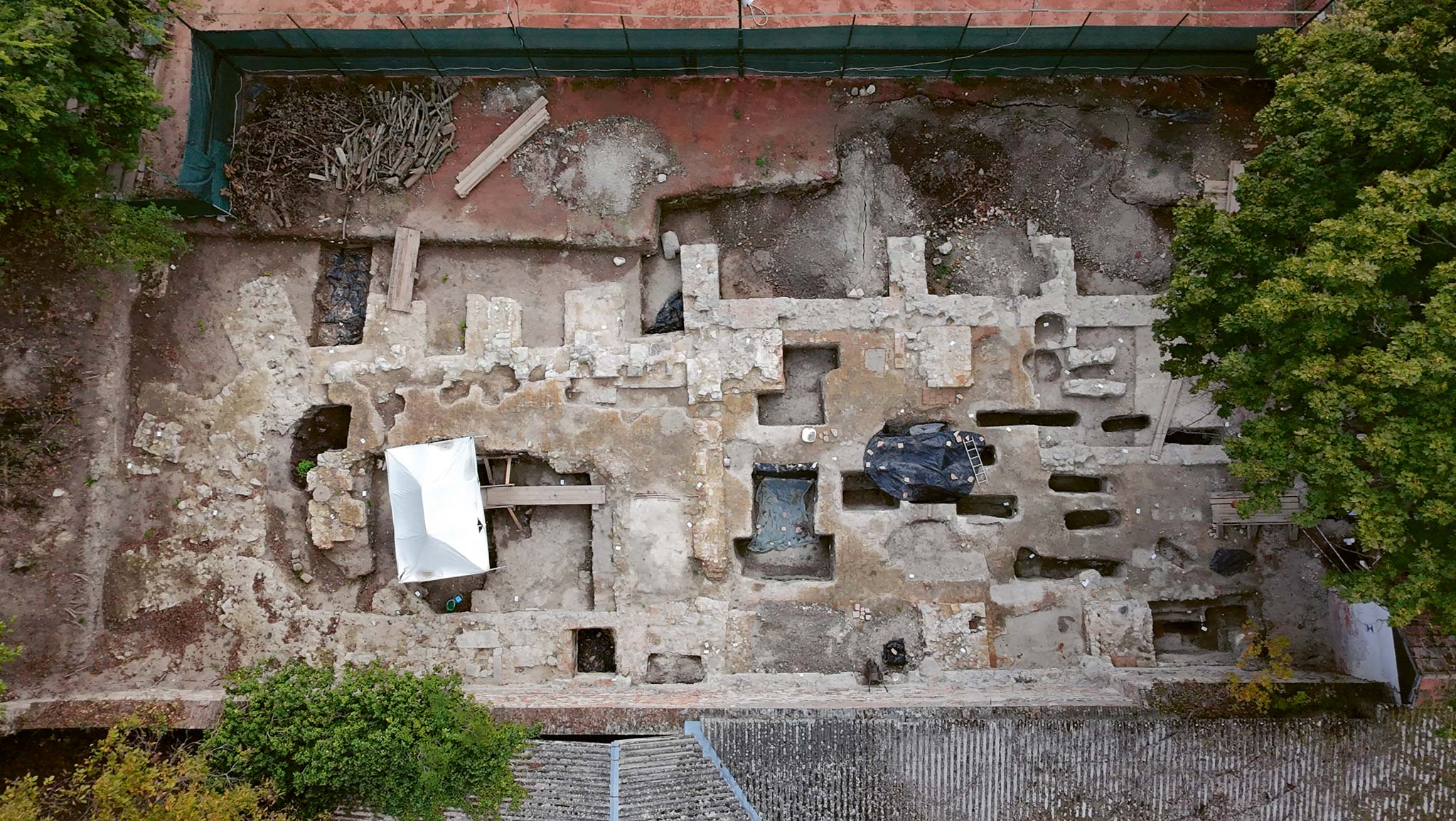
During the excavation of the cemetery, which dates from the same period as the church and is located within the walls of the 15th–16th-century Visegrád church, a peculiar group of graves was recently uncovered. It was situated roughly in the middle of the nave, close to the sanctuary, and thus in a prominent location. Based on the traces of grave digging visible on the surface and the size of the pit, we concluded that we had found an adult grave.
Completely unexpectedly, barely 50 centimetres below floor level, a child’s skeleton was also discovered at the western end of the excavated grave pit. We had found the remains of a two- or three-year-old child, and beneath the right femur of the skeleton, the outline of a larger iron object was visible. Upon removal, it became clear that a padlock had been placed in the grave while it was still sealed and, based on its shape, likely dates to the 16th–17th centuries.
The jaw of the skull was gaping open, which is common due to the decomposition of the body, but a fist-sized piece of stone lay right next to it. After documenting and removing the skeleton, we continued to deepen the grave. At the bottom, the skeleton of an adult was discovered; during its placement, earlier graves had also been disturbed. This is not unusual, as church cemeteries and burial grounds were used for centuries, since from the Middle Ages through the 18th century burial was restricted to consecrated church grounds. Therefore, it was not uncommon for one grave to disturb another.
We also found a lock on the right foot of the skeleton discovered beneath the child, which was lying on its back in a stretched-out position. In addition, we observed other suspicious items in the grave that may suggest the locks were placed alongside the deceased as part of a superstitious custom or belief.
What does a padlock buried with the deceased signify?
Padlocks are a rare find in Hungarian graves; relatively few examples are known. A child’s grave containing a padlock was discovered in the cemetery surrounding the church in Báta, Tolna County, where it was presumed that the coffin had been sealed with it. ‘Vampire graves’ came to light during a search for parallels to the Visegrád burials.
In 16th–18th-century Poland, for example, burial with a padlock was significantly more common; according to colleagues there, this custom was primarily, though not exclusively, characteristic of the burial of people who had been ostracized for some reason during their lives or after their deaths. Since they feared the dead might return from the grave, they placed a padlock with them to seal them in; thus, we can speak of a form of necrophobia—a symbolic expression of the fear of the dead.
In Polish cultural history, folklore, and literature, one form of the malevolent dead returning from the grave is the vampire, also known as an upiór, a blood-sucking specter that torments the living. Drawing a parallel here, it is conceivable that we are dealing with a similar belief in the case of the burials found here. Still, for now, we can only state that we have uncovered burials that are anomalous in many respects.
If the dead buried with locks had been ostracized from society during their lifetimes, why were they buried inside the church, near the sanctuary?
Indeed, one common form of ostracism and humiliation in death was burial outside the church or cemetery. Most of the Polish parallels show that those who were locked away were mostly buried outside cemeteries, by the roadside, in secluded places, and sometimes in graveyards specifically created for outcasts. At the latter sites, the dead were often buried in abnormal positions—face down, mutilated, with stones in their mouths. One such site was the execution ground, where, as a collective punishment and a form of ostracism, the dead were buried on the spot, outside the cemetery, immediately after execution. It was characteristic of the era that suicides were also treated as murderers, since they had taken a human life; therefore, as a form of humiliation, they too were buried by the roadside, at crossroads, in cemetery ditches, or at the execution site.
To answer your question, it is conceivable that they feared someone for some reason, yet that person remained a member of the community and was therefore granted a church burial. Furthermore, it is by no means certain that the locks were placed in the grave with the church’s knowledge: community members could have placed them next to the deceased either during the laying out or even before it. Moreover, it is not certain that the bodies were placed here while the church was in use. Construction began during the reign of King Sigismund and continued until the time of King Władysław, but work was suspended for several decades for various reasons. It is even conceivable that the bodies were buried in the half-finished but already consecrated church without the church’s knowledge. We know of cases where children who died unbaptized, or those who could not be buried in consecrated ground, were buried among the ruins of long-abandoned, so-called ‘deserted churches’. Of course, this cannot be proven; the theory is merely one hypothesis among many, and it must be emphasized that the excavation is not yet complete—we have uncovered roughly half of the graves so far.
What was the Church’s stance on the beliefs and superstitions surrounding burial?
The custom of burying iron objects with the dead has existed since ancient times and persisted well into the 19th and 20th centuries. According to one ethnographic interpretation, the often sharp, pointed objects placed in graves—such as sickles, scissors, and occasionally horseshoes or padlocks—may have served to ward off misfortune or evil spells. It is also a question whether, in these cases, the material or the function of the iron objects placed in the grave was more significant.
In the case of the padlock, it can be surmised that it may have had some kind of symbolic meaning of sealing or locking. It is even possible that the padlock was intended to protect the deceased from something. In the ‘vampire graves’ of Poland, and occasionally elsewhere, sickles have been found placed around the neck of the deceased. It seems clear in these cases that the intention was to prevent the dead from rising, since, if they did, the blade would slit their throats.
‘These were essentially Christian customs and parts of the folk religiosity…yet the Catholic Church often did not tolerate them’
It is a particularly interesting question how the so-called building sacrifices—eggs, upside-down pots, animal bones, chickens, and walled-in cats—which are well known in Hungary and have occasionally been found during church excavations, could have been reconciled with the consecration of the church and the Christian rituals performed there. It is generally believed that the clergy were not necessarily aware of these practices and that pagan beliefs, folk customs, and traditions did not disappear overnight with the adoption of Christianity. During the Baroque period, for example, it was a relatively widespread custom in certain regions to hang a small capsule, known as a breverl (meaning a book amulet in German), around the neck of the deceased. This contained tiny, folded, coloured copper engravings and images of saints—such as patron saints and saints associated with the plague—as well as supplications and prayers. In addition, items such as a penny, a lock of hair, or grains of wheat were also placed inside. These were essentially Christian customs and parts of the folk religiosity interwoven with superstitions of the era; yet the Catholic Church often did not tolerate them.
Let’s return to the Visegrád finds: you also mentioned other strange phenomena.
Regarding the fist-sized stone mentioned earlier, it has been suggested that it was placed in the dead child’s mouth and was dislodged only due to the decomposition of the body or other processes occurring in the soil, such as the growth of plant roots. This is, of course, only a hypothesis; we cannot prove it. According to some theories, stones were sometimes placed in the mouths of the dead to prevent them from biting if they returned. We also know of cases in Hungary involving stones placed in the mouth or on the body: for example, a skeleton excavated in a cemetery surrounding a 14th–15th-century church in Buda was missing its skull, and in its place lay a stone the size of a human head. And at the edge of the cemetery of an Árpád-era church in Baranya County, a body was discovered with a millstone placed on its chest, as if they had wanted to secure the person to ensure they remained in the grave.
What about the adult grave in Visegrád? Were there any signs of abnormalities found there as well?
The case of the adult skeleton is more complicated due to disturbances, so we must proceed with extreme caution if we wish to draw conclusions. What is certain is that we found a lock here as well, albeit an older type dating from the 14th–15th centuries. From this, and from the position of the graves, we logically conclude that this is an earlier burial, over which the child was interred. It is also a fact that we observed severe deformities and abnormalities in the adult skeleton’s left arm and right leg. The individual could not even move his left arm; it was essentially fixed in a flexed position, and there were signs of a severe fracture on his right leg, which caused this leg to be shortened, and the man was likely lame. According to anthropological examinations, we are not dealing with a congenital abnormality, but rather with acquired injuries—perhaps as a result of an accident—which severely limited the individual’s mobility and physical activities in general. In addition, the rib cage on his chest was found in an abnormal position, which could be the result of mutilation, but the examinations have not yet found any evidence to support this.
In the case of individuals suspected of being vampires, mutilation—such as the removal of the heart—was common, at least according to early modern and later descriptions. Furthermore, nails found near the feet are also considered suspicious. It is a matter of debate whether these remained from a rotted-away coffin or were driven through the feet. The former would not be surprising, though we found no trace of a coffin, so it is not certain that the man was placed in one; however, since several graves were disturbed, we cannot rule out the possibility. Of course, wooden pegs and dowels were also used in the era, so a coffin does not necessarily explain the presence of the nails. If, however, they were driven through the legs, it also points to vampire beliefs: they wanted to prevent the dead from returning.
Were children deliberately buried in the adults’ graves?
It is possible that they were related. The presence of the locks, as well as the fact that they were buried in the same grave, definitely suggests some kind of connection, in my opinion. It is quite possible that one or both of them suffered from a mental illness, or that there were elements in their lives—or perhaps in the circumstances of their deaths—such as lameness, strange behaviour, or sudden, unexplained death—that led to the two individuals being buried together in a single grave with padlocks. Archaeogenetics may shed light on any possible familial relationships; until then, we can only speculate.
‘In Polish folklore, burial with a padlock is clearly explained by vampire beliefs’
When they hear the word ‘vampire’, most people think of some version of the Dracula story. Do modern vampire stories have their roots in the Middle Ages?
In the case of the Visegrád graves, we referred to them as ‘vampire graves’ because, in Polish folklore, burial with a padlock is clearly explained by vampire beliefs. The Hungarian equivalent might be the ghost known as the ‘nora’, which sucks milk—or possibly blood—from the breasts of the dead or those who are sleeping.
The vampire stories we know today only emerged in the 19th century, during the Romantic era; the genre was created by John William Polidori, a member of the circle of friends centred around the Shelleys. His short story, written in 1819, was the first published modern vampire story. The classic Dracula story, known to everyone, was written by Bram Stoker in 1897. These Romantic horror stories have nothing to do with medieval vampire beliefs.
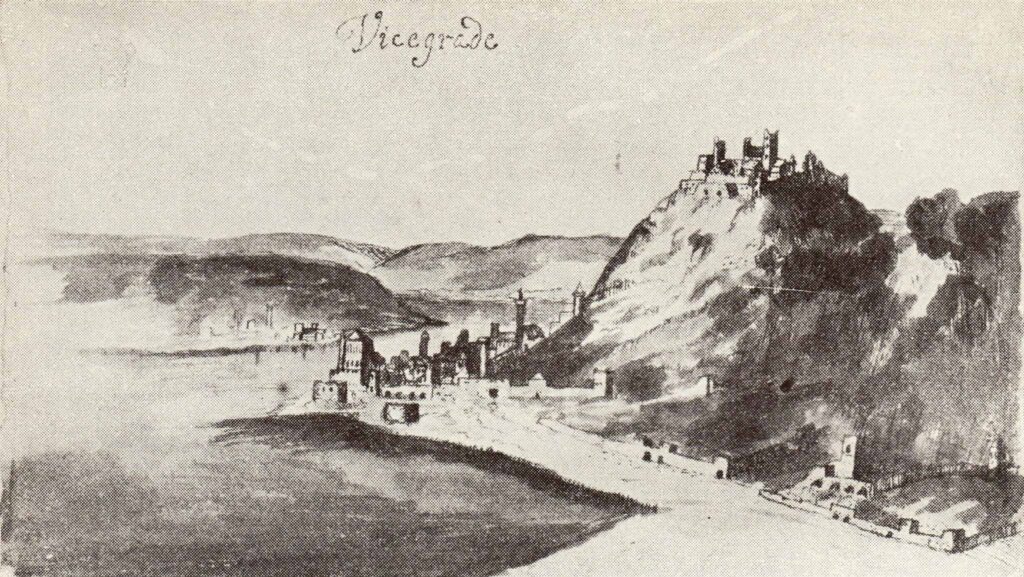
Incidentally, the real Count Dracula—that is, Vlad III, Prince of Wallachia—was imprisoned in Visegrád for several years in the 1460s, having been brought there as a hostage by Matthias. Pamphlets were already circulating about his notorious cruelty at the time, so he was not merely seen as a terrifying figure by later generations. However, he was not associated with vampire lore until after Bram Stoker’s novel.
***
Have We Misunderstood Dracula?
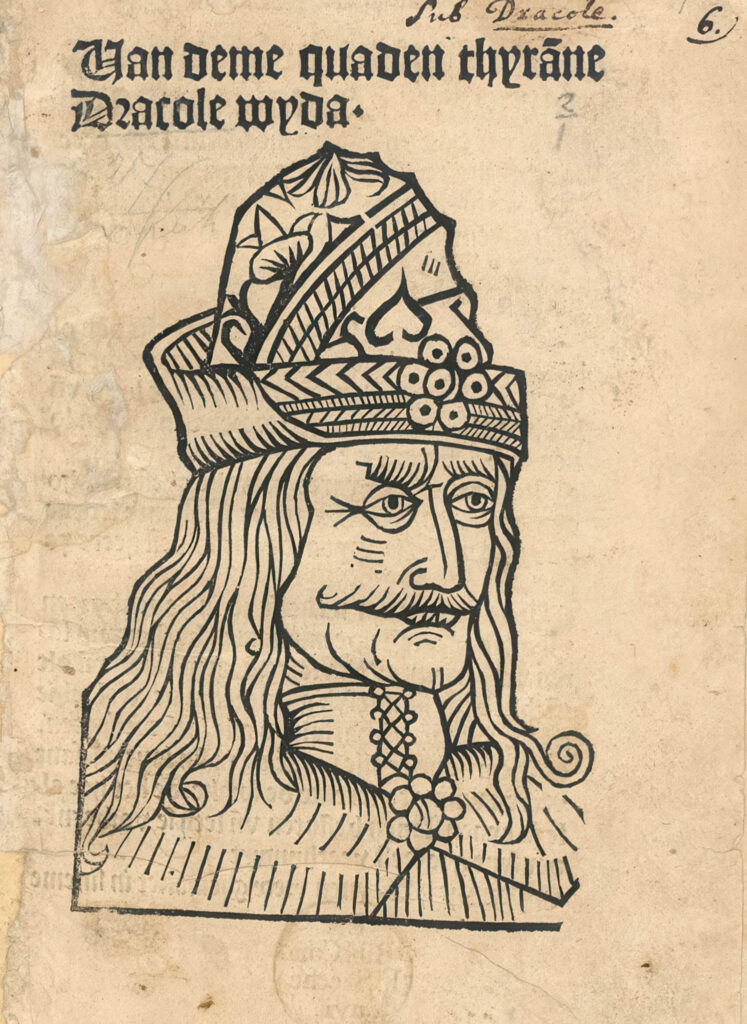
One of the most widely read German-language pamphlets of the 15th century recounts the atrocities committed by Vlad III ‘the Impaler’ (Vlad Țepeș), Prince of Wallachia, who invaded the territories of the Transylvanian Saxons in 1456, based on the accounts of an eyewitness who fled the scene. Its earliest edition appeared around 1485 and, compared to the story preserved in manuscript form by the aforementioned eyewitness, it also contains an addition. According to this, Dracula converted to Christianity while in the captivity of the Hungarian king and, upon his return to his homeland, ruled humanely. This publication, classified as an incunabulum, is exceptional in part because it contains a woodcut depicting the prince. Only one copy exists in the world, which was transferred to the National Library from the collection of Ferenc Széchényi.
Related articles:
Click here to read the original article.
At a time when public debate is increasingly polarized and superficial, Hungarian Conservative remains committed to depth, intellectual honesty, and independent conservative thought.
Producing high-quality journalism requires resources. Your contribution helps us expand our coverage, reach new audiences, and keep our content accessible.

Please consider supporting our mission.