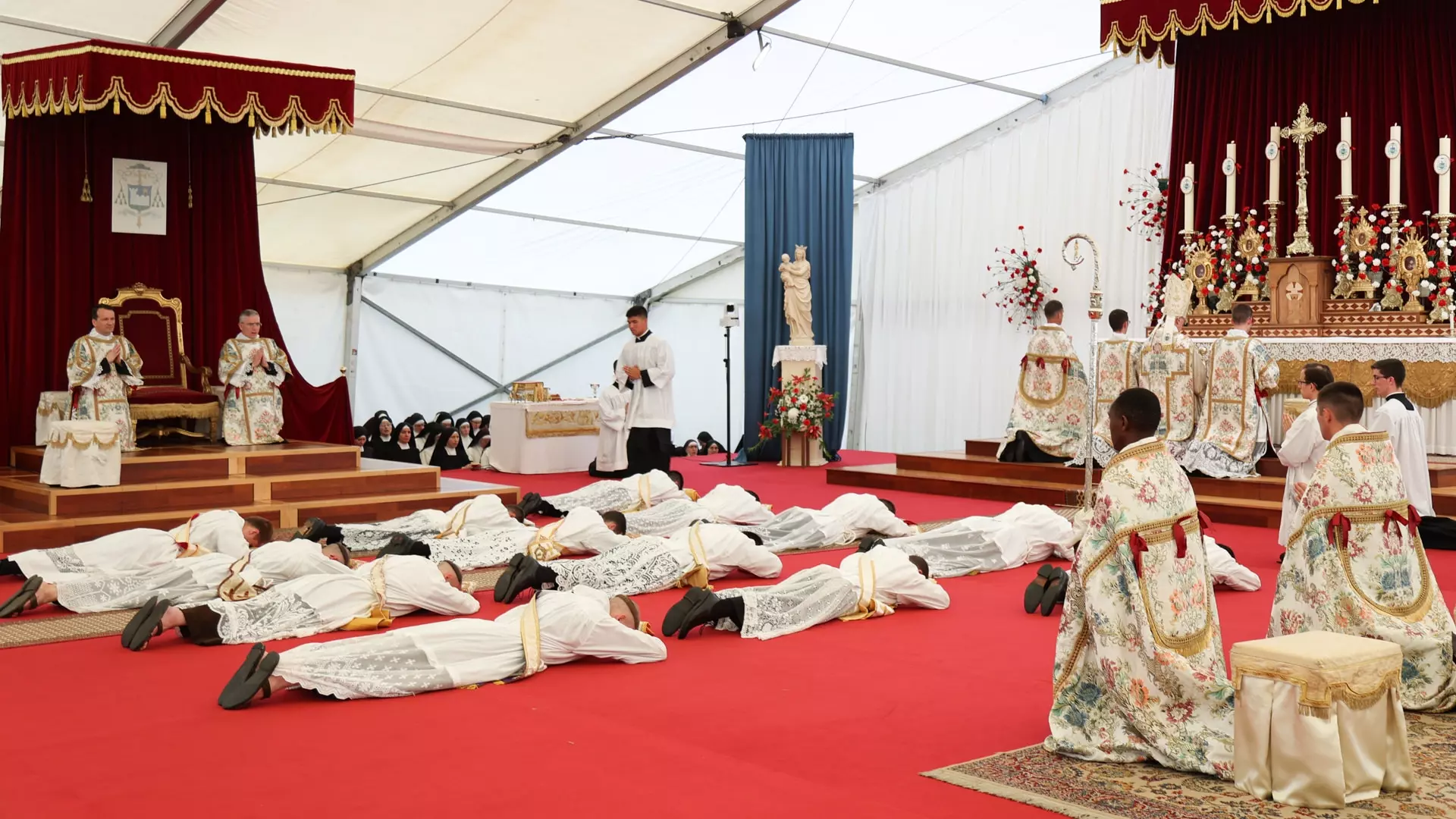
It is a historical fact that although Christianity did not begin within our Western civilization, it undeniably played a crucial role in shaping it. The Christian faith, through the institutional Catholic Church, not only offered the human person a sense of purpose in this life and the afterlife but also the welfare of others. This was evident during the Middle Ages, when the absence of the Roman Empire led to a fragmented civilization.
In the void left by the Empire, the Catholic Church took on this crucial and essential role in the development of jurisprudence, universities, architecture, literature, art, and music, as well as institutions of charity, like orphanages and foundling homes. This influence was not limited to the West; it also reached the East, exemplified by Saints Cyril and Methodius, who in the ninth century introduced Christianity to the Slavic peoples and aided in the establishment of a new civilization.
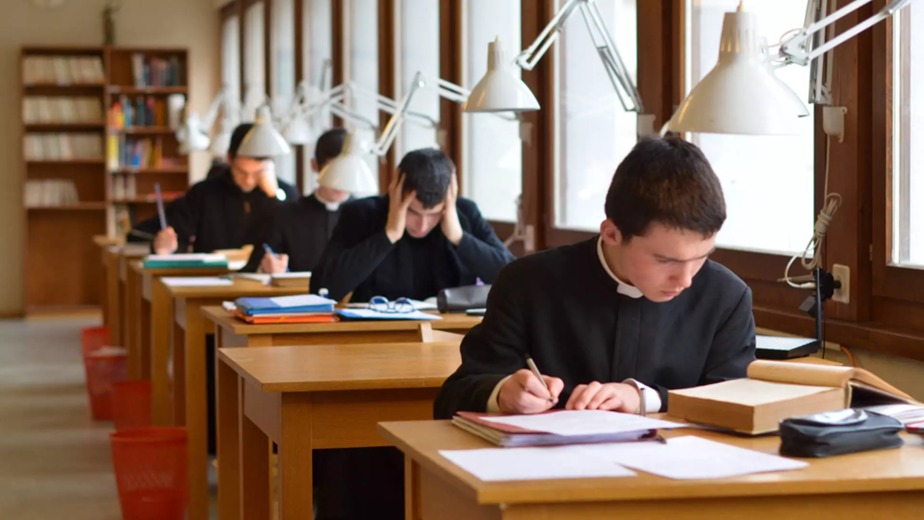
Contemporary Western society, however, finds itself in a state of moral emptiness. This situation can be primarily attributed to the Roman authorities of the Catholic Church and various bishops, whose priorities have shifted since the conclusion of the Second Vatican Council in 1965. Rather than providing doctrinal and moral guidance aimed at the salvation of souls, their focus has transitioned towards promoting harmony between the Church and the modern world and man’s role within it. As a result, the traditional education that formed priests and religious for over 1,500 years, which included asceticism, the Classics, scholasticism, Gregorian chant, and so on, has been replaced by psychological and socio-political training. The results have been empty seminaries and convents, as well as priests committing liturgical abuses that occasionally approach blasphemy, and in lieu of the natural law, moral relativism that has even led to a tacit acceptance of LGBTQ+ lifestyles as legitimate. Nevertheless, amidst these troubling times, a glimmer of hope persists.
‘Contemporary Western society, however, finds itself in a state of moral emptiness’
Last week, I visited the international seminary of the Priestly Fraternity of St. Pius X in Ecône, Switzerland, where the formation remains in line with what the Church has taught from its inception—Pope St. Pius X (r. 1903–1914) was the pontiff who denounced and opposed the encroachment of modernism within the Church.
Founded by Archbishop Marcel Lefebvre (1905–1991) in 1970, the Fraternity also has seminaries in three other countries—Argentina, Germany, and the United States—where the culmination of their formation is the celebration of the Traditional Latin Mass, which was codified by Pope St. Pius V in 1571, and last promulgated in 1962. The Fraternity has a membership of over 700 priests globally, alongside more than 260 seminarians and over 400 male and female religious members, totaling an estimated 600,000 Catholic faithful.
In 1976, Pope Paul VI suspended the archbishop, forbidding him from performing his episcopal duties. Despite this, Lefebvre not only persisted in his apostolate but also established regional headquarters in various nations for Catholics disillusioned by the leftist infiltration of the Church, who sought to practice their faith as it had been taught by the Church of Rome for nearly two millennia.
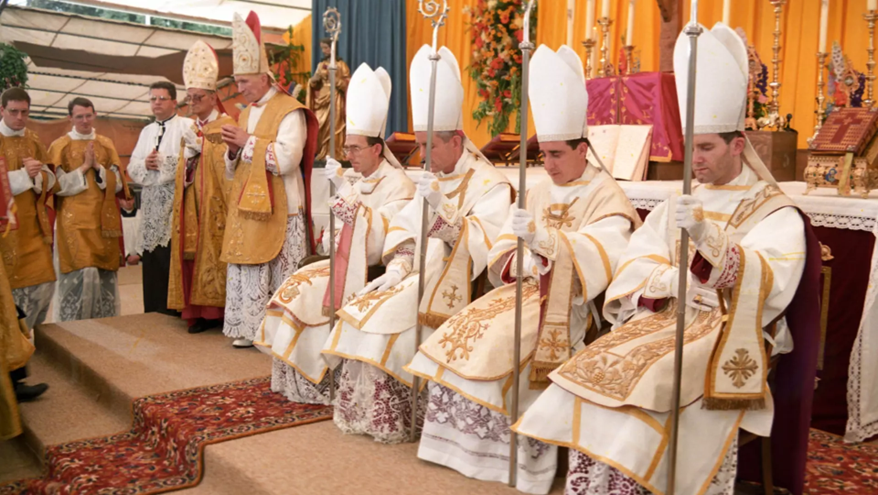
In 1988, in Ecône, he conferred episcopal consecration upon four priests from his Fraternity without a papal mandate, resulting in an excommunication. This sanction, however, is held to be invalid by numerous canonists, myself included, for, in light of what Pope Leo XIII stated in his Encyclical Libertas Praestantissimum (1888):
‘If, then, by any one in authority, something be sanctioned out of conformity with the principles of right reason, and consequently hurtful to the commonwealth, such an enactment can have no binding force of law.’
Archbishop Lefebvre, like St. Athanasius (circa 296/8–373) before him, continued to preach and ordain priests for the good of the Church and society in general despite the ‘excommunication’. This is why Pope Benedict XVI not only lifted the excommunications of the four bishops in 2009, but also, in 2015, Pope Francis granted the priests of the Fraternity the faculty to hear confessions and, in 2017, acknowledged the marriages they celebrate as valid. Yet, the apostolate established by Lefebvre is once again facing challenges from Rome.
Among the four bishops consecrated in 1988, only two are still alive. Consequently, the current Superior General, Fr. Davide Pagliarani, announced on 2 February that the Fraternity will conduct episcopal consecrations on 1 July ‘in fidelity to the Church and to souls’. Rome, after initially refusing their request, has issued a warning of excommunication should they proceed, saying this action will lead to a ‘perfect schism’. This, however, is not true, since for such a schism to occur, there must be a clear intention to engage in a schismatic act and to create, alongside the new bishops, a hierarchical jurisdiction that runs parallel to that of the Roman Catholic Church, similar to the present-day Chinese Catholic Patriotic Association (CCPA) established by the Chinese Communist Party (CCP) in 1957.
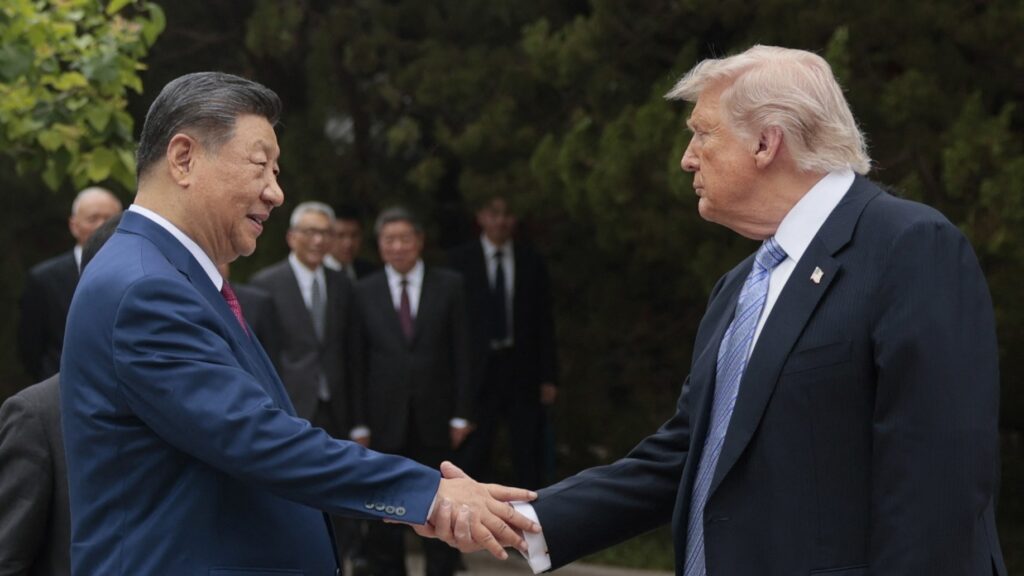
The eye-opener is that the Vatican recognizes the appointments of CCPA bishops by General Secretary of the CCP, Xi Jinping, and, at his behest, the creation of new dioceses in China. All things being equal, unlike other ‘traditional’ groups within the Church, the Fraternity of St. Pius X takes a public, yet respectful, stand against the doctrinal errors that presently ravage the Church and society.
One might assume that this matter is solely an internal concern of the Catholic Church. However, it is essential to consider the historical significance of the Church’s crucial influence on the development of Western society, which today, due to its lackadaisical stance towards Christianity, has resulted in a societal disintegration. While the Fraternity may not represent the last stronghold of Christendom, it undeniably serves as a bulwark for Christianity within society.
Related articles:
At a time when public debate is increasingly polarized and superficial, Hungarian Conservative remains committed to depth, intellectual honesty, and independent conservative thought.
Producing high-quality journalism requires resources. Your contribution helps us expand our coverage, reach new audiences, and keep our content accessible.

Please consider supporting our mission.