The following is an adapted version of an article written by Emese Hulej, originally published in Hungarian in Magyar Krónika.
A journey into the past, a moment of reflection, a tribute to memory. Near the bustling Üllői Road, in the 9th district, a synagogue, museum, and memorial site await visitors. The permanent exhibition informs, provokes thought, and moves the soul; visiting it leaves no one untouched.
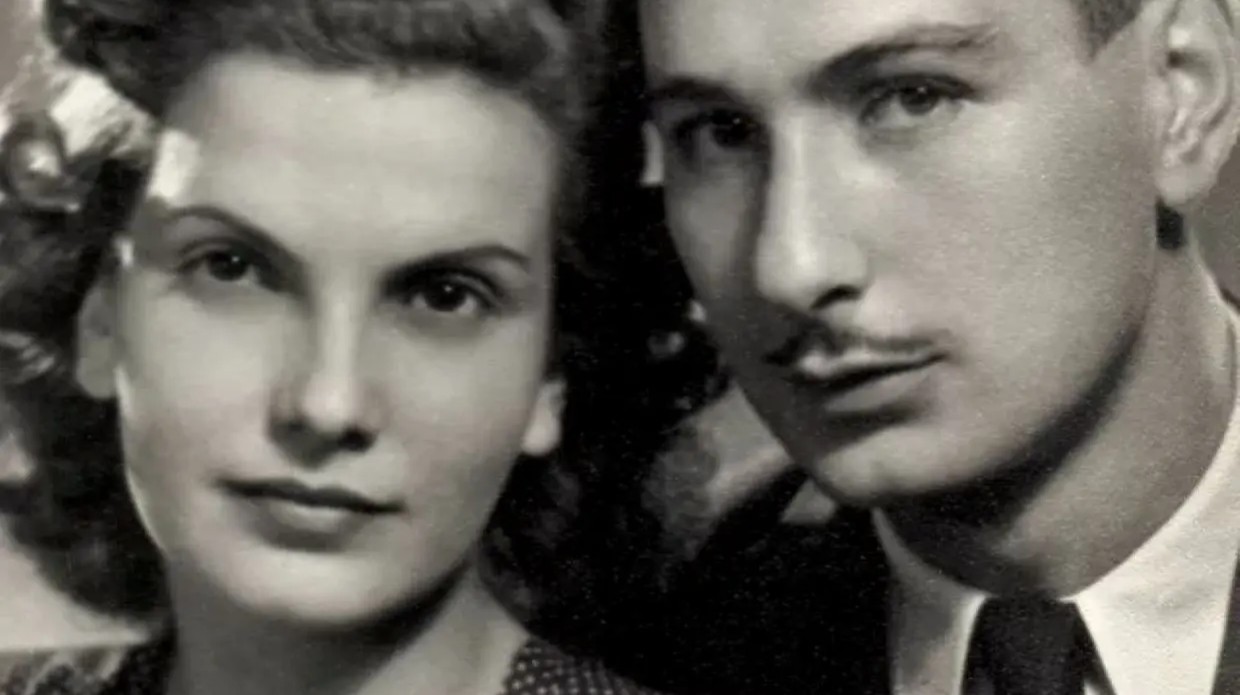
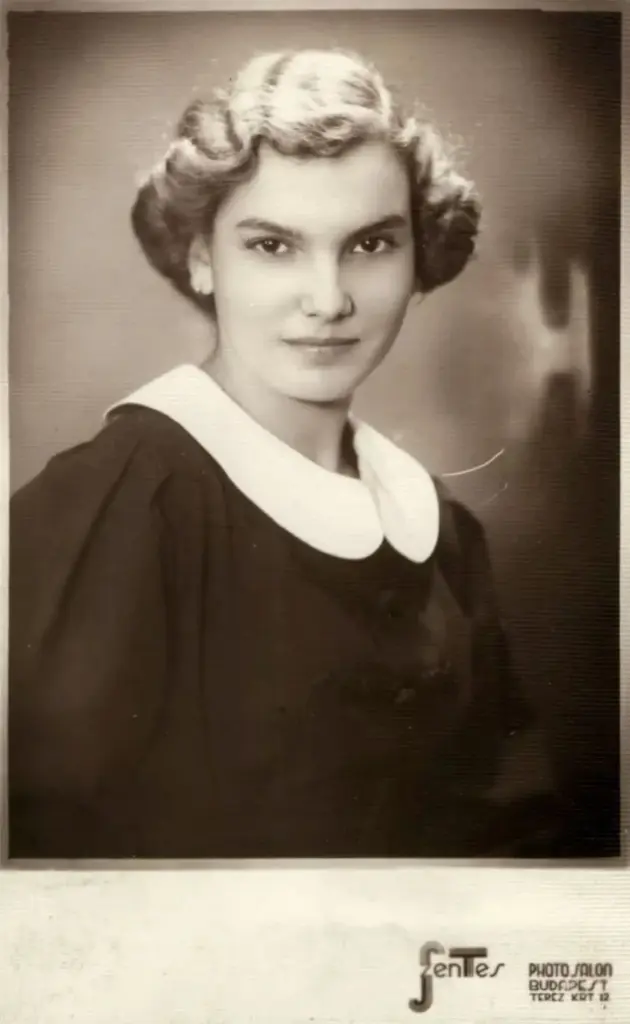
The beautiful Vera Wechsler, fresh out of commercial secondary school, had just started working at the office of the Electric Motor Factory on Csengery Street. There, one of her female colleagues often gushed about her former suitor, saying so many wonderful things about him that Vera decided to go see the young man for herself. So, one day she walked into the Szent István Boulevard branch of the Fiume Coffee Import Company, where Miklós Braun worked. The young man saw Vera and immediately asked her out on a date.
And so began the love story of the beautiful brunette and the man with the moustache—a love that survived the Holocaust—in the 1930s. Their story, along with those of four other families, guides us through the permanent exhibition at the Holocaust Memorial Centre on Páva Street.
Whether the sun is shining, it’s warm, raining, or windy, the sunken exhibition space operates on its own timeline. We literally immerse ourselves in the past. In the dim light, almost in darkness, we first encounter the history of Jewish–Hungarian coexistence, illustrated by data, maps, and scenes of daily life from Huszt, Újlipótváros, and Debrecen.
This is where we set out—literally set out—because it feels as though our own footsteps echo in the corridor, as though we, too, are among those who were suddenly torn from their lives and sent off, or rather driven, toward an unknown destination.
Or rather, not just suddenly. The posters reading ‘Shop at Christian stores!’ and the propaganda documents tell the story of how the exclusion began, offering a historical lesson on what the Holocaust taught humanity: where it can lead when society is divided into ‘us’ and ‘them’.
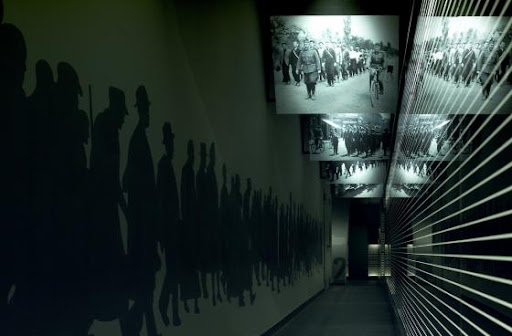
The space is divided into stages representing the deprivation of rights, plunder, and the loss of property, human dignity, and life—all illustrated through personal stories, abandoned objects, and countless photographs. A theatre binocular, a doll, a tiny notebook—each belonged to someone before they became mementoes.
‘A historical lesson on what the Holocaust taught humanity: where it can lead when society is divided into “us” and “them”’
The photos and films depicting the mass scale of murder and annihilation are horrifying. Still, it is perhaps even more harrowing to look into the eyes of those staring at us from the photos, people whose fates we do not know.
There is a picture of three young men with the yellow star on their jackets. The one on the far left has a sweet, boyish face; his hair is wavy, barely grown out—a ‘boy-man’, as they said back then—and we don’t know if he ever grew up at all… A Roma teenage girl, a woman clutching her handbag, two young boys in Bocskai coats and caps.
The film goes on, a heartbeat pulses through the space, boots clatter, fragments of melody and booming oratory. Pressing the speaker to our ears, we listen endlessly to the stories of Vera, Miklós, and four other families, including the Weiss–Chorin family, whose members were able to save their lives only in exchange for their entire fortune.
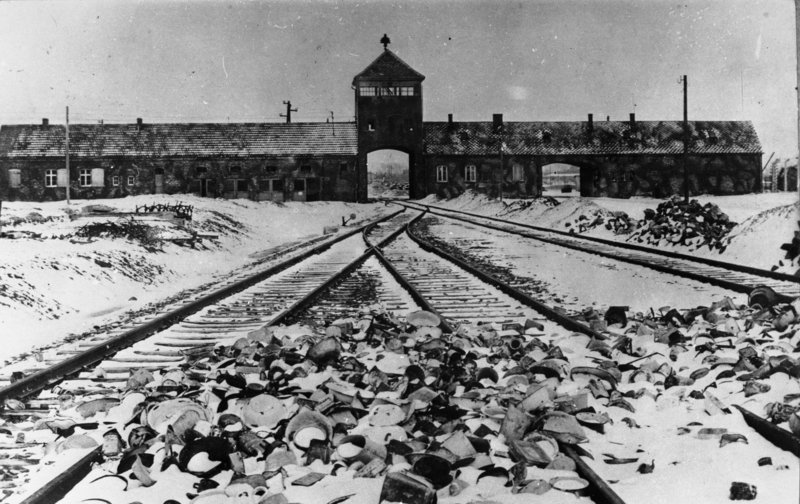
Stories within history. The story of the twins, Éva and Mirjam, born in the Szilágy Region, Transylvania, who became Mengele’s experimental subjects. Miklós Nyiszli, whose story inspired Son of Saul. Lenke Jakab, who searched for warm clothes in the guards’ quarters after the liberation of the concentration camp and found the ‘Auschwitz Album’ there, whose photographs revealed to the whole world what had happened in the camp.
But what happened to Vera and Miklós? The visitor anxiously sets the headset down in yet another space, wondering what they will hear next. Miklós was taken away to a labour camp, Vera’s father was killed by a bomb fragment, they lost their jobs, and after the German occupation, they decided to get married. A church wedding was out of the question, but they could still have a civil marriage in April 1944. Hiding, fleeing—the Arrow Cross dragged Miklós to the western border. ‘I’ll be home for our wedding anniversary,’ the young husband said, and Vera clung to that promise. After the fighting subsided, she returned to the ruins of their home, cleaned up, prepared, and waited for her husband. Miklós Braun was a day late but eventually came home. They gave life to two sons afterwards.
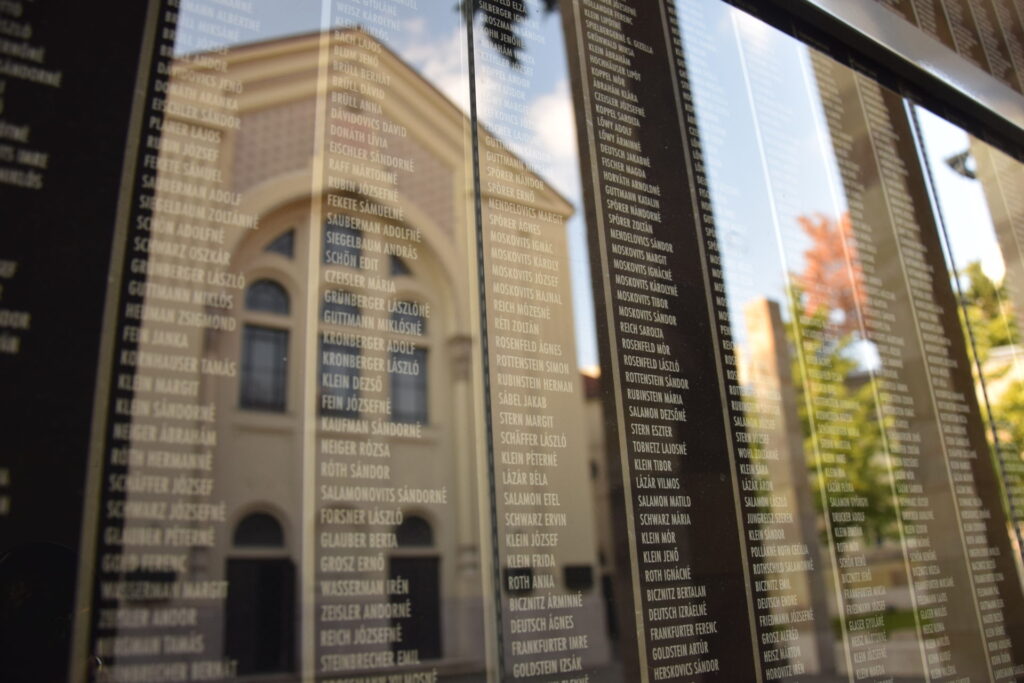
In the courtyard of the memorial centre, the names carved into the black stones mark those who never came home again.
Read more:
Click here to read the original article.
At a time when public debate is increasingly polarized and superficial, Hungarian Conservative remains committed to depth, intellectual honesty, and independent conservative thought.
Producing high-quality journalism requires resources. Your contribution helps us expand our coverage, reach new audiences, and keep our content accessible.

Please consider supporting our mission.