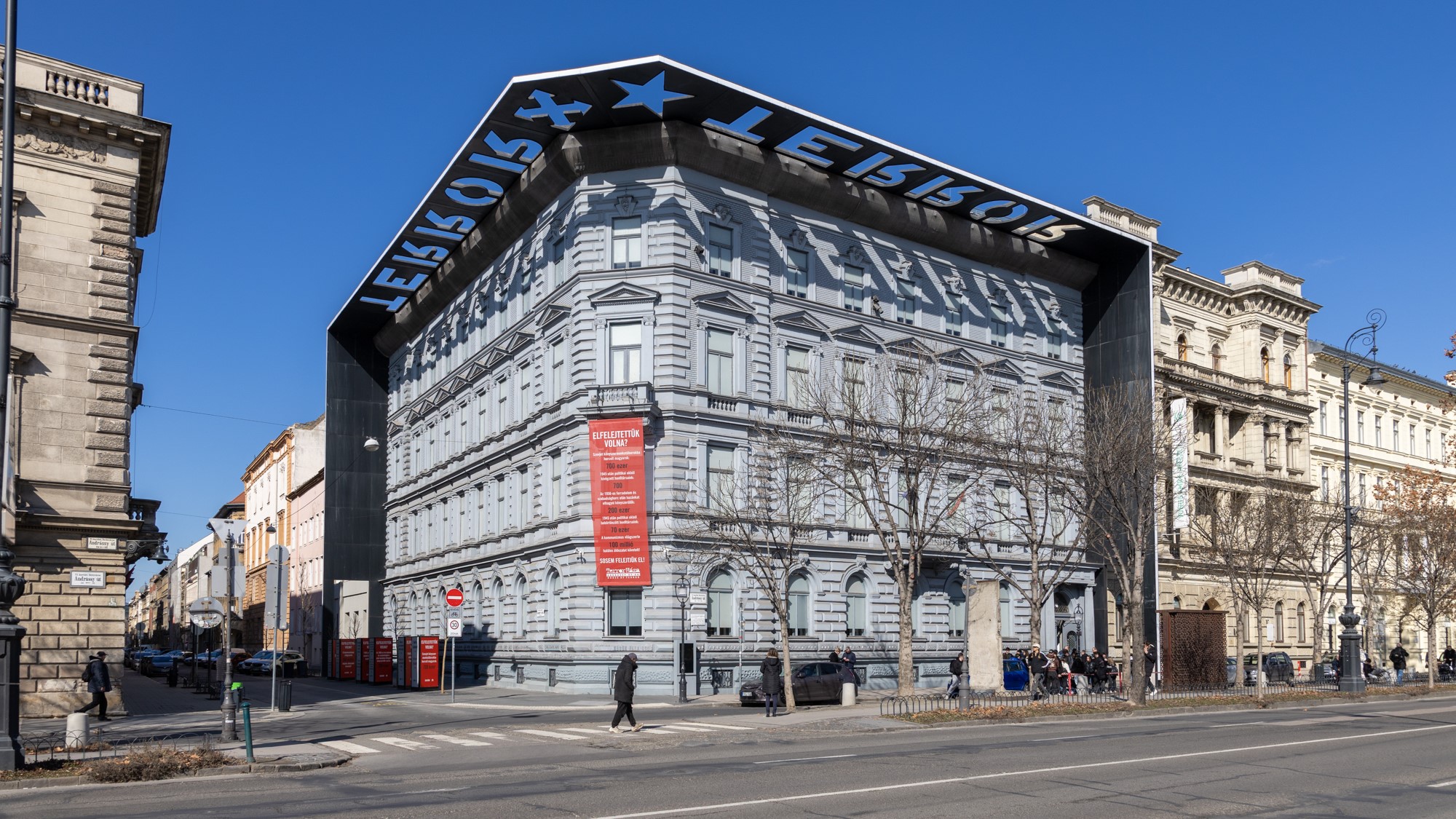
The House of Terror Museum has commemorated the events of the so-called ‘Black March’ in Târgu Mureș (Marosvásárhely), Romania marking 36 years since the ethnic clashes that took place in March 1990, the institution said in a statement.
According to a summary published on the museum’s website and authored by historian Gábor Balogh, the events followed shortly after the fall of the communist regime in Romania. In the aftermath of the Romanian Revolution, ethnic Hungarians in Târgu Mureș took to the streets to demand minority rights, including Hungarian-language higher education and guarantees for mother tongue use.
The statement said that the protests were later used by elements of the former communist elite to incite ethnic tensions between Hungarians and Romanians in the city. It described how groups of Romanians allegedly transported into the city attacked demonstrators, including the headquarters of the Democratic Alliance of Hungarians in Romania. Writer András Sütő was seriously injured during the violence, losing sight in one eye.
The account also highlighted the role of local Roma communities, who, according to the summary, joined in defence of the Hungarian protesters. Béla Puczi and his companions were quoted as rallying to support demonstrators, contributing to the dispersal of violent groups.
The museum’s summary stated that, in the aftermath, authorities held members of the victimized groups responsible for the events, and several individuals, including Puczi, were prosecuted and imprisoned. After his release, Puczi fled to Hungary, where he reportedly waited years for asylum and later died in 2009 in difficult circumstances.
The statement noted that Puczi has since been commemorated in Hungary, including with a memorial plaque unveiled in 2017 and a public space named in his honour in 2021 near Nyugati Railway Station.
According to the museum, several Roma individuals involved in the events were posthumously or personally recognized with awards, including the Petőfi Memorial Certificate for Courage, issued by the Foundation for the Research of Central and Eastern European History and Society. The Hungarian government also awarded them the Minorities Award in the same year.
The foundation has published a book on the events titled Egymásnak ítélve – Fekete március Marosvásárhelyen, available in both Hungarian and Romanian. The events were also featured in the museum’s 2021 temporary exhibition Together, Freely, which focused on Roma figures in 20th-century Hungarian history.
In the summary, Balogh described the events as both a period of suffering and a symbol of solidarity, emphasizing the long-standing historical ties between Roma and Hungarian communities and their shared experiences.
Related articles:
At a time when public debate is increasingly polarized and superficial, Hungarian Conservative remains committed to depth, intellectual honesty, and independent conservative thought.
Producing high-quality journalism requires resources. Your contribution helps us expand our coverage, reach new audiences, and keep our content accessible.

Please consider supporting our mission.