
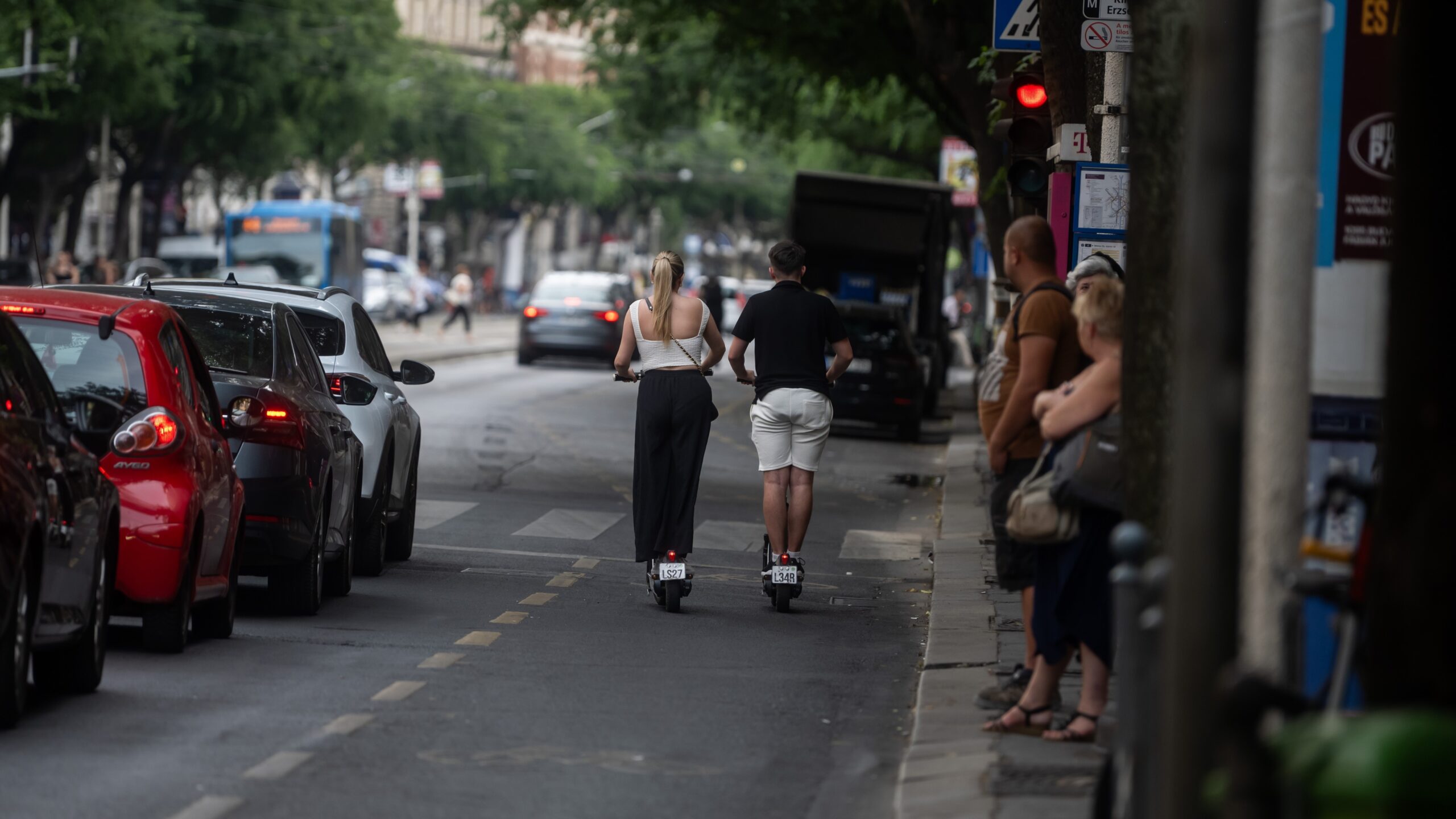
The Future Mobility Association has renewed its call for the introduction of official regulations governing the use of electric scooters in Hungary, warning that the growing popularity of the vehicles has been accompanied by a rise in accidents.
According to industry estimates cited by the organization, between 100,000 and 120,000 electric scooters are currently in use across Hungary. Around 10 to 15 per cent of these are shared vehicles available through rental applications, while the vast majority are privately owned.
Although electric scooters have become a common sight on Hungarian roads since 2018, the country still lacks a dedicated legal framework specifically regulating their operation. As their numbers continue to increase, scooter-related incidents are appearing more frequently in accident statistics, prompting renewed calls for action.
The association said there is broad professional consensus that electric scooters can be integrated safely into everyday transportation. However, it argues that this requires the rapid adoption of clear traffic regulations, alongside comprehensive educational and awareness programmes aimed at both current and future users.
The Future Mobility Association first submitted a detailed regulatory proposal in 2022 outlining how electric scooters could be incorporated into Hungary’s transport system. Since then, the organization has actively participated in professional forums discussing the modernization of the Highway Code (KRESZ) and has contributed to the development of a new draft traffic code that includes provisions for micromobility vehicles.
The group has also joined the Micromobility Working Group of the Institute for Transport Sciences, which has prepared a package of recommendations incorporating input from researchers and industry experts. The aim is to accelerate the introduction of a regulatory framework that reflects the realities of modern urban transportation.
In a statement, association president András Kárpáti welcomed a recent proposal by Transport and Investment Minister Dávid Vitézy to address electric scooter regulation separately from the broader overhaul of the Highway Code. According to Kárpáti, a faster legislative process would allow long-overdue rules to be introduced without waiting for the completion of wider traffic reforms.
At the same time, he stressed that legislation alone would not be enough to improve safety. Effective regulation, he said, must be accompanied by education and public awareness initiatives that promote responsible riding habits and a better understanding of traffic rules.
The association already operates several educational programmes focused on electric scooter safety. These initiatives are presented in schools, at municipal open days, and at the WEMOVE Mobility Park, which was created in partnership with the Hungarian Mobility and Automobile Club.
The organization also revealed that a new scooter safety curriculum, validated by the Institute for Transport Sciences, is nearing completion. The programme is expected to be rolled out nationwide in cooperation with county-level accident prevention authorities and will target a wide age range, from kindergarten children to secondary school students preparing for graduation.
Industry representatives argue that a combination of clear regulations, practical training, and public education is essential if electric scooters are to become a safe and sustainable component of Hungary’s transport network.
Related articles:
At a time when public debate is increasingly polarized and superficial, Hungarian Conservative remains committed to depth, intellectual honesty, and independent conservative thought.
Producing high-quality journalism requires resources. Your contribution helps us expand our coverage, reach new audiences, and keep our content accessible.

Please consider supporting our mission.