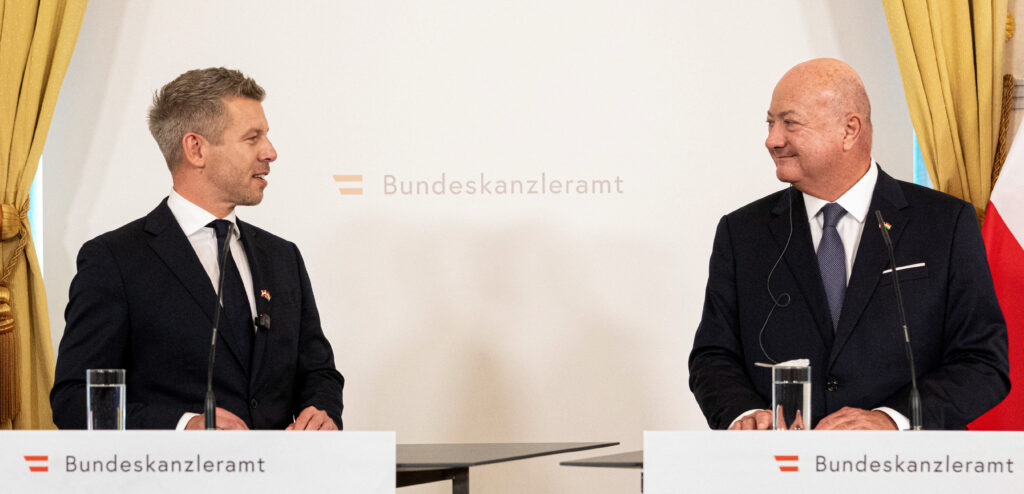
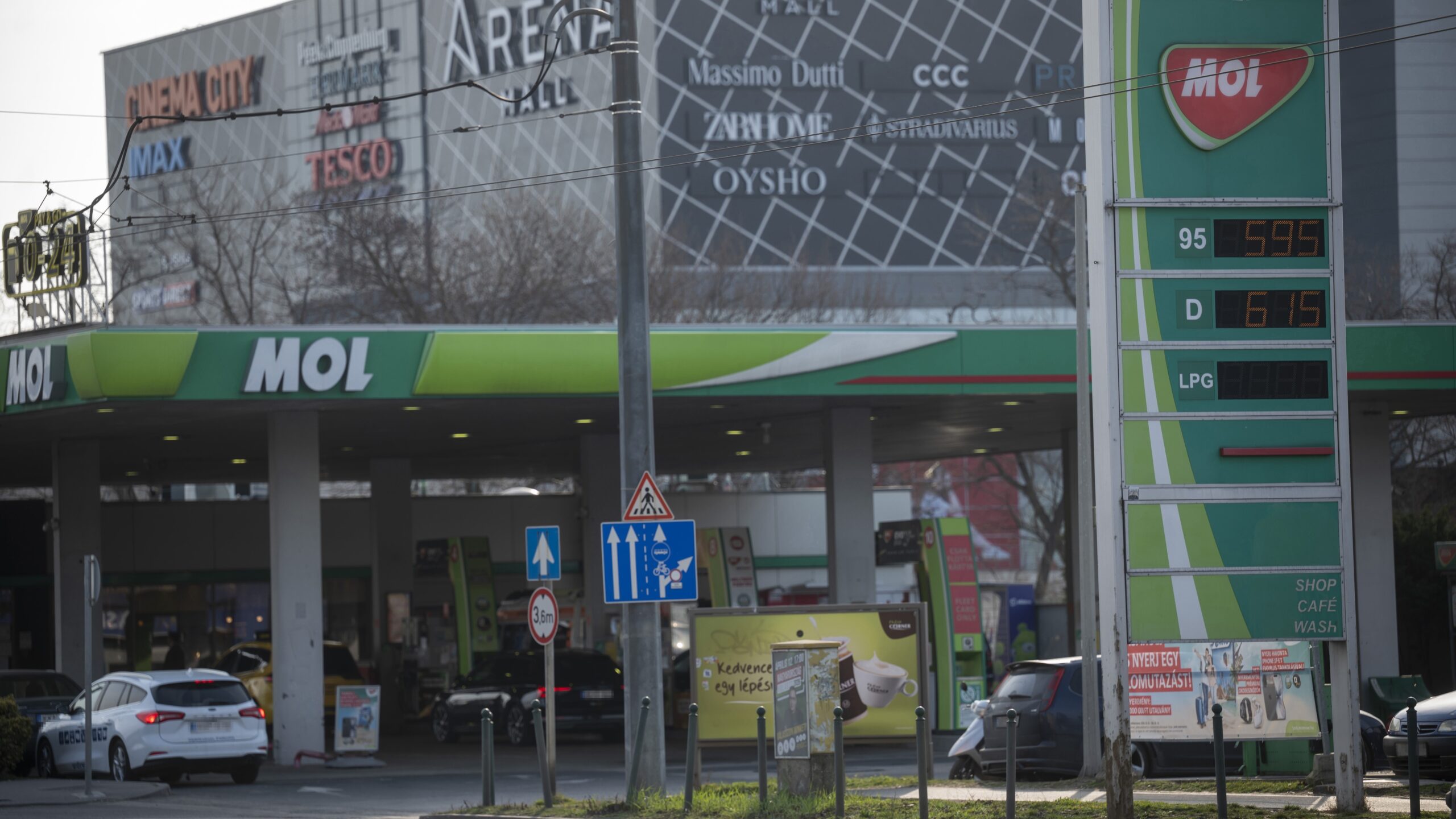
The Hungarian government has decided to initiate legislation to phase out the country’s protected fuel price scheme after market fuel prices fell below the regulated threshold, Prime Minister Péter Magyar announced on Wednesday.
In a social media post, the prime minister said fuel prices at filling stations are expected to fall 10 to 15 forints below the protected price level this week, prompting the government to seek amendments to the relevant legislation and remove the measure.
Magyar stressed that the government will maintain the reduction in fuel excise duty and that MOL Group will continue to operate with reduced margins.
The prime minister noted that the protected fuel price system has cost Hungarian taxpayers approximately 50 billion forints per month.
The scheme was introduced by the previous government on 10 March. Under the current rules, vehicles registered in Hungary can purchase 95-octane petrol for a maximum of 595 forints per litre and diesel for a maximum of 615 forints per litre.
According to fuel price monitoring website holtankoljak.hu, wholesale petrol prices will decrease by 5 forints per litre from Thursday, while diesel wholesale prices will fall by 14 forints per litre.
The website noted that the diesel price reduction is one of the largest declines recorded in recent weeks and could quickly be reflected in retail fuel prices.
International oil markets have continued to trend downward, with the price of Brent Crude falling below $80 per barrel. Market sentiment has been influenced by expectations of normalized Iranian oil exports and easing concerns over global supply constraints.
On Wednesday, average retail prices stood at 635 forints per litre for petrol and 655 forints per litre for diesel, according to the portal.
The parliamentary group of Fidesz criticized the government’s decision, describing the removal of the protected fuel price as a serious mistake. In a statement, the opposition proposed retaining the current protected prices as a permanent price ceiling rather than eliminating the mechanism entirely. The party argued that there is no guarantee fuel prices will not rise sharply again given the fragile global economic environment.
Fidesz also accused the government of breaking an election promise, claiming that Magyar had campaigned on lower fuel prices and pledged to reduce excise taxes before deciding to abolish the protection scheme.
According to the opposition, the protected pricing mechanism helped shield millions of Hungarian households from higher fuel costs over the past four months. The party added that the recent decline in global oil prices should be viewed as a positive development for both Hungarian families and the wider economy.
Related articles:
At a time when public debate is increasingly polarized and superficial, Hungarian Conservative remains committed to depth, intellectual honesty, and independent conservative thought.
Producing high-quality journalism requires resources. Your contribution helps us expand our coverage, reach new audiences, and keep our content accessible.

Please consider supporting our mission.