Prime Minister Péter Magyar says Hungary may be able to find a way out of the EU’s daily €1 million migration fine without loosening its hard-line border policy, while also demanding that the country recover €1 billion lost in the same dispute with Brussels.
Speaking on Thursday, 3 September, Magyar said Hungary had been treated unfairly, arguing that EU asylum rules and European policy have become considerably stricter since the dispute began. ‘Hungary’s position was fundamentally right in the fight against illegal migration,’ he said, referring to the Orbán government’s hard-line position.
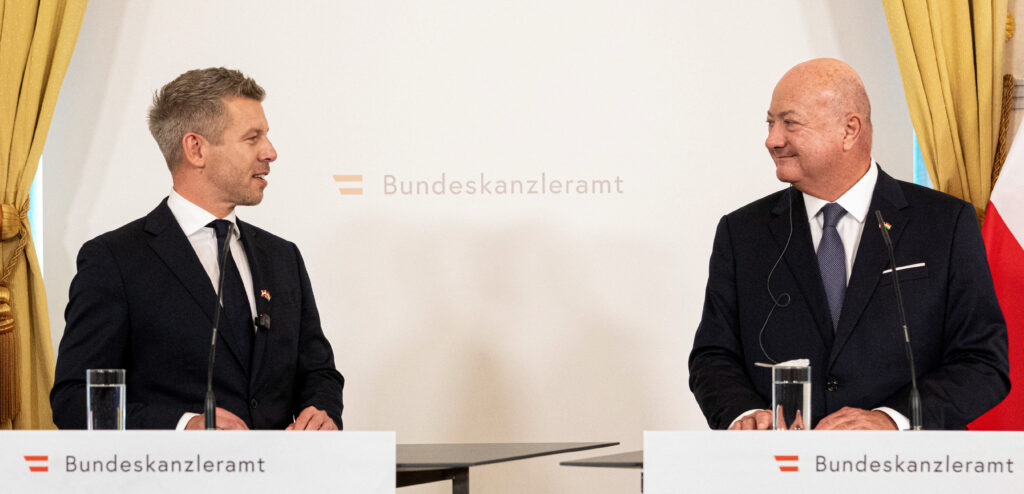
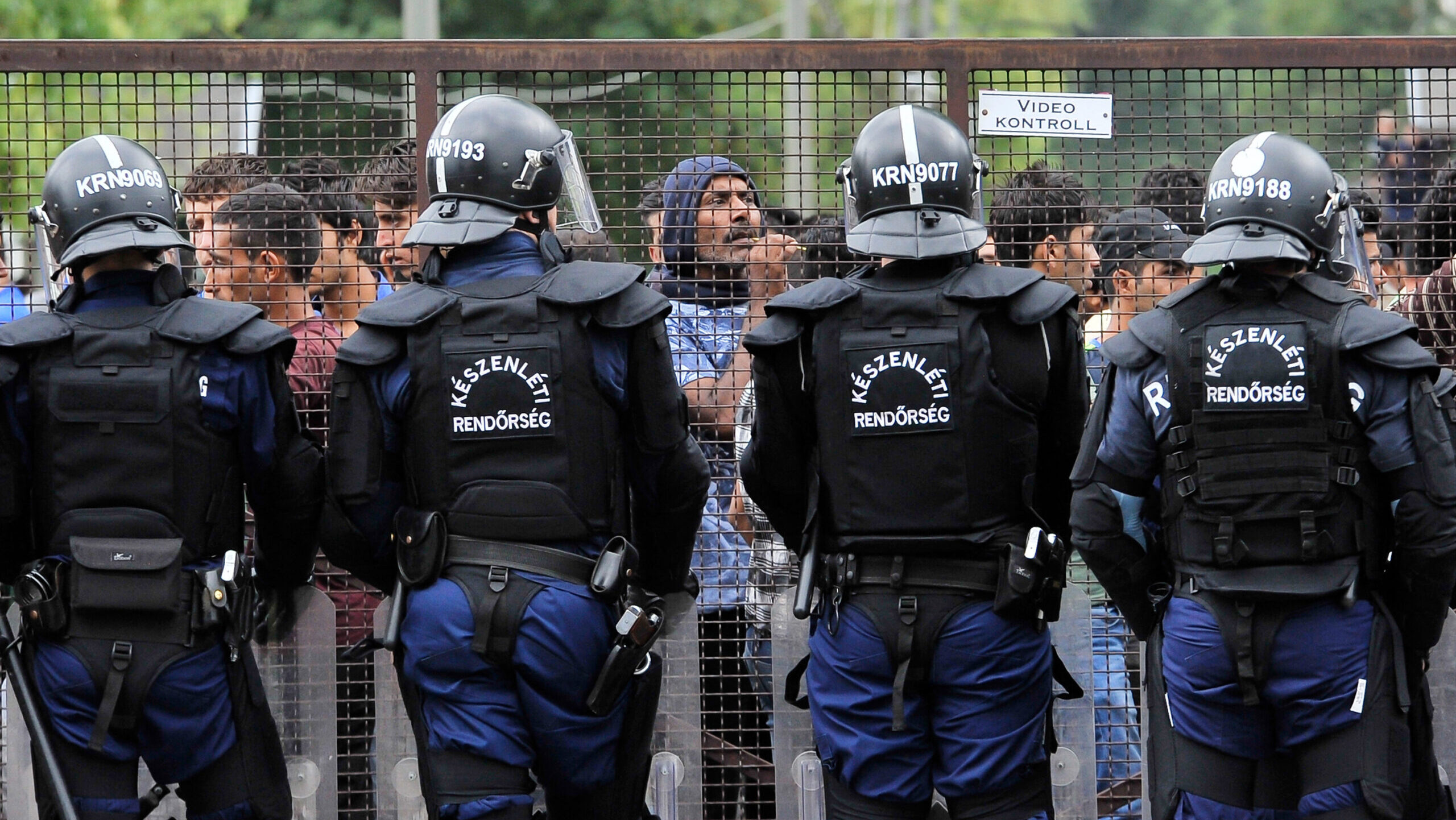
According to the prime minister, the government is currently looking for a solution that would keep the border fence, built in 2015, intact, as well as other parts of the strict system, while also remaining compatible with EU law. The issue was reportedly brought up during his meeting with European Council President António Costa on 2 September.
When speaking about ending the daily penalty, Magyar described one possible route, although in unusually informal terms, stating that ‘something’ could enter into force for a day, allowing Hungary to stop the fine, before a similarly strict but differently functioning regime takes effect.
The idea sounds improvised, but there is a legal pathway behind it. On 13 June 2024 the Court of Justice of the European Union ordered Hungary to pay a €200 million lump sum and €1 million for every additional day it failed to comply with a December 2020 judgment concerning access to asylum procedures, applicants’ right to remain during certain appeals, and removals of illegally staying third-country nationals.
Crucially, the daily penalty lasts only until Hungary reaches full compliance. Budapest therefore does not need Brussels to politically ‘cancel’ the sanction; it needs to remove the legal conditions keeping it in force. There is precedent for such a route: in the 2014 Commission v Portugal case, the CJEU held that once the legislation underlying an infringement is repealed and replaced by a new legal framework not previously examined by the Court, the Commission cannot simply treat the new rules as a continuation of the original breach when calculating the existing penalty.
‘The government and Commission are examining whether two temporary Hungarian migration measures could be allowed to expire’
According to Euronews, the government and Commission are examining whether two temporary Hungarian migration measures could be allowed to expire. One is the ‘state of crisis due to mass migration’, in place since 2015 and due to lapse on 7 September unless extended. Another is the special asylum system requiring applicants to declare their intention through a Hungarian embassy abroad, which expires at the end of the year.
Allowing the emergency regime to expire could nevertheless create a separate risk: even a technical weakening of immediate-return rules may be interpreted by migrants and smugglers as a weakening of Hungary’s border deterrence. Spain faced a similar signalling problem in Ceuta, where Morocco argued that a Supreme Court ruling restricting immediate border rejection was quickly marketed by trafficking networks as making entry easier.
Hungary’s situation is, nevertheless, different, as the country would not lose all of its pushback powers with the expiration. A separate provision introduced in 2016 allows police to apprehend third-country nationals staying illegally within eight kilometres of the external Schengen border and escort them through the nearest gate in the border fence; the emergency regime later extended that power to the entire country. It is not clear whether this would also have to be repealed to achieve full compliance.
If those rules disappear and Hungary achieves compliance, the daily penalty could stop. Budapest could then hypothetically introduce a new restrictive framework under current EU law.
Responding to a question on Thursday, spokesperson Markus Lammert said Brussels was engaging ‘closely’ with the Hungarian authorities, adding that ‘it’s for Hungary and the court to see what can be done’.
Magyar also wants Hungary to recover the roughly €1 billion already accumulated through negotiations over the EU’s next seven-year budget. That is a separate and considerably harder question: stopping future payments does not undo penalties already incurred.
The Orbán government argued that complying would force Hungary to admit migrants while their applications were processed, which is generally true, and maintained that paying the penalty was still cheaper than the costs of mass migration. In February 2025 Orbán said Hungary would ‘still save money if we pay the penalty and keep the migrants out’.
‘Magyar also wants Hungary to recover the roughly €1 billion already accumulated’
Magyar is now trying to preserve the hard line while ending the legal and financial confrontation around it. So far, however, much of that continuity remains rhetorical. His government has kept the fence and rejected mandatory migrant allocation, but it has not yet shown what a redesigned, fine-proof but still strict asylum system would look like.
There have been concrete restrictive steps elsewhere. From 6 June, Hungary stopped accepting new applications for dedicated guest-worker residence permits and ordered a broader review of labour migration into the country. Interior Minister Gábor Pósfai also said Hungary continues to reject the EU Migration Pact in its current form and will not submit a national implementation plan, while accepting technical assistance—not migrant relocation or financial contributions—as the appropriate form of solidarity.
The broader question is therefore not how the penalty will be stopped, but rather what Magyar does with the room available afterwards: how far he moves within the current EU framework, which restrictive tools he actually uses, and how much of Orbán’s migration doctrine survives beyond rhetoric.
Related articles:
At a time when public debate is increasingly polarized and superficial, Hungarian Conservative remains committed to depth, intellectual honesty, and independent conservative thought.
Producing high-quality journalism requires resources. Your contribution helps us expand our coverage, reach new audiences, and keep our content accessible.

Please consider supporting our mission.