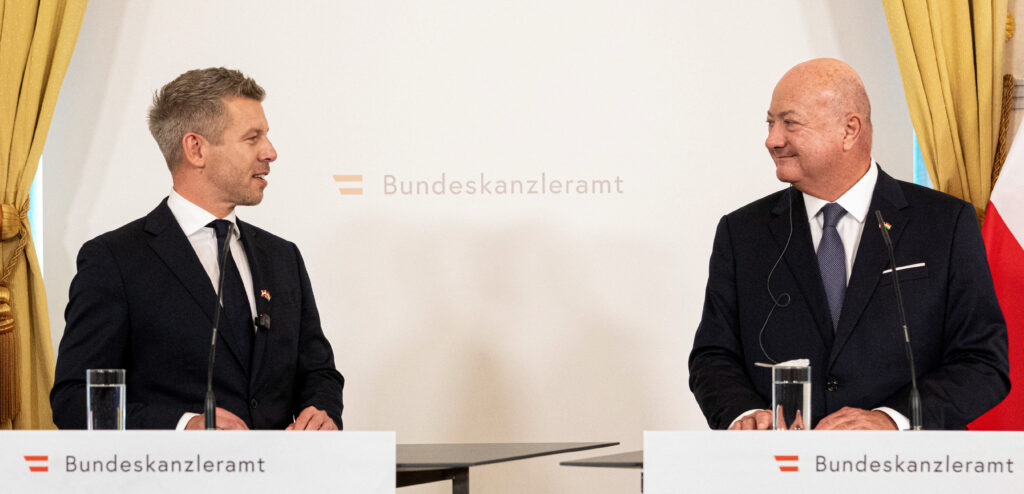
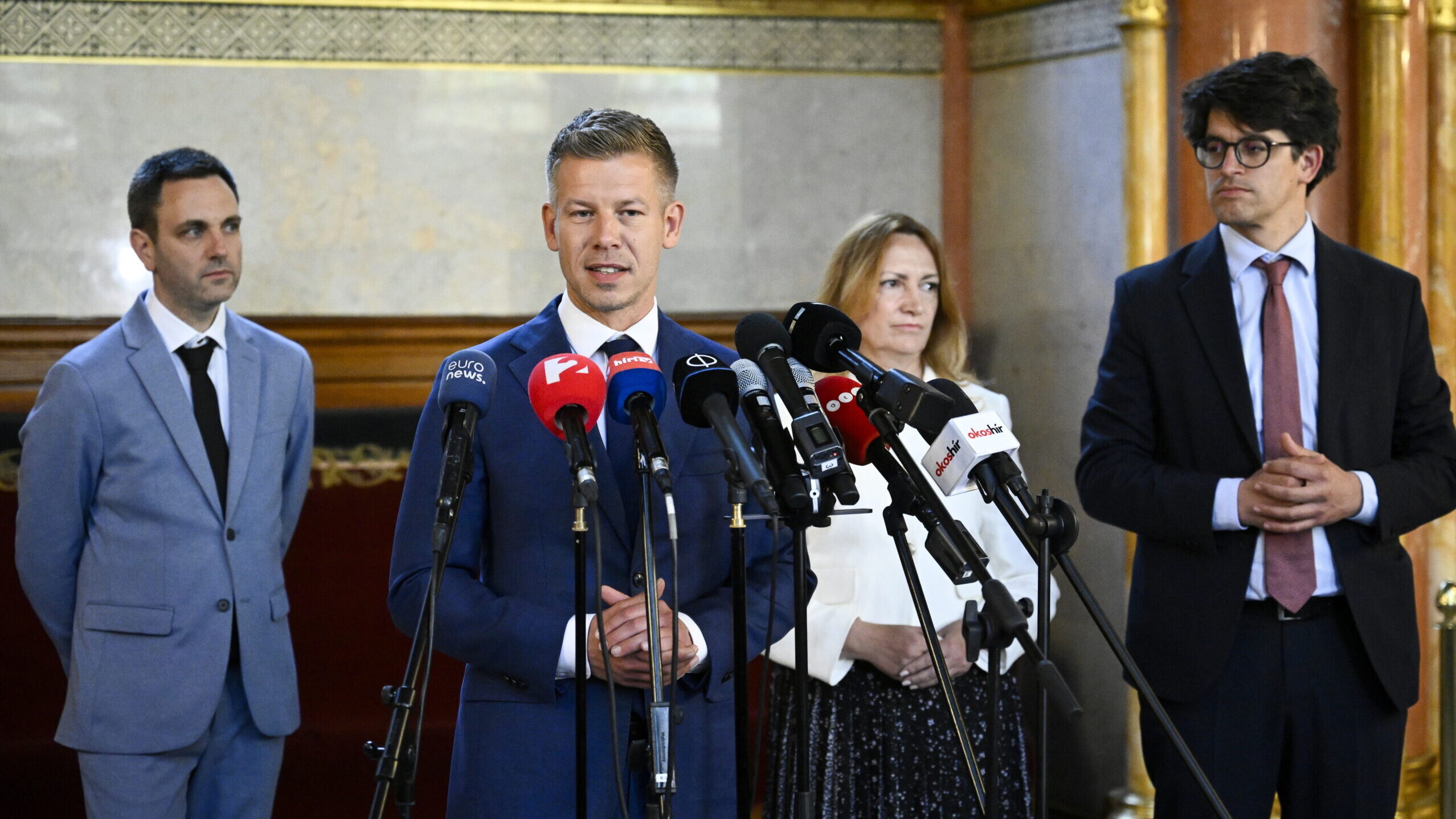
Hungarian Prime Minister-elect Péter Magyar has named the final two ministers of his incoming cabinet, reserving one of the most controversial appointments for last. According to his announcement, the position of Minister of Justice will be filled by Márton Melléthei-Barna, who is also Magyar’s brother-in-law.
Melléthei-Barna has served as the Tisza Party’s chief legal expert since 2024, becoming one of the first figures to join Péter Magyar following his emergence into politics. Since then, he has acted as the party’s legal director, overseeing lawsuits initiated by pro-government media outlets, representing Tisza before the National Election Committee, and playing a central role in the institutional and constitutional preparation of the governmental transition.
He also participated in negotiations with the European Commission regarding Hungary’s frozen EU funds and was part of the delegation led by Péter Magyar that travelled to Brussels this Wednesday for further talks with European Commission President Ursula von der Leyen.
Melléthei-Barna graduated from the Faculty of Law at Pázmány Péter Catholic University in 2004, where he first met both Péter Magyar and outgoing Minister heading the Prime Minister’s Office—and future Fidesz–KDNP parliamentary group leader—Gergely Gulyás as fellow students. After graduation, he worked at the Budapest office of Freshfields Bruckhaus Deringer, one of the world’s largest international corporate law firms.
The firm has been heavily involved in EU regulatory, antitrust, financial, and multinational corporate matters, representing major global actors including Google, UBS, and George Soros in various legal cases over the years. Following his time at Freshfields, Melléthei-Barna joined Oppenheim, one of Hungary’s largest commercial law firms.
Indeed, Melléthei-Barna has become one of Péter Magyar’s closest strategic allies within Tisza. Given his international legal background specializing in competition law, regulatory investigations, and antitrust matters, he appears professionally well prepared to oversee such a sensitive portfolio as the Ministry of Justice—a role that also carries symbolic weight, having previously been held by Magyar’s ex-wife, Judit Varga, who resigned in 2024 following the pardon scandal.
According to Magyar, Melléthei-Barna’s responsibilities will include ‘restoring the rule of law and legal certainty’, preparing legislation necessary to unlock EU funds, implementing anti-corruption institutional reforms, ‘depoliticizing’ oversight bodies, and improving legislative quality and transparency. His legal expertise and involvement in Tisza’s preparations over the past two years make him a logical figure to coordinate these reforms.
At the same time, however, one aspect of the appointment has overshadowed its technocratic rationale: in September 2025, Melléthei-Barna married Péter Magyar’s sister, making the nomination appear to many as a clear case of nepotism.
‘Magyar and the Tisza Party consistently portrayed nepotism as one of the defining problems of the Orbán system’
Magyar and the Tisza Party consistently portrayed nepotism as one of the defining problems of the Orbán system, repeatedly criticizing Fidesz for placing politically and personally loyal relatives, friends, and business circles into key state positions. One of Tisza’s core campaign messages was the promise of a more meritocratic, transparent, and professionally based state administration.
With the appointment of his brother-in-law, Magyar partially undermines this narrative. While Melléthei-Barna clearly meets the professional criteria for the position, his close personal relationship with the prime minister-elect has opened an entirely unnecessary political front for the incoming government.
At a moment when every move of Péter Magyar and Tisza is receiving heightened scrutiny—both domestically and from Brussels—the controversy may prove to be a strategically avoidable mistake. There was an alternative approach—already used by Tisza in other ministries—which could have easily mitigated the controversies stemming from the appointment of Melléthei-Barna.
In the case of the Ministry of Social and Family Affairs, the party opted for a symbolic appointment by nominating Vilmos Kátai-Németh, the first blind minister in Hungarian history, while influential but politically more controversial policy actors such as Kriszta Bódis—who has extensive links to liberal-progressive NGO networks and the LGBTQ lobby—remained in the background.
This time, however, Tisza chose a direct appointment, and the political consequences became visible almost immediately.
Fidesz–KDNP quickly moved onto the offensive. Outgoing State Secretary Bence Rétvári mocked the nomination, arguing that it directly contradicts Tisza’s anti-nepotism rhetoric and instead resembles the same patronage politics the party had condemned for years. Similar criticism appeared across Fidesz-linked media ecosystem.
A Fidesz kormányzása idején általánossá vált az államigazgatásban, diplomáciában, (és szinte mindenhol, ahol kinevezések voltak) a nepotizmus. Abban reménykedtem, hogy legalább ezen a téren változást hoz majd a Tisza Párt kormányzása. Erre most Magyar Péter igazságügyi minisztert… pic.twitter.com/k1ce9BdNOU
— Toroczkai László (@ToroczkaiLaszlo) April 30, 2026
Leader of the hard-right Our Homeland (Mi Hazánk) party László Toroczkai also highlighted the contradiction. In a post on X, he wrote that during Orbán’s governments, ‘nepotism became commonplace throughout the state administration, diplomacy, and virtually everywhere’, and that he had hoped the Tisza Party would bring change in this regard—which, according to him, clearly did not happen.
Responding to the accusations, Tisza argued that the appointment was based on professional competence and trust rather than family ties or political loyalty. The party also stated that criticism from Fidesz on the issue is highly hypocritical, given what it describes as the far more extensive networks of loyalty and family connections built by the outgoing government over the past decade and a half.
Related articles:
At a time when public debate is increasingly polarized and superficial, Hungarian Conservative remains committed to depth, intellectual honesty, and independent conservative thought.
Producing high-quality journalism requires resources. Your contribution helps us expand our coverage, reach new audiences, and keep our content accessible.

Please consider supporting our mission.