Hungary’s state of emergency has officially ended after six years, bringing to a close the extraordinary legal regime first introduced during the coronavirus pandemic and later extended because of the Russo–Ukraine war.
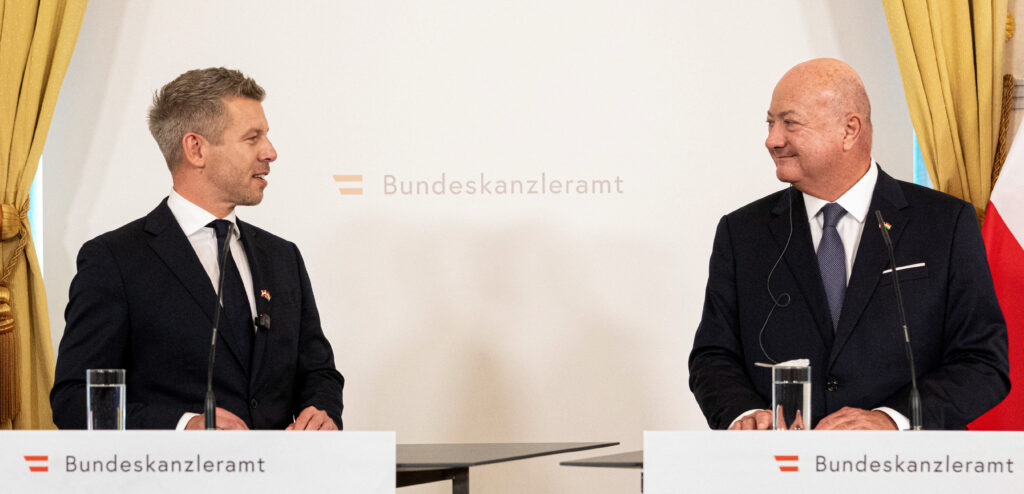
Prime Minister Péter Magyar announced the move in a Facebook post on Thursday morning, saying: ‘As of today, Orbán’s wartime state of emergency ends after four years. We are also saying goodbye to six years of governance by decree. We are returning to normality.’
The wartime emergency was declared on 24 May 2022, the day the fifth Orbán government took office, citing the Russo–Ukrainian war that began on 24 February 2022. Parliament repeatedly extended the measure, most recently in autumn 2025, authorizing the government to maintain the emergency until 13 May 2026.
According to Hungary’s online legal database, more than 170 government decrees were adopted over the past four years under the state of emergency declared in response to the ‘armed conflict and humanitarian disaster’ in neighbouring Ukraine.
Following the 12 April election victory of the Tisza Párt, party leader—and now prime minister—Péter Magyar initially asked the outgoing government to prolong the wartime emergency until the end of May to allow time for legal adjustments. Instead, parliament adopted legislation during its inaugural session on 9 May that transferred several emergency decrees into ordinary law.
The law, authored by Tisza lawmaker Márton Melléthei-Barna, entered into force on 14 May, the same day the state of emergency expired. The legislation reviews the regulatory areas previously governed by emergency decrees and incorporates selected measures into Hungary’s standard legal framework, either temporarily or permanently.
Among the retained provisions are financial protections for farmers affected by frost damage, drought and livestock-related crises. Farmers impacted by drought or frost, as well as pig breeders and pig farmers, will continue to benefit from temporary loan repayment moratoriums until 30 November. Agricultural businesses affected by the recent foot-and-mouth disease outbreak will remain eligible for payment relief until 30 June 2027.
The legislation also permanently codifies a rule placing juvenile correctional institutions under the authority of the minister responsible for the prison system.
Several price-control measures introduced during the emergency period will also remain in place. Fuel price caps were written into law, limiting the retail price of 95-octane petrol to 595 forints per litre and diesel to 615 forints per litre.
Retail margin caps on selected product categories have likewise been maintained. Price restrictions affecting drugstore and household products will continue, although lawmakers introduced higher upper limits to reflect differing market conditions.
The law also extends the settlement deadline for utility bill discounts introduced during the exceptionally cold weather earlier this year.
From 1 July onward, Hungary’s advertising tax rate will remain at 0 per cent indefinitely under the new legislation.
In addition, businesses operating retail premises are now legally required to take all necessary steps to prevent drug trafficking, the facilitation of drug production and the abuse of psychoactive substances on their premises. Police will continue to have the authority to temporarily close businesses if organized crime-related offences are detected on-site.
Hungary first declared a state of emergency in spring 2020 due to the COVID-19 pandemic. That initial emergency regime ended on 1 June 2022, only to be replaced immediately by the wartime emergency linked to the conflict in Ukraine.
Under Hungary’s constitution, three types of special legal orders exist: a state of war, a state of emergency and a state of danger. In all three cases, the government is granted decree-making powers. The constitution allows the declaration of a state of danger for 30 days in the event of armed conflict in a neighbouring country, humanitarian disaster or severe threats to life and property, including natural disasters and industrial accidents. Parliament may authorize extensions if the underlying circumstances continue to exist.
Related articles:
At a time when public debate is increasingly polarized and superficial, Hungarian Conservative remains committed to depth, intellectual honesty, and independent conservative thought.
Producing high-quality journalism requires resources. Your contribution helps us expand our coverage, reach new audiences, and keep our content accessible.

Please consider supporting our mission.