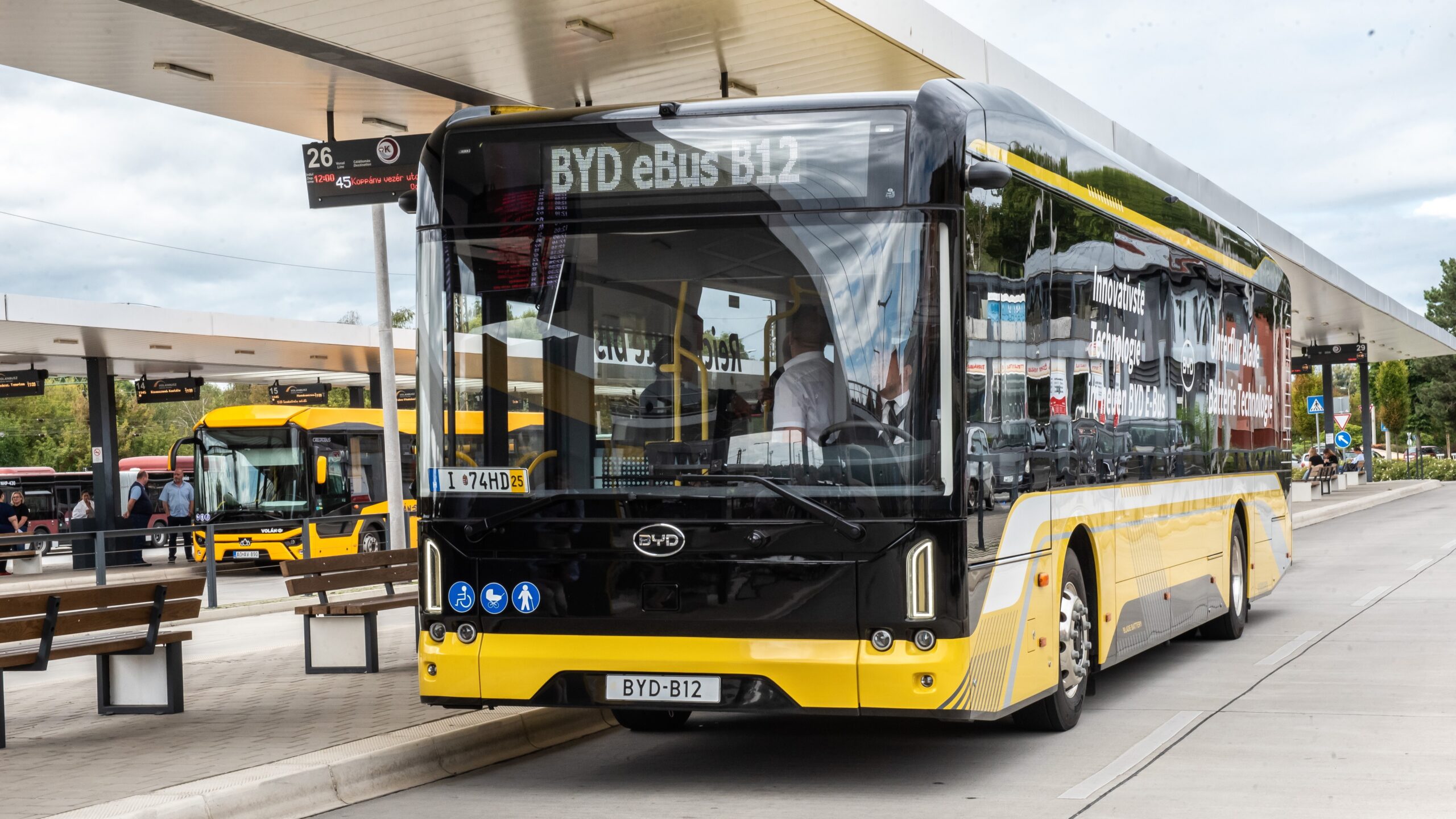
A major public transport development project worth 15 billion forints has been launched in Kaposvár, aiming to modernize the city’s mobility system and introduce a fully electric bus fleet.
Speaking at a press event after the signing of the government support agreement on Thursday, Attila Gelencsér, the Fidesz Member of Parliament representing Kaposvár and the Zselic region, said the investment highlights the importance of strengthening local economic capacity and self-sufficiency.
He argued that in a scenario where war continues and Ukraine becomes a member of the European Union, countries may increasingly have to rely on their own resources. Gelencsér suggested that under such circumstances governments might no longer be able to finance projects of this scale, though he added that he hopes current conditions will remain stable.
Parliamentary State Secretary at the Ministry of Construction and Transport Nándor Csepreghy said Hungary’s geographical position at the intersection of different regions creates opportunities for development, particularly through improvements in transport infrastructure. According to Csepreghy, transport development plays a crucial role in enabling social mobility and ensuring access to workplaces and educational institutions.
He pointed to several achievements in transport policy over the past 16 years, including the expansion of Hungary’s motorway network and improved access to expressways. While in 2010 residents of only ten settlements could reach a motorway within 30 minutes, today roughly 90 per cent of the population has such access, he said. Out of the country’s 25 major regional cities, 22 are now connected to the dual carriageway road network, and the number of motorways reaching Hungary’s borders has increased from three to eleven.
The state secretary also noted that public transport access has been expanded in around 1,000 settlements, while tariff reforms introducing national and county travel passes have made public transport among the most affordable in Europe. He added that the MÁV Group plans to purchase 1,000 new Hungarian-manufactured buses within two years and conclude new agreements with local governments to better coordinate regional and local transport services.
Csepreghy also highlighted improvements in railway transport, noting that the introduction of 100 new or upgraded locomotives has helped increase the punctuality rate of MÁV to above 85 per cent. Passengers affected by delays exceeding 20 minutes are eligible for a refund of half the ticket price. He said a 1,600 billion forint railway development programme is being launched, which will include the renovation of around 1,000 kilometres of rail lines. Among the major projects is the soon-to-open Budapest–Belgrade railway, which will allow passengers to travel between the Hungarian and Serbian capitals in less than three and a half hours. Additional plans include the southern Budapest freight bypass and the proposed V0 rail corridor designed to improve east–west freight traffic while easing pressure on the country’s road network.
Speaking about Kaposvár specifically, Csepreghy said the city’s development initiatives have often been ahead of their time, citing the introduction of compressed natural gas buses in 2015 and the current project to replace the entire fleet with electric vehicles. Under the new development plan, Kaposvár will purchase 42 electric buses, including 11 articulated, 23 standard, six mid-size and two autonomous vehicles.
According to Mayor of Kaposvár Károly Szita, the investment will also include the installation of 30 charging stations, the construction of 20 smart bus stops equipped with modern passenger information systems, and the introduction of an electronic ticketing system. Fifteen of the new buses are expected to arrive by June this year, with the full fleet scheduled to be operational by next spring. Once completed, Kaposvár will become the first city in Hungary to operate a public transport system based entirely on electric buses and the first to introduce autonomous buses into regular service. Szita said the city aims to become a sustainable model city for Hungary and other European municipalities facing similar challenges, with energy efficiency and environmentally friendly transport forming the foundation of its development strategy.
The replacement of the compressed natural gas bus fleet purchased more than a decade ago with electric vehicles is expected to reduce emissions, lower the city’s annual public transport losses of around 1.1 billion forints, and improve service quality through more frequent routes and expanded access to smaller streets served by mid-size buses.
Related articles:
At a time when public debate is increasingly polarized and superficial, Hungarian Conservative remains committed to depth, intellectual honesty, and independent conservative thought.
Producing high-quality journalism requires resources. Your contribution helps us expand our coverage, reach new audiences, and keep our content accessible.

Please consider supporting our mission.