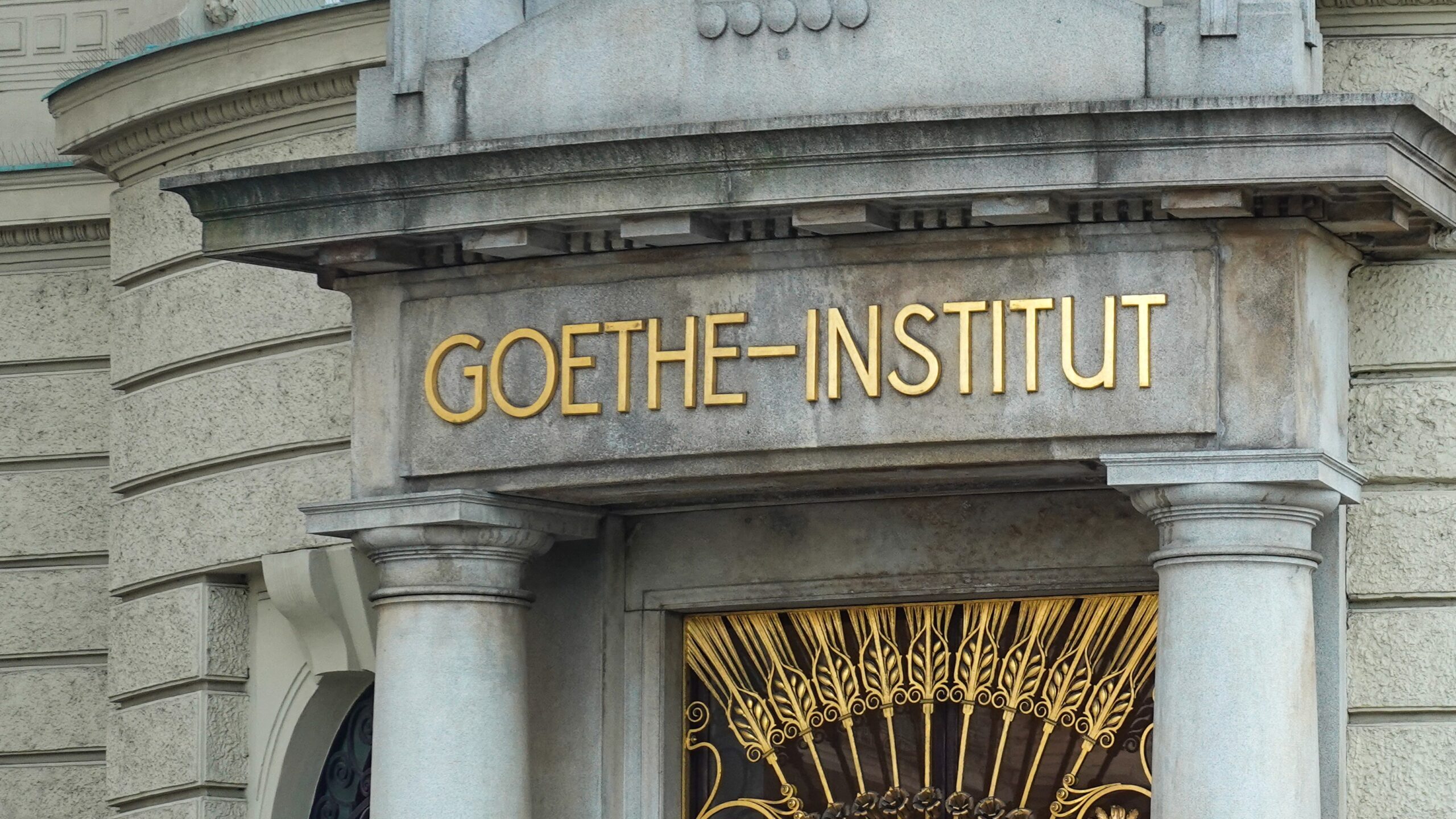
Russian Foreign Minister Sergei Lavrov said Thursday that Moscow would close Goethe Institute offices in Moscow, St Petersburg and Yekaterinburg after German authorities decided to shut down the Russian House cultural centre in Berlin.
‘Of course they will be closed, after they drove our cultural centre out of there; otherwise we would have no self-respect,’ Lavrov said at the Eastern Economic Forum in Vladivostok.
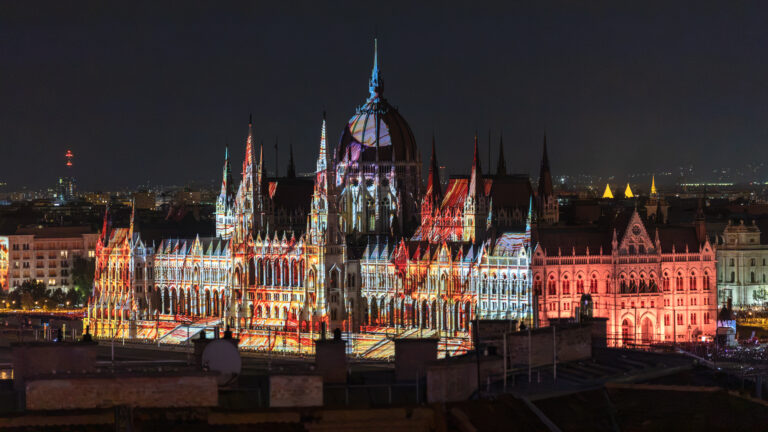
Germany announced on Tuesday that an investigation had concluded that the 4 August drone incident at Leipzig Airport had been carried out on orders from Moscow. Berlin said it would therefore close the Russian consulate general in Bonn and the Russian House in Berlin, while tightening checks on Russian citizens entering the country.
Lavrov criticized Germany for what he described as a lack of clear information about a new ‘anti-Russian campaign’, including the allegations surrounding the Leipzig drone incident. He said Berlin was deliberately taking steps against Russian institutions that would have negative consequences. The Russian foreign minister said Moscow remained open to cooperation and was prepared to engage with anyone willing to set aside ideology and what he called distorted political approaches in favour of economic and social interests. He accused Europe of using sanctions to defend what he described as its claim to global political hegemony and said the West was also seeking to divide Eurasia.
‘Moscow remained open to cooperation’
Lavrov said Russia did not want to depend on the goodwill of its former partners or become isolated from Europe, although he claimed Europe had chosen to distance itself from Russia. ‘Europe thought that our cooperation over the past years was so important to the Russian Federation that we would run around and beg them: forgive us, forget what happened, let’s return to the old ways and lift the sanctions. This will not happen,’ Lavrov said, adding that Russia had its own sense of pride.
Lavrov also accused Europe of continuing to harbour what he described as ‘post-imperial and neo-Nazi’ sentiments and claimed the continent was becoming a source of ideas based on national and racial superiority. He argued that NATO should have been dissolved after the end of the Soviet Union, just as the Warsaw Pact had been, and accused the alliance of ‘desperately looking for excuses’ to prolong what he called its ‘artificial existence’.
Lavrov also criticized German Chancellor Friedrich Merz over his stated intention of making Germany Europe’s leading military power again. ‘When Chancellor Merz said that Germany would once again become Europe’s leading military power, I was simply shocked, because if this man does not understand what the word “again” means in this context, that is, of course, very sad,’ Lavrov said. He also referred to European Commission President Ursula von der Leyen as a ‘führer’, accusing her of seeking to transfer powers from national governments to Brussels.
Lavrov further claimed that von der Leyen had said after the destruction of the Nord Stream gas pipelines that European voters would have to endure higher energy prices in order to defend European values through support for Ukraine. ‘Nobody asked what European values were meant. If legally banning the Russian language in education, culture, everyday life and the mass media reflects European values, then welcome Europe back to Nazism,’ Lavrov said.
Regarding upcoming regional elections in Germany, Lavrov questioned how voters could support the country’s governing parties if they were calling on people to accept hardship and reject cheaper Russian energy supplies. He claimed that Western governments would be removed by their own voters if Russia ceased to be regarded as an ‘enemy’.
Speaking about Ukraine, Lavrov said the principles on which Russia had recognized its neighbour’s independence had long been ‘thrown onto the rubbish heap’. He pointed to provisions in the Ukrainian constitution concerning language and religious rights and criticized the United States for failing to pressure Kyiv to restore what Moscow considers the rights of Russian speakers and to stop what it describes as persecution of the Ukrainian Orthodox Church under the Moscow Patriarchate.
Lavrov also criticized Washington for merely promising to return to the issue of what he called ‘Nazism in Ukraine’ during negotiations.
According to Lavrov, the ‘real situation’ in Ukraine should not be determined by the current positions of Russian forces, but by how people voted in the 2022 referendums in territories that Moscow claims to have annexed.
He said he would again urge UN Secretary-General António Guterres to investigate the events in Bucha in 2022 during the UN General Assembly session in New York.
Lavrov described India and China as Russia’s leading partners, saying their rates of development had become unattainable for the West. He also claimed that Beijing and New Delhi wanted to preserve the Russia–India–China cooperation format.
Read next:
At a time when public debate is increasingly polarized and superficial, Hungarian Conservative remains committed to depth, intellectual honesty, and independent conservative thought.
Producing high-quality journalism requires resources. Your contribution helps us expand our coverage, reach new audiences, and keep our content accessible.

Please consider supporting our mission.