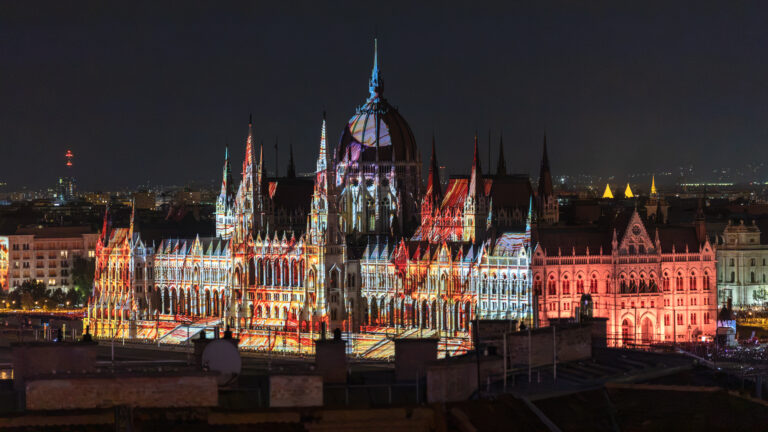
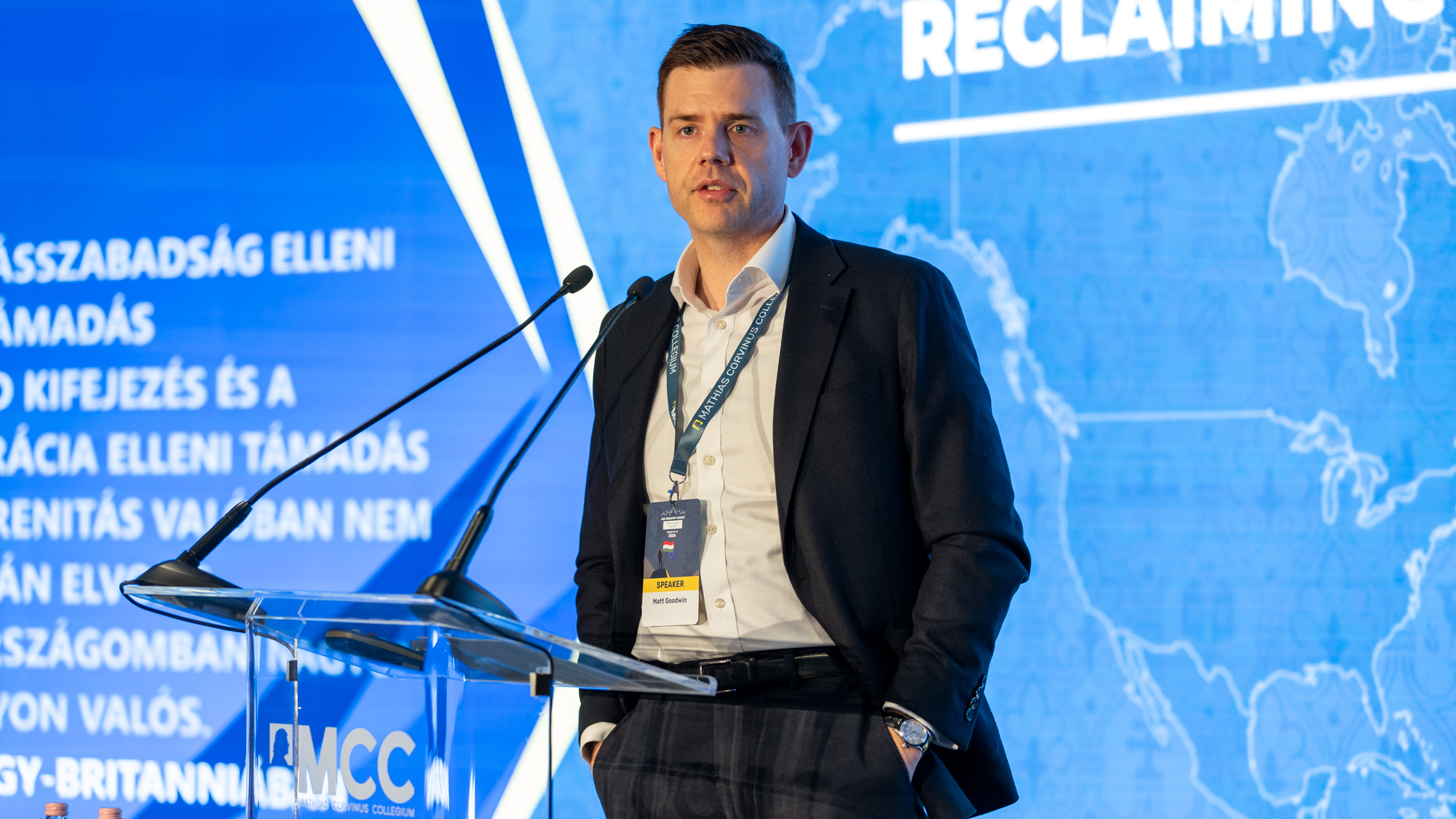
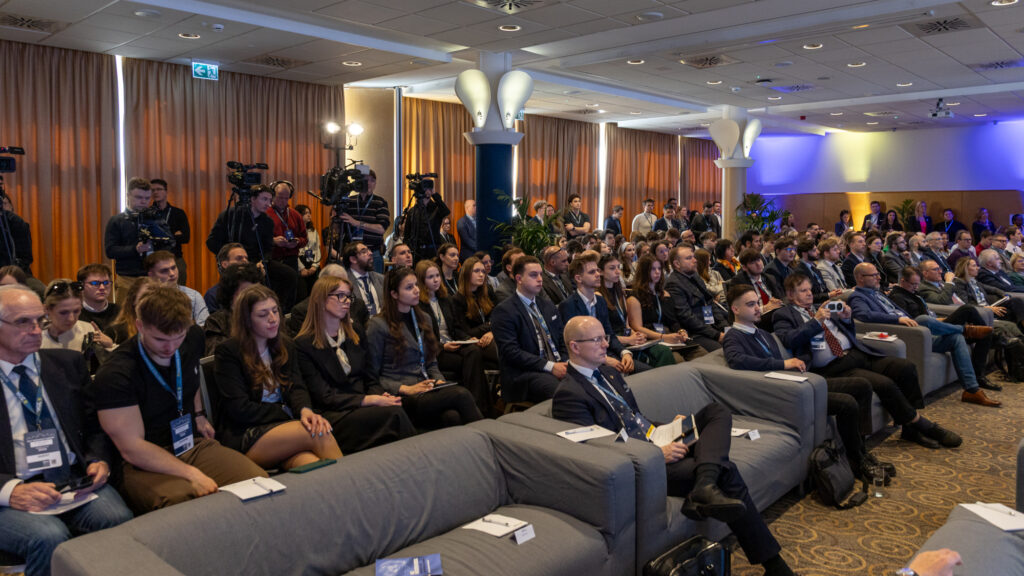
Western intellectuals, analysts, and policymakers gathered in Budapest at Mathias Corvinus Collegium’s (MCC) Reclaiming the West summit to address the increasingly pressing question of whether the West can rediscover the foundations of stability, responsibility, and strategic restraint in an increasingly volatile world.
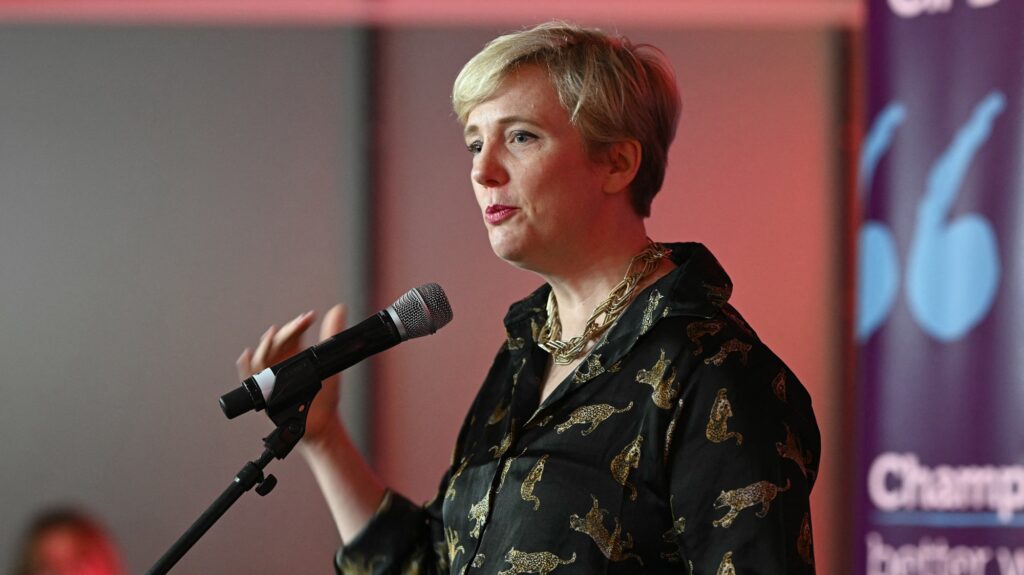
Delivering a keynote speech on the opening day of the conference, British conservative political commentator Matt Goodwin stressed that the assault on free speech, national democracy, and sovereignty in the United Kingdom is very much real. According to Goodwin, recent political developments illustrate how the boundaries of permissible debate are increasingly being narrowed.
He pointed to the Labour government’s recently announced plans to introduce a new official definition of ‘anti-Muslim hostility’, alongside the appointment of a government ‘Islamophobia tsar’, arguing that such measures risk restricting legitimate political discussion and further limiting freedom of expression.
Goodwin also referred to debates about potentially removing jury trials in certain cases, describing them as another worrying sign for the health of British democracy. Taken together, he argued, these developments contribute to a broader sense among many Britons that their traditional liberties are gradually eroding. ‘Britons are losing their freedom,’ he warned, linking these trends to a deeper democratic crisis affecting not only the United Kingdom but much of Europe.
‘The EU was never a democratic institution’
At the centre of this crisis, Goodwin continued, lies a widening gap between governing elites and the societies they claim to represent. On issues such as migration, economic policy, and energy policy, he said, many citizens increasingly feel that key decisions are made not for them but by and for a distant political class. As an example, he cited the United Kingdom’s recent energy shock, which he attributed in part to the ‘insanity’ of net zero energy policies that were implemented without sufficient regard for their social and economic consequences.
According to Goodwin, the structure of governance in Europe has also shifted significantly in recent decades, with increasing authority transferred away from national democracies towards supranational institutions. He argued that organizations such as the European Union have deliberately placed important policy areas outside the reach of ordinary voters.
In his view, the European Commission exemplifies this problem: while it is responsible for proposing legislation that shapes the lives of hundreds of millions of Europeans, it is itself not directly elected. ‘The EU was never a democratic institution,’ Goodwin argued, claiming that there is no meaningful democratic competition for executive power at the European level.
This shift in political power, he suggested, has helped create what he described as a ‘manager elite’: a highly educated, globally connected class of policymakers and technocrats who increasingly operate within transnational systems rather than within the political communities of nation-states. These elites, he argued, often have little connection to the citizens affected by their decisions and tend to operate through institutions that are largely insulated from electoral pressure. In doing so, they effectively distance political decision-making from democratic control.
The consequences of this disconnect are becoming increasingly visible, Goodwin said, pointing to the growing number of voters abandoning traditional parties and turning instead to new political movements that promise to return power to citizens and nation-states. Across Europe, he argued, these movements represent a counter-reaction to a democratic deficit that has been building for decades.
Migration formed a central part of Goodwin’s remarks. He argued that large-scale immigration has profoundly transformed the demographic and cultural landscape of the United Kingdom, warning that current projections suggest the foreign-born population could reach as much as 60 per cent by 2063, while the Muslim population may rise to around 25–30 per cent from the current 6 per cent by the same year. In his view, such demographic changes risk weakening the shared sense of community that historically underpinned democratic institutions.
Democracy, Goodwin emphasized, originally developed within the framework of nation-states where citizens shared a collective sense of belonging and a belief that they could shape their own political destiny. Without that shared bond, he warned, democratic institutions become increasingly fragile. The erosion of social cohesion can also undermine public trust in government, as citizens become less willing to contribute to collective systems if they no longer recognize the community they are asked to support.
‘Democracy only survives if people believe that they still hold the power that was promised when nation-states first emerged’
He also criticized the growing influence of international legal frameworks such as the European Convention on Human Rights (ECHR), arguing that it has empowered an activist class of lawyers who are able to challenge and override decisions taken by elected governments. According to Goodwin, this dynamic further contributes to the erosion of national sovereignty and democratic accountability.
Looking ahead, Goodwin predicted that questions of civilization, identity, and sovereignty will increasingly dominate European politics in the coming decades. As more citizens begin to question the legitimacy of the existing political order, he argued, demands to reclaim control over national borders, democratic institutions, and the destiny of nation-states are likely to intensify.
The key challenge for Western societies, he concluded, is finding a way to maintain international cooperation on major global issues while restoring democratic control at the national level. ‘Democracy only survives if people believe that they still hold the power that was promised when nation-states first emerged,’ Goodwin concluded.
Related articles:
At a time when public debate is increasingly polarized and superficial, Hungarian Conservative remains committed to depth, intellectual honesty, and independent conservative thought.
Producing high-quality journalism requires resources. Your contribution helps us expand our coverage, reach new audiences, and keep our content accessible.

Please consider supporting our mission.