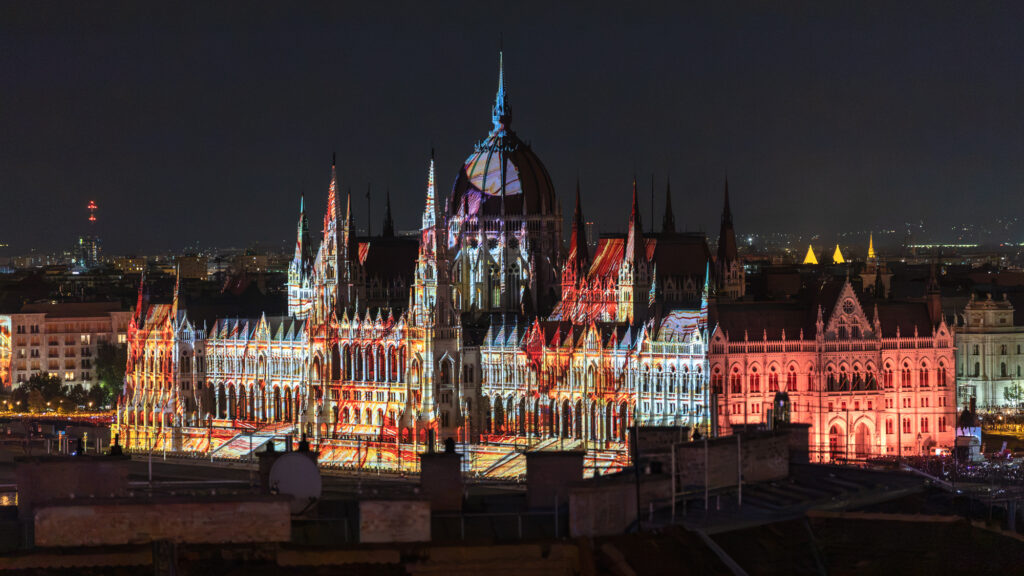
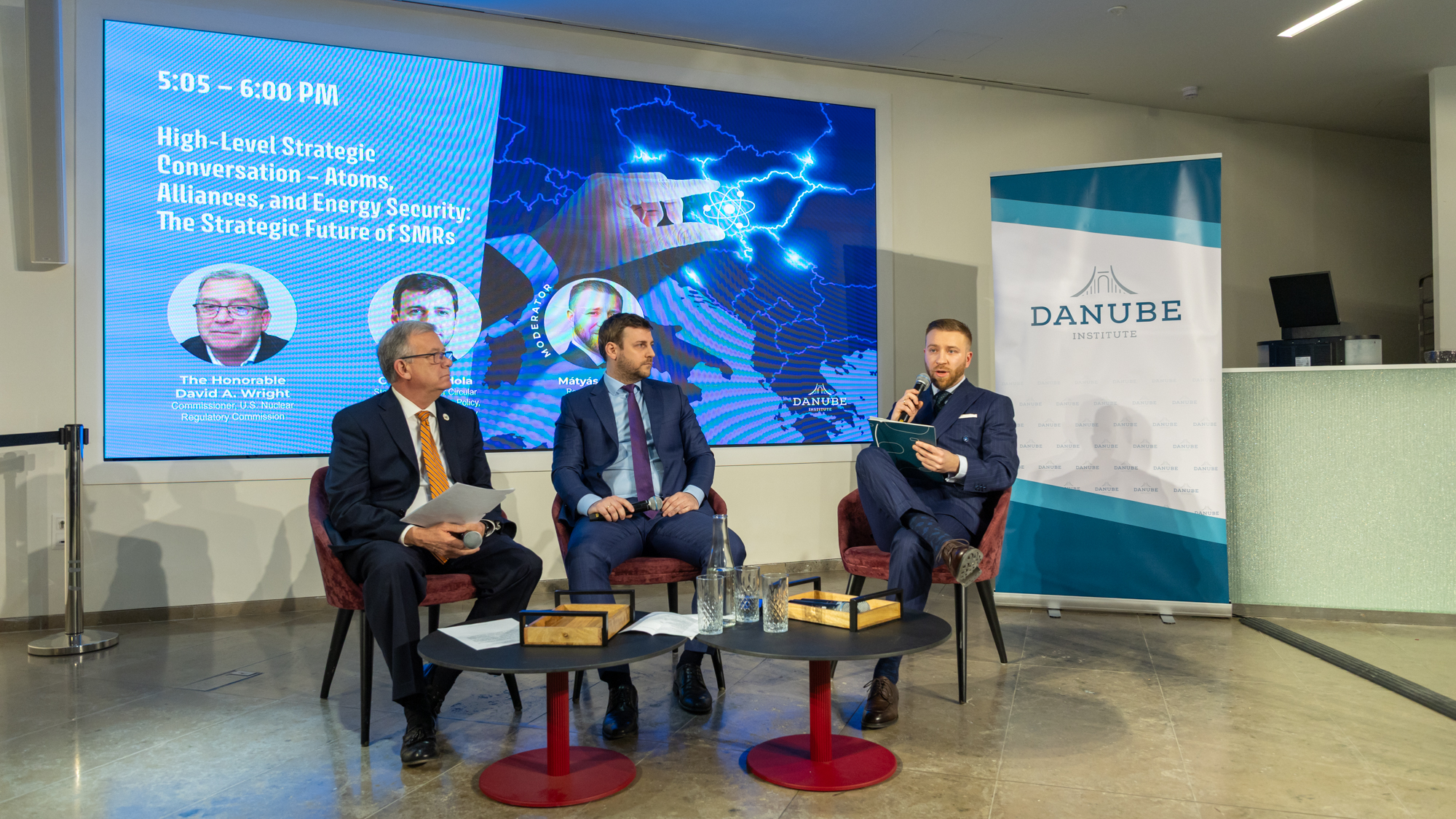
The Danube Institute held an event titled Powering the Future: Nuclear Innovation and Small Modular Reactors in Central Europe at its headquarters in the Castle District of Budapest, Hungary, on Tuesday, 17 March. The signing of the Civil Nuclear Intergovernmental Agreement between the United States and Hungary last month gave the occasion for the special event.
International Director for the Danube Institute Dr Kristóf Veres was the first to greet the attendees. He started by quoting US President Donald Trump, who said ‘Energy independence is national security’. He added that the truth of this statement was demonstrated twice in recent history, after the Russian invasion of Ukraine in 2022 and now, after the US–Israeli strikes on Iran.
Mr Veres also pointed out that Europe does not have major oil reserves or significant domestic crude oil production capacity like the United States, and thus nuclear energy must be a higher priority for the Old Continent. Recently, even EU Commission President Ursula von der Leyen has admitted that turning away from nuclear power for environmental reasons was a mistake, the speaker shared. He then spoke of the latest in nuclear technology, Small Modular Reactors (SMR), which were a major topic of the day.
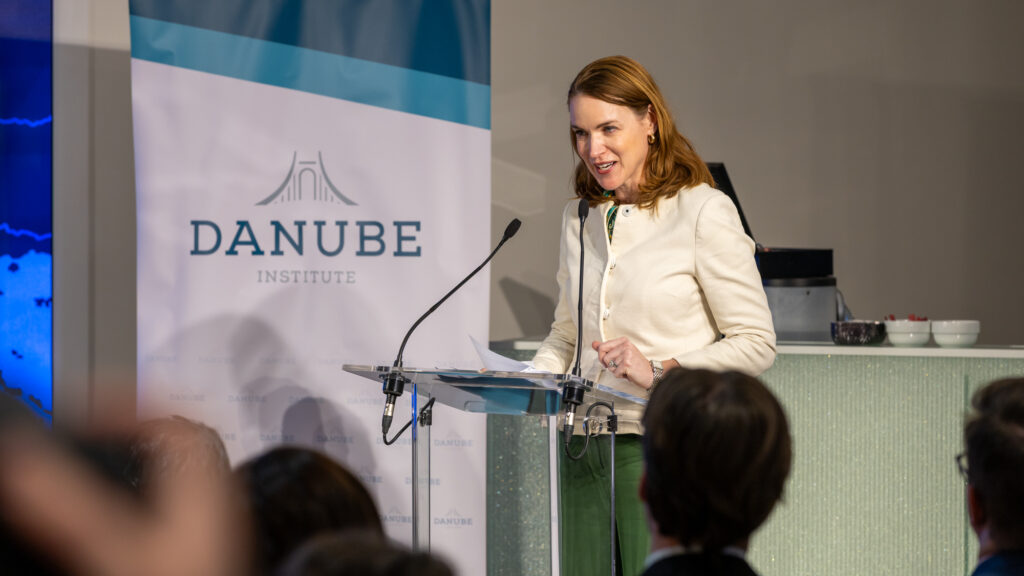
Chargé d’Affaires Caroline Savage at the US Embassy in Budapest took the stage next. She, too, noted the European Union’s renewed openness to nuclear energy, then declared that the United States is leading the world in SMR research and production. She went on to state that SMR technology can not only be used in the most popular area of the day, AI, but also in other fields such as heat utilization for industrial processing.
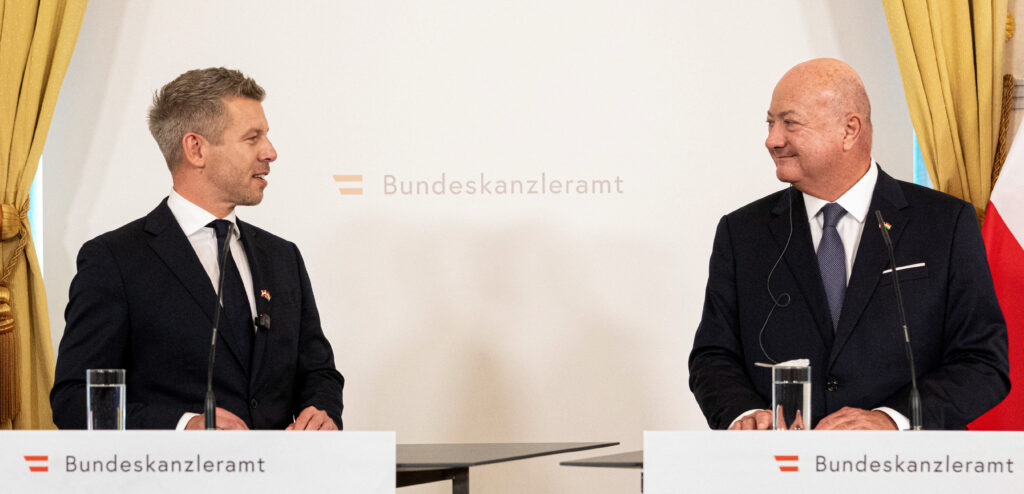
Next, Chair of the Nuclear Regulatory Commission of the United States David A Wright and State Secretary for Circular Economy and Climate Policy at the Ministry of Energy of Hungary Csaba Gondola, joined moderator Mátyás Vajda of the Danube Institute for a panel discussion.
Mr Wright echoed Mr Veres’s sentiments from earlier, saying: ‘We learnt a lot about what energy security means when Russia invaded Ukraine.’ He also noted the rare earth mineral deal that the United States and Ukraine signed with each other in April 2025, which helps the US recoup some of its investment into the Ukrainian war effort.
As for nuclear energy, Mr Wright stressed its importance due to the fact that it works ‘27/7/365’, as opposed to green energy options such as solar and wind power.
Mr Gondola told the audience that not only President von der Leyen, but Chancellor Friedrich Merz of Germany also admitted that turning away from nuclear was misguided; however, he added that he is ‘not sure that there is a way back for Germany’.
The speaker described the last 4–6 years on the international energy scene as a ‘nuclear renaissance’, and stressed Europe’s need for cheap, reliable electricity. He then declared that ‘Hungary is an absolute supporter of nuclear energy’, while also acknowledging that Budapest understands the reasons behind the European Union’s ‘aggressive’ goals in renewable energy. On SMR technology, Csaba Gondola noted that ‘we are just at the beginning’, adding that the widespread deployment of Small Modular Reactors is unlikely to become a reality before 2030, and hence, relevant regulatory legislation is also at a rudimentary state across European nations.
Mr Wright stated that SMRs are cheaper than the current nuclear reactors, as they are cheaper to produce. This, in turn, means power plants wanting to deploy them will have a lower barrier to entry. As the man in charge of the nuclear regulatory body of the United States, he declared that in nuclear power regulation, ‘Safety is our North Star, safety is our strike zone.’ He also noted that the US regulator has agreements with counterparts in other countries, thereby facilitating the regulatory process worldwide.
Meanwhile, Mr Gondola noted the importance of cooperation between academia and the energy sector in advancing new technologies. He shared that there are currently two Small Modular Reactors operating in Budapest, Hungary, but both are used for academic research.
Related articles:
At a time when public debate is increasingly polarized and superficial, Hungarian Conservative remains committed to depth, intellectual honesty, and independent conservative thought.
Producing high-quality journalism requires resources. Your contribution helps us expand our coverage, reach new audiences, and keep our content accessible.

Please consider supporting our mission.