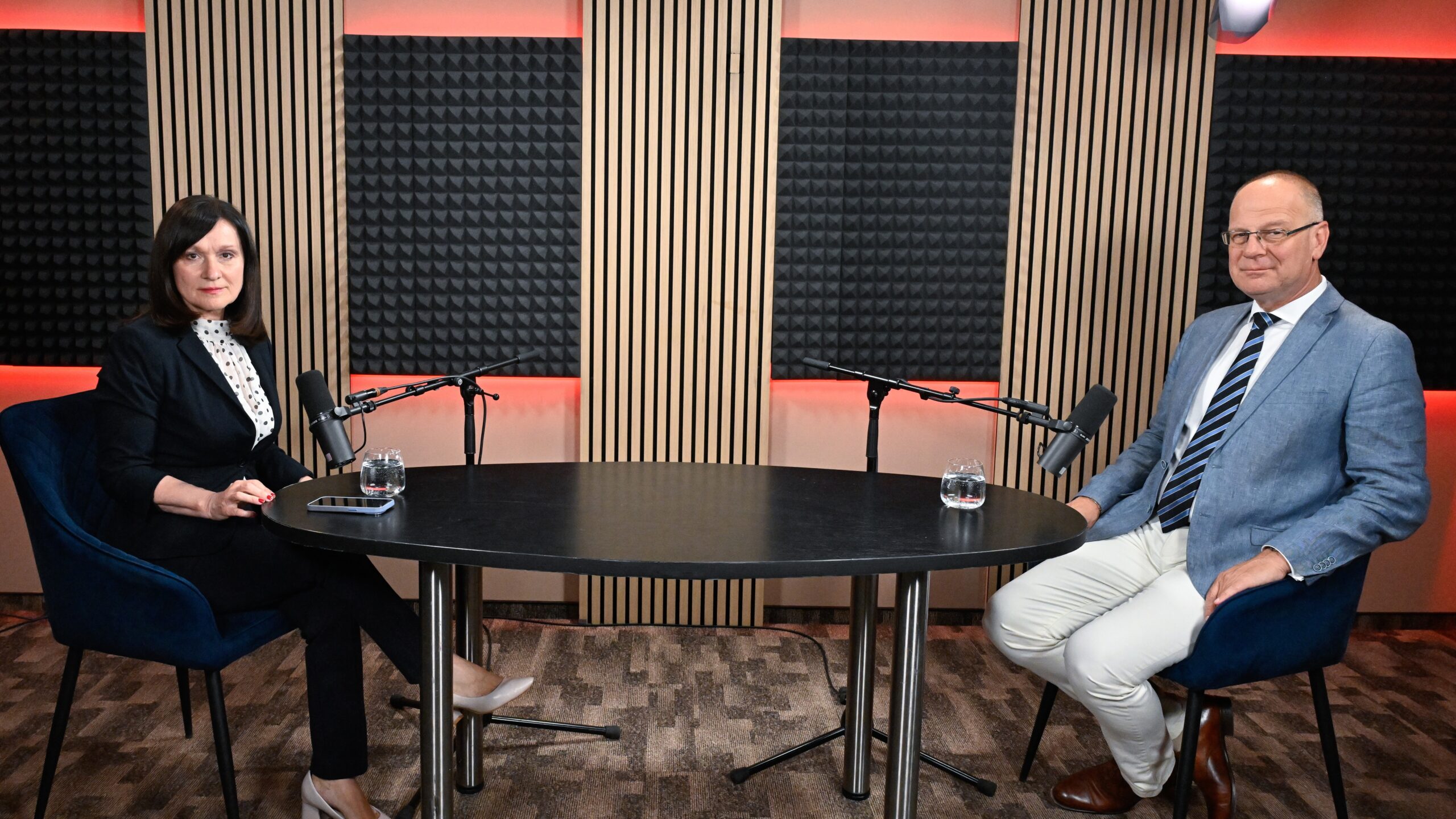
Former minister Tibor Navracsics believes former prime minister Viktor Orbán remains capable of leading a political revival of Fidesz despite the party’s recent election defeat, while also arguing that the conservative movement must undergo renewal if it hopes to regain public support.
Speaking on the podcast, Kell még valamit mondanom, Ildikó?, Navracsics said he saw no signs of fatigue in Orbán during meetings held after the election.
According to Navracsics, Orbán’s four decades in frontline politics and the constant pressure generated by political opponents have not diminished his energy or determination. Instead, he described the former prime minister as highly motivated and focused on preserving party unity and laying the foundations for a future comeback. Navracsics agreed with suggestions that Orbán could once again emerge as a dominant figure in Hungarian politics, likening him to a ‘phoenix’ capable of rising after defeat.
‘The first year is decisive in a four-year political cycle. That is when the main lines of political competition are established,’ he said.
The former minister suggested it is likely that Orbán will be the sole candidate for the Fidesz presidency at the party’s upcoming leadership election. He also did not rule out the possibility that Orbán could return as the party’s candidate for prime minister in the 2030 parliamentary election. Navracsics noted that both Fidesz and Orbán have previously been written off politically, only to return stronger. He recalled that following setbacks in the mid-2000s, Fidesz went on to become Hungary’s most popular political force while Orbán regained his position as the country’s most influential politician. He also defended Orbán’s decision not to take up a parliamentary mandate after the election defeat, describing it as an act of responsibility.
According to Navracsics, had the former prime minister remained in parliament, critics would have accused him of refusing to acknowledge the electoral result. By stepping back, he instead accepted political responsibility for the outcome. At the same time, Navracsics argued that Fidesz cannot simply continue unchanged. He said the party needs renewal, both in terms of personnel and organizational structure.
‘He also did not rule out the possibility that Orbán could return as the party’s candidate for prime minister in the 2030 parliamentary election’
Asked about the possible return of former justice minister Judit Varga, Navracsics described her as a highly talented politician and said any comeback would ultimately depend on her own decision.
Reflecting on the causes of Fidesz’s election defeat, Navracsics identified several factors. He pointed to the party’s difficulties in connecting with younger voters and segments of the middle class, as well as what he described as increasingly one-dimensional communication. Looking ahead, Navracsics said Fidesz has historically responded to electoral defeats through organizational innovation and internal reforms, strategies that have often proved successful in rebuilding support. Current discussions within the party, he said, are focused on finding ways to bring ‘new life and new blood’ into the organization.
Beyond discussing Fidesz’s future, Navracsics also addressed the performance of the new government led by Prime Minister Péter Magyar.
He argued that the administration’s legislative activity has so far been dominated by political and symbolic measures rather than substantive reforms. In his view, the government’s long-term strength and popularity will ultimately depend on whether it can successfully implement its decisions and deliver meaningful results.
The former minister was particularly critical of plans to establish investigative committees aimed at examining the actions of previous governments. He warned that such bodies risk becoming political spectacles rather than impartial mechanisms of accountability.
Navracsics said modern politics has increasingly seen the use of criminal investigations and legal procedures as tools against political rivals. While acknowledging the importance of accountability, he argued that voters are generally capable of distinguishing between genuine wrongdoing and politically motivated attempts to discredit opponents.
He further criticized Prime Minister Magyar’s political style, saying the country’s leader should focus on governing rather than publicly reprimanding political actors.
According to Navracsics, Magyar frequently relies on confrontational rhetoric, personal criticism, and public insults. Such behaviour, he argued, lowers the quality of political discourse and contributes to a broader decline in democratic standards.
The former minister concluded that Hungary’s political future will depend not on symbolic gestures or political messaging alone, but on whether parties and governments are capable of renewing themselves, maintaining public trust, and delivering on their promises to voters.
Related articles:
At a time when public debate is increasingly polarized and superficial, Hungarian Conservative remains committed to depth, intellectual honesty, and independent conservative thought.
Producing high-quality journalism requires resources. Your contribution helps us expand our coverage, reach new audiences, and keep our content accessible.

Please consider supporting our mission.