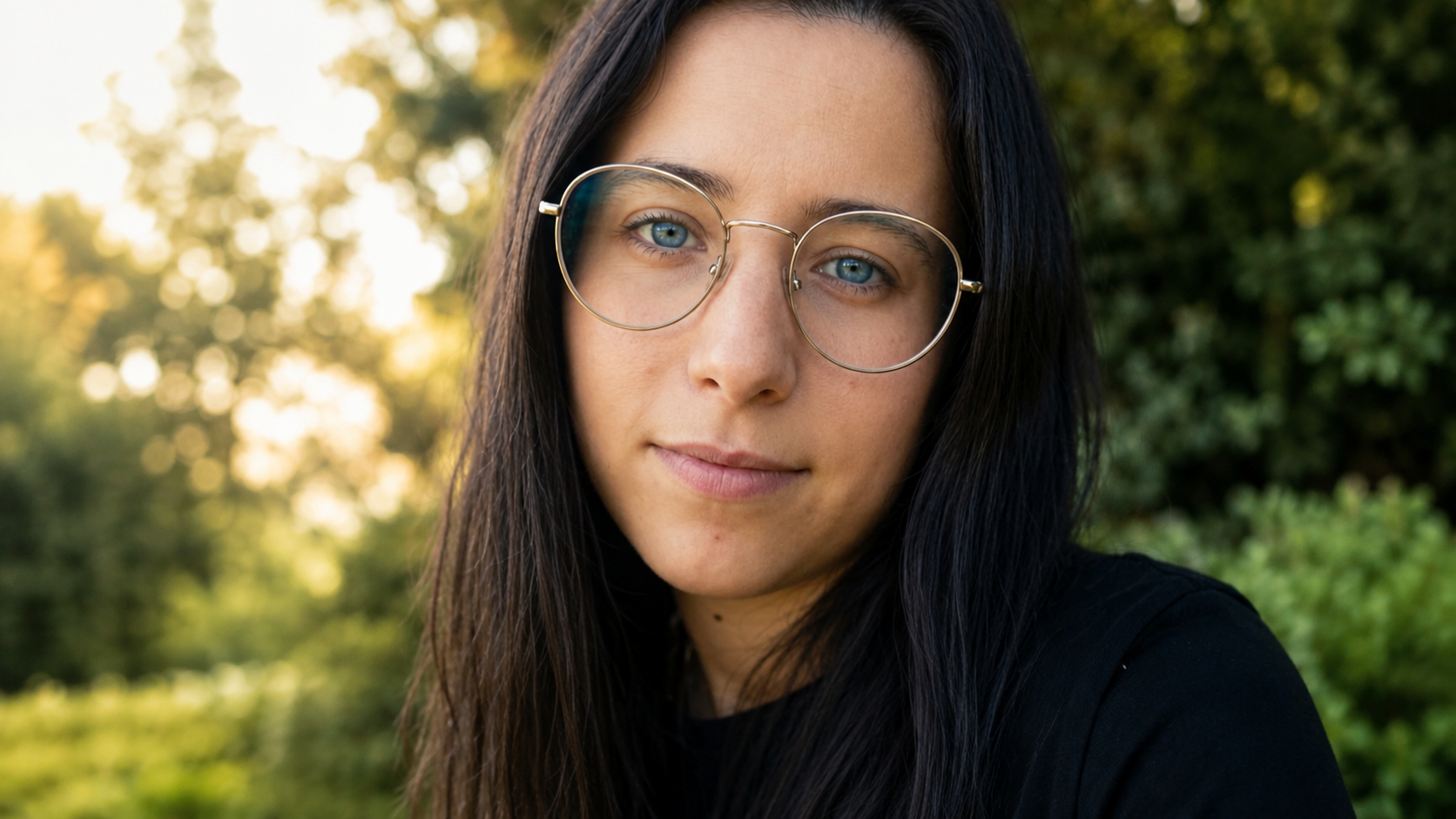
Paula Solanas de Miguel spent years helping young people recognize the warning signs of gender violence. On 31 July, the 27-year-old Red Cross volunteer was found bleeding to death on the floor of her flat in Santander, stabbed by her Moroccan boyfriend, whom she was trying to leave.
Police were called at around 12:30pm to number 12 Calle Perines, where officers found Solanas with severe wounds apparently caused by a bladed weapon. Her 39-year-old boyfriend, Nabil Khalissi, was arrested at the flat after admitting to officers that he had killed her, according to the police account. Their one-year-old daughter was not inside the home.
Solanas and Nabil had met four years earlier. Her parents told the investigating judge that their daughter had broken off the relationship, although there had been ‘comings and goings’ afterwards, and was preparing to leave their rented flat permanently. They described Nabil as ‘controlling and possessive’ and said they believed the killing was linked to the separation.
In the weeks before her death, they said, their daughter seemed to be reclaiming her life. She had begun going to concerts and dinners with friends, changed how she dressed and enrolled to study Social Integration. ‘It seemed that she was coming back to life,’ her parents recalled.
Solanas had worked with Red Cross Youth’s Espacio Propio, a project dedicated to preventing and responding to violence against women. A former colleague said she participated in campaigns and ran workshops teaching children and teenagers how to identify gender violence, prevent it and support victims. She also worked as an English teacher and had previously lived in England and France.
There had been no previous complaints involving the couple, meaning Solanas was not registered in Spain’s VioGén police protection system, which was specifically designed for such cases. After his initial admission at the scene, Nabil declined to testify formally on his lawyer’s advice. A judge subsequently ordered him into provisional detention at prosecutors’ request.
Spain’s Equality Ministry has officially classified Solanas’s killing as gender violence. Her death became the 33rd killing of a woman by a partner or former partner in Spain in 2026, raising the historical total since 2003 to 1,374.
Foreign nationals are significantly overrepresented among perpetrators of such fatal cases. Spain’s General Council of the Judiciary recorded 17 foreign-national perpetrators among 48 cases in 2024 and 18 among 49 in 2025; in 2025, 63.3 per cent of perpetrators were Spanish nationals, leaving 36.7 per cent foreign. That means a crude rate about 3.4 times higher among foreign-national men than among Spanish nationals. Across the two years, foreign nationals represented about 14.1 per cent of Spain’s resident male population aged 15 or over but 36.1 per cent of the perpetrators in these fatal cases.
At Solanas’s funeral on Thursday, her father, Joaquín Solanas, former director-general of Culture in the Cantabrian Government, urged mourners not to answer the killing with hatred. For the family, he said, the task now was to work towards forgiveness rather than allow one act of violence to produce another.
Related articles:
At a time when public debate is increasingly polarized and superficial, Hungarian Conservative remains committed to depth, intellectual honesty, and independent conservative thought.
Producing high-quality journalism requires resources. Your contribution helps us expand our coverage, reach new audiences, and keep our content accessible.

Please consider supporting our mission.