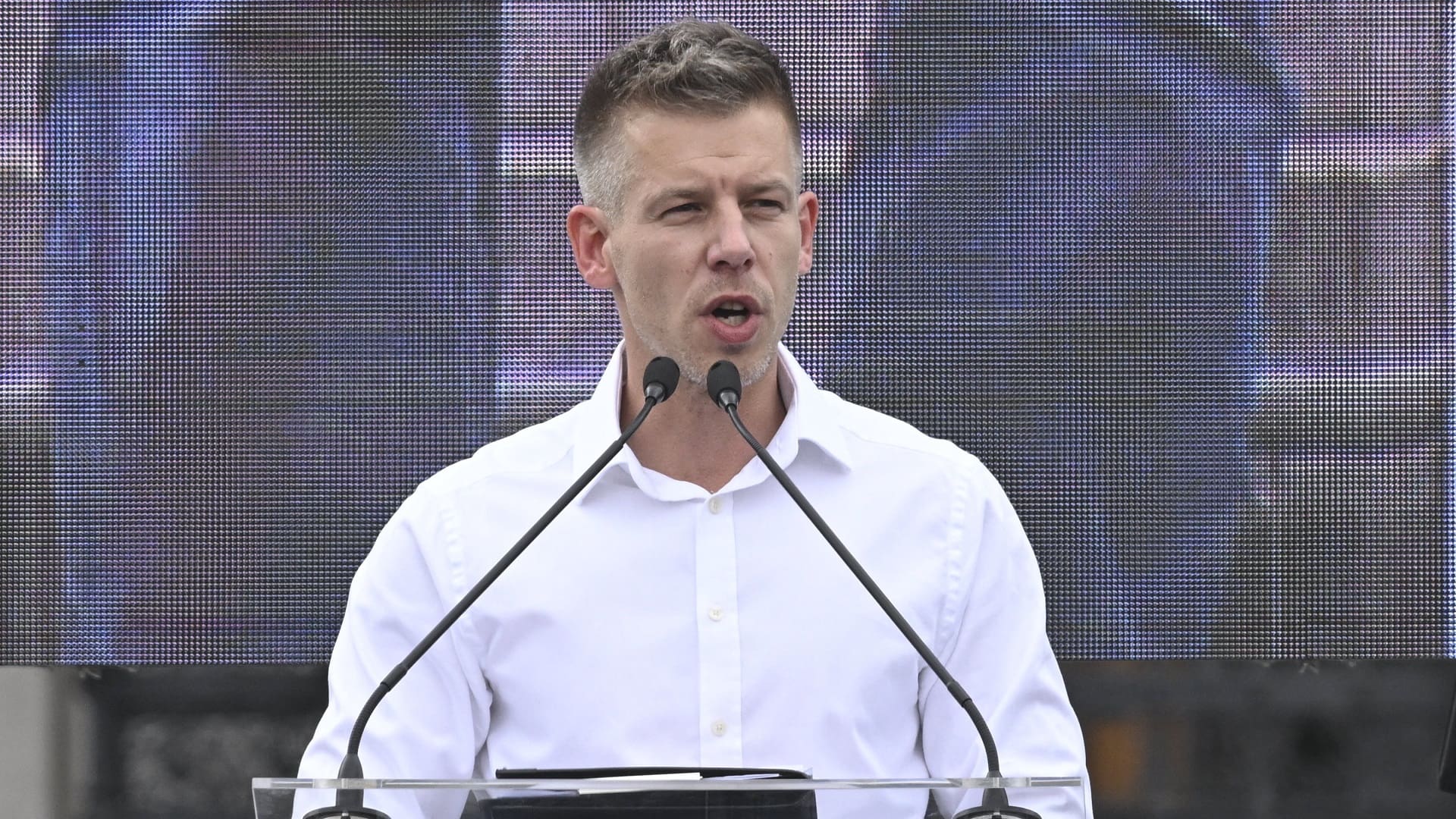
The following is the English translation of a press release kindly provided to us by the Center for Fundamental Rights.
Political developments in January 2026 further reinforced voters’ perception that the right remains a reliable force on key issues such as keeping Hungary out of the war, rejecting large-scale financial support for Ukraine, and defending the utility price reduction programme. By contrast, the Tisza Party increasingly appears not as an alternative, but as a risk.
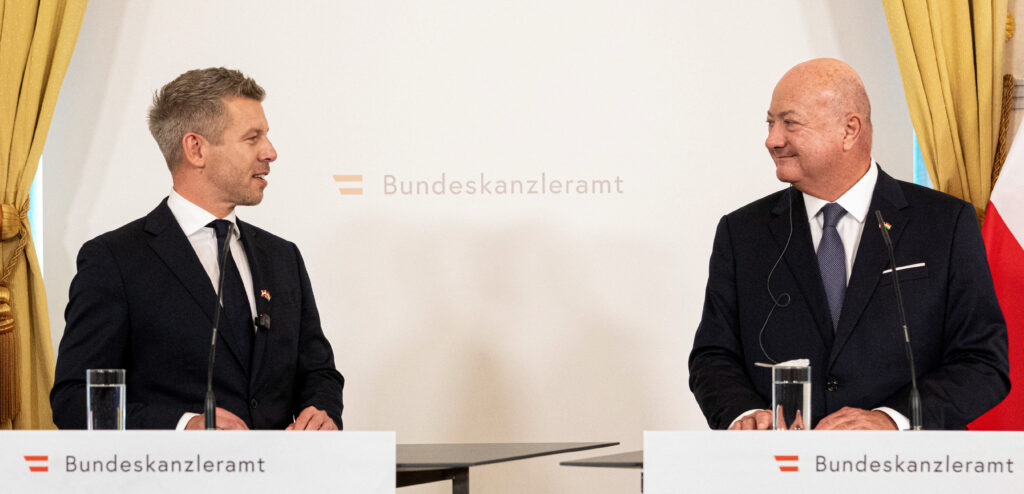
As a result, the trends observed in recent months continued to dominate the political contest. Opinion polls show that the patriotic bloc has retained its clear lead. It is telling that while the ‘national petition’ offered citizens an opportunity to express their views on these fundamental issues, Péter Magyar dismissed the initiative as a mere ‘displacement action’.
During January, Prime Minister Viktor Orbán of Hungary stood firm in defence of utility price cuts, which had come under sustained attack from Brussels. He also made it clear that under his leadership Hungary would not take part in financing Ukraine’s estimated $1.5 trillion funding needs. Péter Magyar and his allies, meanwhile, came to the defence of pro-war European Commission President Ursula von der Leyen by abstaining from the vote on the motion of no confidence against her.
The subordinate position of the left-wing challenger was confirmed not only by polling data, but also by the behaviour of its own party leader. As the prospect of defeat has become increasingly likely, Magyar has resorted to alarmist rhetoric about suicide attakcs, drone attacks, and constitutional coups. At the same time, he has sought to convince his most loyal supporters that Fidesz–KDNP is preparing to rig the election—despite having previously stated himself that it would be impossible to do.
| According to the Center for Fundamental Rights | The Right | Tisza |
| International position | Defending utility price reduction against attack by Brussels, abstaining from financing Ukraine, involvement in Donald Trump’s Board of Peace | Standing by Ursula von der Leyen |
| Economic platform | Utility price cap, 14th-month pension payments, sector-based wage increases, income tax exemption for mothers, doubling the family tax credit, six months of bonuses for armed services, reduced corporate tax rate | An expert leaving Tisza has confirmed the authenticity of the 600-page leaked document detailing the party’s austerity plan |
| Online media | Pronounced lead in online searches | Constant presence |
| Figures influencing political characterization | Conflict with President Volodymyr Zelenskyy of Ukraine to protect national interests | Embarrassment at the farmer’s protest in Brussels |
| Thematization power | Outstanding public interest at the year-opener press international conference | Mimicking trends, desperate attempts at agenda setting |
| Voters’ perception | Improving feelings about the state of the national economy, viewed as the guarantor of economic and physical security, in stable leading position | Stagnant support, dubious relability |
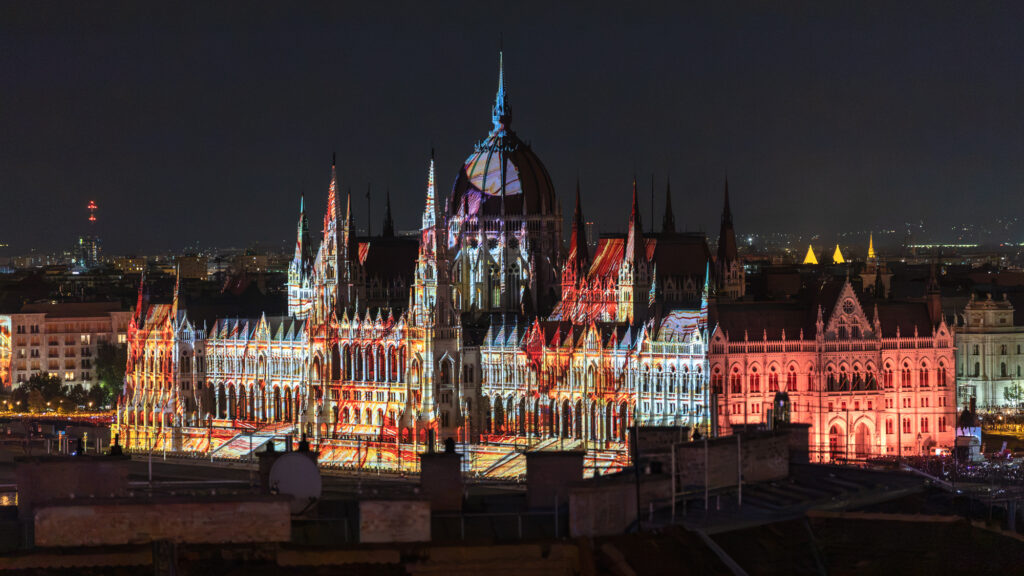
With 2025 now behind us, Hungary has officially entered an election year, and one month has already elapsed. January made clear Fidesz–KDNP’s dominance in the party competition, and the election date has now been set. As of the publication of this analysis, fewer than 70 days remain until the 2026 parliamentary elections. President Tamás Sulyok announced the date on 13 January, choosing the earliest possible option, 12 April. The countdown has begun.
This makes our periodic analysis particularly timely. In the next instalment of our series, we will examine the opening phase of the campaign sprint and assess how the political arena evolved during the first month of the year. As in previous editions, we focus on how the main political actors performed in January and what positions they are likely to occupy during the remaining two months leading up to the parliamentary elections.
The second half of last year yielded poor results for the Tisza Party. Overall, the opposition force closed 2025 in a weakened position. Péter Magyar’s party failed to dominate the political agenda, while its credibility suffered repeated blows—from the Ukrainian spy scandal and the leaked austerity plans to Tisza Party Vice Chair Zoltán Tarr’s gaffe (or, perhaps, sudden burst of candour), which revealed that the party had been concealing its true programme out of fear that its public release would lead to political collapse.
January brought no turnaround. The party again failed to seize control of political communication, and its actions resembled a series of rushed, reactive, and imitative moves rather than a coherent campaign strategy. This does little to inspire confidence in Péter Magyar’s prospects during the remaining two months.
Fidesz–KDNP, by contrast, entered 2026 from a position of stable leadership and actively consolidated that advantage in January. Breaking with tradition, PM Orbán did not hold his customary international press conference in December, instead scheduling it for 5 January—an event attended by a record 63 journalists. Two days later, on 7 January, the governing coalition unveiled its individual candidates for Budapest’s constituencies at a major event. Three days after that, at the Fidesz Party Convention, all 106 individual candidates for the National Assembly were formally introduced to the public.
Related articles:
At a time when public debate is increasingly polarized and superficial, Hungarian Conservative remains committed to depth, intellectual honesty, and independent conservative thought.
Producing high-quality journalism requires resources. Your contribution helps us expand our coverage, reach new audiences, and keep our content accessible.

Please consider supporting our mission.