
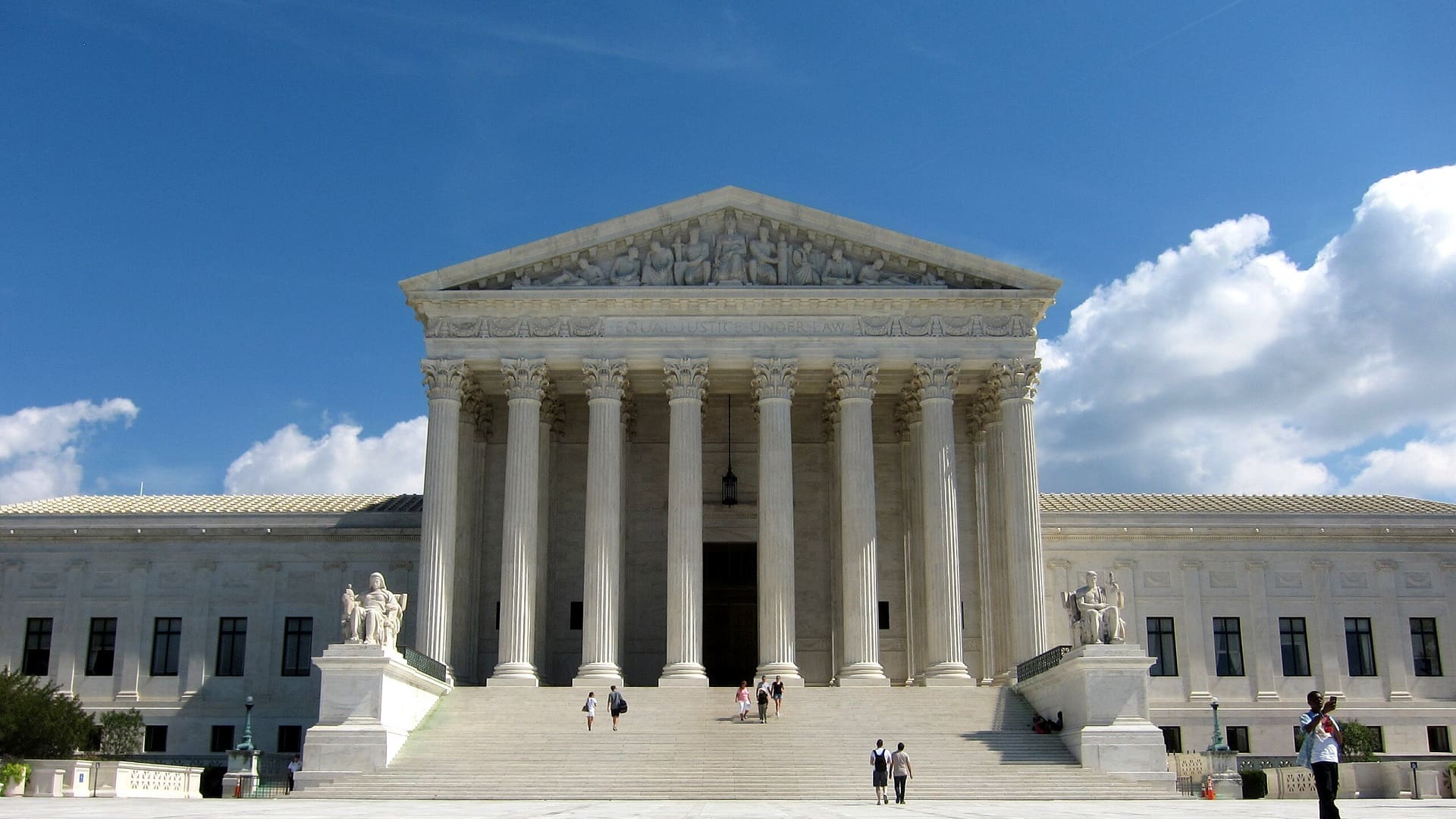
In a 6–3 ruling, the United States Supreme Court ruled in favour of the state of Louisiana in Louisiana v Callais. As per the decision, the state can redraw its congressional map; and the 6th district, currently held by Cleo Fields of the Democratic Party, does not have to stand.
Following the 2020 census, Louisiana originally mapped its congressional districts in a way that would have presumably given Republicans a 5–1 majority in the state’s House of Representatives delegation. However, black advocacy groups sued to overturn the new map, citing Section 2 of the 1965 Voting Rights Act, which prohibits state governments from making an election law that ‘results in the denial or abridgement of the right of any citizen to vote on account of race or color’. The plaintiffs argued that Louisiana should have two black-majority districts out of six, corresponding to the black population in the state of around 33 per cent.
A federal district judge has sided with the black advocacy groups. And, since the SCOTUS denied a stay on the judgment while it was being further adjudicated, the 4–2 Louisiana map was in place for the 2024 congressional elections.
However, the Supreme Court eventually came down with a ruling in favour of Louisiana on Wednesday, 29 April. The majority of the Court found that race played too big a part in shaping the congressional map. Justice Alito went as far as calling it ‘an unconstitutional gerrymander’.
The ruling has implications far beyond the single House seat presumably gained by the GOP in Louisiana.
It gives legal license for Republican stronghold states in the South to redraw their congressional maps, this time without high regard for black-majority districts. Alabama currently has two black Democrats representing them in the House out of their seven total seats, Mississippi and South Carolina have one each, while Tennessee and Kentucky have one white Democrat representative each.
Republicans are estimated to gain 10–12 House seats if each deep red Southern state were to redistrict in accordance with the recent Louisiana ruling.
Despite the elevated gas prices caused by the US–Iran war, Democrats are only leading Republicans by 5.2 points in the generic House ballot, according to the RealClearPolitics polling aggregate (as of the time of writing this). Experts do not expect the standoff of the US naval blockade of Iranian ports and the Iranian closure of the Strait of Hormuz to last for months, as that would not be sustainable for either of the belligerent sides.
This suggests that while the Democrats are almost certain to regain a majority in the House, the final tally of congressional seats won by the two major parties will be close. Thus, the handful of seats gained by either party through redistricting in certain states can make a huge difference.
Redistricting War in Virginia, Florida, and Now Louisiana
After Texas and California in 2025, the redistricting war has seen new ‘theatres’ open for the new year.
Earlier this month, Virginia’s proposed new congressional map was approved by a referendum. The new districts are likely to reduce the number of GOP-held seats in the Commonwealth from five to one. The referendum, however, was not without controversy.
First off, it was surprisingly close. After Democrats won by 15.4 points in the 2025 gubernatorial election and invested a considerable amount in promoting their preferred referendum option, ‘Yes’ only won by 3.36 points in a highly partisan contest.
Second, the referendum question has come under scrutiny, for supposed implied bias. The question on the ballot asked voters if they wanted to approve a temporary new congressional map ‘ to restore fairness in the upcoming elections’.
As expected, the result has been challenged by Republicans in court, and they have already scored a victory. The Virginia Supreme Court has denied controversial Democrat Attorney General Jay Jones’ request to issue a stay on the challenges while they are being adjudicated, thus granting the possibility of the new map not being put in place in time for the 2026 midterms.
Meanwhile, down in Florida, Governor Ron DeSantis’ newly approved congressional map—passed by the Florida legislature this week—could expand Republicans’ advantage from roughly 20–8 to as much as 24–4 in the state’s House delegation. This may prove to be the GOP’s single biggest redistricting prize of the redistricting war for 2026.
Related articles:
At a time when public debate is increasingly polarized and superficial, Hungarian Conservative remains committed to depth, intellectual honesty, and independent conservative thought.
Producing high-quality journalism requires resources. Your contribution helps us expand our coverage, reach new audiences, and keep our content accessible.

Please consider supporting our mission.