The following is a translated and edited version of an article by Anita Farkas, originally published in Hungarian on 10 June 2026 on Mandiner. Translated by Ildikó Antal-Ferencz.
‘Hungarian pioneers from Ohio and Colorado founded Dollar Farm in Bikk, Borsod…The difficult and moving conquest of a homeland by fourteen poor Borsod families, which becomes increasingly visible beyond the acacia grove as we make our way forward along the winding, potholed farm track in the shrieking spring wind. Fourteen poor Borsod families who set off towards the great America’—reported Magyar Hírlap on 8 April 1928. What was this unusual place, and how did the lives of those who lived there and their descendants develop? Éva Szabóné Rácz is researching it; her great-great-grandfather, who traveled to America twice during the first third of the 20th century, is also considered one of the founders.
***
Who exactly were the inhabitants of Dollar Farm?
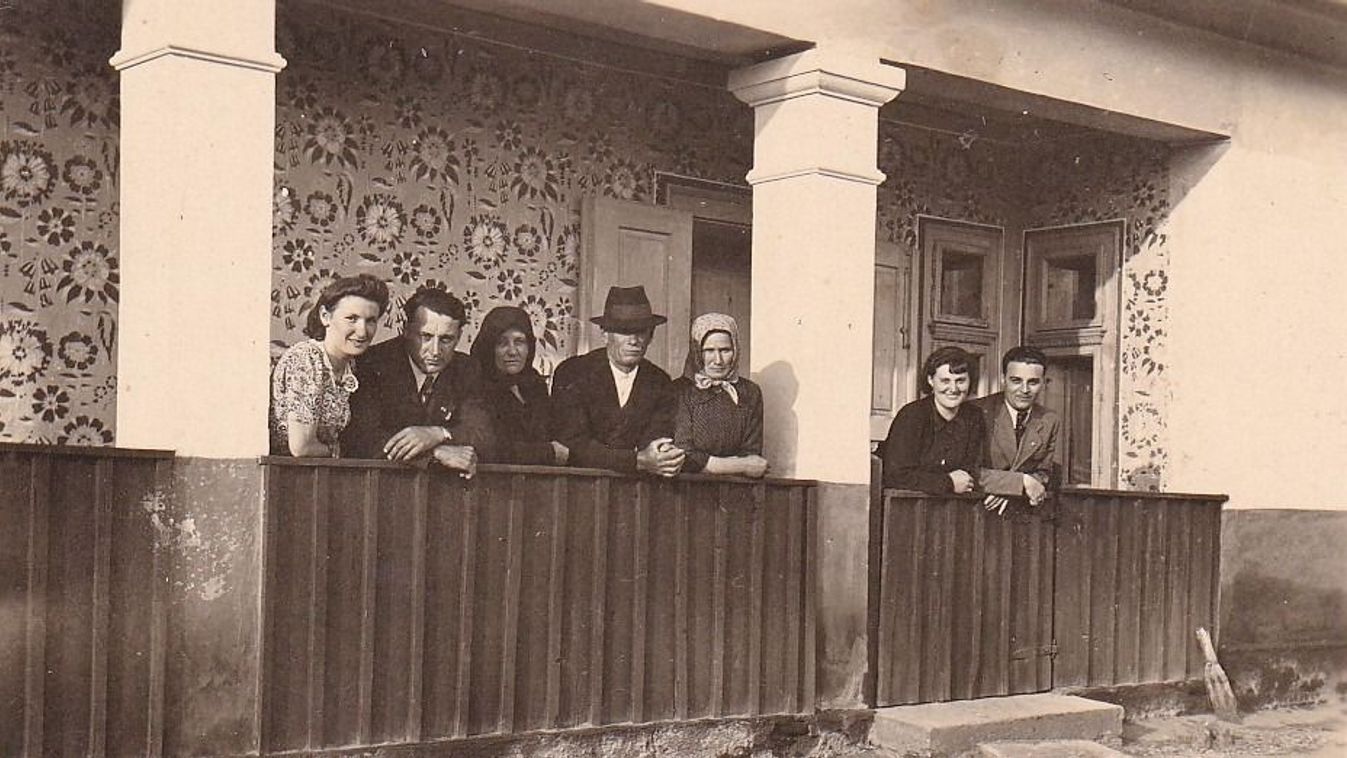
They were poor farmers from Borsod who, after shorter or longer periods of work in the New World, returned to their homeland and wanted to create their own Little America here. They found suitable land for the purpose in Borsod, on the outskirts of the village of Nemesbikk, which they jointly purchased in 1920 with dollars—hence the name—and then construction began: the 17 founding families were able to move into 32 beautiful, colorful, almost identical houses. These were already somewhat more bourgeois-style buildings: spacious, with several rooms, tiled roofs, and huge windows.
What did the settlers here make their living from?
From what most of them had originally done before they went overseas to seek their fortune: intensive, small-scale farming. They cultivated crops, and the settlement also had a great deal of poultry and cattle. Essentially, they organized themselves for self-sufficiency, selling their surplus produce at the markets in Mezőcsát and Miskolc. A rare level of solidarity developed among the residents because they had all experienced the same thing: the men typically had to leave their families behind and somehow make a living in a completely unfamiliar environment, while their wives stayed at home and managed their households on their own for years. For this reason—and because those returning from America also brought back a certain ‘Western’ spirit with them—they stood out to a certain extent from the average population. They considered education and culture particularly important, for example. They even managed to establish their own school in 1925 on the settlement, which administratively belonged to Nemesbikk, but was several kilometers away from both the village center and from Mezőcsát. The school also had a library, and the children often performed plays.
How many people are we talking about in total?
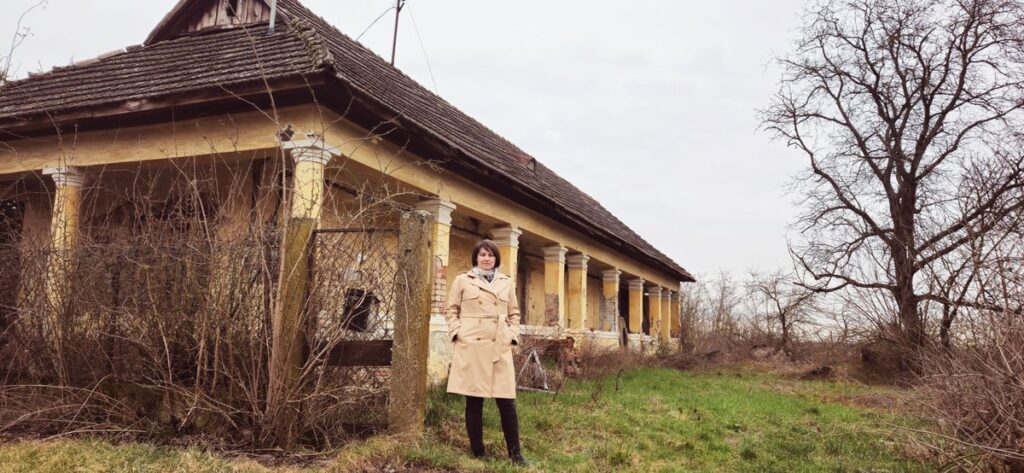
At its peak, in the 1930s, the total population of Dollar Farm grew to around 200 people. Following the beginning of migration away from the settlement in the 1960s, there are currently 25 registered residents, but none of them are descendants of the original settlers. Most of the original farmhouses built in the 1920s are either in a severely deteriorated condition or have already collapsed.
What brought the golden age to an end?
World War II, the collectivization of agriculture, and the consolidation of schools into larger districts. From then on, children had to travel long distances to school, and most of the Dollar Farm residents—always keeping the easier future of their descendants in mind—chose to depart. Some moved into the village [Nemesbikk], while others became scattered across different parts of the Southern Borsod region. Employment patterns also changed. At the time, the Tisza Chemical Combine, known as TVK, was being built in Leninváros [today’s Tiszaújváros], and many people began working there or in other factories instead of continuing agricultural work.
How are you personally connected to this whole story?
One of the founders was my great-great-grandfather, Gyula Bártfai, who worked as a coal miner near Detroit, MI, and traveled to America twice at the beginning of the last century. Even as a small child, I was fascinated not only by his story but by the stories of the older generations in general. I was the grandchild who was constantly pestering my grandparents in the kitchen, asking them to tell me about the past. Later, perhaps because of a similar life situation—as I myself lived abroad, in London, UK, for eight years—I became even more interested in all of this. So, after moving back home in 2015, I began more intensive family history research. In 2017, I found my great-great-grandfather’s American ship records, and two years later I discovered many articles and reports that had been published about Dollar Farm, particularly during the period of its foundation.
Soon, as part of the Hungarian Roots and American Dreams community heritage program, the story of not only your great-great-grandfather, but also other founders and their descendants will appear in a separate volume.
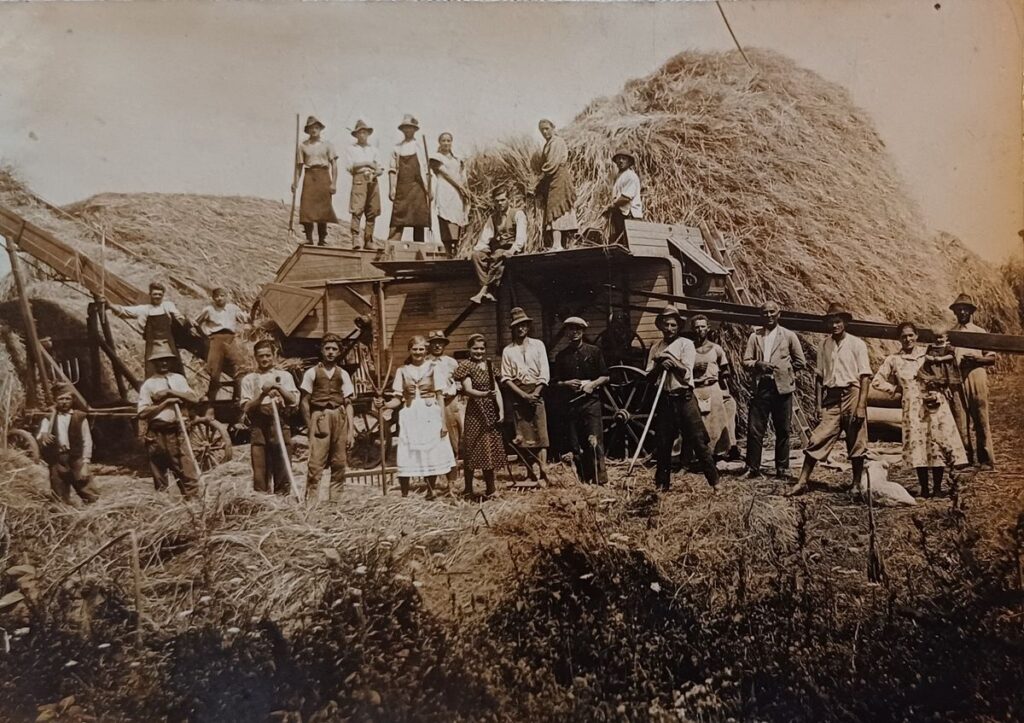
Yes. I’m continuously collecting material, and in addition to researching archives, official records, and online databases, I’m interviewing grandchildren and great-grandchildren of the founders and former residents, who are now typically around 70 or older. I’m searching for the few surviving physical objects, archive diaries, letters, and photographs. From the latter, mainly from the 1950s and 1960s, I’ve already managed to collect almost 250. The aim is to trace the life journeys of all 17 founders and their families as accurately as possible. From the point when, according to some sources, they formed an alliance while still in the U.S., and according to other accounts, during their first ship journey home, agreeing that instead of returning to their original places of residence, they would establish their own colony, all the way through to the fate of their descendants. I’ve also created a community matrix based on family trees extending three or four generations upwards. This revealed that, contrary to previous assumptions, the first settlers of Dollar Farm were probably not complete strangers to one another: second and third cousins and former neighbors can also be found among them.
What causes the greatest difficulty in this research?
The greatest difficulty is that the descendants became scattered throughout the country, and that the elderly people at the time were rather reluctant to talk about their lives in America [as it was regarded as a hostile power at the time by the Soviet-allied Hungarian communist regime]. At most, family members knew that their grandfather had worked in a slaughterhouse, in the steel industry, or in a mine in the U.S.; very little was preserved about their everyday life overseas.
What might have been the reason for that?
I don’t think they denied it. They simply didn’t consider it particularly important. They were happy that they had finally managed to return home. After all, just think about the fact that when my great-great-grandfather set off for America for the second time, one of his daughters was only three weeks old. When they saw each other again, they were introduced to one another as a seven-year-old child and her father. Both the recollections and the newspaper articles show that the time spent abroad truly served only the purpose of earning money: the majority constantly longed to return home. One of the miners later recalled that he viewed every piece of American coal he mined as a small piece of Borsod soil. In other words, it was something that brought him closer to purchasing his own land—something that people from the poorest social classes in Hungary at the time probably would never have had the opportunity to achieve in any other way.
What can we learn from these stories today?
My ‘meeting’ with my great-great-grandfather, who had been to America, was a tremendous source of strength for me personally: nothing happens by chance. Previously, I had often wondered what was driving me so strongly from within, and whether it had been the right decision to leave behind my already established life in England after almost a decade there. But after gaining a deeper understanding of his life story, all my doubts disappeared. More broadly, the strength and courage with which these ordinary people dared to step outside the familiar and adapt flexibly to changing circumstances can serve as an example for anyone. They went abroad, returned home, built something new, crossed the ocean again, became stranded there for years because of World War I, and yet continued to work patiently so that life would become easier for those back home and for future generations.
‘The first settlers of Dollar Farm were probably not complete strangers to one another’
To what extent does the shared heritage of their ancestors still connect the descendants today?
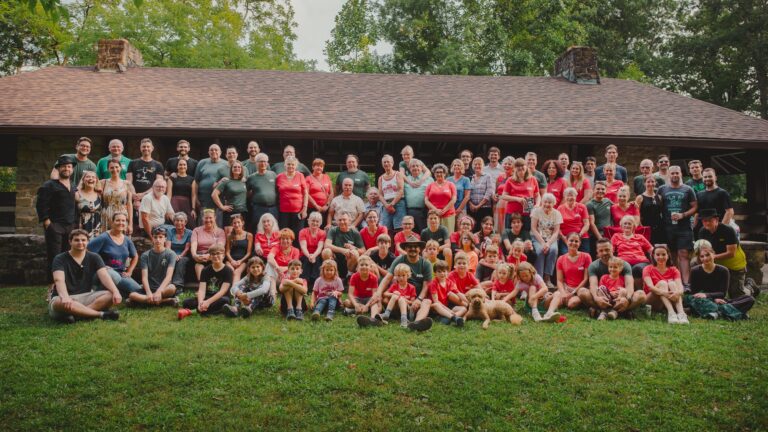
This year, the annual gathering of Dollar Farm descendants was held for the second time, and on this occasion, I was already one of the organizers. Around 40 of us came from all over the country. We went out to the farm, walked among the ruined buildings, and afterward had a very good conversation in the community center in Nemesbikk. Some archived family albums were presented, and older participants tried to identify who might appear in each photograph. In other words, this is still a very much alive community, whose solid foundation is the shared fate and shared values of its members.
Hungarian Roots & American Dreams
Between 1890 and 1920, more than one and a half million people set out for America from the territory of the Kingdom of Hungary in the hope of a better life. Some traveled alone and sent their wages home to the families they had left behind. Many—having sold everything they owned—boarded emigrant ships with their entire families. There is no corner of the Carpathian Basin from which someone did not set out. This is why many people today are curious: what were their stories? How did they live and make their way overseas? Where can descendants find help in researching the topic? To answer these questions, a bilingual Facebook group was created so that descendants could jointly build a worthy memorial to the many hundreds of thousands of Hungarian ancestors who immigrated, by sharing photographs preserved about family members who tried their luck on American soil, as well as the contemporary documents and stories sleeping away in drawers for decades.
The movement launched by Réka Bakos—who herself has Hungarian ancestors who immigrated to America—and which has since grown into a community heritage program, has collected more than one hundred personal stories into book form, including the impacts these stories had on subsequent generations. The Hungarian Roots and American Dreams series is currently planned to consist of seven volumes in total. In addition to the story of the famous ‘Dollar Farm’ in Borsod county, separate books would be dedicated, for example, to the ‘Sopron foresters’ who emigrated to Canada as a group in 1956, as well as to the people of Homoródalmás, Transylvania.
A large-scale exhibition is also being prepared: the idea of the Legacy of Hungarians in the United States – People, Places, Pathways traveling exhibition attracted numerous institutions and specialists from a wide range of academic disciplines. The U.S. celebrates its 250th anniversary this year; its aim is to present Hungarian–American history through the lives of 250 immigrants, family histories, and 50 emblematic locations. The exhibition will naturally feature figures such as Mihály Fabriczi Kováts, who emigrated in 1777 and is regarded as the father of American light cavalry, alongside many distinguished Hungarian-born soldiers, scientists and artists, but it will also tell the stories of the hundreds of thousands of ordinary Hungarians whose labor, determination and sacrifice helped build the bridges, railways and skyscrapers—and much else that still contributes to making America great today.
Related articles:
Read the original article here.
At a time when public debate is increasingly polarized and superficial, Hungarian Conservative remains committed to depth, intellectual honesty, and independent conservative thought.
Producing high-quality journalism requires resources. Your contribution helps us expand our coverage, reach new audiences, and keep our content accessible.

Please consider supporting our mission.