In late January 2026, The Hague District Court ruled that the Kingdom of the Netherlands failed to adopt adequate mitigation and adaptation measures to protect the residents of Bonaire from the adverse effects of climate change. The Caribbean island is particularly vulnerable to extreme weather events and sea-level rise, which threaten its cultural heritage and tourism-dependent economy—and, in turn, locals’ livelihoods. The Dutch state also failed to ensure a level of protection for Bonaire’s residents comparable to that enjoyed by residents of the European Netherlands.
An Island Besieged by Climate Change
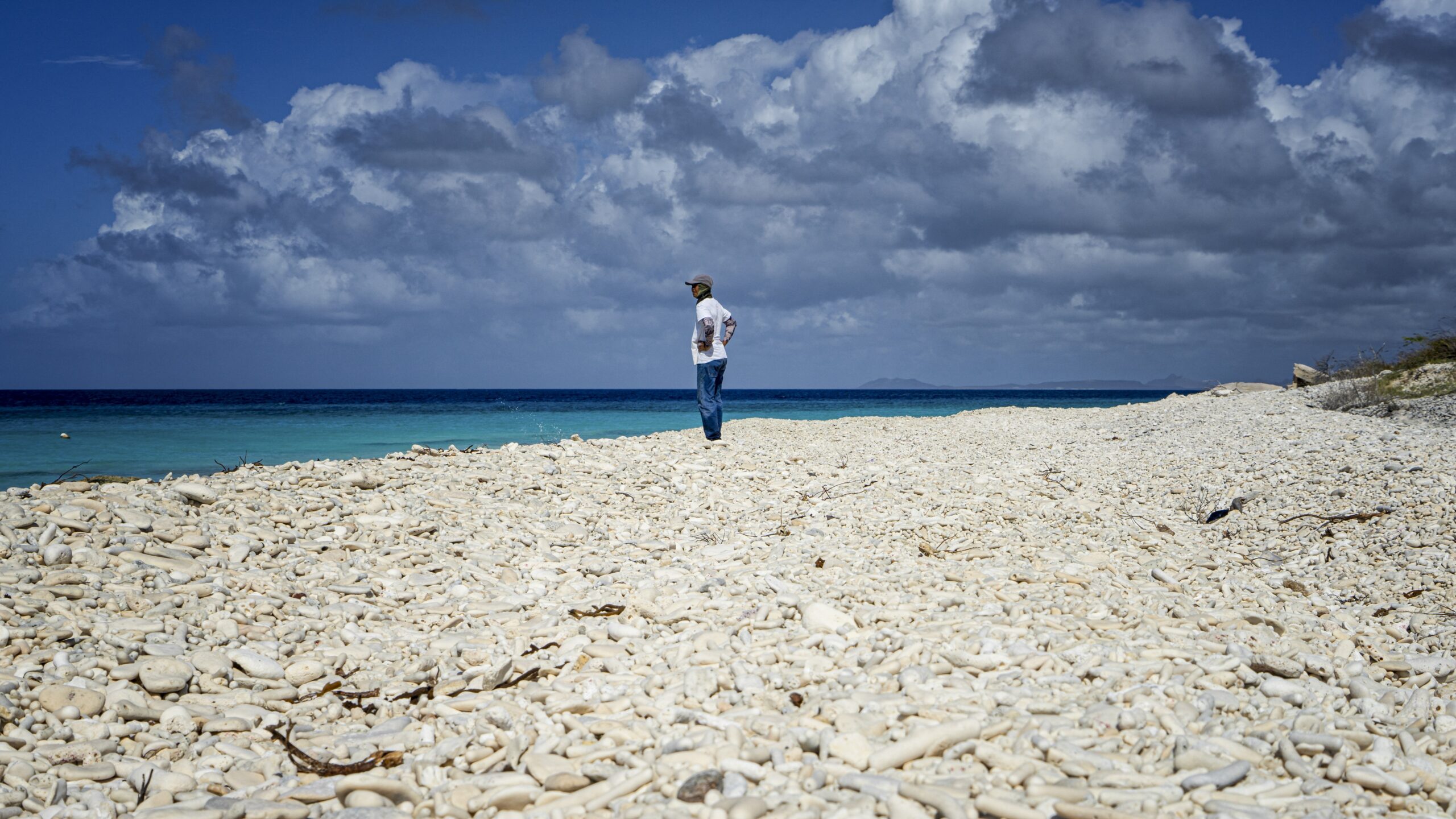
Bonaire—once a Dutch colony, now part of the Kingdom of the Netherlands as a special entity—is among the small islands facing severe challenges due to climate change. According to a 2023 research by the Vrije Universiteit Amsterdam, several low-lying coastal areas of the island are at risk of flooding by 2050. Under worst-case scenarios, the inundated area could easily double or triple by 2150. The situation will be further exacerbated by biodiversity loss, especially the degradation of coastal coral reefs, which currently protect the coastline against waves.
Climate change will also negatively affect the island’s economy; significant losses are expected in the tourism sector, while storm and flood damage is projected to reach approximately USD 317 million by 2050. Much of the island’s cultural heritage is also threatened by sea-level rise. More broadly, these impacts will likely affect residents’ health and well-being.
Key Arguments and Counterarguments
In 2024, Greenpeace Netherlands and eight residents of Bonaire lodged a legal complaint against the state. They asked the court to assess whether the state had taken all necessary, timely, and adequate adaptation measures, and whether its mitigation measures effectively contributed to meeting obligations under the United Nations Framework Convention on Climate Change and the Paris Agreement.
The applicants argued that the state had failed to provide adequate human rights protection to Bonaire’s residents, despite its obligations under international treaties—particularly the European Convention on Human Rights and the International Covenant on Civil and Political Rights. According to the complaint, the state created a discriminatory situation by failing to provide island residents with a level of protection tailored to specific risks the island faces, compared with measures taken for residents of the European Netherlands.
In response, the state argued that it had taken all the necessary mitigation and adaptation measures to protect the island’s residents with the same level of ambition as in the European Netherlands. It added that the methods used could differ, but only to the extent justified by the Caribbean region’s unique circumstances.
The Netherlands also argued that it had already achieved more on mitigation than many other states and could not be held responsible for the emissions of other states. Furthermore, it claimed that the court lacked the competence to prescribe mitigation measures that lie within the state’s discretion.
The Court’s Judgment
In its January 2026 ruling, The Hague District Court examined the state’s obligation under the European Convention on Human Rights, particularly Article 8 (the right to respect for private and family life)—a provision on which much of the European Court of Human Rights’ environmental jurisprudence has been built.
The court found that the Netherlands failed to comply with these obligations, as well as with the requirements of Article 14 on the prohibition of discrimination. It did not accept the state’s justification for the difference in treatment between Bonaire’s residents and residents of the European Netherlands, noting that factual circumstances—such as the island’s higher vulnerability to climate change—may amount to indirect discrimination when the state fails to take appropriate preventive measures.
The court pointed, in particular, to the fact that the state implemented mitigation and adaptation measures for the island too late and with insufficient ambition. Even though evidence had been available since the 1990s showing that Bonaire faces more severe climate impacts than the European Netherlands, local authorities had fewer resources to respond effectively.
‘The state implemented mitigation and adaptation measures for the island too late and with insufficient ambition’
The judgment paid particular attention to cultural heritage protection. A critical shortcoming was that the state had not yet developed an adaptation strategy that adequately reflected local conditions. In light of these findings, the court considered it undisputed that, by 2050, the island’s low-lying areas are highly likely to be inundated as sea levels rise. Because a substantial portion of the island’s heritage is located in these areas, this prospect is especially concerning. The court ordered the state to adopt binding interim greenhouse gas reduction targets within 18 months, covering all sectors of the economy. It also ordered the state to produce and begin implementing a detailed adaptation plan for Bonaire by 2030.
Notably, courts in The Hague have already delivered two significant climate-related decisions. In the Urgenda case, the court required the state to reduce greenhouse gas emissions to 25 per cent below 1990 levels by 2020. In the Milieudefensie v Royal Dutch Shell case, it ordered Shell to cut emissions by a net 45 per cent; however, on appeal, the Supreme Court invalidated the part of the decision that established a concrete reduction target. Given this precedent, it came as no surprise that, in the present case, the court set out the state’s duties in general terms, emphasizing that it could not specify the precise steps the state must take.
The court emphasized that mitigation and adaptation measures are interlinked. The state retains discretion in determining how to fulfil these obligations. Accordingly, the court instructed the state to implement measures in line with existing international standards and objectives, without specifying substantive requirements.
Even though some may view the judgment as a missed opportunity, Greenpeace hailed it as a landmark victory that could influence climate jurisprudence globally, citing the decision’s strong foundation in human rights law.
Related articles:
At a time when public debate is increasingly polarized and superficial, Hungarian Conservative remains committed to depth, intellectual honesty, and independent conservative thought.
Producing high-quality journalism requires resources. Your contribution helps us expand our coverage, reach new audiences, and keep our content accessible.

Please consider supporting our mission.