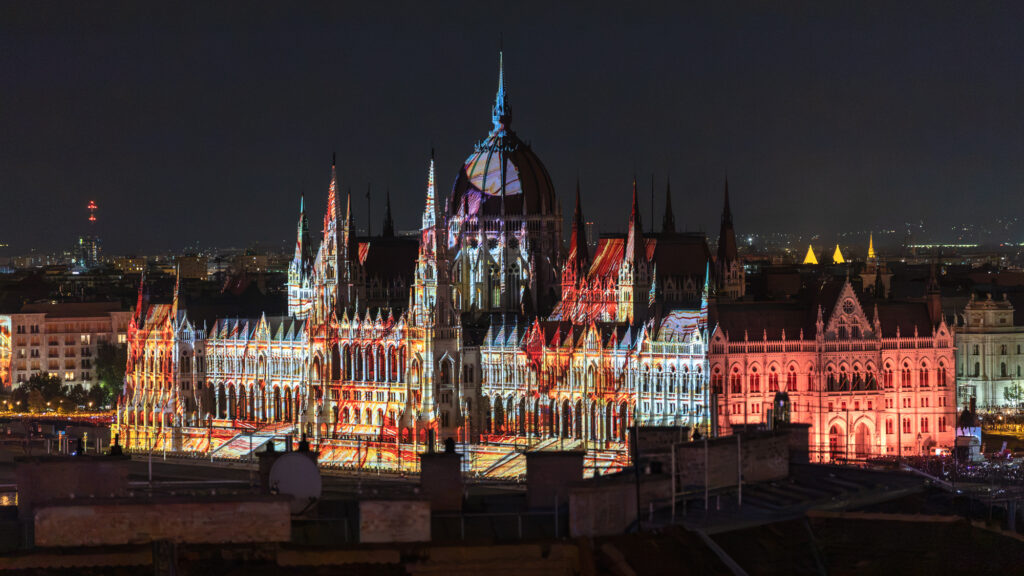
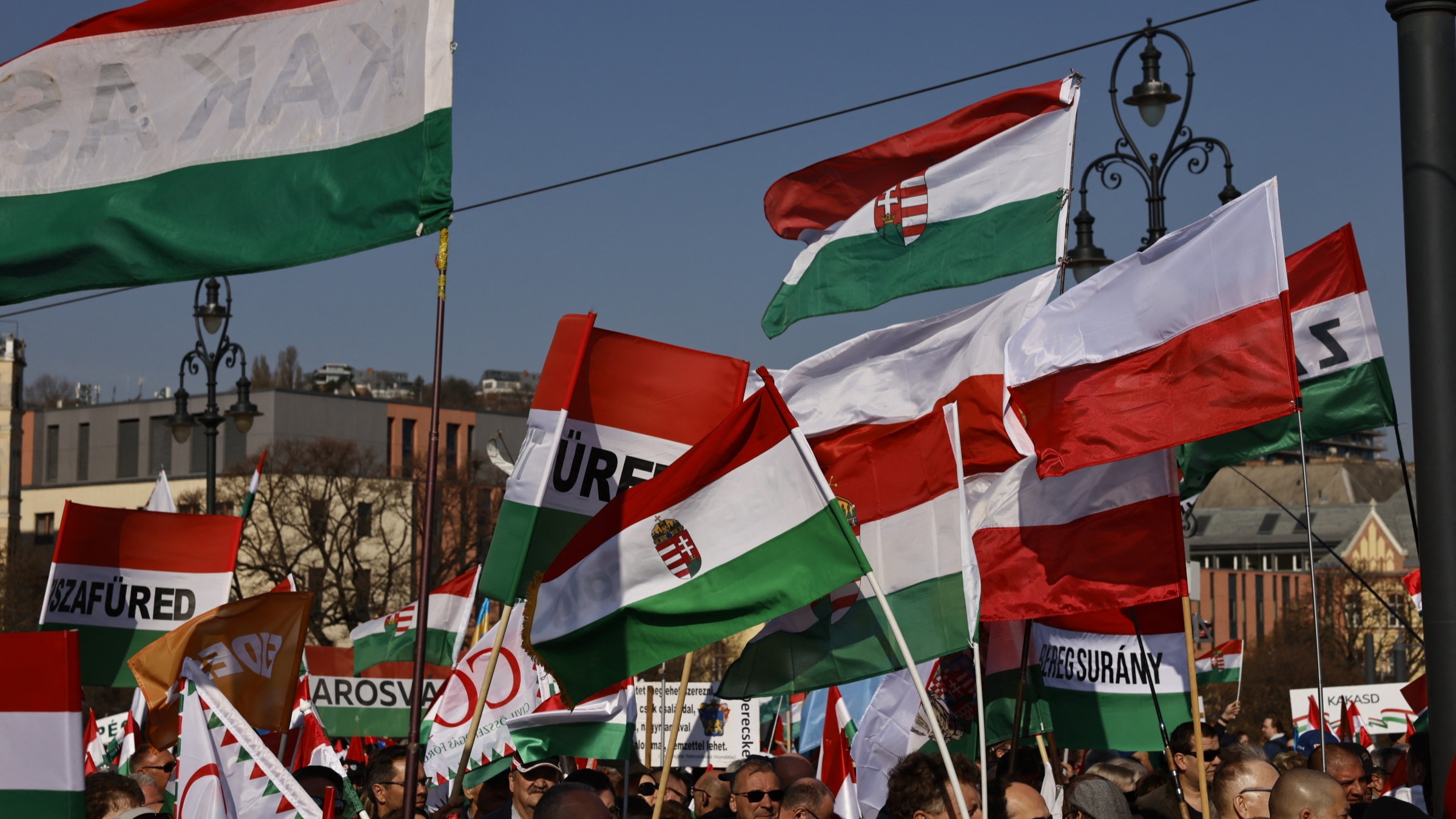
Prime Minister Victor Orbán has spent the last fifteen years exposing Brussels for what it is: an empire that demands nations dissolve themselves in the name of ‘progress’. For decades, Brussels insisted that Europeans must trade sovereignty for progress. It asked nations to answer falling birth rates with gay pride flags, and open borders. Hungary said no. It kept its borders, protected its families, and refused to apologize for its Christian roots. Yet on 12 April, it will not only be the fate of Hungary which will be decided. The Hungarian election will be the most closely watched in all of Europe, and around the world, also because of what it portends for other nations.
Let me try to explain by way of six theses which I think are being tested in real time. Now I happen to believe these theses are all true, and that all will eventually be proven within this century. But it’s fair to say that the upcoming Hungarian election will either confirm the validity of these theses, or will cast some doubt upon them.
Thesis 1: The post-war consensus around a global liberal order is crumbling.
For eight decades, the liberal order erected after 1945 promised perpetual peace through unelected super-national institutions, open borders, secularization, and the steady erosion of national particularity for a global universalist empire.
From the Enlightenment to Bretton Woods to the European Union’s ever-closer union, the liberal faith rested on rules, rights, markets, and managerial elites. Like Gnostics, they spoke loudly against the unique, embodied particularities of actual people, in real places, where history, language, geography, family, and faith mattered. Kantian ‘pure reason’ was now able to cut through nations with the faith of ‘pure reason’.
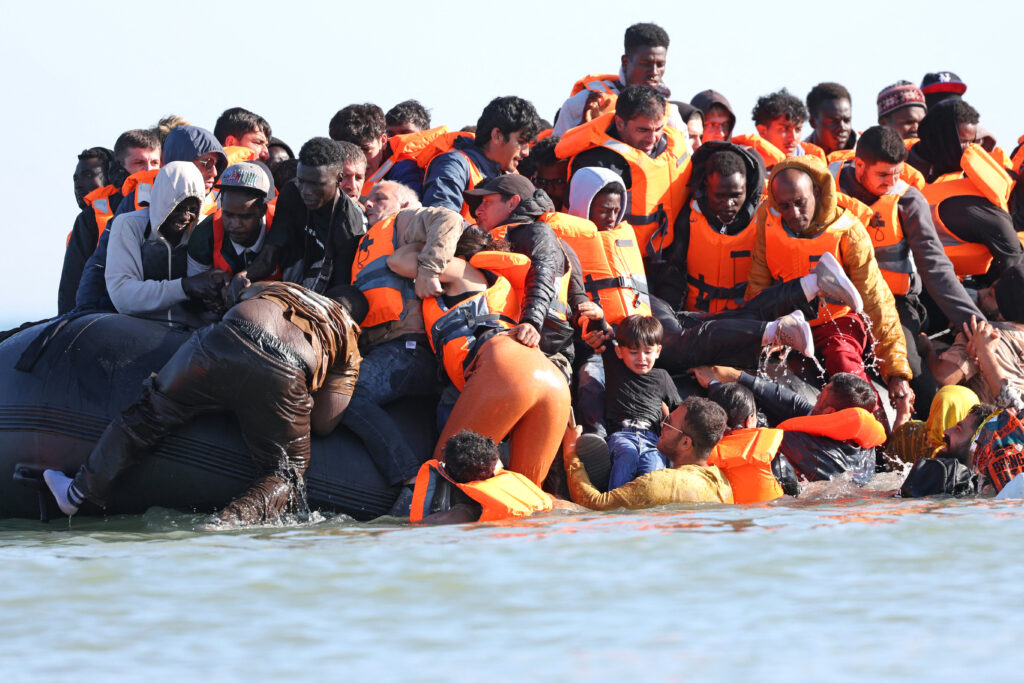
That faith is now collapsing under its own contradictions. Mass migration has broken many great European nations, and threatens the survival of America too. Debt-fueled globalization not only hollowed out the American middle class, but has done so throughout Europe. Cultural liberalism promised cosmopolitan style, elegance, ‘the end of history’, even. But what it has delivered is the end of marriage, family, children, and yes, nations. The evidence is in: we stand upon a demographic cliff, as well as a spiritual precipice. No number of pride parades will distract us from it now.
‘We stand upon a demographic cliff, as well as a spiritual precipice’
Hungary’s election on 12 April is not a peripheral referendum in this story. It represents the first and most visible fracture in the foundations of liberal order. 15 years may seem like a long time to young people, but it has taken this long to reveal the fissures, and to show all nations that the liberal order is now bankrupt.
Thesis 2: Hungarian sovereignty has become a powerful tool in the dismantling of the old liberal empire.
Brussels is terrified by Hungarian sovereignty because it was the first to actually challenge its power. Viktor Orbán has challenged Brussels more effectively than any other European leader—refusing migrant quotas, defending Christian family policy against gender ideology, negotiating energy deals which benefit Hungarians not elites in Brussels or their puppets in places like Kyiv. Hungary is between the teeth of Brussels and Kyiv because they are the ones who have the most to lose.
Actual nations are increasingly standing with Hungary because the writing on the wall is finally becoming clear. If one nation can say ‘No’ and thrive, that exposes that liberalism has indeed failed. The entire post-war architecture of ‘pooling’ nations into a false unity begins to look like what it always was: a war against that once richly differentiated Europe that used to be the crown jewel of Christian civilization.
Thesis 3: When national sovereignty becomes generationally secure in one place in Europe, it ensures that it will occur in other places.
The second thesis leads directly to the third. If Hungary were to prove its sovereignty over a generation, that would mean that Poland, Austria, or France could do so as well. This is no abstract domino theory; it is the logic of political mimesis, which unlocks the shared civilizational memory of many European nations. What Hungary means for the rest of Europe is that if one single nation can successfully defends its borders, its families, its faith, and resist the combined depredations of Brussels, global capital, and cultural Marxism, it becomes ‘proof of concept’.
Young Hungarians raised under Orbán’s model have known nothing but a sovereign state that prioritizes its own people, marries economic realism to cultural confidence, and refuses to apologize for its Christian heritage. Perhaps like all young people, they want something new. But they must wake up to the fact that this is the new thing—or rather what they take for granted is actually a retrieval of their nation, and any new thing which would come in its place would spell destruction for their future.
Other nations can see what some young Hungarians might not, namely that Hungary’s ability to win generational security over and against Brussels gives other nations hope. For example, Poles watching Hungary resist migration see their own Law and Justice legacy vindicated. Austrians and Italians facing demographic winter glimpse a path to renewal. Even the French, long the standard-bearers of Enlightenment universalism, now whisper of ‘reconquête’ and national priority.
‘Hungary’s ability to win generational security over and against Brussels gives other nations hope’
Once one European nation demonstrates that it is possible to say ‘No’ to the liberal empire and survive—indeed, to flourish for a generation or more—the psychological spell is broken. What was dismissed as ‘populism’ or smeared as ‘xenophobia’ becomes something like a new common sense among nations. This is why Hungary’s generational achievement matters so much. It is proof of the concept that liberalism has failed, and Europe can be restored.
Thesis 4: The collapse of global liberalism creates the need for a recovery of the idea of ‘civilization allies’ who see the strength of their nations tied to a much more ancient unity.
A dying liberal order produces great uncertainty. In the postliberal era, what dreams may come? What holds nations together, or at least holds them in some common bond which won’t eviscerate them?
Postliberal nations will have to see themselves as united in something historically and spiritually deeper, something which unites them in a kind of civilizational alliance that has roots. As the U.S State Department stated in the National Security Strategy document, we will need to cultivate ‘civilizational allies’. That cannot be mere trading partners or even military coalitions of convenience. Civilizational allies aren’t bound together by the binaries of capital, but by flesh and blood, by people who recognize that their national strength is inseparable from their own distinctive place in a great civilizational story.
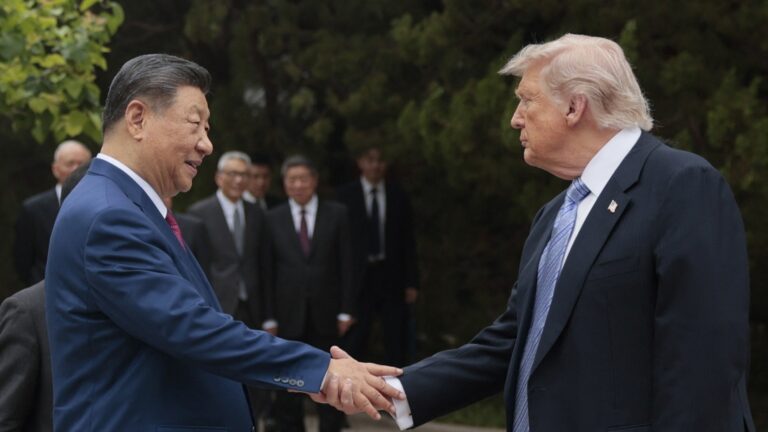
The collapse of liberalism also means freedom from our civilizational amnesia. The ice can thaw, and we can remember again our inheritance of Greek reason, Roman order, and Christian faith. We are witnessing postliberal political realism reborn whenever we see nations draw together around this greater civilizational unity. The alliances with America, with the Visegrád Group, deepening ties with like-minded governments in Italy and Slovakia are signs of hope that Christian civilization is still our operating system, and it still works.
The Hungarian election forces us to see the civilizational choice clearly. We will either continue dissolving into the failures of the liberal project, or we will recover our birthright with the support of that ancient civilizational glue which made Europe great in the first place.
Thesis 5: A vision of Western civilization which recalls Greek wisdom, Roman law, and Christian faith finds itself at odds with both a dying liberal order and a rising Islamic one.
This recovered civilizational vision stands in irreconcilable tension with two opposing forces: the exhausted liberal order that hollowed out its own Christian roots, and the rising Islamic civilization that offers neither wisdom nor law but only submission. One is dying, while the other is ascendant—both are dangerous.
Michel Houellebecq saw it coming. In Submission, he showed a secular France so drained by hedonism, family collapse, and spiritual emptiness that it quietly hands itself over to an Islamic regime—not out of fear, but out of relief. Liberalism’s promise of endless freedom has delivered only meaninglessness; and Houellebecq prophesied that Islam would overwhelm it because it offered structure, fertility, and purpose. This seemed controversial at the time, but now seems almost self-evident. On its current trajectory, by 2050 there will be more Muslim migrant babies born in France than there will babies born to native French parents.
Similarly, Pierre Manent has argued that France cannot survive on abstract rights and radical laïcité. It was born Christian some 18 centuries ago, it was tutored by Greek reason and Roman order, it is the eldest daughter of the Church and one of Europe’s crown jewels. Yet the failure of liberalism will mean the erasure of France as we know it if the seed of Islam is allowed to replace Christian civilization in that country. Without an explicit commitment to Christianity—such as the Notre Dame represents—France will be defenseless.
‘The world is watching because the stakes are civilizational’
This is why Hungary’s defense of Christianity matters so much. It tells all of Europe that you can survive the collapse of liberalism only by returning to Christian civilization.
Thesis 6: Hungary is the vanguard of epochal change in Europe, and around the world. What is decided on 12 April matters not just for Hungarians but for the whole world.
What happens on 12 April is no ordinary ballot. A renewed mandate for Hungary’s vision will echo in Warsaw, Rome, Paris, and beyond. It will embolden civilization allies across the Atlantic and give courage to nations in the Global South tired of lectures from failing liberal elites. The world is watching because the stakes are civilizational.
I pray that ordinary Hungarians will understand that they are not just voting for their families, and for their countrymen. They will be voting in an election that can help other nations become their civilizational allies. The whole world will be watching because Hungary holds in its hands what is perhaps the last smooth stone with which David will finally slay Goliath.
Related articles:
At a time when public debate is increasingly polarized and superficial, Hungarian Conservative remains committed to depth, intellectual honesty, and independent conservative thought.
Producing high-quality journalism requires resources. Your contribution helps us expand our coverage, reach new audiences, and keep our content accessible.
Please consider supporting our mission.